Self-Improvement and Interesting Knowledge

  • Psychometry: How to Read the Hidden Stories of everyday objects

    Psychometry: How to Read the Hidden Stories of everyday objects

    Ever walked into an antique shop and felt a sudden chill or a wave of nostalgia, even though you’ve never been there before? Or maybe you’ve picked up a piece of jewelry and sensed a story behind it; a whisper from the past, a tingle in your hands, or a flash of imagery in your mind. If so, you’ve brushed up against the fascinating world of psychometry.
    Psychometry is the art of reading the energy and history of objects through touch. It’s a skill anyone can develop with practice, curiosity, and an open mind. In this guide, I’ll walk you through what psychometry is, how to do it step by step, how to record your findings, how to uncover the hidden stories of antiques, and—most importantly—how to cleanse yourself after so you don’t carry any residual energy with you after you are done.

    What is Psychometry? The Basics Explained

    Psychometry is a unique intuitive skill where a person can gather information about an object’s background simply by touching or holding it. This ability is sometimes referred to as “token-object reading.” When someone practices psychometry, they are not just feeling the physical qualities of an item like its texture or temperature. Instead, they are tuning into subtle impressions, sensations, and even images that seem to arise from the object itself.

    Those who believe in psychometry believe that every item, whether it’s a piece of jewelry, an old photograph, a book, or a household tool, soaks up energy from the people who have handled it and from the places it has been. Over time, these objects are thought to store traces of emotions, thoughts, and experiences, almost as if they are recording devices for the energy of their surroundings. When a person with a sensitivity to these energetic imprints comes into contact with such an object, they may pick up on these stored impressions in the form of mental pictures, physical sensations, sounds, or even sudden emotional shifts.

    The process of psychometry is often described as similar to tuning into a radio station. Just as a radio picks up invisible signals from the air and translates them into music or voices, a psychometrist is believed to tune into the energetic signals held within an object and translate them into meaningful information. This can include glimpses of the people who owned the object, strong emotions that were felt while the object was in use, or even significant events that took place in its presence.

    For example, someone holding an old wedding ring might suddenly feel a wave of happiness or see a mental image of a joyful celebration. Another person handling a soldier’s medal might sense a feeling of pride mixed with sadness, or see flashes of a battlefield. These impressions are not always clear or literal; sometimes they come as vague feelings, colors, or symbols that need to be interpreted.

    People who practice psychometry often describe it as a form of psychic investigation, where each object is like a clue that can reveal hidden stories from the past. It is not just about curiosity—many use psychometry to connect with family history, understand the emotional significance of heirlooms, or even assist in solving mysteries related to lost or unidentified items.

    Psychometry therefore, is the art of reading the energetic residue left on objects by people and events. It is based on the idea that physical items can act as carriers of memory and emotion, and that with focus and practice, anyone can learn to sense and interpret these subtle messages from the past.

    Why Try Psychometry?

    • Connect with the past: Experience history in a personal, tangible way.
    • Enhance intuition: Strengthen your psychic abilities and trust your gut.
    • Solve mysteries: Uncover the origins of antiques or heirlooms.
    • Protect your energy: Learn to recognize and release negative vibes.

    How to Do Psychometry: Step-by-Step Guide

    Here’s your actionable, beginner-friendly roadmap to practicing psychometry. Follow these steps and keep an open, curious mind.

    Step 1: Choose Your Object Wisely

    Start with something that has a history—an antique, a piece of jewelry, an old photograph, or even a book. Objects made of natural materials (wood, metal, stone) often hold energy better than plastics or synthetics.
    Pro tip: If possible, use an item you know little about. This way, your impressions are less likely to be influenced by prior knowledge.

    Step 2: Cleanse Your Hands and Mind

    Wash your hands thoroughly. This isn’t just about hygiene, it’s a ritual that helps clear away any residual energy. Take a few deep breaths, close your eyes, and set your intention: to receive only information that serves your highest good.

    Step 3: Find a Quiet, Comfortable Space

    Distractions are the enemy of intuition. Sit somewhere peaceful, free from noise and interruptions. Dim the lights if it helps you focus.

    Step 4: Hold the Object Gently

    Place the object in your non-dominant hand (the “receiving” hand for most people). Let your fingers explore its surface. Don’t force anything, just relax and be present.

    Step 5: ‘Tune In’ and Observe

    Close your eyes. Notice any sensations—warmth, cold, tingling, heaviness. Pay attention to emotions, images, words, sounds, or even smells that pop into your mind. Don’t judge or analyze; just observe.
    • Do you see flashes of color or faces?
    • Do you feel sadness, joy, anxiety, or excitement?
    • Do you hear music, voices, or laughter?
    • Do you smell perfume, smoke, or earth?
    Let the impressions flow. Sometimes they come as fleeting thoughts; other times, as vivid visions.

    Step 6: Record Your Impressions

    After a few minutes, open your eyes and jot down everything you experienced. Don’t filter or edit—write it all, even if it seems random or nonsensical. These notes are your raw data.

    Step 7: Seek Feedback (If Possible)

    If the object belongs to someone else, ask them about its history. See if your impressions match up. If it’s an antique, research its background. Over time, you’ll notice patterns and sharpen your accuracy.

    My Personal Psychometry Log: start your own Psychometry journal!

    To show you how this works in practice, here’s a sample log from a psychometry session with an old silver locket that you may have found at a flea market.

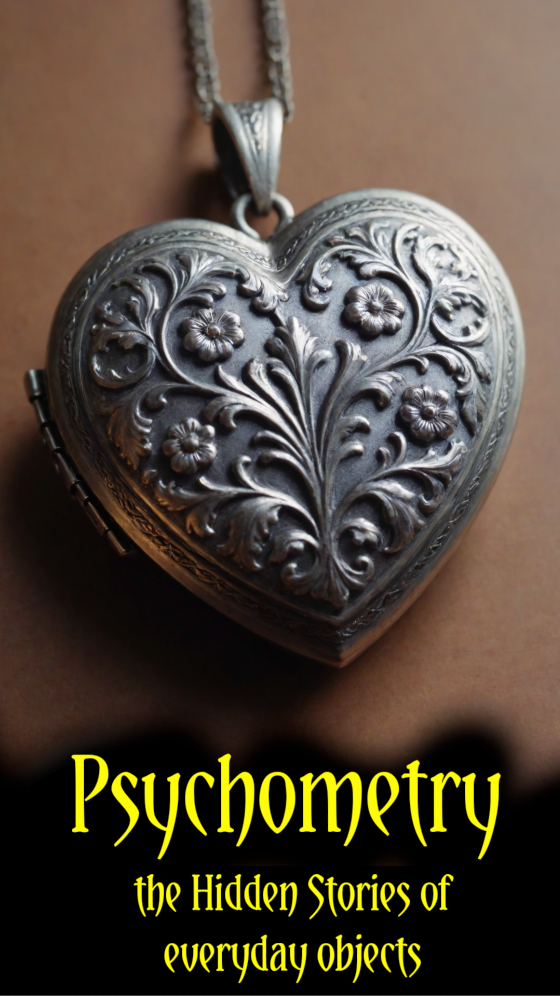
    Object: Silver heart-shaped locket, tarnished, intricate floral design.
    Initial Sensations: Cool to the touch, slight tingling in my palm.
    Impressions:
    • Image of a young woman with dark hair, standing in a sunlit garden.
    • Overwhelming feeling of longing and waiting.
    • Faint scent of roses and old paper.
    • Sudden sadness, as if missing someone dearly.
    • The word “Margaret” popped into my mind.
    Research: Inside the locket was a faded photo of a woman and a slip of paper with the name “Margaret, 1912.”
    Reflection: My impressions lined up with the physical evidence. The sense of longing and waiting could relate to someone waiting for a loved one during wartime.

    Finding the Stories Behind Antiques: Tips & Tricks

    Antiques are treasure troves of energy and stories. Here’s how to dig deeper:
    • Ask questions as you hold the item: “Who owned you? What was your happiest moment? What do you want me to know?”
    • Pay attention to recurring themes: If you sense similar emotions or images from different objects, you may be tapping into a broader historical context.
    • Research your findings: Use names, dates, or locations that come to you as clues for online or local history searches.
    • Trust your gut: Sometimes, the wildest impressions turn out to be true.

    How to Cleanse Yourself After Psychometry

    After a session, it’s crucial to release any lingering energy so you don’t carry someone else’s emotions or experiences with you. Here are my go-to cleansing rituals:

    1. Shake It Off

    Literally shake your hands and arms to release residual energy.

    2. Wash Up

    Rinse your hands under cool water, visualizing any unwanted energy washing away.

    3. Visualize Light

    Close your eyes and imagine a shower of bright, white light pouring over you, dissolving negativity and restoring your energy.

    4. Use Crystals

    Hold a piece of selenite or smoky quartz to absorb and transmute any lingering vibes.

    5. Ground Yourself

    Stand barefoot on the earth, or simply imagine roots growing from your feet into the ground, anchoring and balancing you.

    6. Meditate

    Spend a few minutes in quiet meditation, focusing on your breath and letting go of any impressions that aren’t yours.

    Frequently Asked Questions About Psychometry

    Q: Can anyone learn psychometry, or do you have to be psychic?

    Psychometry is a skill that is open to anyone who is willing to put in the time and effort to develop it. While some people may seem to have a natural ability to sense subtle energies or pick up on information from objects without much effort, this does not mean that others cannot learn. Everyone has an intuitive side, and with regular practice, patience, and a willingness to trust your own impressions, you can strengthen your sensitivity to the energetic information stored in objects. Training your mind to quiet itself, focusing your attention, and keeping a record of your experiences all contribute to building this ability over time. Even those who do not consider themselves psychic can make progress by practicing regularly and remaining open to whatever comes through during sessions.

    Q: What if I don’t feel or see anything?

    It is completely normal for beginners to experience little or no immediate sensations or images when they first attempt psychometry. Not every session will produce strong or obvious impressions, especially in the early stages of learning. Sometimes the information you receive may be very subtle, such as a faint feeling, a fleeting thought, or a gentle shift in mood. These can be easy to overlook if you are expecting dramatic results. If you find that nothing seems to happen, try working with a variety of objects, as some may carry stronger energetic imprints than others. Make sure you are relaxed, comfortable, and free from distractions before you begin. Take your time, and do not put pressure on yourself to succeed right away. The more you practice, the more attuned you will become to the subtle signals that objects can hold.

    Q: Are negative energies dangerous?

    When practicing psychometry, you may occasionally encounter objects that seem to carry heavy or unpleasant emotional energy. In most cases, what you are picking up is simply residual emotion or stress that has been absorbed by the object over time. These energies are not usually harmful, but they can leave you feeling unsettled or drained if you are sensitive. It is important to take care of yourself after each session by using cleansing techniques such as washing your hands, visualizing light, or grounding yourself. These simple actions help to release any lingering energy that does not belong to you and restore your own sense of balance. As long as you make cleansing a regular part of your practice, you can safely explore psychometry without fear of negative effects.

    Q: Can psychometry help solve mysteries or find lost objects?

    Psychometry can be a valuable tool for uncovering hidden information about the past, and many people use it to gain insight into the history of antiques, family heirlooms, or even unsolved mysteries. By tuning into the energy of an object, you may receive impressions that point to important events, people, or places connected to it. Some practitioners have even used psychometry to assist in finding lost items or understanding the circumstances surrounding a disappearance. While results can vary and are not always clear-cut, the information gained through psychometry can sometimes provide new leads or perspectives that would not be available through ordinary means. Keeping detailed records of your sessions can help you track patterns and make connections that might otherwise go unnoticed.

    Q: How often should I practice?

    The frequency of your psychometry practice depends on your personal goals and comfort level. Some people enjoy working with objects every day, while others prefer to schedule sessions a few times a week or only when they feel inspired. It is important to listen to your own needs and avoid overextending yourself. Allow time between sessions for your mind and energy to rest and for you to process any impressions you have received. Regular, consistent practice is more effective than trying to force results through long or frequent sessions. As you become more comfortable with the process, you will develop a routine that feels right for you.

    Q: What objects are best for beginners?

    If you are just starting out with psychometry, certain types of objects tend to produce clearer and more noticeable impressions. Items that have been handled frequently or have strong emotional associations are ideal. Jewelry, such as rings, necklaces, or bracelets, often carry a lot of personal energy from the wearer. Old coins, keys, photographs, and family heirlooms are also excellent choices, as they have usually passed through many hands and witnessed significant events. Choose objects that interest you or that you feel drawn to, as your curiosity and connection can enhance your sensitivity to the energy they hold.

    Q: Is psychometry real, or is it just imagination?

    From the perspective of someone who believes in psychometry, the information received during a session is considered to be genuine energetic data that has been absorbed and stored by the object. While some impressions may seem to arise from your imagination, it is often surprising how closely these impressions can match real events, people, or emotions connected to the object’s history. Over time, as you compare your notes with known facts or feedback from others, you may find that your accuracy improves and your confidence grows. The distinction between imagination and intuition can blur, but many practitioners find that the consistency and detail of their impressions support the reality of psychometry as a genuine intuitive skill.

    Conclusion: The Power of Touch—Unlocking Hidden Stories

    Psychometry is a powerful way to reach into the past and discover the unseen layers of experience attached to everyday objects. It goes far beyond a simple demonstration at social gatherings. This practice offers a direct road for individuals to connect with the memories, emotions, and events that have shaped the items they encounter. By engaging in psychometry, you are not just observing the physical features of an object; you are exploring the subtle energies and stories that have become part of its very essence.
    As you continue to develop your skills, you will find that psychometry also sharpens your intuition. The more you work with different items, the more you will trust your own senses and interpretations. You may begin to pick up on details you would have previously overlooked, such as a sudden feeling of warmth, a fleeting image, or a strong emotional response. These impressions can become clearer and more detailed with regular practice, allowing you to gain a deeper understanding of the connections between people, objects, and the environments they have passed through.
    It is important to approach each session with respect for the process and for yourself. After working with objects and tuning into their energies, always take the time to cleanse yourself. This helps you release any lingering emotions or sensations that do not belong to you, keeping your own energy balanced and clear. Keeping a detailed log of your experiences is also valuable. By writing down your impressions, you create a record that you can review and learn from, which will help you recognize patterns and refine your abilities over time.
    If you find yourself drawn to an antique or a family heirloom, take a moment before moving on. Hold the item, close your eyes, and open yourself to whatever information may come. The impressions you receive might reveal hidden details about the object’s previous owners, significant events it has witnessed, or the emotions that have surrounded it throughout its history. Sometimes, you may uncover a forgotten secret, gain insight into a personal mystery, or feel an unexpected connection to someone from another era.
    Through psychometry, you become both a receiver and a storyteller, giving voice to the silent histories embedded in the objects around you. With patience and dedication, you will not only enhance your intuitive abilities but also enrich your understanding of the world’s many unseen connections. Each session offers the possibility of discovery, making every object an opportunity for learning, healing, and personal growth.
  • Orbs: Uncovering the Mystery, Capturing Real Evidence, and Banishing Negative Energy

    Orbs: Uncovering the Mystery, Capturing Real Evidence, and Banishing Negative Energy

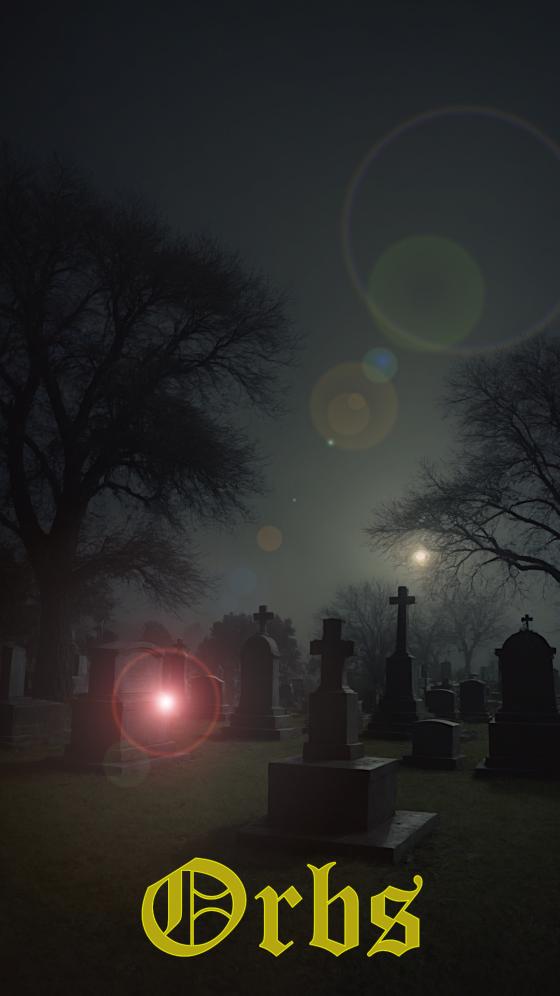
    Welcome to the ultimate guide on orbs-the glowing, mysterious spheres that have fascinated paranormal enthusiasts for decades. If you’ve ever snapped a photo and found a strange ball of light, or felt a sudden chill in a room where orbs seem to fleet at the edge of your vision, you’re not alone. Today, we’ll dive deep into what orbs are, the leading paranormal theories, how to truly capture them on camera (without mistaking dust or bugs for the real thing!), what a swarm of orbs might mean psychically, and practical ways to banish negative orb manifestations.

    Orbs: A Closer Look at a Mysterious Phenomenon

    Orbs have become a familiar presence for many people interested in the paranormal, showing up unexpectedly in digital photographs, video recordings, and, for some, even appearing directly before their eyes. These glowing spheres often spark curiosity and debate. Are they evidence of spirits, manifestations of energy, or simply the result of ordinary environmental factors like dust or moisture? For those who are open to the idea of the supernatural, orbs are far more significant than random camera artifacts. They are interpreted as meaningful signs, messages, and at times, even warnings from realms beyond our everyday perception. This comprehensive guide will explore the subject of orbs in detail, addressing common questions, offering practical advice for those wishing to document them, and uncovering the deeper meanings attributed to these mysterious lights.

    Understanding Orbs: Foundational Knowledge for the Spiritually Curious

    Orbs are most commonly described as small, round, and glowing objects that appear unexpectedly in photographs and videos. Their appearance is not limited to media; some individuals report observing them directly, particularly in places believed to have spiritual significance or during moments of heightened psychic awareness. Orbs can vary greatly in their visual characteristics. Some are nearly transparent, while others emit a vivid glow. Their colors can range from clear or white to shades of blue, green, red, gold, and even black. These colors are not seen as random by those who study orbs; each hue is thought to carry its own meaning and message.
    While skeptics may quickly attribute orbs to dust particles, water droplets, or insects reflecting light back into the camera lens, those who believe in the paranormal see them differently. Orbs are considered by many to be physical evidence of spiritual energy. They might represent the presence of ghosts, the visitation of spirit guides, or even the activity of elemental beings connected to nature.

    Common Features of Orbs:

    • Most orbs appear as perfect circles or ovals, though some may have slightly irregular shapes.
    • Their brightness can vary from barely noticeable to intensely radiant, sometimes even appearing to emit their own light source.
    • Orbs are often seen in a spectrum of colors, each believed to have a unique spiritual significance.
    • In some cases, orbs captured on video or in a series of photographs seem to move in unpredictable ways, change direction abruptly, or hover in a manner that suggests a form of intelligence or intent.

    Exploring Paranormal Explanations: Theories About the True Nature of Orbs

    1. Spirits in Motion

    One widely held belief is that orbs are the simplest and most basic form that a spirit can take when attempting to manifest in the physical world. Since spirits are thought to lack a physical body, they may appear as condensed balls of energy. This form allows them to move rapidly and make their presence known without the complexities of a full apparition. Orbs, in this view, are the visible traces of spirits traveling through our world.

    2. Presence of Guides and Angelic Beings

    Another interpretation is that some orbs are not the spirits of the deceased, but rather spirit guides or guardian angels. These benevolent entities are believed to watch over people, offering protection and guidance. When orbs appear in soothing colors such as white or gold, many interpret this as a sign that a positive spiritual force is nearby, providing reassurance or support during difficult times.

    3. Imprints of Emotional Energy

    Orbs are also thought to be the lingering energy left behind by emotionally charged events or locations. Places with a history of intense emotions-such as old battlefields, historic homes, or sites of tragedy-are often reported to have more orb activity. In these cases, orbs are seen as the visible remnants of energy that has become imprinted on the environment, occasionally taking on form as glowing spheres.

    4. Nature Spirits and Elemental Forces

    Not every orb is believed to be connected to human spirits. Some are thought to represent the presence of elemental beings; entities tied to the natural world, such as fairies, gnomes, or earth spirits. Orbs that appear outdoors, particularly in forests, near water, or at ancient sites, are sometimes interpreted as signs of these nature spirits at work. Their presence is often seen as a reminder of the hidden energies and consciousness within the natural environment.

    5. Signs of Negative or Unsettling Entities

    While many encounters with orbs are positive or neutral, there are reports of orbs that seem to carry a darker energy. Orbs that appear in black, deep red, or murky shades are often associated with negative spirits or entities. Witnesses sometimes describe a sense of discomfort, unease, or even physical symptoms like headaches or chills when these orbs are present. These experiences are taken as warnings that the energy in the area may not be entirely benevolent.

    Decoding Orb Colors: Spiritual Interpretations

    Here’s a breakdown of commonly reported orb colors and their associated spiritual meanings:

    ColorSpiritual Interpretation
    WhiteRepresents purity, spiritual protection, and peace. Often seen as benevolent spirits or guardian angels offering comfort and reassurance.
    BlueAssociated with calm, healing, and spiritual guidance. May indicate a spirit guide or calming influence, often appearing where healing is needed.
    GreenLinked to nature spirits, growth, and renewal. Signs of elemental beings or healing energy in the environment.
    RedSymbolizes strong emotions, warnings, or sometimes danger. Unresolved emotional energy or an urgent message from a spirit.
    BlackIndicators of negative energy or malevolent spirits. A warning to proceed with caution and potential harmful intentions.
    Gold/YellowRepresents wisdom, enlightenment, and the presence of guardian spirits. Signifies a wise and protective force offering guidance and support.
    PinkAssociated with love, compassion, and gentle spirits. Messages of comfort and emotional healing, especially during grief or distress.

    By paying attention to the color, movement, and context of orb appearances, believers can gain deeper insight into the messages these phenomena may be trying to convey.

    How to Capture Genuine Paranormal Orbs: Foolproof Tips

    Photographing orbs is a process that requires patience, careful preparation, and a methodical approach. While it is common for people to find orbs in their photos, most of these are actually the result of ordinary particles or environmental factors. To increase your chances of capturing orbs that may have a true paranormal origin, it’s important to follow a set of best practices that help eliminate false positives and ensure your results are as reliable as possible.

    1. Clean Your Lens and Environment Thoroughly

    Begin every session by making sure your camera lens is spotless. Use a microfiber cloth to gently remove any dust, smudges, or moisture that could distort your images. It is also important to assess your surroundings. Avoid taking photos in places where there is a lot of dust, pollen, or moisture in the air, such as during or after cleaning, in foggy weather, or in areas where insects are active. These conditions can create reflections or light refractions that mimic orbs, leading to misleading results. The cleaner your equipment and environment, the more confident you can be in the authenticity of any orbs you capture.

    2. Use Multiple Cameras and Angles for Verification

    To strengthen your evidence, set up two or more cameras at different locations or angles within the same space. This approach allows you to cross-check your results. If an orb appears in the same spot from different perspectives, it is less likely to be a result of a camera malfunction, dust, or a stray light reflection. Using different types of cameras-such as digital, infrared, or even video recorders-can also help you determine if the phenomenon is visible across various technologies, further supporting the idea that you have captured something unusual.

    3. Capture Both Video and Still Images

    Photographs can provide a snapshot of orb activity, but video recordings offer a dynamic view that can reveal much more. When using video, you can observe the movement of orbs in real time. Genuine paranormal orbs often display movement that seems purposeful, such as changing direction, stopping abruptly, or even responding to spoken questions or requests. By reviewing your footage, you can analyze how these orbs behave compared to ordinary particles, which tend to drift in predictable patterns. This added layer of documentation can make a compelling case for the authenticity of your findings.

    4. Eliminate the Possibility of Insects and Reflections

    Before you start your session, inspect the area for insects, cobwebs, or reflective surfaces like mirrors, glass, or shiny objects. Insects can appear as glowing orbs when illuminated by a camera flash, but they usually have distinguishable features such as wings or irregular shapes. Reflections from surfaces can also create bright spots that look like orbs. Genuine orbs are typically perfectly round, emit a steady glow, and do not have the erratic movement or physical features of insects. Taking a few test shots and reviewing them immediately can help you identify and correct for these issues before you proceed with your investigation.

    5. Keep a Detailed Log of Each Experience

    Every time you attempt to capture orbs, write down the time, date, location, and environmental conditions. Note any unusual sensations, such as sudden chills, tingling, or feelings of being watched. Record any strange sounds, smells, or changes in the atmosphere. These details can help you identify patterns over time and provide context for your photos or videos. If you notice that orb activity coincides with other unexplained phenomena, this can add weight to your evidence and help you build a more complete picture of what is happening in the space.

    Frequently Asked Questions About Orbs

    Are orbs always paranormal in nature?

    The majority of orbs found in photos and videos are usually caused by ordinary factors such as dust, water droplets, or technical issues with the camera. However, there are situations where orbs appear to have their own source of light, move in a way that suggests intent, or are seen without the aid of a camera. These cases are more likely to be considered paranormal by those who study this phenomenon.

    Is it possible to see orbs without using a camera?

    Yes, there are reports from individuals who have witnessed orbs with their unaided eyes. These sightings often occur during meditation, in locations known for spiritual activity, or when a person is in a heightened state of awareness. The experience can be brief or last several minutes, and is sometimes accompanied by changes in temperature or a sense of presence.

    Do orbs communicate messages to people?

    Many people who encounter orbs believe that these phenomena are a form of communication from the spirit world. The color, brightness, and behavior of an orb are thought to provide clues about its intention or message. For example, a white orb may be interpreted as a sign of peace or protection, while a red or dark orb could be seen as a warning or indication of unresolved energy.

    Why are orbs more common in certain locations?

    Some places are known for frequent orb activity. These locations often have a history of strong emotions, significant events, or spiritual importance. Areas with natural energy sources, such as those near bodies of water, geological faults, or ancient sites, are also believed to attract more orbs. The presence of orbs in these places is thought to be connected to the lingering energy or spiritual activity associated with them.

    Are orbs ever dangerous?

    Most orbs are considered harmless or even protective, especially those that appear in light or soothing colors. However, if you encounter orbs that are dark, murky, or accompanied by feelings of discomfort, anxiety, or fear, it is advisable to take steps to cleanse the space. This can include using spiritual practices, protective rituals, or simply removing yourself from the area until you feel safe again.
    By following these guidelines and understanding the nature of orbs, you can approach your investigations with confidence and discernment, increasing the likelihood of capturing genuine paranormal evidence and deepening your connection to the mysteries of the unseen world.

    What Does It Mean When There Are Many Orbs in One Place?

    When you encounter a location where orbs are not only present but appear in large numbers, especially with a variety of colors and intensities, this often points to a heightened level of spiritual or energetic activity. Such concentrations of orbs are most frequently reported in places that have a rich or turbulent past, such as historic residences, sites of former conflict, ancient ceremonial grounds, or areas known for their spiritual or mystical significance. These locations may have accumulated layers of emotional and spiritual energy over time, making them more likely to attract or manifest orb phenomena.
    A gathering of orbs in one area can be interpreted in several ways by those attuned to psychic or spiritual insights. One common interpretation is that these orbs represent the presence of multiple spirits or entities, perhaps congregating for a specific purpose or event. This could be a form of spiritual gathering, where energies from different sources come together, either to communicate, observe, or participate in activities occurring in the physical world.
    Another possibility is that the presence of many orbs signals the existence of a portal or energetic opening. Such portals are believed to act as gateways between different dimensions or realms, allowing spirits or energies to move more freely between worlds. These energetic openings are sometimes thought to be temporary, appearing during times of heightened spiritual activity, or they may be permanent features of certain locations, especially those with a long history of ritual use or emotional significance.
    In some cases, a high concentration of orbs may be interpreted as a message that the location itself holds special importance. This could mean the site is a place where unresolved energies linger, where spirits are seeking attention or resolution, or where the veil between the physical and spiritual realms is especially thin. The orbs may be attempting to draw attention to the site, urging those present to recognize its significance, address unresolved issues, or simply acknowledge the presence of the unseen.
    It is also possible that a multitude of orbs serves as a warning. Locations with a history of trauma, unrest, or negative events may attract orbs that reflect the unsettled energy of the area. In these situations, the orbs may appear darker or more chaotic, and those present might feel discomfort, anxiety, or a sense of being watched. If you ever find yourself in such a place and begin to feel overwhelmed or uneasy, it’s important to listen to your instincts. Not all spiritual presences are positive, and it is entirely appropriate to establish boundaries and take steps to protect yourself.

    Banish Negative Orbs: Proven Techniques That Work

    If you find that a space is filled with orbs that cause discomfort or seem to carry negative energy, there are several effective methods you can use to cleanse and protect your environment. These techniques are used by many who work with spiritual energies to restore balance and peace.

    1. Cleansing With Smoke or Sound

    One of the most widely practiced methods involves the use of sacred smoke, such as burning sage, palo santo, or incense. Move through each area of your space, allowing the smoke to drift into corners, closets, and other hidden spots. The intention is to clear away stagnant or negative energy, creating a more harmonious environment. Sound can also be used for cleansing. Ringing bells, playing singing bowls, or even clapping your hands can break up heavy energy and encourage it to move on.

    2. Black Candle Banishing

    Lighting a black candle is another method for absorbing and neutralizing negative energy. Place the candle in the area where the orbs are most active, and as it burns, focus on the intention of drawing out and dissolving any negativity. Visualize the dark orbs being transformed into light or simply fading away, leaving the space clear and peaceful.

    3. Salt and Water Barriers

    Salt has long been regarded as a powerful purifier and protector. Sprinkle a line of salt across thresholds, along windowsills, or in the corners of rooms to create a barrier against unwanted energies. Bowls of salt water can also be placed in strategic locations to absorb negativity. After a period of time, dispose of the salt water outside the home to remove the absorbed energy from your environment.

    4. Visualization and Affirmation

    The power of the mind and focused intention should not be underestimated. Take a few moments to center yourself, then imagine a sphere of pure white light expanding from your heart or from the center of the room, gradually filling and surrounding the entire space. As you do this, repeat affirmations such as, “Only positive energy may remain here,” or create your own phrase that resonates with your intentions. This practice can help reinforce a sense of safety and positivity.

    5. Rituals and Prayers

    Depending on your spiritual background, you may wish to perform specific rituals or prayers designed to cleanse and protect. This could include established ceremonies like the Lesser Banishing Ritual of the Pentagram, or simply reciting prayers for peace and protection. The key is to act with clear intent and confidence, trusting in your ability to influence the energy of your surroundings.

    6. Physical Cleansing

    Sometimes, the most effective way to shift the energy in a space is through physical action. Clean and declutter the area, removing items that feel heavy or carry unpleasant memories. Open windows to allow fresh air to circulate. These simple actions can help reset the energy and reduce the presence of unwanted orbs.

    Advanced Orb Recording: Next-Level Tips for Paranormal Investigators

    For those who are serious about documenting orb activity and want to go beyond basic photography, there are several advanced techniques that can yield more compelling evidence:
    • Use infrared cameras, which can detect orbs that are invisible to the naked eye by capturing light outside the visible spectrum.
    • Employ night vision or full-spectrum cameras to reveal details and movements that standard equipment might miss.
    • Set up motion detectors that trigger cameras automatically when movement is detected, increasing your chances of capturing spontaneous orb activity.
    • Work with a team whenever possible. Multiple witnesses and devices add credibility to your findings and help rule out technical glitches.
    • Maintain a detailed log for every investigation, recording environmental conditions, equipment settings, and any unusual observations. Over time, this documentation can reveal patterns and help you refine your methods.

    Conclusion: Embrace the Mystery, Stay Empowered

    Orbs continue to intrigue and mystify those who encounter them, sparking questions about the nature of reality and the boundaries between the seen and unseen. Whether you interpret them as spirits, energy forms, or messengers from another realm, their presence shows us that our world has many secrets waiting to be explored. By learning how to distinguish genuine orbs from ordinary phenomena, understanding their possible meanings, and using proven methods to maintain a positive environment, you can approach the subject with both curiosity and confidence.
    Always pay attention to your own feelings and reactions when dealing with orb phenomena. Document your experiences thoroughly, and remember that it is entirely appropriate to set boundaries with the unseen just as you would with the living. The realm of spirit is vast and full of surprises, and orbs are just one of the many mysteries you may encounter as you continue your exploration.

  • The Hidden Secrets in Aleister Crowley’s “The Book of Lies”: Mystical Codes, Magical Paradoxes & Hidden Truths

    The Hidden Secrets in Aleister Crowley’s “The Book of Lies”: Mystical Codes, Magical Paradoxes & Hidden Truths

    Let’s be honest. When you first hear the name Aleister Crowley, images of controversy and sensationalism probably pop into your head. And yes, there’s a history there. But beneath the surface lies something far more profound: a brilliant mind grappling with fundamental questions about reality, perception, and our place within the cosmos. And at the heart of that exploration sits The Book of Lies. It’s not just another occult text; it’s a philosophical puzzle box, a magical instruction manual disguised as poetry, and frankly, one of the most fascinating books I’ve ever encountered. It’s about understanding how to see differently, to dismantle limiting perceptions, and ultimately, to shape your own reality. If you’re ready to challenge everything you think you know, then let’s dive in.

    Introduction

    Picture holding a book that doesn’t just offer information but actively invites you to rethink everything you’ve ever assumed about the world, the words you use, and even your own sense of purpose. This is the experience offered by The Book of Lies by Aleister Crowley. First published in 1913, this compact yet dense work contains 91 brief chapters. Each chapter, referred to as a “lie,” is crafted as a riddle, a cryptic message, or a ritualistic formula, sometimes playful and sometimes deeply enigmatic. The book’s structure is deliberately puzzling, with each section presenting a new conundrum or insight, often leaving the reader with more questions than answers.

    At first glance, the title might suggest that the contents are misleading or deceptive. However, the so-called “lies” within these pages are intended to conceal deeper meanings. Crowley uses layers of symbolism, numerological references, and clever wordplay to encode significant ideas. Rather than straightforward instruction, he presents wisdom through hidden messages, requiring careful thought and intuition to uncover. Crowley, recognized both for his expertise in ceremonial magic and his philosophical depth, constructed this book as a guide for those seeking deeper understanding. It’s filled with hints about how reality operates, how personal will can be harnessed, and how magical practice can transform perception and experience.

    This book continues to fascinate and intrigue readers, including those deeply involved in magical traditions and those simply curious about esoteric philosophy. Its reputation endures because it doesn’t offer easy answers. Instead, it draws the reader into a process of discovery, encouraging them to look beyond the surface and engage with the mysteries that lie beneath. As we delve further into this inscrutable work, we’ll examine some of its most notable chapters and consider the reasons it remains a source of fascination and inspiration more than a century after it was written.

    What Is “The Book of Lies”?

    • This book consists of 91 distinct chapters, each one concise yet densely packed with meaning. The content of these chapters weaves together elements of poetry, philosophical inquiry, and teachings drawn from occult traditions. Each piece stands alone as a unique puzzle, yet together they form a complex whole.
    • The style throughout is intentionally elusive and playful. Crowley doesn’t spell things out directly; instead, he employs riddles, ambiguous statements, and unexpected humor. Readers are encouraged to look past the literal meanings of the words and search for the hidden messages that lie beneath. The book is written in such a way that it rewards those who are willing to read carefully and reflect deeply.
    • The structure and content are designed to serve a dual purpose. For those who are prepared and receptive, the book reveals powerful magical insights and practical secrets. For those who approach it superficially or without the necessary background, it can seem confusing or even nonsensical. This selective approach ensures that the book’s most significant teachings remain accessible only to those who are ready to receive them, preserving its mysteries for the truly dedicated.

    Why Is It Full of Magical Secrets?

    • Crowley uses symbolism, numerology (gematria), and paradoxes to encode teachings about magic, the universe, and the self.
    • Many chapters double as instructions for magical rituals or as keys to deeper mysteries.
    • The structure itself is a magical act: the book’s 91 chapters correspond to significant mystical numbers.

    Notable Chapters: 36, 44, and 69

    Some sections of The Book of Lies have earned special recognition due to their unique content and the impact they have had on students of Crowley’s work. These chapters stand out not only for their subject matter but also for the way they encapsulate Crowley’s approach to magic, symbolism, and philosophical inquiry.

    Chapter 36: The Star Sapphire

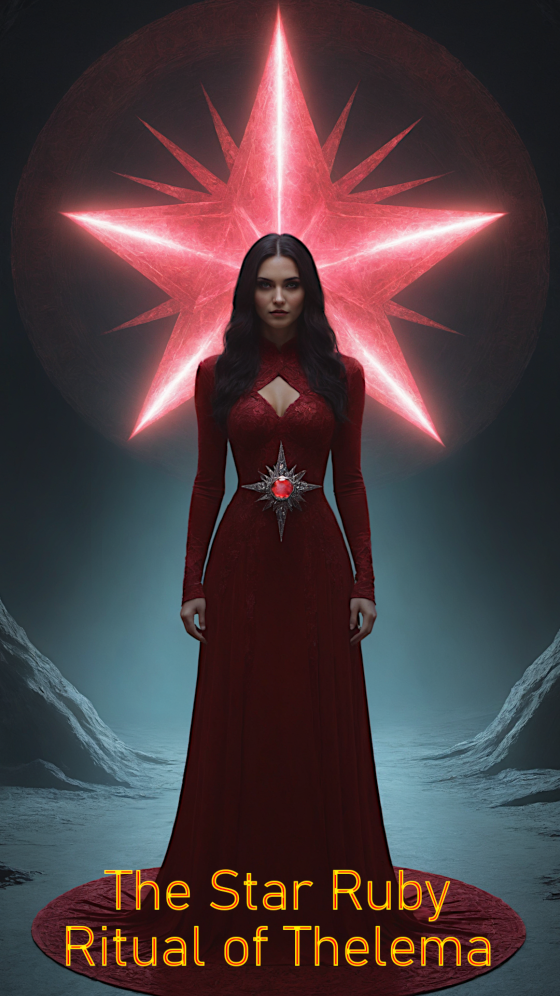
    This chapter presents a ritual that serves as a companion to Crowley’s well-known “Star Ruby” ceremony. The material here is rich with encoded instructions, intended for those who are familiar with ritual magic and its symbolic language. The ritual itself is constructed with a series of precise movements, specific words, and deliberate visualizations that draw upon sacred geometry. The practitioner is guided to perform gestures that correspond to cosmic principles, invoking spiritual forces through a carefully structured sequence. Each movement and utterance is designed to align the individual with higher energies, making the ritual both a spiritual exercise and a practical magical operation. The chapter is written in a poetic style, but beneath the surface, it provides a detailed blueprint for those who can interpret its coded language. The Star Sapphire ritual is valued for its effectiveness in focusing the mind, purifying the practitioner’s intent, and establishing a direct link to deeper spiritual realities.

    Chapter 44: The Mass of the Phoenix

    In this section, Crowley introduces a ritual that centers on the theme of transformation. The phoenix, a mythical bird that is consumed by fire and then reborn from its own ashes, serves as the central symbol. The ritual described in this chapter is both a meditation and a practical exercise, guiding the participant through a symbolic process of destruction and renewal. The actions and words prescribed in the ritual are intended to help the practitioner shed old patterns, beliefs, or limitations, and to emerge renewed, with a clearer sense of purpose and vitality. The Mass of the Phoenix is often performed as a way to mark significant transitions or to reaffirm one’s dedication to spiritual growth. It combines dramatic imagery with personal reflection, making it a powerful tool for those seeking to experience a sense of rebirth or to reinforce their commitment to their chosen path.

    Chapter 69: The Way to Succeed-and the Way to Suck Eggs!

    As the chapter number might imply, this chapter is notable for its playful and irreverent tone. Crowley employs humor, wordplay, and a liberal dose of innuendo to explore the topic of sexual alchemy. The text is filled with double meanings and puns, inviting the reader to look past the surface jokes and consider the deeper implications. Sexual energy, in Crowley’s system, is a potent force for magical transformation, and this chapter hints at methods for harnessing that energy. The playful language serves to disarm the reader, making the underlying message more accessible while also reminding them that spiritual insight is not always accompanied by seriousness. The chapter suggests that real understanding often involves a sense of humor and an ability to appreciate the absurd, even when dealing with profound subjects.

    Truth, Illusion, and the Limits of Language

    A central theme running through The Book of Lies is the idea that language is inherently limited in its ability to express the full scope of reality. Crowley deliberately constructs his writing to be ambiguous, paradoxical, and at times seemingly nonsensical. This approach is not accidental; it is meant to encourage the reader to move beyond the literal interpretation of words and to seek the underlying meaning that cannot be directly stated.
    Crowley’s method involves presenting statements that appear contradictory or absurd on the surface, but which, upon deeper reflection, reveal hidden layers of significance. He suggests that what might initially seem meaningless or confusing can actually point to profound truths that are accessible only through intuition or direct experience. By breaking down conventional ways of thinking and exposing the limitations of language, Crowley opens the possibility for the reader to encounter reality in a more immediate and unfiltered way. This process is intended to disrupt habitual patterns of thought, making room for new insights and a more direct engagement with the mysteries of existence. Through this playful yet rigorous approach, Crowley invites readers to question their assumptions, embrace ambiguity, and discover the richness that lies beyond the surface of words.

    Numerology, Paradoxes, and “Corny” Statements

    Crowley was obsessed with numbers. He used gematria to encode hidden meanings—every chapter number, every word, is a clue. For example:
    • 44 is the number of blood and sacrifice, fitting for the Mass of the Phoenix.
    • 69 is a visual pun and a reference to the union of opposites, a core theme in magical philosophy.
    The book is full of paradoxes and “corny” statements—lines that seem silly or absurd at first. But these are koans, designed to jolt you out of ordinary thinking and into a state of magical awareness.

    The Discovery of the True Will

    Central to Crowley’s philosophy is the concept of the True Will—the unique, divine purpose of every individual. The Book of Lies is a guide for discovering and aligning with your True Will.
    • The book’s riddles and rituals are tools for stripping away illusion and uncovering your deepest desires.
    • Crowley teaches that when you act in harmony with your True Will, you become a magician-capable of shaping your reality.

    Why This Book Is a Hidden Masterpiece

    • It’s a manual of magic disguised as a book of jokes and riddles.
    • It’s a work of philosophy that uses poetry, puns, and paradox to reveal the secrets of existence.
    • It’s a living text-every time you read it, you find new meanings, new clues, new doors to open.

    Frequently Asked Questions

    Q: Is “The Book of Lies” really about lying?

    A: Not exactly. The “lies” are masks for deeper truths. Crowley uses deception to teach you how to see beyond appearances.

    Q: Do I need to be an occultist to understand it?

    A: No, but a background in magic, mysticism, or philosophy helps. The book rewards repeated reading and open-mindedness.

    Q: What’s the deal with all the numbers?

    A: Crowley uses numerology (gematria) to encode hidden meanings. Every number is a clue—sometimes the chapter number itself is the message.

    Q: Is this book dangerous or just weird?

    A: It’s only “dangerous” if you’re afraid of changing your mind. The book is weird, but that’s the point—it’s meant to shake up your assumptions.

    Q: How do I start working with this book?

    A: Read a chapter a day, meditate on its meaning, and look for patterns. Try the rituals if you feel called. Let the book work its magic on you.

    Conclusion: The Book of Lies-A Hidden Treasure for the Bold

    The Book of Lies stands apart from ordinary literature. It is not simply a collection of writings to be read for entertainment or even just for information. Instead, it serves as a rite of passage for those who are serious about personal transformation, spiritual growth, and the pursuit of deeper understanding. Crowley has constructed this work as a series of tests and invitations, each section prompting the reader to go further than the obvious and to question the very foundations of thought, belief, and perception.

    Throughout its pages, the book consistently pushes the reader to move beyond the boundaries of ordinary language. The writing style is intentionally elusive, filled with riddles, jokes, and statements that appear contradictory or nonsensical at first glance. Each of these elements is carefully placed to provoke thought and encourage a shift in perspective. The humor and apparent absurdity are not there simply for amusement; they are tools designed to loosen the grip of rigid thinking and open up new avenues for insight and realization.

    Central to the book’s purpose is the idea of discovering what Crowley calls the True Will. This is not just about following personal desires, but about uncovering a deeper sense of purpose that is unique to each individual. The book’s structure and content are intended to strip away illusions and distractions, guiding the reader toward a clearer understanding of their own path. The process is not always comfortable, as it demands honesty, self-reflection, and a willingness to let go of old assumptions. However, for those who persist, the rewards can be profound.

    The Book of Lies also serves as a practical guide for those interested in the practice of magic. Many of its chapters contain rituals, symbolic instructions, and coded messages that can be used to effect real change in consciousness and experience. These are not presented as straightforward recipes, but as puzzles to be solved and mysteries to be explored. The book assumes that the reader will bring curiosity, intelligence, and a sense of humor to the task.

    For anyone who feels drawn to explore the hidden dimensions of existence, to question the nature of reality, and to seek out the secrets that lie beneath the surface, this book offers a unique and rewarding path. It does not promise easy answers or instant enlightenment. Instead, it offers a series of doors, each one requiring effort and insight to open. The wisdom contained within is not always obvious, but it is accessible to those who are willing to look beyond appearances and engage with the material on a deeper level.

    The Book of Lies is a resource for the adventurous and the curious, for those who are not satisfied with superficial explanations and who are willing to put in the work to discover the truth for themselves. Its teachings are hidden in plain sight, waiting for readers who have the courage to seek them out and the intelligence to appreciate the humor and complexity woven throughout. This is a book for those who are ready to embark on a journey of self-discovery, transformation, and magical exploration.

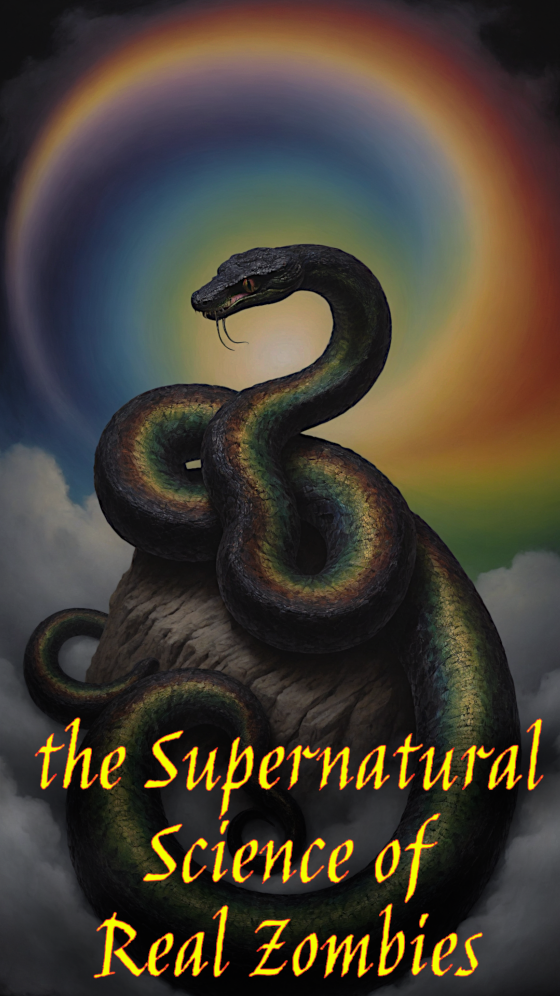
  • Haiti’s Living Dead: The Loa, Lethal Poisons, and the Supernatural Science of Real Zombies

    Haiti’s Living Dead: The Loa, Lethal Poisons, and the Supernatural Science of Real Zombies

    Imagine a world where the dead don’t stay buried; where spirits dictate who lives, who dies, and who exists in between. This isn’t fantasy; it’s the reality of Haitian zombification, a process where neurotoxins, Voodoo rituals, and the unseen hand of the Loa collide. Anthropologist Wade Davis didn’t just study zombies-he stepped into a realm where chemistry and the supernatural intertwine, revealing how pufferfish poisons, divine intervention, and cultural terror create the living dead. Prepare to unravel a mystery where science bows to forces older than logic itself.
     

    The Secret Formula: Where Toxins Meet the Divine

    At the core of zombification lies a poison so meticulously calibrated, it straddles the line between science and the supernatural. The zombie powder isn’t a haphazard mix of deadly ingredients-it’s a sacred recipe, passed through generations not by trial and error, but through direct communion with forces beyond human understanding. Pufferfish toxin, extracted from organs where tetrodotoxin lurks in lethal concentrations, acts as the anchor. Combined with datura, a plant that scorches memories and warps perception, the mixture doesn’t just paralyze-it fractures the mind. Crushed human bones, ground into powder from exhumed graves, add a macabre symbolism, binding the victim to the realm of the dead even as their body lingers among the living.
    Voodoo priests don’t stumble upon these formulas. They’re conduits, receiving instructions in states beyond waking logic: during feverish dreams where the Loa speak in riddles, or in trances induced by drumbeats that sync with the pulse of the unseen world. The Loa don’t merely suggest-they dictate. Too much pufferfish toxin, and the victim’s lungs freeze permanently. Too little, and they awaken too soon, shattering the illusion of death. But under the Loa’s guidance, the poison becomes a scalpel, severing the soul’s tether just enough to simulate death without crossing into irreversible oblivion.
     

    The Loa’s Role: Spirits Who Demand Zombies

    Zombification isn’t arbitrary punishment. It’s a spiritual mechanism, a way for the Loa to enforce balance in a world they oversee. These spirits, existing in a liminal space between creation and decay, don’t act on whims-they respond to breaches in the social and cosmic order.

    Lwa (Loa) are spirits in Haitian Vodou that act as intermediaries between humans and Bondye (the supreme creator). They are not deities but serve as divine messengers, protectors, and guides, governing aspects of life, nature, and human affairs. Worship involves rituals, offerings, and possession ceremonies to seek their guidance or blessings.

    A man who steals from his village, a woman who betrays communal trust, or anyone who threatens the fragile equilibrium becomes a target. The Loa mark them, whispering their names to priests during ceremonies where the air hums with otherworldly energy.
    When a victim is poisoned, the process isn’t merely physical. The Loa’s influence permeates every step. They ensure the toxin’s dosage paralyzes without killing, that the burial occurs in soil charged with spiritual resonance, and that the priest exhumes the body at the exact moment the soul hovers between realms. The “corpse” retrieved isn’t just a reanimated body-it’s a vessel housing a fractured psyche. The Loa strip away autonomy, leaving behind a hollow shell that obeys without question. This isn’t mind control. It’s a forced alliance with the spirits, where the victim’s will is supplanted by the Loa’s directives.
    The living dead serve as warnings, yes, but also as instruments. They labor in fields or hidden compounds, their existence a constant reminder of the Loa’s reach. To see a zombie isn’t just to fear death—it’s to confront the certainty that the spirits govern life’s boundaries, and that their justice operates beyond mortal laws. The Loa don’t punish individuals; they sculpt the community’s soul, using zombies as both deterrent and proof of their omnipresence. In this system, zombification isn’t cruelty-it’s supposed justice, a dark sacrament maintaining order in a world where the seen and unseen are inextricably linked.
     

    Clairvius Narcisse: A Zombie’s Testimony

    Clairvius Narcisse’s story begins in 1962, when doctors pronounced him dead after a sudden illness marked by fever, labored breathing, and a heartbeat so faint it vanished from detection. His family buried him in a shallow grave, unaware he remained conscious beneath the soil. For hours, he lay paralyzed but aware, unable to scream as dirt pressed against his coffin. Then came the voodoo priests or their aides, working under the Loa’s direction-digging him up not as a rescue, but as a calculated act of spiritual engineering.
    What followed was a two-year nightmare. Narcisse wasn’t revived to freedom. He was dragged to remote plantations, his mind clouded by daily doses of a paste made from datura and other psychoactive plants. The substance erased his past identity, replacing memories with confusion and obedience. He worked under threat of beatings, but the true coercion came from within: the lingering effects of the zombie powder’s toxins left him physically weakened, while the Loa’s influence-channeled through the priests-convinced him resistance was futile.
    His eventual escape wasn’t a triumph. It was a fluke, a momentary lapse in his captors’ vigilance that let him flee into the Haitian countryside. Even then, he wandered for years, a ghost in his own life, before daring to return to his village. When he did, his sister recognized him not by his face-which had hardened from trauma—but by a scar from childhood.
    Narcisse’s account reveals the mechanics of zombification beyond toxins. The Loa didn’t merely poison him; they curated his suffering. The paralysis ensured he’d experience burial fully conscious, a psychological breaking point. The datura didn’t just erase his identity-it made him receptive to the priests’ commands, which he later described as sounding “like echoes of the spirits.” His forced labor wasn’t random; it served the Loa’s demand for balance, transforming him into a living lesson about the consequences of disrupting communal harmony.
    Most chillingly, Narcisse’s resurrection wasn’t an isolated event. His case offers a blueprint: the Loa mark their targets, priests execute the rituals with precision, and the victim becomes a vessel. His testimony shows that zombification isn’t about death-it’s about erasure. The Loa don’t kill; they rewrite, leaving behind a hollowed-out version of the person, a warning etched in flesh and bone.
     

    The Poison’s Dark Alchemy

    The zombie powder’s ingredients read like a grimoire:
    • Pufferfish: Its tetrodotoxin induces deathlike paralysis, but only the Loa ensure survivors wake.
    • Datura: This hallucinogen doesn’t just erase memory-it opens the mind to spirit manipulation.
    • Human Bones: Stolen from graves, they symbolize the Loa’s dominion over life and death.
    Without the spirits’ guidance, the powder is merely lethal. With their blessing, the poison becomes a bridge between worlds.
     

    Wade Davis’s Revelation: Science Meets the Supernatural

    Davis didn’t merely study toxins in a lab-he immersed himself in a world where chemistry and the unseen operate in tandem. His work peeled back layers of secrecy, revealing zombification as a process where human hands follow divine instructions.

    Wade Davis is a Canadian anthropologist and ethnobotanist best known for investigating Haitian zombification and his book, ** The Serpent and the Rainbow**. His research revealed how specific neurotoxins, including pufferfish-derived tetrodotoxin and hallucinogenic plants like datura, were used in rituals to induce deathlike paralysis. Davis documented how Voodoo priests administered these poisons alongside psychological manipulation to create “zombies”-individuals revived in a trance-like state, stripped of autonomy. His work bridged cultural practices and biochemistry, demonstrating how belief systems can physically alter human biology.

     
    He discovered that voodoo priests aren’t independent actors; they’re intermediaries, translating the Loa’s will into physical actions. When a victim collapses from the poison, it’s not just biochemistry at play-it’s the culmination of a ritual where every step, from ingredient ratios to burial depth, reflects the spirits’ demands.
    Davis uncovered how the Loa’s influence permeates even the smallest details. The timing of poison application, the chants muttered over the powder, the alignment of the grave with specific spiritual markers-these aren’t superstitions. They’re non-negotiable requirements, ensuring the victim’s soul remains accessible to the spirits during their near-death state. The precision defies coincidence: doses calibrated to paralyze without killing, antidotes administered at exact intervals, and victims revived only after their minds have been fractured by datura’s hallucinations.
    This collaboration isn’t metaphorical. Davis observed priests entering trances to receive guidance, their hands moving as if guided by invisible forces while mixing toxins. The resulting powder isn’t just a chemical weapon-it’s a spiritual contract, binding the victim to the Loa’s judgment. When a zombie awakens, their blank stare and robotic movements aren’t solely drug-induced. They’re symptoms of a psyche reshaped by forces that exist outside conventional frameworks of biology or psychology.
    Davis’s breakthrough wasn’t just identifying tetrodotoxin or datura-it was proving that zombification requires more than poison. Without the Loa’s orchestration, the rituals fail. Victims die outright or resist mental reprogramming. The eerie success rate of these practices points to a synergy between the material and the metaphysical, where faith and chemistry amplify each other. In Haiti, science doesn’t negate the supernatural-it coexists with it, creating phenomena that laboratories alone can’t replicate.
    What Davis documented isn’t a relic of the past. It’s a living system where spirits influence outcomes in measurable ways. The zombies themselves are proof: their existence hinges on a pact between human practitioners and entities that operate beyond the physical, enforcing rules that science can dissect but never fully explain.
     

    Could This Happen Elsewhere?

    Tetrodotoxin exists globally, but zombification requires the Loa’s blessing. Without Haiti’s spiritual framework-the rituals, the societal fear, the priests who commune with spirits—the poison is just a toxin. The Loa don’t share their secrets lightly.
     

    The Takeaway: When Spirits Script Reality

    Zombies force us to confront a chilling truth: some forces refuse to be dissected. The Loa don’t need our belief to work. They operate in the half-lit spaces where science ends and the inexplicable begins. Davis’s research didn’t demystify zombification—it proved that reality’s strangest corners are still ruled by the unseen.

    Conclusion

    Zombies aren’t just biological anomalies; they’re proof of something older and darker, a secret the Loa guard closely. How else could Voodoo priests have uncovered a formula so precise, so lethal, that it defies even modern science? The answer lies beyond chemistry. The Loa, spirits woven into Haiti’s soul, don’t just influence rituals-they dictate them. These entities, neither fully benevolent nor wholly malicious, operate in the spaces between life and death, guiding hands that mix pufferfish toxins with crushed bones, or dose victims with datura at the exact moment to shatter their minds.
    The process isn’t trial and error. It’s revelation. Priests don’t stumble upon these recipes; they’re bestowed in dreams, trances, or midnight ceremonies where the veil between worlds thins. The Loa don’t merely permit zombification—they demand it, using the living dead as pawns to enforce cosmic balance. A thief, a murderer, or someone who disrupts the community’s harmony might vanish, only to return hollow-eyed and compliant. This isn’t punishment. It’s correction, orchestrated by forces that see deeper into human frailty than any court or law.
    Science explains the toxins, but not the precision. Tetrodotoxin alone can’t account for victims who wake exactly when intended, or the uncanny timing of datura’s hallucinations erasing their past selves. The Loa’s influence lingers here, ensuring the poison’s alchemy aligns with their will. When a priest exhumes a “corpse,” it’s not just a body they’re retrieving; it’s a soul halfway between realms, tethered by spirits who decide who lives, dies, or exists in between.
    Zombification isn’t a metaphor. It’s a collaboration between the seen and unseen, where biology becomes a tool for beings who’ve mastered both flesh and spirit. The living dead walk because the Loa allow it, because they’ve whispered recipes into the right ears, and because Haiti’s soil remembers older, starker truths. Reality isn’t just stranger than fiction here; it’s a conversation with powers that refuse to be ignored.
    So, when Wade Davis documented zombification, he wasn’t just studying toxins. He was glimpsing a world where spirits script the rules, where the dead don’t stay buried, and where the line between healer and witch-doctor blurs. The Loa don’t care if we believe in them. Their work continues, in the half-lit spaces where science ends and the impossible begins.

  • Shadow People: Folklore, Paranormal Theories & How to Banish Them

    Shadow People: Folklore, Paranormal Theories & How to Banish Them

    Welcome to the mysterious world of shadow people—a realm where folklore, paranormal theories, and chilling personal encounters collide. If you’ve ever caught a fleeting, dark figure at the edge of your vision and wondered what it was, you’re not alone. Shadow people have haunted humanity’s collective imagination for centuries, and today, their legend is more alive than ever. In this deep dive, we’ll unravel their origins, explore the most popular theories (from ghosts to interdimensional beings and time travelers), and give you actionable tips to reclaim your space if you ever feel their presence.
     

    Introduction

    Have you ever felt a cold shiver run down your spine, only to turn and see nothing but a shadow darting away? Shadow people are one of the most compelling and unnerving mysteries in the paranormal world. Their stories span cultures and centuries, yet they remain elusive—always just out of reach, lurking in the periphery. Some say they’re omens, others believe they’re harmless observers, while a few insist they feed on our fears. Are they ghosts, demons, djinn, or something else entirely? Let’s shine a light on these shadowy figures and uncover the truths that lie in the darkness.
     

    What Are Shadow People? The Basics

    • Shadow people are dark, humanoid silhouettes that appear at the edge of vision, often vanishing when looked at directly.
    • They’re typically described as darker than night, lacking clear features, and moving with unnatural speed.
    • Encounters often happen in dimly lit rooms, at night, or during moments of vulnerability like sleep paralysis.
    • Some witnesses report feeling watched, chilled, or even paralyzed with fear during encounters.

    Common Traits

    • Fleeting and elusive—rarely seen head-on
    • No discernible facial features
    • Sometimes wear hats or cloaks (the infamous “Hat Man”)
    • Often associated with a heavy, oppressive atmosphere
     

    Shadow People in Folklore: Ancient Roots, Modern Fears

    Shadow people aren’t a recent invention. Their roots stretch deep into global folklore:


    • Choctaw Legend: The Nalusa Chito, a soul-eating shadow, preys on those with evil thoughts or deep sadness. The Choctaw also believe in an “outside shadow” that can wander separate from the body, sometimes frightening the living after death.
    • Islamic Tradition: Djinn, supernatural beings invisible to humans, occasionally manifest as shadows. They can be good, evil, or neutral—mirroring the mixed reports of shadow people encounters.

    • Modern Pop Culture: In recent years, shadow people have become a familiar topic in both paranormal circles and mainstream media. This surge in attention can be traced back to a popular radio show in the early 2000s that asked listeners to describe their encounters with these mysterious figures. The response was overwhelming. People from all walks of life began sending in their stories, sketches, and even chilling audio recordings.

    Some listeners described waking up in the middle of the night, unable to move, and seeing a tall, dark figure standing at the foot of their bed. Others recounted glimpsing a shadowy silhouette darting across a hallway or lingering in a doorway, only for it to vanish when they tried to focus on it. There were accounts of people feeling an intense sense of dread, as if something was watching them from the corner of the room. In a few cases, individuals reported seeing the same type of figure—often described as wearing a hat or cloak—on multiple occasions, sometimes even in different locations or homes.
    One particularly memorable story involved a woman who would regularly see a shadowy figure standing by her bedroom window just before dawn. She never saw its face, but she felt a cold, heavy presence whenever it appeared. Another person shared an experience of seeing several shadowy forms moving together along a wall, almost as if they were silently communicating with each other. Some stories were less frightening, with people describing a sense of curiosity or even calm when the shadow person appeared, suggesting that not all encounters were negative.

    As these stories spread online, forums and social media groups dedicated to shadow people began to form. Artists started illustrating the figures described in these accounts, leading to a flood of eerie drawings and digital art that captured the unsettling nature of these encounters. Television shows and movies soon picked up on the trend, featuring shadow people as mysterious, often menacing, presences in their storylines. Books on the paranormal began including entire chapters on shadow people, and podcasts devoted episodes to analyzing listener experiences.

    This widespread sharing of personal stories and creative interpretations has made shadow people a well-known phenomenon. The sheer number and variety of reports reveal a deep, shared curiosity about what might exist just beyond the limits of ordinary sight. These stories tap into a fundamental human fear of the unknown, as well as a fascination with the possibility that unseen entities might be sharing our world. The ongoing discussion and artistic expression surrounding shadow people show how this phenomenon continues to capture the imagination and stir emotions, making it a lasting part of modern culture.
     

    Paranormal Theories: What Are Shadow People Really?

    Let’s break down the leading theories believers discuss:

    1. Ghosts Trapped Between Dimensions
      • Some say shadow people are spirits of the dead, stuck in limbo and unable to fully manifest.
      • Unlike traditional ghosts, they lack detail and appear as pure darkness, suggesting a form of spiritual “static” or incomplete manifestation.
      • This theory explains why they’re often seen in places with a history of trauma or loss.
    2. Interdimensional Beings
      • Another popular belief is that shadow people are visitors from parallel universes.
      • They might slip into our reality accidentally, appearing as shadows because their true forms can’t fully exist here.
      • This would explain their fleeting, out-of-place behavior and why they vanish so quickly.
    3. Time Travelers
      • Some speculate that shadow people are time travelers whose attempts to observe our era render them as indistinct shadows.
      • Their presence could be accidental—a side effect of technology not meant for our timeline.
    4. Djinn or Other Supernatural Entities
      • Drawing from Middle Eastern folklore, some believe shadow people are djinn—ancient beings with their own agendas.
      • Djinn can be mischievous, helpful, or malevolent, which aligns with the range of shadow people encounters.
    5. Psychic Projections or Manifestations
      • A more esoteric theory suggests that shadow people are projections of human consciousness, stress, or negative energy.
      • They might be created by intense emotions or trauma, taking on a life of their own.
       

    Characteristic Behaviors: How Do Shadow People Act?

    • Fleeting Presence: Most often, shadow people are seen darting away at the edge of vision, rarely lingering long enough for a clear look.
    • Watching and Observing: Many report a sense of being watched, as if the shadow is studying them.
    • Paralysis and Fear: Encounters can be accompanied by sleep paralysis, leaving the witness unable to move or speak.
    • Physical Sensations: Some feel a chill, heaviness, or even pressure on their chest.
    • Neutral to Negative Energy: While many experiences are unsettling or frightening, not all are malevolent. Some people feel only curiosity or neutrality from the presence.
     

    Are Shadow People Dangerous? Feeding on Fear

    • Negative Experiences: A significant number of reports describe feelings of terror, dread, or oppression during encounters. Some even claim the shadow figure tried to choke or suffocate them.
    • Neutral or Indifferent: Others insist the shadow simply observed and left, with no harm done.
    • Feeding on Fear: A common belief is that shadow people draw energy from human fear, amplifying their presence but not directly causing harm.
    • No Direct Physical Harm: Despite the fear they inspire, there are no verified reports of shadow people causing lasting physical injury.
     

    The Hat Man: The Most Infamous Shadow Person

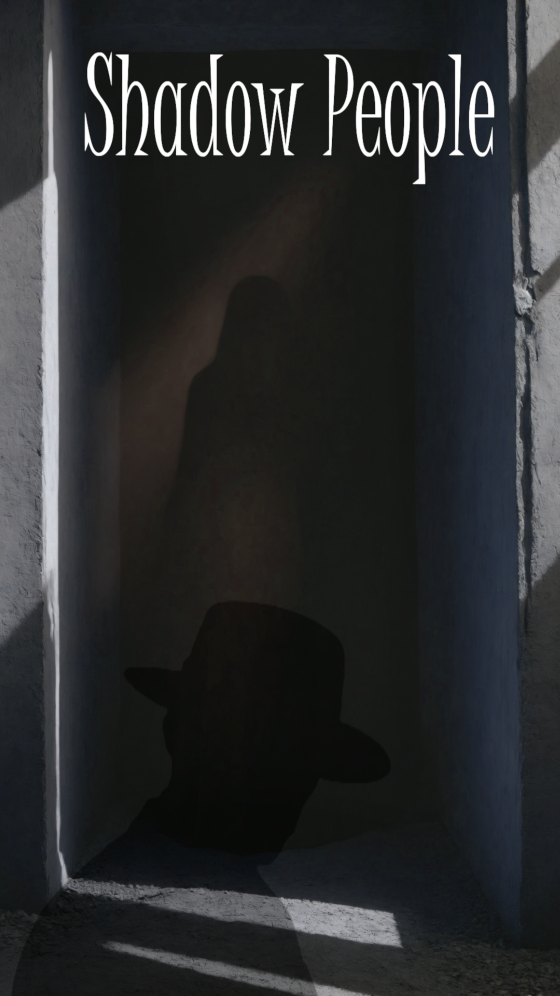
    • The figure known as the Hat Man stands out as the most widely recognized and unsettling among shadow people. Reports consistently describe this entity as unusually tall, with a distinctly human shape that is completely black, lacking any visible features except for his signature headwear—a fedora, bowler, or sometimes a wide-brimmed hat. The Hat Man’s silhouette is often sharply defined, making him easy to distinguish from other, more amorphous shadow figures.

    • Encounters with the Hat Man usually happen at night, especially when the witness is in a vulnerable state such as experiencing sleep paralysis. People often wake up unable to move, only to find the Hat Man standing in the bedroom, sometimes at the foot of the bed or lurking in a corner. His presence is described as overwhelmingly intimidating, with many people feeling a wave of dread or terror that seems to fill the room. Some individuals report that the Hat Man simply stands and watches in silence, while others recall feeling as though he was pressing down on their chest or draining their energy. There are also accounts of the Hat Man’s eyes appearing to glow red, adding another layer of fear to the experience.

    • The Hat Man is not always encountered alone. In some stories, he appears alongside other shadowy figures, but he is always the most prominent and commanding presence. Witnesses often sense a clear difference between the Hat Man and other shadow people, describing him as more intelligent, aware, and purposeful. Unlike the fleeting, peripheral glimpses of ordinary shadow figures, the Hat Man tends to linger, making his presence known for longer periods.

    • Some people have tried to explain sightings of the Hat Man by pointing to physical or psychological factors. For example, certain medications, sleep disorders, or periods of extreme stress can trigger vivid hallucinations, and the Hat Man often appears during these altered states. However, many who have seen him insist that their experiences felt entirely real and unlike any dream or hallucination they have ever had. They describe a sense of menace and power that goes beyond ordinary nightmares.

    • For those who believe in the paranormal, the Hat Man is thought to be a distinct entity, separate from other shadow people. He is often described as having a unique purpose or agenda, and some believe he is capable of moving between different locations, following or revisiting certain individuals over time. The Hat Man’s reputation for instilling fear and unease has made him a central figure in discussions about shadow people, and his image continues to appear in stories, artwork, and media related to the unexplained.
     

    How to Banish Shadow People: Take Back Your Space

    If you ever feel threatened or just want peace of mind, here’s a general technique to banish shadow people:

    Step-by-Step Banishing Ritual

    1. Set Your Intention: Clearly state your desire to remove the shadow presence from your space. Intent is the most important factor.
    2. Cleanse the Area: Use smoke (sage, incense), salt, or sound (bells, chimes) to purify the space.
    3. Protective Barriers: Place protective stones (like black tourmaline or obsidian) around your home or room.
    4. Invoke Light: Visualize a sphere of bright, white light filling the space, pushing out all darkness.
    5. Speak Aloud: Firmly command the shadow to leave—using your own words or a simple phrase like, “You are not welcome here. Leave now.”
    6. Repeat as Needed: Some banishings may need to be refreshed regularly, especially if the presence is persistent.
      Remember, the key is confidence and clarity. Shadow people feed on fear and uncertainty—standing firm in your intent is often enough to send them packing.

    Frequently Asked Questions

    Are shadow people always evil?

    Not every encounter with a shadow person is negative or frightening. While it’s true that many people describe feeling a strong sense of fear, dread, or unease when they see these shadowy figures, there are also plenty of accounts where the experience is much less intense. Some individuals have reported that the presence of a shadow person felt neutral, as if the being was simply observing rather than intending any harm. In rare cases, people have even described feeling comforted or protected, as though the shadow figure was acting as a silent guardian. The emotional response seems to depend on the individual and the specific circumstances of the encounter, so it’s not accurate to say that shadow people are always evil or malevolent. Their intentions, if they have any, appear to be varied and not always hostile.

    Why do shadow people appear at the edge of vision?

    Shadow people are most commonly spotted out of the corner of one’s eye, rather than directly in front of you. This tendency to appear at the periphery of vision is a consistent detail in countless reports. The reason for this could be that these entities exist in a way that is just outside the range of our normal senses. They seem to inhabit a space that is close to, but not fully within, our everyday reality. Because of this, they are more likely to be glimpsed in places where our perception is less focused, such as in dim lighting or at the edge of our visual field. When you try to look directly at them, they often vanish or fade away, reinforcing the idea that they are not fully present in our world. This fleeting quality makes them difficult to study or understand, and adds to the mystery surrounding their true nature.

    Can shadow people hurt me?

    There is no substantial evidence to suggest that shadow people are capable of causing direct physical harm to those who see them. Most reports center around the intense emotional reactions people experience, such as fear, anxiety, or a sense of being watched. These psychological effects can be powerful and unsettling, but they do not typically lead to lasting physical injuries or harm. The overwhelming majority of experiences involve the shadow figure appearing briefly and then disappearing, with no physical contact or aggression. While the fear they inspire can be very real, it is usually the result of the unknown and the mind’s reaction to an unexplained presence, rather than any actual threat posed by the shadow person itself.

    Why do I see shadow people during sleep paralysis?

    Sleep paralysis is a phenomenon where a person becomes conscious while their body remains in a state of temporary paralysis, usually during the transition between sleep and wakefulness. This state can leave individuals feeling vulnerable and unable to move or speak, even though they are aware of their surroundings. During these episodes, it is common to experience vivid and sometimes frightening hallucinations, including the appearance of shadowy figures. Shadow people are frequently reported during sleep paralysis because the mind is in a unique state where dreams can blend with reality, making it easier for the brain to conjure up images that feel very real. The combination of immobility, heightened fear, and altered perception creates the perfect conditions for seeing shadow people, even if there is no external entity present.

    How can I prevent future encounters with shadow people?

    If you want to reduce the likelihood of seeing shadow people or feeling their presence, there are several practical steps you can take. Keeping your living space clean and free of clutter can help create a more positive and comfortable environment. Many people find that regular cleansing rituals, such as burning sage, using incense, or ringing bells, can help clear out unwanted energies. Maintaining a strong sense of personal boundaries is also important—this can be done by verbally stating that shadow people are not welcome in your home, or by visualizing a protective barrier of light around yourself and your space. Focusing on positive thoughts, practicing relaxation techniques, and addressing sources of stress or anxiety in your life can also make encounters less likely. By taking these actions, you can create an environment that feels safe and secure, making it less inviting for shadow people to appear.
     

    Conclusion

    Shadow people continue to be a source of fascination and unease for many who encounter them or hear their stories. Their mysterious nature, combined with the wide range of theories about what they might be—such as spirits caught between worlds, visitors from other realities, ancient supernatural beings, or even manifestations of human thoughts—ensures that they remain a frequent topic of discussion among those interested in the unexplained. Encounters with these shadowy figures often provoke strong emotional reactions, ranging from fear and anxiety to curiosity and even a sense of awe.
    For those who believe they have experienced the presence of shadow people, the most important step is to recognize that fear can amplify the situation. Taking control of your environment and your mindset is crucial. Simple actions like cleansing your space, keeping your home orderly, and focusing on positive intentions can make a significant difference. Setting clear personal boundaries and asserting your desire for peace in your surroundings can help diminish unwanted experiences.
    Ultimately, while the true nature of shadow people remains uncertain, you do not have to feel powerless in the face of the unknown. By learning about these entities, staying calm, and taking practical steps to protect your space, you can maintain a sense of security and confidence. Whether shadow people are real entities or something less tangible, your response to them is within your control.

  • Bigfoot: Trans-Dimensional Entity or Flesh-and-Blood Beast? The Mind-Bending Truth

    Bigfoot: Trans-Dimensional Entity or Flesh-and-Blood Beast? The Mind-Bending Truth

    For decades, Bigfoot has eluded capture, leaving behind only fleeting glimpses, mysterious footprints, and baffled witnesses. But what if the reason we can’t find Bigfoot isn’t because it’s hiding—but because it exists beyond our conventional understanding of reality? Could this enigmatic creature be a trans-dimensional traveler, slipping between worlds? Or is it a physical being with abilities far beyond our own?

    This article explores the astonishing possibilities: that Bigfoot might be both a biological creature and a supernatural entity, capable of teleportation, interdimensional movement, or even existing as an energy-based being. Let’s dive deep into the evidence, witness accounts, and theories that suggest Bigfoot is far stranger than we ever imagined.

    1. The Case for a Physical Bigfoot

    The strongest arguments for Bigfoot being a real, biological creature come from tangible evidence that defies easy dismissal. Footprints found across North America—many with dermal ridges, muscle impressions, and anatomical consistency—suggest a living, breathing animal of immense size and weight. The Skookum Cast, a plaster mold taken in Washington state, reveals the clear imprint of a massive, hair-covered body with proportions unlike any known bear or human. Hair samples collected from alleged Bigfoot encounters occasionally yield unknown DNA sequences, neither fully human nor matching any cataloged primate.

    If Bigfoot is a physical being, its ability to avoid conclusive capture or clear documentation raises important questions. How does something so large leave so little definitive proof?

    • Advanced Camouflage: Witnesses often describe Bigfoot as seemingly melding into the forest, standing motionless until it chooses to move. Some researchers propose the creature may have adaptive pigmentation or textured skin that breaks up its outline, similar to advanced natural camouflage in certain reptiles or insects. Others speculate it might have an ability to manipulate light or shadow in ways we don’t yet understand, making it nearly invisible when it wants to be.
    • Underground Networks: There are accounts of Bigfoot vanishing into thick forest or rocky terrain without leaving a clear trail. This has led to theories that undiscovered cave systems, lava tubes, or extensive subterranean passages could serve as hidden highways for the creature. Some remote regions have deep, unmapped caverns where sounds of movement and strange vocalizations have been reported—locations that could provide shelter, travel routes, or even permanent dwellings.
    • Hyper-Intelligence: Unlike most animals, Bigfoot appears to actively avoid game cameras, human settlements, and search efforts. This suggests more than just instinct—it hints at problem-solving ability, memory, and perhaps even an understanding of human technology. Indigenous legends often describe these beings as clever, even mischievous, reinforcing the idea that they may be far more cognitively advanced than any known primate. If Bigfoot is watching us more than we realize, its continued secrecy makes perfect sense.

    The physical evidence, though scattered, is too consistent to ignore. If Bigfoot is real, it’s not just another animal—it’s a master of evasion, a creature that has learned to exist just beyond human reach. Whether through biology, intelligence, or something even more unusual, its ability to stay hidden is as fascinating as the possibility of its existence.

    2. The Trans-Dimensional Bigfoot Theory

    Among the most perplexing aspects of Bigfoot encounters are the numerous reports where the creature doesn’t simply flee – it ceases to exist before witnesses’ eyes. These aren’t cases of the animal ducking behind trees or fading into distance, but instantaneous, impossible vanishings that defy conventional explanations. This recurring phenomenon has spawned some of the most radical yet compelling theories about Sasquatch’s true nature.

    • Interdimensional Portals: Remote wilderness areas where Bigfoot sightings cluster often coincide with locations where other anomalous phenomena occur. Certain forests, mountain ranges and river valleys appear to function as “thin places” where the barrier between dimensions may weaken. Some researchers propose that Bigfoot possesses an innate ability to detect and utilize these natural dimensional intersections, stepping between realities at will. These portals might manifest as temporary distortions in air density, unusual electromagnetic fields, or brief visual warping that human observers rarely notice but which the creatures can apparently sense and manipulate.
    • Temporal Shifting: The consistency of Bigfoot reports throughout history – from indigenous oral traditions to pioneer journals to modern sightings – suggests the creatures have remained virtually unchanged for centuries. Some theorists speculate this is because they don’t experience time linearly like we do. Rather than being permanent residents of our timeline, they may phase in and out of different eras, explaining why they’re seen but never conclusively documented. This could account for reports where Bigfoot appears momentarily before dissolving like a mirage, or instances where multiple witnesses describe seeing the same creature decades apart in the same location without apparent aging.
    • Energy-Based Form: The most radical interpretation suggests that what we perceive as Bigfoot may not be biological at all, but rather a concentrated manifestation of energy that temporarily coalesces into physical form. In this model, the creature would be more akin to a thought-form or psychic projection than an actual primate. This could explain encounters where Bigfoot exhibits impossible characteristics – walking through solid objects, changing size or shape, or leaving no physical traces despite clear visual contact. Some experiencers report feeling an intense psychic presence during sightings, as if the creature is as much a mental phenomenon as a physical one. Under this theory, the famous Patterson-Gimlin film might not show an undiscovered ape, but rather a temporary materialization of something far stranger.

    These theories share one critical commonality – they attempt to explain the most baffling elements of Bigfoot encounters that conventional zoology cannot address. While they may seem fantastical, they emerge from genuine patterns in eyewitness testimony that have remained consistent for generations. Whether these phenomena represent actual dimensional travel, temporal displacement, or energetic manifestations remains unknown, but they suggest that if Bigfoot exists, it may operate under physical laws we have yet to comprehend.

    3. The Hybrid Theory: When Biology Meets the Unexplained

    The most compelling solution to the Bigfoot mystery might lie in a middle ground between the purely physical and the completely paranormal. Rather than being strictly a flesh-and-blood primate or exclusively a supernatural entity, Sasquatch could represent something far more complex – a biological being with extraordinary capabilities that blur the line between natural and supernatural.

    This hybrid model accounts for why Bigfoot displays characteristics of both a tangible creature and something beyond ordinary physical laws. Certain innate abilities, developed through evolution or existing as fundamental aspects of its nature, could give it properties that appear magical to human observers but are simply part of its normal functioning.

    • Inconsistent Physical Evidence: The hybrid theory neatly explains the puzzling discrepancies in Bigfoot encounters. Some incidents leave behind clear physical traces – deep footprints with dermal ridges, tufts of hair with unusual DNA, and disturbed vegetation showing massive weight and movement. Yet other encounters feature behaviors that violate known physics – sudden disappearances, apparent invulneribility to bullets, or the ability to pass through solid objects. If Bigfoot is fundamentally biological but possesses certain extraordinary capabilities, this would account for why it sometimes behaves like a physical animal and other times defies all material limitations.
    • Diverse Behavioral Patterns Across Regions: Reports of Bigfoot-like creatures vary dramatically depending on location. In some areas, they appear as shy, reclusive animals carefully avoiding human contact. Other regions describe aggressive, territorial creatures that throw rocks or pound on structures. Some accounts depict entities with clearly paranormal characteristics – glowing eyes, the ability to fade in and out of visibility, or associations with unexplained lights and sounds. The hybrid model suggests these may all be the same essential beings displaying different aspects of their nature depending on circumstances, environmental factors, or even their relationship to particular locations with unusual energetic properties.
    • Ancient Cultural Accounts of Enhanced Beings: Indigenous traditions from multiple continents describe “wild men” or forest beings that possess both physical form and extraordinary abilities. The Samala Chumash spoke of the Maychay, a giant hairy man who could disappear at will. Siberian tribes recount stories of the Chuchunaa, a massive hominid said to move between worlds. These aren’t simple animal legends, but accounts of creatures that existed in both the physical and spiritual realms simultaneously. The persistence of these stories across cultures and centuries suggests they may represent early human encounters with the same hybrid entities we now call Bigfoot.

    A biological basis for these creatures would explain the physical evidence, while acknowledging their extraordinary capabilities accounts for the impossible aspects of sightings. This combination could result from several possibilities: an undiscovered primate with latent psychic abilities, an intelligent species that has learned to manipulate dimensional rifts, or even Earth’s native inhabitants who understand natural laws we have yet to discover.

    The hybrid theory ultimately presents Bigfoot as neither purely animal nor purely supernatural, but as something more profound – a being that exists at the intersection of the known and unknown, forcing us to reconsider the boundaries of biology, physics, and consciousness itself. This perspective maintains scientific rigor while making room for the genuinely inexplicable elements that make the Sasquatch phenomenon so enduring and fascinating.

    Frequently Asked Questions

    Q: If Bigfoot is real, why haven’t we found any bones or bodies?
    The absence of physical remains is one of the most commonly cited arguments against Bigfoot’s existence, but several plausible explanations exist. If Bigfoot possesses interdimensional capabilities, its corporeal form may not remain in our reality after death – the biological matter could return to its point of origin or dissolve entirely. For purely physical specimens, consider how rapidly forest ecosystems recycle organic material. Large scavengers like bears and coyotes can completely consume a carcass within days, while insects and bacteria break down remaining tissue surprisingly fast in moist woodland environments. Additionally, if Bigfoot populations are extremely sparse and concentrated in remote areas, the chances of humans stumbling upon remains become statistically negligible.

    Q: What explains the intense feeling of dread many witnesses report during encounters?
    The overwhelming sense of primal terror described by many Bigfoot witnesses goes beyond normal fear responses. Several biological and paraphysical mechanisms could account for this phenomenon. Some researchers suggest Bigfoot may naturally produce infrasound – low frequency vibrations below 20Hz that can trigger visceral fear responses in humans. Certain animals like tigers are known to use this as a defensive mechanism. Alternatively, if Bigfoot exists partially in other dimensions, its very presence might create subtle distortions in our perceptual field that the human brain interprets as profound unease. There’s also the possibility of intentional psychic projection – either as a defensive strategy or simply an unconscious byproduct of the creature’s hybrid nature between physical and non-physical states.

    Q: Is there actually a connection between Bigfoot sightings and UFO activity?
    Numerous reports describe unusual aerial phenomena coinciding with Bigfoot encounters, ranging from strange lights to classic disc-shaped craft. This correlation appears too frequent to dismiss as pure coincidence. Several theories attempt to explain this link. Some propose that certain wilderness areas function as “window zones” where multiple paranormal phenomena manifest more readily. Others suggest Bigfoot entities might be interdimensional travelers who occasionally cross paths with other non-human intelligences. A more radical interpretation posits that some Bigfoot manifestations could represent biological drones or projections created by advanced intelligences, explaining why they sometimes appear alongside UFOs. The common thread in all these theories is that both phenomena may originate from realms or technologies beyond current human understanding.

    Q: How could Bigfoot avoid detection by trail cameras and drones?
    Modern surveillance technology’s failure to capture definitive Bigfoot evidence suggests several possibilities. If Bigfoot is a highly intelligent primate, it may have learned to recognize and avoid human devices through observation over time. Thermal imaging might be ineffective if the creature’s fur or skin has insulating properties that mask its heat signature. For more paranormal interpretations, entities existing slightly out of phase with our reality might not register properly on electronic sensors. Some researchers speculate that certain cryptids may emit electromagnetic fields that interfere with recording equipment, causing malfunctions or blurred images precisely when they’re present.

    Q: Why do Bigfoot reports vary so much in different regions?
    The dramatic differences in behavior and appearance described across North America and worldwide could indicate several underlying factors. Regional variations might represent distinct subspecies adapted to different environments, much like human ethnic groups developed localized physical traits. Alternatively, if Bigfoot has paranormal aspects, its manifestation could be influenced by local geomagnetic conditions, ancient land energies, or even cultural belief systems. Some researchers propose that what we call “Bigfoot” may actually be several different types of beings – some purely biological, others more supernatural – that get lumped together under one name due to superficial similarities.

    Q: Could Bigfoot be connected to ancient human species like Neanderthals?
    The possibility that Bigfoot represents a relict hominid raises fascinating questions about human evolution. Some physical descriptions align with theoretical reconstructions of robust hominins like Gigantopithecus or more primitive human ancestors. If such species survived in isolated pockets, they might have developed enhanced survival strategies to avoid detection. More speculatively, if early hominids possessed latent psychic abilities that modern humans lost through evolution, this could explain both the physical evidence and paranormal aspects of sightings. The staggering longevity of Bigfoot legends across cultures suggests that if it exists, humanity has coexisted with it for millennia without fully understanding its nature.

    Q: What would Bigfoot’s existence imply about our understanding of nature?
    Verified discovery of Bigfoot would force dramatic reassessment in multiple scientific fields. Biology would need to account for how such a large mammal remained undocumented. Physics might have to consider mechanisms for interdimensional travel or matter phase-shifting. Psychology could gain insights into collective perception and the nature of belief. Most profoundly, confirmation that creatures with apparent paranormal abilities share our world would fundamentally alter humanity’s place in the natural order – suggesting we may not be the only intelligent, technologically-capable species on Earth, nor perhaps even the most advanced. This potential paradigm shift may explain why the subject generates such intense debate and why definitive proof remains elusive.

    Conclusion: The Enduring Enigma of Bigfoot

    After examining the compelling evidence and theories surrounding Bigfoot, one thing becomes clear – this phenomenon represents far more than just an undiscovered primate. The creature’s consistent ability to evade capture and documentation suggests we may be dealing with something that defies conventional biological classification. Bigfoot appears to exist in a unique category that straddles the line between physical reality and something more extraordinary.

    The possibility that Bigfoot could be a dimensional traveler offers the most elegant explanation for many puzzling aspects of sightings. Its sudden appearances and disappearances, the lack of physical remains, and reports of impossible behavior all align with the concept of a being that can move between realities or exist in multiple states simultaneously. This wouldn’t make Bigfoot any less “real” – just operating under physical principles we don’t yet understand.

    For those who lean toward a purely biological explanation, the creature’s apparent intelligence and adaptability raise fascinating questions about primate evolution. If Bigfoot is an undiscovered hominid, its survival skills and avoidance behaviors suggest a level of sophistication beyond any known great ape. The way it reportedly interacts with its environment while remaining hidden demonstrates capabilities we’ve never documented in other species.

    The hybrid theory presents perhaps the most intriguing middle ground. Imagine a creature that is fundamentally biological but has developed – or always possessed – certain extraordinary abilities through evolutionary adaptation or as part of its essential nature. This could explain why some encounters leave behind physical evidence while others involve phenomena that seem to break the known laws of physics.

    What makes the Bigfoot mystery so compelling is how it forces us to confront the limits of our knowledge. Whether through advanced biology, undiscovered physics, or something beyond current scientific frameworks, this phenomenon challenges us to expand our understanding of what might share our world. The fact that sightings continue across generations and cultures suggests there’s something substantive behind the legends – something that deserves serious consideration rather than dismissal.

    As technology advances and wilderness areas become more accessible, we may eventually get definitive answers. Until then, Bigfoot remains one of the most fascinating mysteries at the intersection of zoology, anthropology, and the paranormal. The truth, when and if it emerges, will likely be more remarkable than anything we’ve imagined.

    What’s your take on this enduring enigma? Could there be a biological basis for all reports, or does the full scope of evidence point toward something more extraordinary? However you interpret the phenomenon, the Bigfoot mystery continues to arouse us to question what we know about our world and what might still remain hidden in the shadows of our understanding.

  • The Star Ruby Ritual: A Powerful Thelemic Banishing Practice (Step-by-Step Guide)

    The Star Ruby Ritual: A Powerful Thelemic Banishing Practice (Step-by-Step Guide)

    The Star Ruby is one of the most essential rituals in Thelemic magick, used as a potent banishing practice to clear negative energies and align the practitioner with divine forces. Created by Aleister Crowley, this ritual evolved from older ceremonial magic traditions but was adapted to fit the spiritual framework of Thelema—a system emphasizing personal will and cosmic harmony.

    Whether you’re new to Thelema or a seasoned practitioner, mastering the Star Ruby can elevate your magical work, purify your sacred space, and strengthen your connection to higher energies. In this guide, we’ll break down its origins, purpose, and a step-by-step method to perform it yourself.

    What Is the Star Ruby Ritual?

    The Star Ruby is a core ritual in Thelemic magick that serves as a powerful method for cleansing and protecting sacred space. Unlike many traditional Western ceremonial practices, this ritual was specifically crafted by Aleister Crowley to align with the philosophical and spiritual principles of Thelema. While it shares some functional similarities with older banishing rites, its structure, symbolism, and execution are distinctly modern, embodying Crowley’s revolutionary approach to magical practice.

    At its heart, the Star Ruby is a dynamic ceremonial act that combines precise gestures, vibrated words of power, and concentrated visualization to create a purified zone free from disruptive influences. It systematically clears away unwanted energies while reinforcing the magician’s connection to the divine forces central to Thelemic cosmology.

    Key Distinctions from Earlier Banishing Methods:

    • Linguistic Shift: The ritual employs ancient Greek invocations rather than the Hebrew terminology common in older systems, marking a deliberate break from Judeo-Christian mystical traditions.
    • Thelemic Pantheon: Instead of referencing archangels or Qabalistic entities, the Star Ruby directly calls upon the primary deities of Crowley’s system—Nuit (the infinite goddess), Hadit (the divine spark), Babalon (the sacred feminine), and Therion (the solar-phallic force).
    • Single-Purpose Design: Unlike some traditional rituals that can be adapted for both banishing and invoking, the Star Ruby is optimized solely for the removal of unwanted energies, making it exceptionally focused in its effects.
    • Energetic Focus: The ritual channels a particular current of solar-phallic vitality, directly supporting the Thelemic ideal of active, will-driven spiritual development rather than passive mystical absorption.

    Who Created the Star Ruby and Why?

    Aleister Crowley conceived the Star Ruby during his most productive period of magical innovation following his departure from the Hermetic Order of the Golden Dawn. As the driving force behind the A∴A∴ (his own magical order), Crowley sought to develop rituals that would better serve practitioners operating within Thelema’s paradigm of personal spiritual sovereignty.

    The ritual first appeared in print within The Book of Lies (technically called “Liber 333”), a 1913 publication containing Crowley’s most enigmatic magical instructions. He later expanded upon its theory and application in his 1929 masterwork Magick in Theory and Practice, where it stands as one of the fundamental techniques for serious students of his system.

    Crowley’s Motivations for This New Design:

    • Philosophical Alignment: Traditional ceremonial magic often carried assumptions about divinity and human nature that conflicted with Thelema’s radical individualism. The Star Ruby provided a ritual framework fully congruent with “Do what thou wilt.”
    • Cultural Resonance: By using Greek instead of Hebrew, Crowley connected the practice to older pagan mystical traditions that he viewed as more compatible with his vision of the New Aeon.
    • Practical Accessibility: While maintaining profound depth, the Star Ruby eliminates some of the complex symbolism and lengthy preparations found in older systems, allowing practitioners to achieve powerful results with relatively straightforward techniques.
    • Energetic Specificity: The ritual’s solar-phallic emphasis directly supports the kind of active, creative magical work Crowley advocated, as opposed to more contemplative approaches dominant in other traditions.

    The result was a banishing ritual that perfectly encapsulated Crowley’s vision of modern magic—direct, effective, and perfectly suited to the psychological and spiritual needs of contemporary practitioners working within the Thelemic framework.

    What Is the Star Ruby Used For?

    The Star Ruby ritual serves as a multifaceted magical tool within Thelemic practice, offering practitioners several key benefits that extend far beyond simple space-clearing. When performed with proper focus and intent, this ritual creates measurable shifts in both the practitioner’s consciousness and their immediate environment, making it one of the most versatile techniques in a magician’s repertoire.

    1. Banishing Negative Energies

    The primary function of the Star Ruby is to systematically remove unwanted psychic influences from both physical spaces and the practitioner’s personal energy field. Unlike passive cleansing methods, this ritual actively drives out disruptive forces through the combined power of sacred geometry (the pentagram), vibrated words of power, and directed will.

    Practitioners often employ the Star Ruby when first entering a new ritual space, after experiencing psychic contamination, or when preparing for intensive magical work. The ritual’s effectiveness stems from its precise structure – the forceful gestures and declarations create an energetic “reset” that dissolves accumulated negativity while preventing new disturbances from taking hold.

    2. Establishing Sacred Space

    Beyond simple cleansing, the Star Ruby actively consecrates an area for magical operations. The ritual doesn’t just remove unwanted energies – it establishes a defined boundary where only those forces aligned with the practitioner’s True Will can operate.

    This makes the Star Ruby particularly valuable before:

    • Evocational or invocational ceremonies
    • Divination sessions
    • Astral projection attempts
    • Any working requiring precise energetic conditions

    The four directional pentagrams create an invisible but potent barrier that persists for hours or even days, depending on the practitioner’s skill. Many Thelemites report perceiving this boundary as a palpable shift in atmospheric pressure or temperature within the ritually prepared space.

    3. Strengthening Willpower & Focus

    Regular performance of the Star Ruby produces cumulative psychological and spiritual benefits. The ritual’s precise movements and declarations train the magician in several crucial areas:

    • Mental Discipline: The need to perfectly execute gestures and enunciations sharpens concentration
    • Energetic Sensitivity: Practitioners develop greater awareness of subtle energy flows
    • Magical Confidence: Successful banishings reinforce belief in one’s abilities
    • Psychological Integration: The ritual aligns conscious and subconscious intentions

    These effects make the Star Ruby an excellent daily practice, similar to yoga or meditation in its ability to progressively enhance the practitioner’s magical faculties. Many advanced Thelemites continue using it daily for decades due to these developmental benefits.

    4. Connecting to Thelemic Current

    The Star Ruby serves as a direct line to the core deities of Thelemic cosmology. Each directional invocation – Nuit (North), Hadit (South), Babalon (West), and Therion (East) – establishes a living connection with these divine forces.

    Over time, practitioners notice:

    • Increased synchronicities related to these deities
    • Deeper understanding of Thelemic doctrine through direct experience
    • Spontaneous visionary encounters during or after ritual
    • Enhanced magical results when working with these forces

    This aspect transforms the Star Ruby from mere banishing ritual to an ongoing initiatory process. The more consistently one performs it, the stronger these connections become, eventually reaching a point where simply beginning the ritual immediately shifts consciousness into a properly attuned magical state.

    The ritual’s versatility explains why it remains a cornerstone of Thelemic practice over a century after its creation. From basic space-clearing to advanced mystical development, the Star Ruby adapts to serve practitioners at all levels while maintaining its essential simplicity and directness.

    How to Perform the Star Ruby Ritual (Step-by-Step)

    Performing the Star Ruby requires focus, visualization, and precise movements. Here’s how to do it:

    Step 1: Preparation

    • Stand in the center of your ritual space, facing East.
    • Take deep, calming breaths to center yourself.

    Step 2: Banishing Gesture & Words

    • Press your right forefinger to your lower lip, holding your breath.
    • Sweep your hand downward forcefully while exhaling and declare:
      • “APO PANTOS KAKODAIMONOS!” (Away, all evil spirits!)

    Step 3: Thelemic Cross

    • Touch your forehead and say: “SOI” (To Thee).
    • Touch your groin and say: “Ô PHALLE” (O Phallus).
    • Touch your right shoulder, saying: “ISCHUROS” (Strong).
    • Touch your left shoulder, saying: “EUCHARISTOS” (Full of Grace).
    • Clasp hands together and proclaim: “IAÔ!” (A name of God in Gnosticism).

    Step 4: Drawing the Pentagrams

    • Move to the East, visualize a flaming pentagram, and thrust it forward while roaring: “THERION!” (The Beast).
    • Move clockwise to each cardinal direction, repeating the gesture but changing the name:
      • North: Whisper “NUIT” (Goddess of Infinite Space).
      • West: Whisper “BABALON” (Goddess of Ecstasy).
      • South: Bellow “HADIT” (God of the Point).

    Step 5: Closing the Ritual

    • Return to the center, raise your arms, and chant: “IÔ PAN!” (Hail, All!).
    • Perform the Sign of NOX (arms crossed over chest).

    Frequently Asked Questions

    1. Is the Star Ruby Suitable for Beginners?

    The Star Ruby was designed to be accessible to practitioners at all levels, including those just beginning their exploration of Thelemic magick. While the ritual may initially seem complex due to its combination of gestures, directional movements, and vibrated words, its structure is actually more straightforward than many traditional ceremonial practices.

    New practitioners should approach it methodically:

    • First master the physical movements and directional turns
    • Then focus on clear pronunciation of the Greek phrases
    • Finally work on synchronizing breath with the gestures

    Many find it helpful to practice individual components separately before combining them. The ritual’s power comes through repetition – what feels awkward at first will become second nature with consistent practice. Even imperfect early attempts still produce measurable effects, so beginners shouldn’t wait for “perfect” execution before working with it regularly.

    2. What Equipment is Required for the Star Ruby?

    One of the ritual’s advantages is its minimal material requirements. The core practice needs nothing more than:

    • The practitioner’s physical body (for gestures and movement)
    • A voice capable of clear pronunciation
    • Enough space to move in a circle

    Optional tools some practitioners incorporate:

    • An athame or ritual dagger can add emphasis to the pentagram tracing
    • Robes help mark the transition into ritual consciousness
    • A properly consecrated wand may substitute for finger movements

    The absence of mandatory tools makes this an excellent ritual for travel or situations where elaborate setups aren’t practical. That said, many experienced practitioners develop personal variations involving specific ritual garb or implements that enhance their individual practice.

    3. What’s the Ideal Frequency for Performing This Ritual?

    Practice frequency depends largely on the practitioner’s goals:

    For general maintenance:

    • Once daily (morning or evening) provides consistent energetic hygiene
    • Twice daily (morning and night) creates stronger cumulative effects

    For specific purposes:

    • Before any major magical working as preparation
    • After psychic disturbances or unwanted energetic contacts
    • During periods of spiritual transition or initiation

    Many notice that daily practice for at least one lunar cycle produces noticeable shifts in perception and magical sensitivity. The effects compound over time – practitioners performing it daily for years often describe it as fundamental to their ongoing development.

    4. How Should I Handle Mistakes During the Ritual?

    Errors happen, especially when learning. The ritual’s efficacy isn’t destroyed by:

    • Mispronounced words
    • Inaccurate gestures
    • Wrong directional facing

    When mistakes occur:

    1. Briefly pause and recenter
    2. Repeat the correct form
    3. Continue without excessive self-criticism

    The ritual’s power comes primarily from focused will, not perfect mechanics. In many ways, learning to recover gracefully from errors trains valuable magical skills in adaptation and perseverance. Some traditions even view these stumbles as intentional tests from one’s Holy Guardian Angel.

    5. Are Modifications to the Ritual Permissible?

    Thelema fundamentally encourages individual adaptation while respecting core principles. Possible modifications include:

    Structural changes:

    • Adding preliminary purification rites
    • Incorporating supplemental invocations
    • Extending the closing sequence

    Personalizations:

    • Using native language translations for clarity
    • Adjusting pacing to match individual breathing patterns
    • Incorporating supplemental visualization

    Key considerations for modifications:

    • Changes should enhance rather than dilute the ritual’s purpose
    • Significant alterations should be tested and refined over time
    • Traditional forms should be mastered before innovating

    Many advanced practitioners develop personal variations while maintaining the ritual’s essential framework. The test of any modification is whether it produces equal or greater results than the original form.

    Conclusion

    The Star Ruby is one of the most potent and practical rituals in the Thelemic magician’s toolkit. Far from being merely a ceremonial cleansing exercise, this ritual operates on multiple levels of consciousness and energy, creating immediate and lasting changes for those who practice it with dedication. Its elegant simplicity belies the profound transformational power it contains – a power that grows exponentially with regular application.

    What makes the Star Ruby particularly valuable is its dual nature as both a practical working tool and a developmental exercise. On one level, it effectively clears spaces and prepares them for magical work, creating the clean energetic slate necessary for successful operations. Simultaneously, it serves as a daily workout for the magician’s will, steadily strengthening the mental and spiritual muscles required for advanced practice. The ritual’s structure trains focus, visualization, breath control, and energetic sensitivity – all fundamental magical skills.

    For newcomers to Thelema, the Star Ruby offers an ideal entry point into ceremonial practice. Its relatively straightforward format allows beginners to experience real magical effects early on, while its depth ensures it remains useful throughout one’s entire magical career. Many practitioners report that their understanding and appreciation of the ritual continues to deepen even after decades of regular use, revealing new layers of meaning and effectiveness.

    More experienced magicians will find the Star Ruby adapts well to advanced applications. It can serve as the foundation for more complex rituals, be combined with other techniques for enhanced effects, or be modified to suit specific magical goals. The ritual’s flexibility allows it to grow with the practitioner, always meeting them at their current level of development while pushing them toward greater mastery.

    The true test of any magical technique lies in its results, and the Star Ruby consistently demonstrates its value through tangible effects. Practitioners commonly report:

    • Noticeable improvements in mental clarity and focus
    • Increased sensitivity to subtle energies
    • Greater success in subsequent magical workings
    • Enhanced connection to Thelemic currents
    • More vivid dream states and visionary experiences

    These effects compound over time, making the ritual particularly valuable as a daily practice. Like physical exercise for the subtle body, regular performance creates cumulative benefits that extend far beyond the immediate cleansing effects.

    There comes a point in every magician’s development where theoretical knowledge must give way to practical experience. The Star Ruby offers one of the most direct ways to bridge this gap, providing immediate hands-on engagement with magical forces. No amount of reading about the ritual can substitute for actually performing it – the real understanding comes through doing.

    For those ready to take this step, the path is straightforward. Begin with careful study of the ritual’s form, then move into regular practice. Start slowly if needed, focusing first on accuracy before building speed and intensity. Be patient with the learning process while remaining consistent in application. Over time, what begins as a series of awkward motions and uncertain pronunciations will transform into a fluid, powerful magical operation.

    The Star Ruby’s enduring popularity among Thelemites stems from one simple fact – it works. Its effectiveness has been proven through generations of practitioners across diverse magical lineages. Now it stands ready to serve a new generation of magicians seeking to purify their space, strengthen their will, and align themselves with the currents of the New Aeon. The only question remaining is whether you will put it to use in your own practice.

    Magick ultimately comes down to action. Theory informs practice, but transformation only occurs through doing. The tools are here, the methods are clear, and the potential awaits realization. The next step belongs to you.

  • The Enchanting Power of Magical Dolls: From Healing Poppets to Cursed Fetishes

    The Enchanting Power of Magical Dolls: From Healing Poppets to Cursed Fetishes

    Magical dolls have been a cornerstone of folk traditions for centuries, serving as vessels for healing, protection, love, and even darker intentions. Whether called poppets, fetishes, or spirit dolls, these handmade figures bridge the physical and spiritual realms, channeling energy to influence reality. Believers craft them with intent—infusing herbs, personal belongings, or sacred symbols—to manifest desires or shield against harm.

    But how do these dolls work? Why are some feared while others are cherished? This detailed investigation explores their varied roles across cultures, from benevolent medicine dolls to infamous Vodou effigies. Whether you’re a curious seeker or a seasoned practitioner, understanding their power can transform your magical practice.

    The Deep Roots and Varied Forms of Magical Dolls

    Magical dolls have been used in spiritual practice for millennia, appearing in nearly every culture under different names and forms. These are not mere playthings but sacred objects—crafted with intention, infused with power, and designed to bridge the physical and spiritual worlds. The fundamental belief behind their use is sympathetic magic, an ancient principle that holds that objects resembling a person or spirit can influence them through symbolic action.

    The Sympathetic Connection

    At the heart of magical doll practices is the idea that a physical representation—whether made of cloth, wax, wood, or clay—can serve as a conduit for energy. The stronger the connection between the doll and its subject, the more effective the magic. This link is often established through:

    • Personal items: Hair, nail clippings, or clothing fragments
    • Written names or petitions: Words have power, and inscribing a name binds the doll to its target
    • Visual resemblance: Carved faces, painted features, or even crude shapes meant to evoke a person

    This concept is so universal that it appears in prehistoric artifacts, suggesting that humans have always sought ways to influence fate through symbolic acts.

    Strange Connections: Poppets, Curses, and Quantum Entanglement

    At first glance, poppets and curse dolls seem worlds apart from quantum physics, but they share an eerie similarity—action at a distance. In folk magic, a poppet or curse doll operates on the principle of sympathetic magic: what is done to the doll affects its human counterpart, regardless of physical separation. Stick a pin in the doll’s heart, and pain manifests in the person it represents. This magical connection defies conventional logic—just as quantum entanglement defies Einstein’s discomfort with “spooky action at a distance.”

    In quantum mechanics, entangled particles remain mysteriously linked, with changes to one instantly influencing the other, even across vast cosmic distances. No signal travels between them—just an inexplicable, immediate correlation. Similarly, a curse doll doesn’t require physical contact with its target; the intent alone binds them. The doll becomes a focal point, just as measuring one entangled particle determines the state of its partner. In other words, a witch or sorcerer is entangling two separate things through the use of poppets, and is then affecting one through the other using what quantum theorist have termed, “Spooky Action at a Distance”.

    Both concepts are unsettling to average rationality because they bypass ordinary cause and effect beliefs about the world. A witch doesn’t need to touch their victim to harm them—just as quantum particles don’t need a signal to communicate. Whether through magic or physics, these phenomena speak of and work in accordance with hidden connections that transcend space, forcing us to reconsider how influence really works. The difference? One belongs to folklore, the other to cutting-edge science—but both challenge our understanding of separation and connection in unsettling ways.

    Types of Magical Dolls Across Cultures

    Poppets: The European Tradition

    In European folk magic, poppets (from the Middle English popet, meaning “small child” or “doll”) have been used for everything from healing to cursing. These dolls, often made of fabric stuffed with herbs or wax molded into human shapes, were employed in:

    • Love magic: Two poppets bound together with red thread to unite lovers
    • Protection: A doll filled with rosemary and buried near a home’s entrance to ward off evil
    • Justice work: A wax figure melted to weaken an enemy’s influence

    Historical records show that as far back as the 10th century, people in England were accused of witchcraft for driving nails into effigies—proof that the fear (and power) of these objects was very real.

    Fetishes: Sacred Objects of African and Indigenous Traditions

    Unlike poppets, which are often temporary tools for spellwork, fetishes are enduring sacred objects. In African diasporic religions like Vodou and Hoodoo, as well as in Native American traditions, fetishes are:

    • Carved from wood or bone, sometimes in animal forms
    • Adorned with beads, shells, or sacred bundles to hold spiritual energy
    • Used for ongoing spiritual work, not just single spells

    These are not “cursed dolls” as Hollywood depicts but revered items that house spirits, offer guidance, or provide protection.

    Vodou Dolls: Misunderstood Tools of Spirit Work

    Thanks to sensationalized films, Vodou dolls are often seen as instruments of torture—pinned with needles to inflict pain. In reality, Haitian Vodou practitioners rarely use dolls in this way. Instead:

    • Dolls may represent spirits (lwa), serving as vessels for communication
    • Some are used in healing, dressed in white and anointed with oils
    • Others act as offerings, not curses

    Worry Dolls: The Gentle Magic of Guatemala

    A far cry from the ominous imagery of cursed dolls, Guatemalan worry dolls (muñecas quitapenas) are tiny, brightly clothed figures meant to soothe rather than harm. According to Mayan tradition:

    • You whisper worries to them before bed
    • Place them under your pillow
    • They “take” your troubles, letting you sleep peacefully

    This practice shows that not all magical dolls are about manipulation—many exist to comfort and heal.

    Why Do Magical Dolls Work?

    Whether one believes in their power or not, magical dolls have endured because they:

    1. Make intention tangible – Holding a physical object focuses the mind.
    2. Create a symbolic link – The brain responds strongly to representation.
    3. Tap into tradition – Rituals gain power from centuries of use.

    From ancient Egyptian tomb figurines to modern witch’s poppets, these dolls show us that magic is, at its core, about the human desire to shape the unseen forces around us.

    4. Crafting a Magical Doll: A Step-by-Step Guide

    Creating a magical doll is a sacred act that blends creativity with spiritual intention. The process requires careful consideration at every stage, from material selection to final activation. Here’s how to craft one effectively:

    Material Selection

    The foundation of any magical doll lies in its physical form. The materials you choose should align with both your magical goal and personal connection:

    • Fabric (Cotton, Linen, Wool): Ideal for soft, pliable poppets meant for healing or love magic. Natural fibers absorb energy well.
    • Clay (Air-Dry, Pottery): Best for permanent fetishes requiring durability, especially in protection or ancestor work.
    • Corn Husks or Straw: Traditional in folk magic for temporary spells, as they decompose naturally when buried.
    • Wax: Used in candle magic poppets, where melting symbolizes transformation.

    Each material carries its own vibrational quality—select what feels right for your purpose.

    Personalization Techniques

    A doll becomes magically potent when linked to its subject. Strengthen this connection through:

    • Physical Taglocks: Hair, nail clippings, or saliva embedded in the stuffing.
    • Written Components: Names, birthdates, or petitions folded into the doll’s core.
    • Visual Likeness: Painted features, stitched symbols, or clothing resembling the target.

    The more intimate the link, the stronger the doll’s influence.

    Charging with Intent

    As you assemble the doll, infuse it with purpose:

    • Verbal Activation: Speak your goal aloud (“This doll protects my home”) while sewing or molding.
    • Elemental Blessing: Pass it through incense smoke (air), sprinkle with salt (earth), anoint with oil (fire), or mist with moon water (water).
    • Energy Work: Hold the doll and visualize light or energy flowing into it.

    This step transforms a simple figure into a magical vessel.

    Final Activation Methods

    How you “complete” the doll determines its ongoing function:

    • Burying: For grounding spells (fertility, banishing), use biodegradable materials.
    • Burning: Releases intentions quickly (hex-breaking, urgency).
    • Altar Placement: Maintains continuous energy (deity work, long-term healing).
    • Anchoring: Sewing lodestones or crystals inside amplifies specific effects.

    5. Safety and Ethical Considerations in Doll Magic

    Working with magical dolls demands mindfulness. Their power isn’t trivial—it can rebound or spiral unexpectedly if mishandled.

    Precautions

    • Cleansing Rituals: Smudge your workspace with sage or palo santo before and after creation to clear residual energy.
    • Containment: Store active dolls wrapped in black cloth or inside a sealed box to prevent energy leaks.
    • Disposal: Deactivate unwanted dolls by cutting them open, removing taglocks, and burning/burying the remains respectfully.

    Ethical Boundaries

    • Consent Matters: Love spells targeting specific people often backfire; focus on drawing love generally instead.
    • Justice vs. Harm: Binding someone’s malice differs from cursing out of spite—examine your motives.
    • Spiritual Hygiene: Regularly cleanse yourself after intense workings to avoid energy drain.

    Magical dolls are tools, not toys. Treat them with the gravity of a surgeon’s scalpel—precision and respect prevent unintended consequences.

    The Living Legacy of Magical Dolls

    Magical dolls represent one of humanity’s oldest and most enduring spiritual technologies. These are not primitive superstitions but sophisticated tools that have evolved across cultures and centuries to help people interact with forces beyond ordinary perception. The practice of creating and using these dolls continues today because it works – not through some vague mystical energy, but through the concrete psychological and spiritual mechanisms that our ancestors intuitively understood.

    The true power of magical dolls lies in their ability to make abstract intentions tangible. When we hold a physical representation of our desires or concerns, something profound happens in our consciousness. The mind more easily focuses, the will becomes concentrated, and the spiritual forces around us respond to this clarity of purpose. This explains why similar doll traditions developed independently in Europe, Africa, Asia, and the Americas – because people everywhere discovered this effective method of shaping reality.

    Modern practitioners have adapted these ancient techniques while preserving their core wisdom. Today’s magical dolls might incorporate contemporary materials like polymer clay or synthetic fabrics, but they still operate on the same timeless principles. The careful selection of components, the ritual of assembly, and the ceremonial activation all follow patterns established generations ago. This continuity demonstrates the enduring value of these practices.

    For newcomers, the world of magical dolls offers numerous accessible starting points. A simple white cloth doll filled with lavender can become a powerful talisman for peace and tranquility. A red fabric figure containing cinnamon and cloves might attract warmth and passion. Even basic corn husk dolls, when properly consecrated, can serve as effective guardians for homes or children. The materials matter less than the intentionality behind them.

    The ethical dimension of doll magic remains as crucial today as ever. These are not toys but serious spiritual instruments that demand respect and responsibility. Those who work with them must constantly examine their motives and consider the consequences of their actions. The same doll that can heal a broken heart might also be misused to manipulate others – which is why developing wisdom and restraint proves just as important as learning the technical aspects of construction.

    As our world becomes more technologically complex, the simple magic of dolls retains its power precisely because of its physical, hands-on nature. In an age of digital abstraction, the act of shaping materials with our hands to manifest our intentions provides a grounding counterbalance. The doll becomes a focal point that helps bridge our inner and outer realities.

    Whether through historical research, cultural study, or practical experimentation, anyone can begin working with these powerful tools. Start with clear intentions, proper materials, and respectful practice. Observe the results carefully. In time, you may find yourself continuing an unbroken lineage of magical practitioners stretching back to humanity’s earliest magical doings.

  • Ancient Mysteries and Lost Civilizations

    Ancient Mysteries and Lost Civilizations

    The allure of ancient mysteries and lost civilizations has captivated humanity for centuries. From the mythical island of Atlantis to the architectural marvels of Stonehenge and the Pyramids, these enigmatic sites test our understanding of history and inspire endless curiosity. Were these civilizations more advanced than we imagine? Did they possess knowledge that modern science has yet to uncover? As believers in the extraordinary, we embark on a journey to explore these fascinating remnants of human ingenuity, unravel their mysteries, and delve into their profound legacy.

    The Mythical Atlantis: A Civilization of Unparalleled Sophistication

    Atlantis is widely regarded as one of history’s most intriguing and enduring mysteries. First introduced in the writings of the ancient Greek philosopher Plato, this mysterious civilization has captured the imagination of scholars, storytellers, and adventurers for centuries. Described as a utopian society that flourished with remarkable advancements in technology, governance, and philosophy, Atlantis is said to have met a sudden and catastrophic end, vanishing beneath the sea. While many consider it a fictional allegory, others firmly believe that Atlantis was a real civilization that existed thousands of years ago.

    Frequently Asked Questions About Atlantis

    1. Where was Atlantis located?
    The precise location of Atlantis has been the subject of endless debate and speculation. Numerous theories propose its whereabouts, ranging from the Mediterranean Sea to the Atlantic Ocean and even the Caribbean. Some researchers suggest that Atlantis could have been near the island of Santorini, known for its volcanic eruption in antiquity, while others argue it might lie submerged off the coast of Cuba. Additional hypotheses point to locations such as Antarctica or beneath the North Sea, where ancient landmasses once existed before being engulfed by rising waters.

    Plato’s original account places Atlantis “beyond the Pillars of Hercules,” which is commonly identified as the Strait of Gibraltar. This location situates Atlantis in the Atlantic Ocean, though no definitive archaeological evidence has been uncovered to confirm this claim. Modern technologies like sonar mapping and underwater exploration have yet to reveal any structures resembling Plato’s descriptions.

    2. What made Atlantis so advanced?
    According to legend, Atlantis was a marvel of engineering and innovation. The Atlanteans were said to have developed a highly organized urban infrastructure characterized by concentric rings of land and water connected by sophisticated canals. These waterways facilitated maritime trade and transportation, showcasing their mastery over engineering.

    In addition to their architectural prowess, Atlanteans are often credited with harnessing natural energy sources in ways that remain speculative today. Some theories suggest they utilized crystals or magnetic fields as sources of power, enabling them to achieve technological feats far ahead of their time. While these claims lack scientific evidence, they contribute to the mystique surrounding this lost civilization.

    3. Why did Atlantis disappear?
    The downfall of Atlantis is as mysterious as its existence. Plato’s account attributes its destruction to divine punishment for moral corruption and hubris. The Atlanteans, once virtuous and wise, allegedly became greedy and power-hungry, leading to their downfall. In a single day and night of calamity, violent earthquakes and floods are said to have submerged the island beneath the ocean.

    Other interpretations suggest natural disasters such as tsunamis or volcanic eruptions could explain its sudden disappearance. For example, some researchers draw parallels between Atlantis and historical events like the eruption of Thera (modern-day Santorini), which caused widespread devastation in the ancient Aegean region. Alternatively, internal strife or resource depletion might have contributed to its collapse.

    The Enduring Legacy of Atlantis

    Despite centuries of exploration and debate, no conclusive evidence has been found to prove the existence of Atlantis. Plato’s writings remain the primary source for its story, leaving much room for interpretation and imagination. Whether viewed as a cautionary tale about human ambition or as a genuine historical mystery awaiting discovery, Atlantis continues to inspire fascination across cultures and disciplines.

    For some, it represents an idealized vision of human potential—a society that achieved greatness but succumbed to its own excesses. For others, it serves as a reminder of how fragile civilizations can be when faced with natural or self-inflicted catastrophes. Regardless of its reality or fictionality, Atlantis remains an enduring symbol of both human ingenuity and our fascination with the unknown.

    Stonehenge: A Portal to Ancient Knowledge

    Stonehenge is one of the most puzzling and iconic monuments in human history. Situated on Salisbury Plain in Wiltshire, England, this prehistoric structure has captivated imaginations for centuries due to its mysterious origins, architectural sophistication, and alignment with celestial phenomena. Composed of massive standing stones arranged in a circular formation, Stonehenge is believed to have been constructed over a period of approximately 1,500 years, beginning around 3100 BCE during the Neolithic period and continuing into the early Bronze Age.

    The monument consists of an outer ring of towering sarsen stones, each standing approximately 13 feet high and weighing up to 25 tons. These stones are connected by horizontal lintels using mortise-and-tenon joints—a feature unique among ancient structures. Within the outer circle lies an arrangement of smaller bluestones, which were transported from quarries located over 150 miles away in Wales. At the center are trilithons—pairs of upright sarsens capped by a single lintel stone—forming a horseshoe-shaped configuration. The entire site is encircled by a ditch and bank, which represent the earliest phase of construction.

    Frequently Asked Questions about Stonhenge:

    How Was Stonehenge Constructed?
    The construction of Stonehenge remains a marvel of engineering and ingenuity. Scholars believe that the transportation and erection of its stones required advanced techniques far beyond what was typical for the time. The sarsens were likely dragged from nearby quarries using wooden sledges and ropes, while the bluestones were transported over long distances via waterways and land routes. The precise placement of these stones demonstrates an extraordinary understanding of geometry and astronomy.

    What Was Stonehenge Used For?
    The purpose of Stonehenge has been the subject of extensive debate. Many researchers theorize that it served as an astronomical calendar, marking key events such as the summer solstice sunrise and winter solstice sunset with remarkable accuracy. Others propose that it functioned as a ceremonial site for rituals related to death, fertility, or seasonal transitions. Evidence suggests that it may have also been used as a burial ground; cremated human remains dating back to 3000 BCE have been discovered within its Aubrey Holes—pits that may have originally held timber posts or bluestones.

    Could Stonehenge Have Extraterrestrial Origins?
    Speculation about extraterrestrial involvement has fueled theories that Stonehenge’s construction was guided by knowledge imparted by otherworldly beings. Proponents point to its alignment with cosmic patterns and its advanced engineering as evidence of influences beyond human capabilities at the time. While such claims remain unsubstantiated, they highlight the monument’s enduring mystique.

    Stonehenge stands not only as potential proof of the ingenuity of ancient civilizations but also as a symbol of humanity’s enduring quest to understand its place in the cosmos. Whether viewed as an astronomical observatory, a sacred site, or a monument to collective effort, it continues to inspire awe and curiosity among visitors and scholars alike.

    The Great Pyramids: Engineering Marvels Beyond Compare

    Looking at the Egyptian pyramids, you can instantly appreciate the ingenuity and skill that went into creating them – they’re truly impressive feats of architecture. Constructed over four and a half millennia ago, these colossal structures continue to confound experts with their precision and complexity. The methods employed by ancient Egyptians to transport and position enormous stone blocks, some weighing upwards of 80 tons, remain a subject of intense debate and speculation.

    The Great Pyramid of Giza, the largest of the pyramids, originally stood at a staggering height of 146.5 meters (481 feet) and covered a base area of 230.4 meters (756 feet) per side. Its construction required an estimated 2.3 million limestone blocks, each weighing between 2.5 to 15 tons. The level of accuracy achieved in its construction is remarkable, with the base being flat to within 2 centimeters (0.8 inches) and the sides aligned to the cardinal directions with an error of less than 0.06 degrees.

    Numerous theories have been proposed to explain the construction techniques used by the ancient Egyptians. Some researchers suggest the use of sophisticated ramp systems, both external and internal, to transport stone blocks to higher levels of the pyramid. Others propose the use of levers and counterweights to maneuver the massive stones into place. More unconventional theories posit the use of advanced technologies, including acoustic levitation or manipulation of gravitational fields, though ALL these ideas (whether levers and ramps or acoustic technology and gravitational fields) lack substantial evidence. The pyramids are a true history on this earth.

    The internal structure of the pyramids has been a source of fascination for centuries. Beyond the known burial chambers and passageways, some researchers speculate about the existence of hidden chambers or voids that may contain undiscovered artifacts or ancient knowledge. Recent studies using muon radiography have detected large voids within the Great Pyramid, fueling further speculation about their purpose and contents.

    The astronomical alignment of the pyramids has long been a subject of study and wonder. The Great Pyramid’s sides are aligned with the cardinal directions with remarkable accuracy, demonstrating the ancient Egyptians’ advanced understanding of celestial mechanics. The alignment of the pyramid complex at Giza with the constellation Orion has led some to propose that the pyramids were built as a terrestrial map of the heavens, though this theory remains controversial among mainstream Egyptologists.

    Some unconventional theories propose that the pyramids served purposes beyond that of royal tombs. One such hypothesis suggests that the Great Pyramid functioned as a massive energy generator. Proponents of this idea point to the pyramid’s internal structure, choice of materials, and precise geometry as evidence of its potential to harness and amplify natural energy sources. According to this theory, the limestone exterior and granite interior could have acted as piezoelectric materials, converting the Earth’s vibrations into electrical energy. The internal chambers and passageways are thought to have been designed to concentrate and direct this energy, possibly for uses unknown to modern science.

    The construction methods, internal layout, and potential alternative functions of the pyramids continue to be subjects of intense research and speculation. As technology advances, new investigative techniques may shed light on these ancient mysteries, potentially revealing insights into the knowledge and capabilities of ancient civilizations that have been lost to time.

    Frequently Asked Questions About the Pyramids:

    1. How were the pyramids built?
      Despite centuries of study, the exact methods used to construct these colossal structures remain a subject of ongoing research and debate among Egyptologists and engineers. The commonly proposed theories – involving pulleys and rollers – have been repeatedly disproven through modern scientific testing; it’s simply not possible to move those massive stones using such techniques, even with the most optimistic estimations of manpower and resources. While we can observe the finished product, the “how” continues to elude us. Modern science struggles alongside Egyptologists to reconcile the sheer scale of the pyramids with what seems logically feasible given the tools available at the time. It’s a humbling realization – that despite our advancements, a fundamental aspect of this ancient marvel remains shrouded in mystery!
    2. What is inside the pyramids?
      The interiors of the Egyptian pyramids are a labyrinth of chambers and passageways, including spaces Egyptologists still refer to as burial chambers – despite the complete lack of evidence suggesting anyone was ever interred within them. Beyond these, antechambers and shafts present further puzzles; their remarkable precision and alignment defy explanation according to current theories. Recent discoveries have also revealed previously unknown voids within the structures, adding another layer of mystery to their purpose. Intriguingly, there’s growing evidence of something substantial beneath the pyramids themselves, though investigation is proving difficult due to tight restrictions on access and research surrounding the entire complex.
    3. Were the pyramids aligned with celestial bodies?
      The precise alignment of the pyramids with cardinal directions and certain star constellations indicates a sophisticated understanding of astronomy among ancient Egyptians. This alignment may have held religious or cultural significance beyond its architectural purpose.

    Other Enigmatic Sites Worth Exploring

    While Atlantis, Stonehenge, and the Pyramids often dominate discussions of ancient mysteries, numerous other archaeological sites around the world present equally compelling enigmas and insights into past civilizations. These lesser-known locations offer a wealth of information about potential human ingenuity, architectural prowess, and/or potential connections to cosmic phenomena. Here are several intriguing sites that merit further exploration:

    • Machu Picchu: Nestled high in the Peruvian Andes, this 15th-century Incan citadel stands as amazing proof of the advanced capabilities of pre-Columbian societies. Perched at an elevation of 2,430 meters (7,970 feet) above sea level, Machu Picchu’s construction required overcoming significant logistical challenges. The site’s urban planning showcases a sophisticated understanding of seismic activity, with buildings designed to withstand earthquakes through the use of precisely cut stones that fit together without mortar.
    The agricultural terraces of Machu Picchu demonstrate the Incas’ mastery of land management and irrigation techniques. These terraces not only prevented erosion on the steep mountain slopes but also created microclimates that allowed for the cultivation of a diverse range of crops at high altitudes. The site’s astronomical alignments, particularly evident in structures like the Intihuatana stone, suggest that Machu Picchu may have served as an astronomical observatory in addition to its other functions.

    • Gobekli Tepe: Located in southeastern Turkey, Gobekli Tepe has revolutionized our understanding of prehistoric human societies. Dated to approximately 10,000 BCE, this site predates pottery, metallurgy, and even agriculture, challenging long-held assumptions about the development of human civilization. The complex consists of circular and oval-shaped structures, some measuring up to 20 meters (65 feet) in diameter, adorned with intricate stone carvings depicting various animals and abstract symbols.
    The construction of Gobekli Tepe would have required a level of social organization previously thought impossible for hunter-gatherer societies. The site’s builders demonstrated advanced knowledge of engineering, astronomy, and artistry. The purpose of Gobekli Tepe remains a subject of debate, with theories ranging from a religious sanctuary to an astronomical observatory. Its existence suggests that complex religious or social structures may have been the catalyst for the development of agriculture and settled societies, rather than the other way around.

    • Nazca Lines: Etched into the arid coastal plains of southern Peru, the Nazca Lines comprise a vast array of geoglyphs covering an area of nearly 1,000 square kilometers (386 square miles). Created between 500 BCE and 500 CE, these enormous ground drawings depict various animals, plants, and geometric shapes, some measuring over 300 meters (980 feet) in length. The scale and precision of the Nazca Lines have led to numerous theories about their purpose and the methods used to create them.
    One of the most puzzling aspects of the Nazca Lines is that they are only fully visible from the air, leading some to speculate about the creators’ ability to plan and execute designs on such a massive scale without aerial guidance. Theories about their purpose range from astronomical calendars and water rituals to extraterrestrial landing strips. The lines’ preservation over millennia in the harsh desert environment adds to their mystique, as does the fact that their true significance remains elusive despite decades of study.

    • Moai of Easter Island: The colossal stone statues of Easter Island, known as Moai, represent one of the most isolated and mysterious archaeological sites in the world. Carved between 1250 and 1500 CE, these monolithic figures average 4 meters (13 feet) in height and weigh around 14 tons. The largest unfinished Moai would have stood at 21 meters (69 feet) tall and weighed an estimated 270 tons.
    The creation and transportation of these massive statues across the island pose significant questions about the technological capabilities of the ancient Rapa Nui people. Theories about how the Moai were moved range from the use of log rollers and sleds to more speculative ideas involving levitation or extraterrestrial assistance. The purpose of the Moai remains debated, with suggestions including ancestor worship, demonstrations of clan power, and guardians of the island’s resources.

    • Derinkuyu Underground City: Located in the Cappadocia region of Turkey, Derinkuyu is an ancient multi-level underground city that could accommodate up to 20,000 people. Extending to a depth of approximately 85 meters (279 feet), this subterranean marvel features living quarters, stables, wells, ventilation shafts, and religious spaces spread across at least eight levels.
    The construction date of Derinkuyu remains uncertain, with estimates ranging from the 7th or 8th century BCE to the Byzantine era. The engineering required to create such an extensive underground complex, complete with effective ventilation and water systems, shows a remarkable level of architectural and logistical skill. The purpose of Derinkuyu and similar underground cities in the region is thought to have been primarily defensive, providing shelter during times of invasion or religious persecution.

    These mysterious sites, along with many others around the world, continue to test our understanding of ancient human capabilities and motivations. They invite further research and exploration, promising to reveal new insights into the ingenuity, beliefs, and potential cosmic connections of our ancestors.

    Conclusion

    The remnants of vanished societies—their monumental structures, intricate artifacts, and advanced knowledge systems—prompt ongoing research into our ancestors’ capabilities and how human development unfolded. Examining these historical sites offers glimpses into the essence of human existence. The sophisticated engineering of the pyramids, the astronomical precision of Stonehenge, and the enduring mystery of Atlantis all suggest levels of understanding that are difficult to reconcile with conventional history.

    These discoveries fuel curiosity and inspire new approaches to archaeology, utilizing technologies like ground-penetrating radar, satellite imagery, advanced dating methods, and genetic analysis to reveal more about these ancient cultures. Studying them also provides unexpected insights into contemporary issues; for example, the agricultural techniques of the Maya or the water management systems of the Indus Valley Civilization offer valuable lessons for addressing modern environmental concerns.

    The allure of these mysteries extends beyond academia, inspiring artists and writers to explore alternative historical narratives. This public interest supports archaeological research and preservation efforts, ensuring that these sites are protected for future study.

    Ultimately, exploring these ancient societies reminds us that human history is complex and nuanced—that progress isn’t always linear, and that past civilizations may have possessed knowledge we’ve lost. As new evidence emerges and investigative tools improve, our understanding of the past continues to evolve, prompting us to remain open to new interpretations and possibilities.

  • The Hermetic Principles: A Deep Dive into the Seven Laws of the Universe

    The Hermetic Principles: A Deep Dive into the Seven Laws of the Universe

    Hermeticism is an ancient philosophical system that has stood the test of time, offering insights into the fundamental principles governing the universe. At its core is Hermes Trismegistus, a legendary figure whose teachings provide a framework for understanding reality and practical applications in modern occult practices.

    Hermes Trismegistus isn’t just some mythical figure; his teachings are compiled from various ancient texts, with the “Emerald Tablet” being one of the most famous. This tablet is said to contain the secrets of the universe, distilled into a few concise statements. The seven Hermetic principles outlined in these texts offer a roadmap for understanding how the universe operates and how we can align ourselves with its natural rhythms.

    These principles aren’t just philosophical musings; they are practical tools that can be applied in daily life. Whether you’re interested in ritual magic, divination, or personal spiritual development, these laws provide a structure for understanding and influencing the world around us. They help demystify complex concepts, making them accessible and engaging for anyone.

    Imagine Hermeticism as a treasure map leading you through the mysteries of existence. It’s like having a conversation with an ancient sage who reveals timeless truths about how the universe works. This article is your guide to exploring each of these laws, making them accessible and engaging for readers interested in the deeper mysteries of existence.

    So, let’s explore each of these seven principles in detail. We’ll look at what they mean, how they apply to everyday life, and how you can use them to foster personal growth and spiritual development. By the end of this exploration, you’ll have a solid foundation for understanding the Hermetic principles and their relevance in modern times.

    The Seven Hermetic Principles

    1. The Principle of Mentalism

    The Principle of Mentalism states that the universe is mental in essence. Everything that exists is a manifestation of mind. This principle is basically saying that thoughts are the building blocks of reality: you create your own reality through thought, awareness, and attention. Understanding this law means recognizing that our mental constructs shape our experiences and the world around us.

    Practical Applications:

    • Mindfulness and Meditation: Practicing mindfulness can help individuals become more aware of their thoughts and how they influence their perceptions and actions.
    • Visualization Techniques: Visualizing desired outcomes can help manifest them into reality, a common practice in various spiritual traditions.

    2. The Principle of Correspondence

    The Principle of Correspondence asserts that “as above, so below.” This means that there is a correspondence between the microcosm (the small scale) and the macrocosm (the large scale). Changes at one level can affect changes at another level.

    Practical Applications:

    • Symbolism: Understanding symbols and their meanings can provide deeper insights into various aspects of life.
    • Astrology and Divination: These practices use correspondences between celestial bodies and human experiences to gain insight.

    3. The Principle of Vibration

    The Principle of Vibration posits that everything is in motion; nothing stands still. Everything vibrates at different frequencies, and these vibrations can be altered or influenced.

    Practical Applications:

    • Sound Healing: Using sound frequencies to influence the body’s energy fields can promote healing.
    • Chakra Balancing: Practices like yoga and meditation focus on aligning the body’s energy centers (chakras) to achieve harmony.

    4. The Principle of Polarity

    The Principle of Polarity states that everything has its opposite. These opposites are interconnected and exist on a spectrum, where extremes meet.

    Practical Applications:

    • Emotional Balance: Recognizing the duality within emotions can help in managing and balancing them.
    • Magical Practices: Understanding polarity is crucial in rituals aimed at transformation or manifestation.

    5. The Principle of Rhythm

    The Principle of Rhythm Says that everything flows to and fro, like a pendulum swinging. This principle is all about the cyclical nature of life and the universe.

    Practical Applications:

    • Seasonal Rituals: Observing and participating in seasonal changes can help align with natural rhythms.
    • Life Cycles: Understanding personal and universal cycles can aid in planning and preparing for changes.

    6. The Principle of Cause and Effect

    The Principle of Cause and Effect stresses that every cause has an effect, and every effect has a cause. This law of karma underlines the importance of actions and their consequences.

    Practical Applications:

    • Ethical Living: Being mindful of one’s actions and their potential outcomes can lead to more conscious decision-making.
    • Manifestation: Understanding that thoughts and actions create future realities is key in manifestation practices.

    7. The Principle of Gender

    The Principle of Gender does not refer to biological sex but rather to the dual creative forces present in all things: masculine (active) and feminine (receptive). This principle is all about the interplay between these forces.

    Practical Applications:

    • Relationship Dynamics: Recognizing the balance of giving and receiving in relationships can foster healthier interactions.
    • Creative Processes: Understanding the dynamic between inspiration (feminine) and execution (masculine) can enhance creative endeavors.

    Practical Applications in Modern Occult Practices

    The Hermetic principles offer a rich framework for modern occult practices. Whether it’s through ritual magic, divination, or personal spiritual development, these laws provide a structure for understanding and influencing the world around us.

    • Ritual Magic: Incorporating the Principles of Correspondence and Gender can enhance the effectiveness of magical rituals.
    • Divination: Using tools like tarot cards or runes can help decipher the underlying patterns and correspondences in life.
    • Spiritual Development: Practices like meditation and visualization can help individuals align with universal rhythms and vibrations, fostering personal growth.

    Questions and Answers

    What is Hermeticism?

    Hermeticism, an ancient philosophical system often linked to the legendary figure Hermes Trismegistus, offers a detailed framework for understanding the universe’s foundational principles. This system provides profound insights into the nature of reality, delving deep into the essence of existence.

    In its most basic form, Hermeticism proposes that there are universal laws that govern all aspects of life and the cosmos. These laws are not arbitrary rules but fundamental truths that can be observed and understood through careful study and introspection.

    At its core, Hermeticism teaches that the universe is an interconnected web of energy and consciousness. Everything in existence is part of a greater whole, and understanding this interconnectedness is key to unlocking the mysteries of life.

    The teachings of Hermes Trismegistus are often found in texts like the “Emerald Tablet,” which encapsulates many of the core principles of Hermeticism. These texts provide guidance on how to align with the natural order of the universe and harness its energies for personal growth and spiritual development.

    How can I apply the Principle of Mentalism in my daily life?

    Applying the Principle of Mentalism involves recognizing that your thoughts are powerful creators. This principle proposes that the universe is mental in essence, meaning that everything you experience is a manifestation of your mind.

    To incorporate this into your daily routine:

    1. Practice Mindfulness: Start by becoming more aware of your thoughts throughout the day. Pay attention to how your thoughts influence your emotions and actions. Mindfulness meditation can be particularly helpful in cultivating this awareness.
    2. Visualization Techniques: Spend a few minutes each day visualizing your desired outcomes. Imagine yourself achieving your goals as if they are already happening. This practice can help align your thoughts with the reality you want to create.
    3. Affirmations: Use positive affirmations to reinforce your intentions. Repeating phrases like “I am capable of achieving my goals” or “I attract abundance into my life” can help reprogram your mind for success.

    By consistently practicing these techniques, you can shape your experiences and manifest your goals more effectively.

    What is the significance of the Principle of Correspondence?

    The significance of the Principle of Correspondence lies in its ability to reveal the interconnectedness of different levels of reality. This principle states that there are parallels between the microcosm (the small scale) and the macrocosm (the large scale).

    To understand this better, let’s break it down:

    • Microcosm vs Macrocosm: Think of the microcosm as your personal life—your thoughts, emotions, and experiences. The macrocosm, on the other hand, encompasses the larger universe—celestial bodies, natural phenomena, and universal laws. The Principle of Correspondence suggests that what happens in one realm can affect the other.
    • Symbolism: Symbols often serve as bridges between these levels. For example, the symbol of a circle might represent wholeness and unity on both a personal and cosmic scale.
    • Practical Application: By recognizing these correspondences, you can gain deeper insights into various aspects of life. For instance, understanding the symbolic meaning of celestial events can provide guidance on personal matters.

    In essence, the Principle of Correspondence helps you see the interconnected web of existence, making it easier to understand and influence your surroundings.

    How does the Principle of Vibration affect daily life?

    The Principle of Vibration affects daily life by stressing that everything is in constant motion. This principle suggests that all things vibrate at different frequencies, and these vibrations can be influenced and altered.

    To leverage this in your everyday routine:

    1. Sound Healing: Use sound frequencies to influence your energy fields. Instruments like tuning forks or singing bowls can emit specific frequencies that promote healing and well-being.
    2. Chakra Balancing: Practices like yoga and meditation focus on aligning the body’s energy centers (chakras). Each chakra vibrates at a different frequency, and balancing them can enhance overall harmony.
    3. Environmental Influences: Be mindful of the vibrations around you. Surround yourself with positive influences—people, places, and activities that elevate your energy.

    By recognizing and working with these vibrations, you can promote a more harmonious and balanced life.

    Why is the Principle of Polarity important?

    The Principle of Polarity is crucial because it reveals the dual nature of existence. This principle states that everything has an opposite, and these opposites are interconnected on a spectrum.

    To fully grasp its importance:

    1. Duality in Life: Think about common polarities like hot and cold, light and dark, or joy and sorrow. Each pair represents two sides of the same coin, and understanding this can help you manage contrasting experiences.
    2. Emotional Balance: Recognizing polarity within emotions can aid in managing them more effectively. For example, feeling sad might seem negative, but it also provides an opportunity for growth and appreciation of joy when it returns.
    3. Magical Practices: In rituals aimed at transformation or manifestation, understanding polarity is essential. It allows you to work with the dynamic interplay between opposites to achieve desired outcomes.

    In summary, the Principle of Polarity helps you see the interconnectedness of contrasting forces, fostering a more balanced and harmonious approach to life.

    How does the Principle of Rhythm influence personal growth?

    The Principle of Rhythm influences personal growth by pointing out the cyclical nature of life. This principle advocates that everything flows in patterns, like a pendulum swinging back and forth.

    To align with these rhythms:

    1. Seasonal Observances: Pay attention to seasonal changes and how they affect you. Engaging in activities that honor each season can help you stay in sync with natural cycles.
    2. Life Cycles: Recognize the stages of your own life—from childhood to adulthood, and beyond. Each stage has its unique challenges and opportunities for growth.
    3. Routine Practices: Establish daily routines that align with these rhythms. For example, waking up at the same time each day can help create a sense of stability and harmony.

    By recognizing and aligning with these natural rhythms, you can better prepare for changes and foster personal growth.

    What is the role of the Principle of Cause and Effect in ethical living?

    The role of the Principle of Cause and Effect in ethical living is to emphasize the importance of actions and their consequences. This principle proposes that every cause has an effect, and every effect has a cause.

    To incorporate this into your daily life:

    1. Mindful Decision-Making: Be aware of your actions and their potential outcomes. Consider how your decisions might affect not only yourself but also others around you.
    2. Karmic Awareness: Understand that your actions create future realities. This awareness can lead to more conscious and ethical living, as you recognize the impact of your choices on the world around you.
    3. Positive Intentions: Focus on setting positive intentions and taking actions that align with your values. This can help you create a more harmonious and fulfilling life.

    In essence, the Principle of Cause and Effect encourages you to think carefully about your actions, developing a more ethical and mindful approach to living.

    How can I incorporate the Principle of Gender into my relationships?

    Incorporating the Principle of Gender into your relationships involves recognizing the balance between giving and receiving. This principle does not refer to biological sex but rather to the dual creative forces present in all things: masculine (active) and feminine (receptive).

    To integrate this into your interactions:

    1. Dynamic Balance: Understand that both giving and receiving are essential for healthy relationships. Strive for a balance where you can express both your active and receptive sides.
    2. Communication: Foster open communication that allows for the expression of both masculine (logical, assertive) and feminine (emotional, nurturing) qualities. This can deepen connections and promote understanding.
    3. Creative Processes: Recognize the interplay between inspiration (feminine) and execution (masculine) in creative endeavors. Both forces are necessary for bringing ideas to life.

    By understanding and balancing these dynamic forces, you can foster healthier interactions and deeper connections in your relationships.

    Conclusion

    So, let’s wrap up this journey through the Hermetic principles. We’ve explored seven fundamental laws that have guided seekers of knowledge for centuries. These principles aren’t just abstract ideas; they are practical tools designed to help you understand and influence the world around you.

    Think about it: every time you practice mindfulness, visualize your goals, or even just take a moment to appreciate the rhythm of the seasons, you’re aligning with these universal truths. The Hermetic principles offer a roadmap for living in harmony with the universe, nurturing a sense of balance and purpose in your life.

    How do you integrate these principles into your daily life?
    Start small. Maybe begin with a simple mindfulness practice, taking a few minutes each day to observe your thoughts without judgment. Or try visualizing your goals, imagining yourself achieving them as if they’re already happening. These practices can help you align with the mental nature of the universe and manifest your intentions more effectively.

    As you become more comfortable with these principles, you can explore deeper practices like ritual magic or divination. These tools provide a structure for understanding and influencing the world around you, offering a richer connection to the universal truths that govern our existence.

    Remember, the Hermetic principles aren’t about adhering to rigid rules; they’re about promoting a deeper understanding of yourself and the universe. They encourage curiosity, exploration, and conscious living. By integrating these principles into your life, you can align with the natural rhythms and vibrations of the universe, creating a sense of harmony, balance, and purpose.

    So, go ahead—experiment, explore, and most importantly, enjoy the journey. The Hermetic principles are your guide, but the path is yours to walk. And who knows? You might just find that they lead you to a deeper understanding of yourself and the world around you than you ever thought possible.