Self-Improvement and Interesting Knowledge

  • The Celestial Tongue: The Mystical World of Enochian Magic

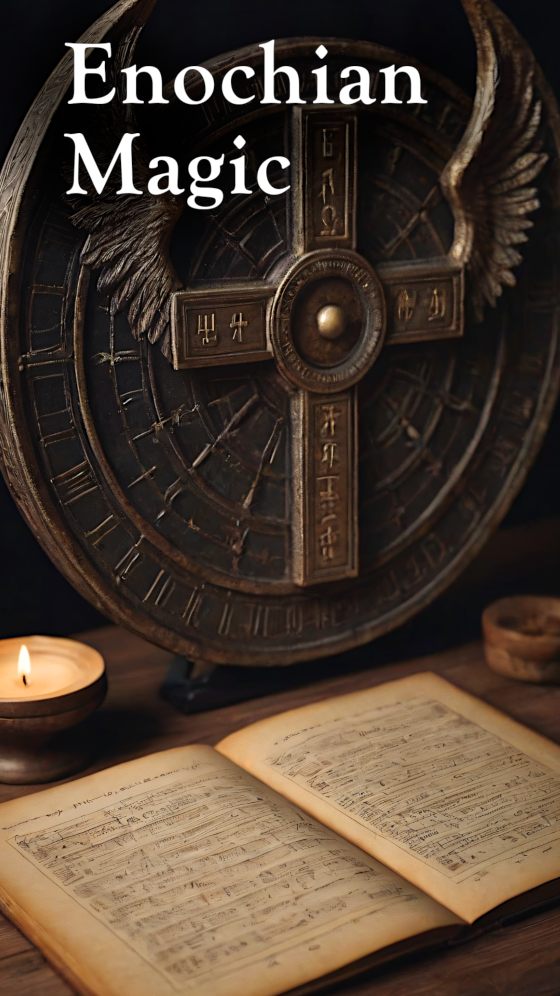
    The Celestial Tongue: The Mystical World of Enochian Magic

    In the extensive realm of esoteric knowledge, few subjects captivate the imagination as profoundly as Enochian magic. This mysterious and alluring system, crafted by the visionary minds of Renaissance scholars, offers a fascinating glimpse into what is believed to be the language of creation itself. Join me in this article as I delve into the origins, applications, and enduring power of Enochian magic, tracing its journey from its inception in the 16th century to its influence on modern-day practitioners.

    The Birth of a Celestial Language

    Enochian magic was born during the late Renaissance, a period marked by an interestingly fluid interaction between science, spirituality, and the occult. This era saw the rise of two extraordinary figures: John Dee, a brilliant mathematician and esteemed advisor to Queen Elizabeth I, and Edward Kelley, a gifted medium with an exceptional ability to penetrate the veil separating the mundane from the divine.

    The Crystal Gateway

    At the core of Dee and Kelley’s mystical endeavors was a unique tool known as the “shewstone,” what some have described as a polished obsidian mirror that served as a portal to realms beyond human perception. Through this ethereal gateway, Kelley claimed to perceive angelic beings of immense power and wisdom. Dee, ever the diligent scholar, meticulously documented every whisper and vision imparted by these celestial messengers.

    The Angelic Alphabet Unveiled

    As their sessions progressed, a remarkable revelation unfolded. The angels began to disclose a unique alphabet consisting of 21 letters, each imbued with profound spiritual significance. This celestial script would become the foundation of the Enochian language – believed by Dee and Kelley to be the very tongue spoken by angels and used by the Divine in the act of creation itself.

    Decoding the Divine: The Structure of Enochian

    Far from being a mere collection of mystical symbols, Enochian revealed itself as a fully-formed language with its own intricate grammar, syntax, and vocabulary. While bearing some similarities to earthly tongues, Enochian possessed unique features that set it apart as truly otherworldly.

    The Enochian Keys: Gateways to Cosmic Power

    At the core of Enochian practice lie the 48 Enochian Keys or Calls. These powerful invocations serve as gateways to different spiritual realms and cosmic energies. Each Key is a poetic verse designed to attune the practitioner to specific angelic forces or universal principles. When properly intoned, these Keys are said to unlock vast reservoirs of magical power and divine wisdom.

    The Elemental Tablets: Mapping the Spiritual Universe

    Through their angelic communications, Dee and Kelley received instructions for creating complex magical squares known as the Elemental Tablets. These intricate diagrams correspond to the four classical elements – Fire, Water, Air, and Earth – and serve as detailed maps of the spiritual universe. Each tablet is populated by a hierarchy of angelic beings, offering a structured approach to navigating the higher realms.

    Practical Applications: Harnessing Enochian Power

    Enochian magic is far more than a theoretical system; it offers practical tools for spiritual growth and magical workings. Practitioners use Enochian techniques for a variety of purposes:

    1. Scrying and Divination: The Enochian system provides powerful methods for peering into past, present, and future events.
    2. Astral Travel: Using Enochian Keys and visualizations, practitioners can explore the astral plane and higher spiritual realms.
    3. Invocation of Angelic Beings: Enochian rituals allow for direct communication with angelic entities, seeking their guidance and assistance.
    4. Spiritual Healing: The energies accessed through Enochian practice can be directed towards healing oneself and others.
    5. Personal Transformation: Working with Enochian forces is said to catalyze profound spiritual growth and self-realization.

    Modern Revival: Enochian in the 21st Century

    While Enochian magic fell into relative obscurity after Dee and Kelley’s time, it experienced a dramatic resurgence in the late 19th and early 20th centuries. Occult orders like the Hermetic Order of the Golden Dawn incorporated Enochian elements into their teachings, sparking renewed interest in this celestial system.

    Contemporary Practitioners

    Today, Enochian magic continues to fascinate and inspire seekers of esoteric wisdom. Modern occultists, ranging from ceremonial magicians to chaos magicians, have adapted Enochian techniques to suit their individual practices. Some notable figures who have worked with Enochian include:

    • Aleister Crowley: The infamous occultist incorporated Enochian elements into his system of Thelema.
    • Israel Regardie: A Golden Dawn adept who helped preserve and publish much of the order’s Enochian material.
    • Lon Milo DuQuette: A contemporary magician known for his accessible approach to complex magical systems, including Enochian.

    The Enochian Worldview: A Cosmic Perspective

    Enochian magic presents a captivating and intricate cosmology that challenges conventional Western esoteric thought while offering a unique perspective on the structure of the universe. This system posits a multidimensional reality that extends far beyond the physical realm, encompassing various spiritual planes and celestial hierarchies.

    At the heart of the Enochian worldview are the Aethyrs, a series of 30 concentric spiritual realms that form a cosmic onion-like structure. Each Aethyr is a distinct dimension of consciousness, vibrating at progressively higher frequencies as one ascends through them. These realms are not merely abstract concepts but vivid, experiential realities that practitioners can explore through advanced magical techniques. Each Aethyr is said to contain profound mystical truths and transformative experiences, with the highest levels approaching the pure, undifferentiated divine essence.

    The concept of the Watchtowers forms another crucial aspect of Enochian cosmology. These are envisioned as four mighty cosmic pillars or fortresses, each corresponding to one of the classical elements (Fire, Water, Air, and Earth) and aligned with the cardinal directions. The Watchtowers serve as dimensional gateways, regulating the flow of energy between the material world and higher spiritual realms. They are inhabited by various angelic and elemental forces, each with its own sphere of influence and magical properties.

    Central to Enochian practice is the Great Table, a complex magical diagram that serves as a symbolic representation of the entire created universe. This intricate structure is divided into various sections and subsections, each corresponding to different spiritual forces, elemental powers, and cosmic principles. The Great Table is not merely a theoretical construct but a practical tool used in Enochian rituals to navigate the spiritual landscape and invoke specific energies.

    The Enochian system also presents a detailed hierarchy of angelic beings, far more elaborate than traditional Western angelology. These entities are organized into various orders and suborders, each with specific roles, attributes, and areas of influence within the cosmic order. Some are associated with celestial bodies, others with natural forces or abstract concepts. Practitioners of Enochian magic seek to communicate with and enlist the aid of these beings for spiritual growth and magical operations.

    Enochian Magic and Modern Spirituality

    Despite its Renaissance origins, Enochian magic has demonstrated remarkable adaptability, finding resonance with various contemporary spiritual and esoteric movements. Its emphasis on direct spiritual experience, personal transformation, and the exploration of consciousness aligns well with the aspirations of many modern seekers who desire a more immediate and profound connection to the divine.

    The system’s complex symbolism and evocative language have proven particularly attractive to practitioners of Chaos Magic, who often incorporate Enochian elements into their eclectic approach. The Enochian script and sigils are valued for their perceived power to bypass the conscious mind and directly influence reality. Some chaos magicians use Enochian calls or angelic names as mantras or focus points for their magical workings, believing that these carry inherent power regardless of their historical context.

    In the realm of psychedelic exploration, Enochian concepts and imagery have found application as frameworks for navigating and interpreting altered states of consciousness. The system’s detailed map of spiritual realms provides a useful structure for organizing and making sense of profound psychedelic experiences. Some explorers use Enochian visualizations or invocations as a means of guiding their journeys, believing that these can help access specific states of consciousness or spiritual insights.

    The vibrational aspect of Enochian magic, particularly its use of angelic languages and names, has also attracted interest in energy healing circles. Practitioners have incorporated Enochian sounds and visualizations into their healing modalities, believing that these can help balance and align subtle energies within the body. Some healers work with specific Enochian angels or forces, invoking them for support in their therapeutic practices.

    As Enochian magic continues to evolve and integrate with modern spiritual paradigms, it remains a dynamic and influential system, offering practitioners a unique blend of ancient wisdom and contemporary relevance.

    The Controversy and the Call

    Enochian magic is not without its critics. Some scholars argue that the language is a fabrication, while others warn of the system’s potential dangers. However, for many practitioners, the proof lies in the experience itself. The power and transformative potential of Enochian magic continue to draw seekers from all walks of life.

    As we navigate an increasingly complex world, the allure of ancient magical systems like Enochian grows stronger. It offers a bridge between the mundane and the mystical, inviting us to explore the hidden dimensions of existence and our own inner potential.

    Whether viewed as a literal angelic language or a powerful symbolic system, Enochian magic remains a fascinating subject for spiritual explorers. Its intricate beauty and profound depth continue to inspire and challenge practitioners, offering a glimpse into the mysteries that lie beyond our everyday perception.

    The celestial tongue awaits those brave enough to listen – will you answer its call?
  • Profound Truths of Theosophy That Will Transform Your Spiritual Journey

    Profound Truths of Theosophy That Will Transform Your Spiritual Journey

    Theosophy, the divine wisdom that has captivated seekers for centuries, offers a transformative path to spiritual enlightenment. In this comprehensive guide, we’ll explore the fascinating origins, core principles, and far-reaching influence of this esoteric tradition.

    The Birth of Modern Theosophy

    The emergence of modern Theosophy as a spiritual and philosophical movement can be traced back to the vibrant and eclectic atmosphere of late 19th century New York City. In 1875, amidst the backdrop of rapid industrialization and growing interest in spiritualism and Eastern philosophies, a remarkable convergence of minds took place that would forever alter the landscape of Western esotericism.

    At the center of this pivotal moment was Helena Petrovna Blavatsky, an enigmatic figure whose life seemed to embody the very mysteries she sought to unveil. Born into Russian aristocracy, Blavatsky had spent years traversing the globe, immersing herself in various spiritual traditions and occult practices. Her travels had taken her from the streets of Cairo to the mountains of Tibet, where she claimed to have received instruction from advanced spiritual beings known as the Mahatmas.

    Blavatsky’s magnetic personality and vast knowledge of esoteric subjects drew to her a diverse group of seekers and intellectuals. Among these were Colonel Henry Steel Olcott, a respected lawyer and journalist with a keen interest in spiritualism, and William Quan Judge, a young Irish-American attorney fascinated by mysticism. Together, this trio would form the nucleus of what would become the Theosophical Society.

    The founding of the Society was not a sudden event, but rather the culmination of numerous discussions and meetings held in Blavatsky’s apartment, which had become a salon for those interested in the occult. These gatherings often featured lively debates on topics ranging from ancient wisdom traditions to the latest scientific discoveries, all infused with Blavatsky’s unique insights and purported psychic demonstrations.

    On November 17, 1875, the Theosophical Society was officially inaugurated with a stated mission that was breathtaking in its scope and ambition. The founders envisioned an organization that would transcend religious and cultural boundaries, seeking to uncover the fundamental truths underlying all spiritual traditions. They aimed to promote the idea of universal brotherhood, challenging the sectarian divisions and racial prejudices of their time.

    Central to the Society’s teachings was the concept of an ancient wisdom-religion, a primordial spiritual knowledge that Blavatsky claimed had been preserved by initiated adepts throughout history. This wisdom, she asserted, formed the esoteric core of all major world religions and could be accessed through careful study and spiritual development.

    Blavatsky’s role in shaping the Society’s doctrines cannot be overstated. Drawing upon her extensive travels and claimed mystical experiences, she began to articulate a comprehensive worldview that synthesized elements of Eastern philosophy, Western occultism, and her own unique insights. This synthesis found its first major expression in “Isis Unveiled,” a sprawling two-volume work published in 1877 that critiqued contemporary scientific materialism and religious dogmatism while presenting an alternative spiritual framework.

    As the Society grew, it attracted a diverse membership ranging from curious intellectuals to dedicated spiritual seekers. Branches were established in major cities across the United States and Europe, with each group engaging in study, meditation, and exploration of paranormal phenomena. The movement’s emphasis on comparative religion and Eastern philosophy played a significant role in introducing concepts like karma and reincarnation to Western audiences.

    The early years of the Theosophical Society were marked by both rapid growth and controversy. Blavatsky’s claims of psychic powers and communication with spiritual masters drew both fascination and skepticism. The Society’s challenge to established religious and scientific paradigms often placed it at odds with mainstream institutions.

    Despite these challenges, the founders remained committed to their vision of a universal spiritual movement. Olcott’s organizational skills complemented Blavatsky’s charismatic leadership, while Judge worked tirelessly to promote Theosophy in America. Together, they laid the groundwork for a movement that would have a profound and lasting impact on Western spirituality, influencing fields as diverse as art, literature, and psychology in the decades to come.

    The Seven Fundamental Principles of Theosophy

    At the heart of Theosophy lie seven profound truths that offer a radical perspective on the nature of reality:

    1. The Absolute: All existence emanates from a single, infinite, and eternal principle.
    2. Cycles of Manifestation: The universe undergoes periodic cycles of activity and rest, mirroring the rhythm of breath.
    3. The Omnipresence of Consciousness: Every particle of the cosmos possesses some degree of consciousness.
    4. Karma and Reincarnation: Our actions create ripples of cause and effect, shaping our journey through multiple lifetimes.
    5. Spiritual Evolution: All beings are on a path of continuous growth and unfoldment towards higher states of consciousness.
    6. The Septenary Nature of the Cosmos: Reality is composed of seven interpenetrating planes of existence.
    7. The Masters of Wisdom: Advanced beings guide humanity’s spiritual progress from behind the scenes.

    These principles offer a holistic framework for understanding the cosmos and our place within it, challenging conventional notions of reality and human potential.

    The Hidden Masters and the Great White Brotherhood

    One of the most intriguing aspects of Theosophy is the concept of the Masters of Wisdom, also known as Mahatmas or Adepts. These enlightened beings are said to have transcended ordinary human limitations, possessing extraordinary powers and knowledge.

    According to Theosophical teachings, the Masters form a spiritual hierarchy known as the Great White Brotherhood. This brotherhood oversees humanity’s evolution, working tirelessly to guide us towards our highest potential. Blavatsky claimed to be in direct communication with several of these Masters, including Koot Hoomi and Morya.

    The idea of hidden spiritual guides resonates deeply with many seekers, offering hope and inspiration on the path of self-transformation. It suggests that we are not alone in our spiritual journey and that higher wisdom is available to those who earnestly seek it.

    Theosophy’s Influence on Modern Thought

    The impact of Theosophy on modern spirituality, philosophy, and culture cannot be overstated. Its syncretic approach, blending Eastern and Western wisdom traditions, paved the way for the global spiritual awakening we see today.

    Bridging East and West

    Theosophy played a crucial role in introducing Eastern concepts like karma and reincarnation to Western audiences. It challenged the prevailing materialistic worldview and opened minds to alternative perspectives on reality. This East-West synthesis laid the groundwork for the modern New Age movement and the popularity of yoga and meditation in the West.

    Inspiring Scientific Inquiry

    Surprisingly, Theosophy has also influenced scientific thought. Its emphasis on the interconnectedness of all things and the existence of subtle energies has inspired research in fields like quantum physics and consciousness studies. The concept of a holographic universe, for example, bears striking similarities to Theosophical ideas about the nature of reality.

    Shaping Modern Occultism and Magic

    Theosophy’s impact on modern magical practices is profound. Its systematic approach to esoteric knowledge and emphasis on personal spiritual development have influenced numerous occult orders and magical systems. The Golden Dawn, one of the most influential magical orders of the 20th century, drew heavily from Theosophical concepts.

    Influencing Art and Literature

    The visionary ideas of Theosophy have inspired countless artists, writers, and musicians. From the abstract paintings of Wassily Kandinsky to the symphonies of Alexander Scriabin, Theosophical concepts have found expression in various art forms. The works of authors like William Butler Yeats and James Joyce also bear the imprint of Theosophical thought.

    Practical Applications of Theosophical Principles

    Theosophy is not merely a set of abstract ideas but a practical path of spiritual growth. Here are some ways to apply Theosophical principles in daily life:

    1. Meditation and Contemplation: Regular practice helps attune oneself to higher states of consciousness.
    2. Study of Sacred Texts: Exploring wisdom literature from various traditions expands one’s spiritual understanding.
    3. Service to Humanity: Actively working for the betterment of others aligns one with the principle of universal brotherhood.
    4. Mindful Living: Cultivating awareness of the interconnectedness of all life fosters compassion and ethical behavior.
    5. Exploration of Psychic Faculties: Developing latent abilities like intuition and clairvoyance through careful training.

    By integrating these practices, one can gradually unfold their inner potential and contribute to the spiritual evolution of humanity.

    Frequently Asked Questions About Theosophy

    Is Theosophy a religion?

    Theosophy is not a religion in the traditional sense but rather a spiritual philosophy that embraces truth from all sources. It encourages individuals to seek their own path while recognizing the underlying unity of all spiritual traditions.

    How does Theosophy view God?

    Theosophy posits an impersonal, infinite principle as the source of all existence, rather than a personal deity. This absolute principle manifests through various levels of reality, giving rise to the diversity we see in the universe.

    What is the Theosophical view on life after death?

    Theosophy teaches that consciousness continues after physical death, with the soul undergoing a process of review and rest before reincarnating. This cycle of rebirth allows for ongoing spiritual growth and evolution.

    How can I start studying Theosophy?

    Begin by reading foundational texts like “The Key to Theosophy” by H.P. Blavatsky. Join local Theosophical study groups or online forums to engage with other seekers. Most importantly, apply Theosophical principles in your daily life and reflect on your experiences.

    Is Theosophy compatible with modern science?

    Many Theosophists believe that true science and spirituality are complementary. Theosophy encourages scientific inquiry while also exploring realms beyond the physical. Some Theosophical concepts, like the interconnectedness of all things, find resonance in cutting-edge scientific theories.

    The Continuing Relevance of Theosophy

    In our rapidly evolving global landscape, Theosophy serves as a timeless beacon of wisdom, offering profound insights that resonate with the challenges and opportunities of our modern era. The core principle of universal brotherhood is particularly relevant today, encouraging us to transcend superficial differences and recognize the fundamental unity that binds all humanity. This comprehensive worldview encompasses both the physical and subtle dimensions of existence, providing a framework for understanding the complexities of human experience and the cosmos at large.

    Theosophy presents a compelling vision of spiritual evolution, suggesting that each individual is on a grand journey of unfoldment across multiple lifetimes. This perspective fosters patience, perseverance, and compassion in facing life’s challenges, instilling a sense of purpose as we recognize our roles in the broader cosmic narrative. By emphasizing the interconnectedness of all life forms, Theosophical teachings promote ecological awareness and encourage sustainable living, urging us to consider the far-reaching consequences of our actions on the planet and its inhabitants.

    Theosophy also offers practical tools for personal transformation through practices such as meditation and mindfulness. These techniques can enhance intuition and empathy, deepening our connection to the universal life force that permeates all existence. The Theosophical Society serves as a hub for spiritual seekers, providing resources for those interested in comparative religion, esoteric philosophy, and consciousness exploration.

    For newcomers to esoteric thought, Theosophy provides a coherent framework for understanding life’s mysteries and our place in the cosmic order. Its teachings on karma, reincarnation, and the multi-dimensional nature of humanity offer insights that can transform individual lives. As we navigate the complexities of the 21st century, Theosophy’s emphasis on ethics and interconnectedness remains profoundly relevant. By cultivating compassion and wisdom, we can work toward creating a more just and enlightened world.

  • Austin Osman Spare’s Revolutionary Magic

    Austin Osman Spare’s Revolutionary Magic

    Introduction:

    Austin Osman Spare is an incredibly important figure in the realm of modern occultism, his influence echoing through the magical community long after his time. Born in the late 19th century, Spare emerged as both a talented artist and an innovative magician, challenging the established norms of magical practice and forging new paths in occult exploration. His revolutionary approach to magic laid the groundwork for what would later become known as chaos magic, a paradigm shift in occult thinking that emphasizes personal experience and belief over rigid dogma.

    At the heart of Spare’s magical system lies the art of sigil crafting, a technique he developed and refined throughout his life. This method of distilling magical intent into symbolic form has become a cornerstone of contemporary magical practice, offering practitioners a direct and personalized approach to manifesting their will. Spare’s work in this area represents a significant departure from the complex rituals and hierarchical structures that dominated occult circles of his time.

    In this comprehensive exploration, we will delve deep into Spare’s multifaceted contributions to the world of magic. We’ll examine his unconventional techniques, many of which were considered controversial in his day and continue to challenge mainstream magical thought. From his use of sexual energy in magical workings to his exploration of altered states of consciousness, Spare’s practices pushed the boundaries of what was considered possible in magical endeavors.

    Moreover, we’ll investigate the lasting impact of Spare’s work on contemporary occult practices. His emphasis on the power of belief, the role of the subconscious mind, and the importance of individual experience in magical work continues to resonate with modern practitioners. The influence of his ideas can be seen in various branches of modern occultism, from chaos magic to certain forms of neo-shamanism.

    The Early Years of a Magical Prodigy

    Austin Osman Spare burst onto the London art scene in the early 20th century, showcasing his prodigious talent at a remarkably young age. Born in 1886 to a working-class family, Spare’s artistic gifts were evident from childhood. By the age of 13, he had already begun his artistic career as an apprentice to a stained glass maker. His raw talent and unique vision quickly garnered attention, leading to his first exhibition at the Royal Academy at the tender age of 17.

    However, it was Spare’s attraction to the occult that would truly set him apart from his contemporaries. Influenced by diverse sources such as Eastern mysticism, Theosophy, and Spiritualism, Spare began to develop his own magical system that would challenge the established occult traditions of his time.

    The Birth of Chaos Magic

    Austin Osman Spare’s approach to magic marked a significant departure from the established occult practices of his time. His innovative methods emphasized simplicity and personal effectiveness over the elaborate rituals and structured hierarchies that characterized traditional magical orders. This shift in focus represented a fundamental change in how magic was conceived and practiced.

    At the core of Spare’s magical philosophy was the belief that the individual’s will and imagination were the primary sources of magical power. He posited that complex ceremonial rituals and rigid organizational structures often served more as distractions than aids in magical work. Instead, Spare advocated for a direct engagement with the subconscious mind, believing that this was the true wellspring of magical ability.

    This revolutionary approach laid the foundation for what would eventually evolve into chaos magic. Spare’s ideas challenged the prevailing notion that magical power was the domain of select initiates or required adherence to specific dogmas. He proposed that magic was accessible to anyone willing to explore their own psyche and harness their innate creative forces.

    Spare’s system emphasized flexibility and personal experimentation. He encouraged practitioners to develop their own magical techniques based on what worked for them, rather than adhering to prescribed methods. This adaptability and focus on results over tradition became hallmarks of the chaos magic movement that would emerge decades later.

    The simplicity of Spare’s magical techniques made them highly accessible. Unlike traditional magical systems that often required years of study and initiation, Spare’s methods could be grasped and applied relatively quickly. This democratization of magical practice was a radical concept at the time and continues to influence modern occult thought.

    Spare’s emphasis on the power of belief and the malleability of reality aligned well with emerging ideas in psychology and quantum physics. His notion that belief could shape reality resonated with later magical practitioners and theorists, who saw in it a bridge between ancient magical concepts and modern scientific understanding.

    By rejecting the need for external validation or authority in magical practice, Spare’s approach empowered individuals to take control of their own spiritual and magical development. This emphasis on personal gnosis and direct experience would become central tenets of chaos magic as it developed in the latter half of the 20th century.

    In essence, Spare’s revolutionary approach to magic, with its focus on individual will, imagination, and practical results, sowed the seeds for a new paradigm in occult practice. His ideas challenged the established order and opened the door for a more dynamic, personalized approach to magic that would ultimately blossom into the diverse and innovative field of chaos magic.

    Key Principles of Spare’s Magical System:

    1. The power of belief
    2. The importance of the subconscious mind
    3. The use of sigils as magical tools
    4. The concept of “atavistic resurgence”
    5. The rejection of dogma and rigid systems

    Spare believed that magic was not about adhering to complex rituals or invoking external deities, but rather about tapping into the vast potential of the human mind. He emphasized the importance of belief, arguing that anything one could believe in with sufficient intensity could be made manifest in reality.

    Sigil Magic: Spare’s Greatest Contribution

    Perhaps Spare’s most enduring legacy is his development of sigil magic. This innovative technique involves distilling a magical intention into a symbolic representation, which is then charged with the practitioner’s will and released into the subconscious mind.

    The Process of Sigil Creation:

    1. Formulate a clear intention or desire
    2. Write out the intention as a statement
    3. Remove all repeating letters
    4. Combine the remaining letters into a unique symbol
    5. Simplify and stylize the symbol
    6. Charge the sigil through various methods
    7. Release the sigil and forget about it

    Spare’s sigil magic was groundbreaking in its effectiveness and accessibility. By bypassing the conscious mind and speaking directly to the subconscious, sigils could manifest desires more quickly and powerfully than traditional magical practices.

    Controversial Practices and Unconventional Techniques

    Spare’s magical system was not without its controversies. His emphasis on sexuality and altered states of consciousness as tools for magical work often put him at odds with more conservative occultists.

    Austin Osman Spare’s magical practices were often considered controversial and unconventional, even within occult circles. His approach to magic incorporated several elements that set him apart from his contemporaries and challenged established norms.

    Some of Spare’s More Controversial Practices:

    • The use of sexual energy in magical workings
      Spare believed that sexual energy was a potent magical force. He developed techniques to harness and direct this energy towards magical goals, incorporating both solitary and partnered sexual practices into his magical system. These methods ranged from specific forms of sexual stimulation to the use of sexual fluids in sigil creation and activation.
    • Exploration of atavistic resurgence through trance states
      Spare postulated that by accessing altered states of consciousness, practitioners could tap into primal, instinctual energies dormant in the human psyche. He developed various methods for inducing these trance states, including specialized meditation techniques, sensory deprivation practices, and ritualized breathing exercises. Through these methods, he sought to awaken what he believed were latent magical abilities tied to our evolutionary past.
    • Rejection of traditional moral constraints in magical practice
      Spare argued that conventional morality often hindered magical progress. He advocated for transcending societal norms and embracing one’s deepest desires and instincts as a path to true magical power. This philosophy led him to explore taboo subjects and practices, challenging the ethical boundaries of his contemporaries in the pursuit of magical knowledge and power.
    • Incorporation of “death postures” to achieve altered states
      Spare developed a series of specific physical postures, often uncomfortable or difficult to maintain, which he called “death postures.” He believed these postures could induce trance-like states and facilitate magical experiences. These postures were described in detail in his writings and were considered an integral part of his magical practice, designed to push the practitioner’s physical and mental limits.

    Spare believed that by tapping into primal, atavistic energies and exploring the darker aspects of the psyche, one could access greater magical power. This approach involved delving deep into the subconscious mind, confronting personal fears and desires, and embracing the raw, instinctual aspects of human nature. While this method was seen as dangerous and irresponsible by some, Spare viewed it as an essential part of his magical philosophy, arguing that true magical power could only be achieved by fully embracing all aspects of the self, including those deemed unacceptable or taboo by society.

    Despite the controversy surrounding his methods, Spare’s contributions to magical theory and practice have had a lasting impact on modern occultism. His emphasis on personal experience, intuition, and the power of the subconscious mind continues to influence numerous magical traditions and inspire practitioners today, offering a unique perspective on the nature of magic and human consciousness.

    The Zos Kia Cultus: Spare’s Magical Legacy

    In the later years of his life, Spare developed the Zos Kia Cultus, a magical system that further refined his earlier ideas. This system emphasized the importance of the body (Zos) and the universal life force (Kia) in magical practice.

    Key Concepts of the Zos Kia Cultus:

    • The body as a vehicle for magical power
    • The importance of instinct and intuition
    • The use of automatic drawing as a magical technique
    • The concept of the “alphabet of desire”

    Through the Zos Kia Cultus, Spare continued to push the boundaries of magical practice, inspiring generations of occultists to come.

    Frequently Asked Questions About Austin Osman Spare

    1. Was Austin Osman Spare a Satanist?
      No, Spare was not a Satanist. While his practices were unconventional, they were rooted in his own unique spiritual philosophy rather than any form of devil worship.
    2. How did Spare’s art relate to his magical practice?
      For Spare, art and magic were inseparable. He used automatic drawing as a means of accessing the subconscious and often incorporated magical symbols and sigils into his artwork.
    3. Did Spare belong to any magical orders?
      While Spare briefly associated with Aleister Crowley’s A∴A∴, he quickly broke away to pursue his own path, rejecting the hierarchical structure of traditional magical orders.
    4. How has Spare’s work influenced modern occultism?
      Spare’s ideas have had a profound impact on modern magical practices, particularly in the fields of chaos magic, sigil work, and the use of altered states of consciousness in magical practice.
    5. Can anyone practice Spare’s magical techniques?
      Yes, one of the strengths of Spare’s system is its accessibility. His techniques can be practiced by anyone willing to explore their own psyche and tap into their innate magical abilities.

    The Enduring Legacy of Austin Osman Spare

    Despite living much of his life in obscurity, Austin Osman Spare’s influence on modern occultism cannot be overstated. His innovative approaches to magic, particularly his development of sigil magic and the emphasis on the power of belief, have inspired countless practitioners and shaped the landscape of contemporary magical practice.

    Spare’s work continues to resonate with those seeking a more individualistic and intuitive approach to magic. His rejection of dogma and emphasis on personal experience align well with the modern spiritual seeker’s desire for authenticity and direct experience.

    As we continue to explore the frontiers of consciousness and the nature of reality, Spare’s ideas remain as relevant and powerful as ever. His legacy serves as a reminder of the transformative power of imagination and the unlimited potential that lies within each of us.

    Conclusion:

    Austin Osman Spare’s contributions to the field of occultism represent a significant paradigm shift in magical theory and practice. His innovative approaches challenged the established norms of traditional occult orders and ceremonial magic, introducing a more accessible and individualistic methodology that continues to resonate with practitioners today.

    Spare’s development of sigil magic stands as one of his most enduring legacies. This technique, which involves distilling magical intent into symbolic form, has become a cornerstone of modern magical practice. Its simplicity and effectiveness have made it a popular tool for practitioners of various magical traditions, from chaos magicians to contemporary witches.

    Spare’s ideas about the nature of consciousness and reality continue to intrigue and inspire magical practitioners and theorists. His concept of “Kia,” a primal, undifferentiated consciousness, and his exploration of altered states of awareness through techniques like the “death posture,” offer unique perspectives on the relationship between the individual psyche and the broader universe.

    The influence of Spare’s work extends beyond the realm of occultism, touching on areas such as psychology, art, and philosophy. His integration of magical practice with artistic expression has inspired generations of occult artists, while his theories about the nature of consciousness continue to provoke thought and discussion in various fields.

    As contemporary practitioners and researchers delve deeper into the mysteries of consciousness and the nature of reality, Spare’s work remains relevant and thought-provoking. His emphasis on the power of individual belief and the potential of the human mind to shape reality continues to resonate with those seeking to understand and harness the forces of magic.

  • Secrets of Pyramid Power: Mind-Blowing Ways to Amplify Your Psychic Abilities

    Secrets of Pyramid Power: Mind-Blowing Ways to Amplify Your Psychic Abilities

    Introduction: The Allure of Pyramid Power

    For centuries, pyramids have captivated the human imagination. These awe-inspiring structures, with their perfect geometric proportions, have long been associated with mystical powers and hidden knowledge. From the ancient Egyptians to modern-day spiritual seekers, people have been drawn to the mysterious energy of pyramids.

    But what if the power of pyramids isn’t just a myth? What if these remarkable structures hold the key to unlocking our latent psychic abilities and connecting us to higher realms of consciousness? In this article, we’ll delve deep into the world of pyramid power, exploring its potential to amplify psychic abilities and transform our lives.

    The Science Behind Pyramid Power

    While mainstream science may approach pyramid power with skepticism, a growing community of researchers, energy workers, and spiritual enthusiasts firmly believe that these ancient structures hold profound secrets waiting to be unlocked. The science behind pyramid power, though not yet fully accepted by conventional academia, offers fascinating insights into how these geometric marvels might influence energy, consciousness, and even the fabric of reality itself. Let’s delve deeper into some of the most compelling theories that attempt to explain the mysterious workings of pyramid power:

    Energy Accumulation and Concentration

    At the heart of pyramid power theory lies the concept of energy accumulation and concentration. Pyramids are thought to act as cosmic antennas, capable of drawing in and focusing various forms of subtle energy from the environment. This includes everything from electromagnetic frequencies to more esoteric concepts like prana or chi.

    The unique geometry of a pyramid plays a crucial role in this process. The broad base serves as a collection point, gathering energy from a wide area. As this energy moves upward through the structure, the sloping sides act like funnels, compressing and intensifying the energy flow. By the time it reaches the apex, this energy has been significantly amplified.

    Some theorists propose that this concentrated energy creates a vortex or spiral pattern within the pyramid. This spiraling effect might explain why objects placed at different levels within a pyramid experience varying degrees of energetic influence. The apex, being the focal point of this energy vortex, is often considered the most potent area for energy work and meditation.

    Resonance and Frequency Amplification

    Another intriguing aspect of pyramid power theory revolves around the concept of resonance. Just as a tuning fork vibrates at a specific frequency, pyramids are believed to resonate at particular frequencies that harmonize with natural energy patterns found throughout the universe.

    This resonance theory suggests that pyramids can amplify and modulate various energy frequencies, creating a powerful field of influence both within and around the structure. Some researchers have reported measuring distinct frequency changes inside pyramids, particularly at the so-called “King’s Chamber” position, which is approximately one-third of the way up from the base.

    The implications of this resonance effect are far-reaching. It could explain why people often report feeling a sense of calm or heightened awareness when meditating inside or near pyramids. The amplified and harmonized energies might interact with our own bioelectrical fields, potentially influencing our mental states, physical well-being, and even our capacity for psychic perception.

    Scalar Wave Generation

    Venturing into more advanced realms of pyramid power theory, we encounter the concept of scalar waves. These hypothetical waves, also known as longitudinal waves or Tesla waves (named after the inventor Nikola Tesla), are thought to be a form of energy that doesn’t conform to conventional electromagnetic principles.

    Proponents of this theory suggest that the unique shape and proportions of pyramids enable them to generate and manipulate scalar waves. Unlike traditional electromagnetic waves, scalar waves are believed to be capable of traveling faster than light and penetrating solid matter with ease. This property could explain some of the more extraordinary claims associated with pyramid power, such as the ability to preserve food or sharpen blades.

    The interaction between scalar waves and human consciousness is a particularly fascinating area of speculation. Some researchers propose that these waves can directly influence our thoughts, emotions, and even our ability to access higher states of consciousness. This could account for the reports of enhanced meditation experiences and increased psychic abilities among those who work with pyramid energy.

    Orgone Energy Accumulation

    Drawing parallels with Wilhelm Reich’s work on orgone energy, some pyramid power enthusiasts suggest that these structures might function as orgone accumulators on a grand scale. Orgone, a hypothetical universal life force, is thought to be concentrated and amplified by alternating layers of organic and inorganic materials.

    While traditional pyramids weren’t constructed with alternating materials, their massive stone blocks and intricate internal chambers could potentially create a similar effect. The theory posits that pyramids might naturally accumulate and concentrate orgone energy from the environment, creating a high-energy field that can influence biological processes and consciousness.

    Torsion Field Manipulation

    Expanding on the idea of energy manipulation, some researchers in the field of pyramid power have proposed that these structures might interact with or generate torsion fields. Torsion fields, a concept from theoretical physics, are hypothetical spinning fields that permeate all of space.

    According to this theory, the geometric shape of a pyramid could create a stable torsion field, which might explain some of the reported effects on consciousness and matter. These fields are thought to be capable of affecting the spin of particles, potentially influencing everything from the rate of chemical reactions to the flow of information in living systems.

    Quantum Entanglement and Non-Locality

    Venturing into the realm of quantum physics, some theorists speculate that pyramids might somehow tap into or amplify quantum phenomena such as entanglement and non-locality. These mind-bending concepts suggest that particles can be instantaneously connected across vast distances and that information can be transferred faster than the speed of light.

    If pyramids can indeed interact with quantum-level processes, it could provide a framework for understanding some of the more inexplicable aspects of pyramid power, such as reports of long-distance healing or the ability to influence events through focused intention within a pyramid structure.

    While these theories remain controversial and unproven by mainstream scientific standards, they offer tantalizing possibilities for understanding the potential mechanisms behind pyramid power. As research in this field continues, we may yet uncover solid evidence that bridges the gap between ancient wisdom and modern science, revealing the true nature of these enigmatic structures and their influence on energy, matter, and consciousness.

    Pyramid Power and Psychic Amplification

    Now that we understand the basics of how pyramid power might work, let’s explore how it can be used to enhance our psychic abilities:

    1. Meditation Enhancement

    Meditating within or under a pyramid structure is said to deepen your practice and facilitate easier access to altered states of consciousness. Many practitioners report more vivid visualizations, clearer intuitive insights, and a stronger sense of connection to higher realms.

    2. Third Eye Activation

    The concentrated energy at the apex of a pyramid is believed to stimulate the pineal gland, often referred to as the “third eye” in esoteric traditions. This activation may lead to enhanced intuition, clairvoyance, and other psychic abilities.

    3. Energy Field Expansion

    Regular exposure to pyramid energy is thought to strengthen and expand your personal energy field or aura. A more robust energy field can make you more sensitive to subtle energies and psychic impressions from your environment.

    4. Chakra Balancing

    Pyramids are believed to help balance and align the chakras, the energy centers of the body. When your chakras are in harmony, it becomes easier to access your innate psychic abilities and maintain a clear channel for intuitive information.

    5. Dream Enhancement

    Many people report more vivid and prophetic dreams when sleeping under or near a pyramid. The amplified energy may help you access deeper levels of the subconscious mind during sleep, leading to enhanced dream recall and lucid dreaming experiences.

    6. Thought Form Amplification

    Pyramids are sometimes described as “thought form incubators.” By focusing your intentions and visualizations within a pyramid structure, you may be able to manifest your desires more quickly and effectively.

    7. Psychic Protection

    The powerful energy field generated by a pyramid is believed to offer protection against negative energies and psychic attacks. This protective barrier can help you feel more secure and confident as you develop your psychic abilities.

    Frequently Asked Questions About Pyramid Power

    Q: Is pyramid power scientifically proven?

    A: While mainstream science remains skeptical, many independent researchers and enthusiasts have conducted experiments that suggest pyramid power is a real phenomenon. More research is needed to fully understand and validate these effects.

    Q: What size pyramid is most effective for psychic amplification?

    A: The size of the pyramid can vary depending on its intended use. For personal meditation and psychic development, a pyramid that’s large enough to sit under comfortably (about 3-4 feet tall) is often recommended. Smaller pyramids can be used for energizing objects or creating a general energy field in a room.

    Q: Do I need to use a specific material for my pyramid?

    A: While some believe that certain materials like copper or gold are more effective, many practitioners find that pyramids made from wood, cardboard, or even PVC pipes can produce noticeable effects. The most important factor is maintaining the correct proportions and alignment.

    Q: How long does it take to see results from using pyramid power?

    A: Results can vary greatly from person to person. Some people report feeling immediate effects, while others may need to work with pyramid energy for several weeks or months before noticing significant changes in their psychic abilities.

    Q: Are there any risks associated with using pyramid power?

    A: When used responsibly, pyramid power is generally considered safe. However, some people report feeling overwhelmed or experiencing headaches if they spend too much time in a pyramid’s energy field. It’s important to listen to your body and start with short exposure times, gradually increasing as you become more accustomed to the energy.

    How to Harness Pyramid Power at Home

    Ready to experience the benefits of pyramid power for yourself? Here’s a simple guide to creating your own pyramid energy generator:

    Materials Needed:

    • 4 equal-length wooden dowels or PVC pipes
    • String or thin rope
    • A protractor or angle measurement tool
    • A compass (for alignment)

    Steps:

    1. Determine the size of your pyramid. For a meditation pyramid, aim for a base width of about 4-5 feet and a height of 3-4 feet.
    2. Cut your dowels or pipes to the appropriate length. For a square-based pyramid, all four edges should be equal.
    3. Connect the dowels at the base to form a square. You can use additional short pieces of dowel or pipe connectors for this.
    4. Tie the four upper ends of the dowels together at the apex, forming the pyramid shape.
    5. Use your protractor to ensure that the angles between the base and sides are approximately 51.8 degrees (the same as the Great Pyramid of Giza).
    6. Use your compass to align one side of the pyramid’s base with magnetic north for optimal energy flow.
    7. Your pyramid structure is now complete! You can cover it with fabric or leave it open, depending on your preference.

    Maximizing Your Pyramid Power Experience

    To get the most out of your pyramid energy generator, try these tips:

    1. Meditate regularly under your pyramid, starting with short sessions and gradually increasing the duration.
    2. Place crystals or other objects you wish to energize inside the pyramid.
    3. Sleep with a small pyramid under your pillow or place your meditation pyramid over your bed.
    4. Use your pyramid as a sacred space for visualization exercises and manifestation practices.
    5. Keep a dream journal to track any changes in your dream experiences.
    6. Be patient and consistent in your practice. The effects of pyramid power can be subtle at first but may become more pronounced over time.

    Conclusion: Embracing the Power of the Pyramid

    As we’ve explored in this article, pyramid power offers a fascinating and potentially transformative approach to enhancing our psychic abilities and connecting with higher realms of consciousness. While the scientific community may still debate the validity of these claims, countless individuals have reported profound experiences and benefits from working with pyramid energy.

    By creating your own pyramid structure and incorporating it into your spiritual practice, you open yourself up to a world of possibility. Whether you’re seeking to deepen your meditation, enhance your intuition, or simply explore the mysteries of the universe, pyramid power may hold the key to unlocking your full psychic potential.

    Remember, the journey of psychic development is a personal one, and what works for one person may not work for another. Approach your exploration of pyramid power with an open mind, a spirit of curiosity, and a willingness to trust your own experiences. Who knows what hidden abilities you might discover as you harness the ancient wisdom of the pyramids?

  • Secrets of Meditation: Ancient Western Techniques You Never Knew Existed

    Secrets of Meditation: Ancient Western Techniques You Never Knew Existed

    Introduction

    Meditation, often associated with Eastern spiritual traditions, has a rich and largely overlooked history in Western culture. Long before the influx of Asian meditative practices in the 20th century, Western civilizations had developed their own forms of contemplative practices, rooted in philosophical, religious, and secular traditions.

    This comprehensive exploration delves into the fascinating world of meditation, tracing its Western origins from ancient Greek philosophy to Christian mysticism and beyond. We’ll uncover how early Western thinkers and spiritual leaders developed techniques for introspection, self-reflection, and mental clarity that parallel many aspects of what we now recognize as meditation.

    As we journey through the annals of Western history, we’ll discover how figures like Pythagoras, Socrates, and Marcus Aurelius incorporated meditative practices into their philosophical teachings. We’ll explore the contemplative traditions of early Christian desert fathers and the mystical practices of Jewish Kabbalists. These Western approaches to meditation, while distinct from their Eastern counterparts, offer valuable insights into the human quest for inner peace, self-knowledge, and spiritual growth.

    Moreover, we’ll examine how these historical Western practices have evolved and influenced modern secular meditation techniques. From mindfulness-based stress reduction to transcendental meditation, we’ll see how ancient Western wisdom has been adapted to meet the needs of contemporary society.

    This article aims to provide a balanced perspective on meditation, highlighting its Western roots while acknowledging the significant contributions of Eastern traditions. By understanding the full spectrum of meditative practices, readers can gain a deeper appreciation for this timeless pursuit of mental and emotional well-being.

    Whether you’re a history enthusiast, a spiritual seeker, or someone simply looking for effective ways to manage stress and improve focus, this exploration of Western meditation will offer valuable insights and practical techniques. Join us as we uncover the hidden Western legacy of meditation and its potential to transform our modern lives.

    The Astonishing Benefits of Meditation: More Than Just Stress Relief

    When most people think of meditation, they often picture a serene monk sitting cross-legged on a mountaintop. But the truth is, meditation is for everyone, and its benefits extend far beyond simple relaxation. Let’s explore some of the most impressive ways meditation can improve your life:

    1. Stress Reduction: Your Personal Zen Button

    In our hectic lives, stress has become an unwelcome constant. Meditation acts as a natural stress-buster, helping to lower cortisol levels and activate the body’s relaxation response. Regular practice can make you more resilient to stress, allowing you to navigate life’s challenges with greater ease and grace.

    2. Improved Focus and Concentration: Sharpen Your Mental Edge

    In a world full of distractions, the ability to focus is more valuable than ever. Meditation trains your mind to stay present and attentive, enhancing your concentration and productivity. Many practitioners report feeling more “in the zone” and able to tackle complex tasks with improved clarity and efficiency.

    3. Enhanced Emotional Regulation: Master Your Moods

    Meditation helps you develop a greater awareness of your emotions and the ability to respond to them more skillfully. This emotional intelligence can lead to better relationships, reduced anxiety, and a more positive outlook on life.

    4. Boosted Immune Function: Your Body’s Natural Defense System

    Believe it or not, meditation may be able to strengthen your immune system. Studies have shown that regular meditation practice can in some cases, increase the activity of natural killer cells, which help your body fight off illness and disease.

    5. Pain Management: A Natural Painkiller

    For those suffering from chronic pain, meditation can be a powerful ally. By changing your relationship to pain and increasing your pain tolerance, meditation may provide relief where other methods have failed.

    6. Improved Sleep: Sweet Dreams Are Made of This

    If you’re one of the millions who struggle with insomnia or poor sleep quality, meditation might be your ticket to dreamland. Regular practice can help calm an overactive mind and promote more restful, rejuvenating sleep.

    7. Increased Self-Awareness: Know Thyself

    Meditation provides a unique opportunity to explore your inner landscape. By observing your thoughts and feelings without judgment, you can gain profound insights into your behavior patterns, motivations, and values.

    8. Creativity Boost: Unleash Your Inner Artist

    Many artists, writers, and innovators credit meditation with enhancing their creative abilities. By quieting the critical mind and accessing deeper levels of consciousness, meditation can help you tap into your creative wellspring.

    The Western Roots of Meditation: A Hidden History

    While meditation is often associated with Eastern spiritual traditions, the West has a rich and largely overlooked history of contemplative practices. These Western forms of meditation, developed independently of Asian influences, have shaped philosophical, religious, and cultural traditions for millennia. This section explores the diverse and fascinating Western sources of meditative practice that existed long before the widespread adoption of Eastern meditation techniques in the 20th century.

    Ancient Greek Philosophy: The Art of Contemplation

    The ancient Greeks were pioneers in developing systematic approaches to introspection and self-reflection. Their philosophical traditions laid the groundwork for many Western meditative practices. Pythagoras, known for his mathematical discoveries, also founded a religious movement that practiced silent contemplation and self-examination. Socrates famously emphasized the importance of self-knowledge, encouraging his students to engage in deep, analytical thinking about moral and existential questions. This approach bears similarities to certain forms of analytical meditation practiced today.

    Plato, Socrates’ student, further developed these ideas, particularly in his concept of anamnesis, or recollection, which involved a form of meditative introspection to access innate knowledge. Later Greek philosophers, such as Plotinus, developed more elaborate meditative techniques. Plotinus’ method of achieving union with the One, the supreme principle of reality in his philosophy, involved a form of concentrated meditation that bears striking similarities to some Eastern practices.

    Christian Mysticism: The Desert Fathers and Beyond

    Early Christian mysticism, particularly the tradition of the Desert Fathers, developed rich meditative practices that continue to influence Western spirituality. These early monks, who lived in the deserts of Egypt, Syria, and Palestine from the 3rd to the 5th centuries CE, practiced forms of prayer and contemplation that closely resemble modern meditation techniques.

    One of the most significant practices they developed was hesychasm, a form of inner stillness and continual prayer. This practice involved repeating a short prayer, often the Jesus Prayer (“Lord Jesus Christ, Son of God, have mercy on me, a sinner”), while focusing on one’s breath. This technique bears a striking resemblance to mantra-based meditation practices found in Eastern traditions.

    The influence of the Desert Fathers extended far beyond their time. Later Christian mystics, such as Meister Eckhart in the 13th century and the anonymous author of “The Cloud of Unknowing” in the 14th century, developed sophisticated contemplative practices. These often involved forms of apophatic meditation, focusing on the ineffable nature of God, which parallels certain Buddhist concepts of emptiness.

    In the 16th century, Ignatius of Loyola, the founder of the Jesuit order, developed the Spiritual Exercises, a structured series of meditations and contemplations designed to deepen one’s relationship with God. This systematic approach to meditation and visualization has had a lasting impact on Western spiritual practices.

    Jewish Meditation: Kabbalah and Hitbodedut

    Jewish mystical traditions have long incorporated meditative practices, offering a rich, complex, and diverse set of contemplative techniques. The Kabbalistic tradition, which emerged in medieval Europe, developed complex systems of meditation aimed at achieving union with the divine. These practices often involved visualizing divine names, contemplating the sefirot (divine attributes), and engaging in letter permutations.

    One particularly notable form of Jewish meditation is hitbodedut, a practice associated with Hasidic Judaism. Developed by Rabbi Nachman of Breslov in the late 18th century, hitbodedut involves secluded, personal prayer and meditation. Practitioners engage in spontaneous, unstructured conversation with God, often in natural settings. This practice emphasizes emotional expression and self-reflection, bearing similarities to certain forms of mindfulness and open awareness meditation.

    Stoic Philosophy: Mindfulness in Ancient Rome

    The Stoic philosophers of ancient Rome developed practices that closely resemble modern mindfulness techniques. Figures such as Marcus Aurelius, Seneca, and Epictetus advocated for constant self-examination and awareness of one’s thoughts and actions. Their approach emphasized the importance of living in the present moment and accepting things beyond one’s control.

    Marcus Aurelius, in his “Meditations,” describes practices of self-reflection and contemplation that he used to maintain equanimity in the face of life’s challenges. Seneca advocated for a daily review of one’s actions and thoughts, a practice not unlike modern journaling meditation techniques. Epictetus emphasized the importance of distinguishing between what is within our control and what is not, a concept that resonates with many contemporary mindfulness teachings.

    These Stoic practices, focused on cultivating awareness, emotional regulation, and ethical behavior, offer a Western parallel to mindfulness meditation that predates the introduction of Buddhist-inspired techniques by nearly two millennia.

    Renaissance Hermeticism: The Art of Memory

    During the Renaissance, a resurgence of interest in ancient knowledge led to the development of complex meditative techniques, particularly in the realm of memory and cognition. The “art of memory,” a set of mnemonic principles and visualization techniques, required intense concentration and mental imagery that closely resembles certain forms of meditation.

    Practitioners of this art, such as Giordano Bruno, developed elaborate systems for organizing and recalling information. These involved creating detailed mental landscapes or “memory palaces” and populating them with vivid, often symbolic images. The practice required a high degree of mental focus and visualization skills, engaging the mind in ways similar to many forms of concentration meditation.

    Moreover, Renaissance Hermeticism, a philosophical and spiritual movement, incorporated meditative practices aimed at achieving spiritual transformation and gaining esoteric knowledge. These practices often involved contemplation of symbolic images, such as the Tarot or alchemical emblems, as a means of accessing higher truths.

    The Western roots of meditation, spanning from ancient Greek philosophy to Renaissance esotericism, demonstrate that contemplative practices have been an integral part of Western intellectual and spiritual traditions for millennia. These diverse approaches to meditation, developed independently of Eastern influences, offer a rich tapestry of techniques for self-reflection, spiritual growth, and mental cultivation. Recognizing this hidden history not only broadens our understanding of meditation but also highlights the universal human drive to explore consciousness and seek inner transformation.

    Western Meditation Techniques: Proven and Powerful

    While Eastern meditation practices have gained widespread popularity, Western-developed techniques have also proven to be incredibly beneficial. Here are some powerful Western meditation methods you can incorporate into your practice:

    Mindfulness-Based Stress Reduction (MBSR)

    Developed by Jon Kabat-Zinn at the University of Massachusetts Medical Center, MBSR is a structured 8-week program that combines mindfulness meditation with yoga and body awareness. It has been scientifically proven to reduce stress, anxiety, and chronic pain.

    Transcendental Meditation (TM)

    Although it has roots in ancient Vedic traditions, TM was popularized in the West by Maharishi Mahesh Yogi and has been extensively studied by Western researchers. This technique involves the use of a personalized mantra and has been shown to reduce stress and improve overall well-being.

    Centering Prayer

    Developed by Christian contemplatives in the 1970s, Centering Prayer is a method of silent prayer that prepares practitioners to receive the gift of contemplative prayer. It involves choosing a sacred word as the symbol of your intention to consent to God’s presence and action within.

    Guided Imagery

    This Western technique involves using mental imagery to promote relaxation and healing. It often incorporates all the senses and can be particularly helpful for those new to meditation or those dealing with specific health issues.

    Biofeedback Meditation

    This modern technique uses electronic monitoring of bodily processes (such as heart rate or brain waves) to train individuals to gain control over these processes. It’s particularly useful for stress reduction and pain management.

    Progressive Muscle Relaxation

    Developed by American physician Edmund Jacobson in the 1920s, this technique involves systematically tensing and relaxing different muscle groups. It’s often used in combination with other meditation practices to promote deep relaxation.

    A Simple Guided Imagery Meditation to Try

    To help you experience the benefits of meditation firsthand, here’s a quick and easy guided imagery meditation you can try right now. This practice is designed to help you relax your body and calm your mind. Find a comfortable place to sit or lie down, and let’s begin.

    1. Close your eyes and take a few deep breaths. Inhale slowly through your nose, feeling your belly expand, and exhale gently through your mouth.
    2. Imagine yourself standing on a beautiful, secluded beach. Feel the warm sand beneath your feet and the gentle sea breeze on your skin.
    3. Look out at the vast ocean before you. Notice the rhythmic movement of the waves as they roll in and out. Sync your breath with this rhythm – inhaling as the waves come in, exhaling as they recede.
    4. Now, focus on the warmth of the sun on your skin. Feel it melting away any tension in your body, starting from the top of your head and slowly moving down to your toes.
    5. Listen to the soothing sound of the waves. With each crash of the waves, imagine it washing away your worries and stress.
    6. Smell the fresh, salty air. Let it invigorate your senses and clear your mind.
    7. Look up at the clear blue sky. Watch as any lingering thoughts or concerns drift away like small, wispy clouds.
    8. Feel a sense of peace and tranquility wash over you. Allow yourself to be fully present in this moment, on this peaceful beach.
    9. When you’re ready, slowly bring your awareness back to your body. Wiggle your fingers and toes, and take a deep breath.
    10. Open your eyes, feeling refreshed and relaxed.

    This simple guided imagery meditation can be done in just a few minutes, making it perfect for a quick stress-relief break during your day. Remember, the key is to engage all your senses in the visualization, making it as vivid and real as possible. With practice, you’ll find it easier to slip into this relaxed state whenever you need it.

    Frequently Asked Questions About Meditation

    Q: How long should I meditate each day?

    A: While any amount of meditation can be beneficial, most experts recommend starting with 5-10 minutes a day and gradually increasing to 20-30 minutes. Consistency is more important than duration, so it’s better to meditate for a short time every day than for a long time occasionally.

    Q: Do I need to sit in a specific posture to meditate?

    A: While the traditional cross-legged position is popular, it’s not necessary. The most important thing is to be comfortable and maintain a straight spine. You can meditate sitting in a chair, lying down, or even walking.

    Q: What if I can’t stop my thoughts during meditation?

    A: It’s a common misconception that meditation is about stopping thoughts. Instead, it’s about observing your thoughts without getting caught up in them. If you notice your mind wandering, simply bring your attention back to your breath or chosen point of focus.

    Q: Can meditation replace sleep?

    A: While meditation can improve sleep quality and help you feel more rested, it’s not a substitute for sleep. Both meditation and adequate sleep are important for optimal health and well-being.

    Q: Is meditation religious?

    A: While meditation is practiced in many religious traditions, it doesn’t have to be religious. Many people practice meditation for its health and wellness benefits without any spiritual or religious context.

    Conclusion: Your Journey to Inner Peace Begins Now

    As we’ve explored in this article, meditation is a powerful tool for transformation that has roots in both Eastern and Western traditions. From stress reduction and improved focus to enhanced creativity and better health, the benefits of meditation are vast.

    Whether you choose to explore ancient Western contemplative practices, modern mindfulness techniques, or a combination of approaches, the key is to start and maintain a consistent practice. Remember, meditation is a skill that improves with time and patience.

    So why wait? Your journey to a calmer, more focused, and healthier you starts right now. Take a deep breath, close your eyes, and take the first step towards unlocking the incredible power of your mind through meditation. It’s as easy as trying the simple guided imagery meditation technique that I have included in this article. Try it once, just read through it. As you do so images will pop into your mind, or you will feel something. If you have benefited in any way from this simple imagery, then you can see how moving forward meditation can help you. Take that first easy step and repeat, this may open up a whole new world of personal actualization.

  • The Epic Psychic War Between Mathers and Crowley: How Their Occult Battle Shaped Modern Magic

    The Epic Psychic War Between Mathers and Crowley: How Their Occult Battle Shaped Modern Magic

    Introduction:

    The world of occultism was forever changed by the titanic psychic battle between two of its most influential figures: Samuel Liddell MacGregor Mathers and Aleister Crowley. This clash of magical titans not only reshaped the landscape of Western esotericism but also left an indelible mark on the Hermetic Order of the Golden Dawn. As we delve into the ‘arcane’ depths of this conflict, we’ll uncover the shocking truths behind their psychic warfare, the devastating spells employed, and the far-reaching consequences that continue to ripple through magical societies today.

    The Seeds of Conflict: Mentor and Student Turned Rivals

    Samuel Liddell MacGregor Mathers, co-founder of the Golden Dawn, was once a revered figure in Aleister Crowley’s magical journey. Crowley, a brilliant and ambitious young occultist, initially pledged his unwavering loyalty to Mathers and the Order. However, this harmonious relationship was not destined to last.

    As Crowley’s magical prowess grew, so did his ego and desire for power within the Golden Dawn. Mathers, sensing a threat to his authority, began to view his former protégé with suspicion and contempt. The stage was set for an epic confrontation that would shake the foundations of the occult world.

    The Arcane Arsenal: Unveiling the Mystical Weapons of Psychic Warfare

    The clash between Samuel Liddell MacGregor Mathers and Aleister Crowley was a battle fought with the formidable tools of high magic. As adepts of ceremonial magic, both men wielded an impressive array of occult techniques, turning the astral plane into their battlefield. Their magical arsenal was vast and varied, encompassing a wide range of esoteric practices that pushed the boundaries of known occult lore.

    1. Psychic Vampirism: This insidious technique, rumored to be a specialty of Mathers, involved the subtle draining of an opponent’s life force. The effects were said to be profound, leaving the victim feeling inexplicably exhausted, both mentally and physically. Those who witnessed Crowley during this period often remarked on his uncharacteristic lethargy and mental fog, leading many to suspect he was under constant psychic assault. Mathers was believed to have refined this technique to such a degree that he could sustain himself on the energy of others, prolonging his own magical workings at the expense of his adversary.
    2. Elemental Attacks: In retaliation, Crowley unleashed the raw power of the elements against his former mentor. Drawing upon his extensive knowledge of elemental magic, he would conjure storms of astral fire, ice, and lightning to batter Mathers’ psychic defenses. These elemental attacks were not mere metaphors but were believed to manifest as real phenomena in the physical world. Some Golden Dawn members reported strange weather patterns and inexplicable natural disturbances around Mathers’ residence. Crowley’s mastery over the elements was said to be so profound that he could manipulate the very fabric of reality, bending nature to his will in his assault against Mathers.
    3. Egregore Manipulation: Perhaps the most sophisticated weapon in this occult arms race was the manipulation of the Golden Dawn’s egregore. This collective thought-form, built up over years of ritual and shared belief, was the spiritual heart of the Order. Both Mathers and Crowley sought to influence this ethereal construct, attempting to turn it to their advantage. Their efforts to sway the egregore resulted in a psychic tug-of-war that left many Order members feeling conflicted and disoriented. The battle for control of the egregore was not just about power within the Order, but also about shaping the very nature of the magical current that flowed through the Golden Dawn.
    4. Curse Tablets: The combatants revived ancient magical practices, crafting elaborate curse tablets reminiscent of those used in Greco-Roman magic. These tablets, inscribed with intricate sigils and words of power, were designed to bind and hex their opponent. The creation of these artifacts was a time-consuming and energy-intensive process, requiring precise timing with astrological events and the gathering of rare magical ingredients. Each tablet was a work of dark art, imbued with the focused malevolence of its creator and designed to inflict specific magical harm on the target.
    5. Astral Projection: The pinnacle of their mystical confrontation often took place in the astral realm itself. Both Mathers and Crowley were skilled in the art of astral projection, able to send their consciousness beyond the physical body. In this ethereal battleground, they would engage in direct combat, their astral forms clashing in spectacular displays of occult prowess. These encounters were said to be so intense that they sometimes left physical marks on their bodies upon returning to normal consciousness. The astral battles were not just tests of magical skill, but also of will and imagination, with each adept attempting to outmaneuver and overwhelm the other in a realm where thought becomes reality.

    The Waning of a Magical Titan: Mathers’ Descent

    As the psychic war raged on, the toll on Samuel Liddell MacGregor Mathers became increasingly apparent. The once-great magus, who had stood at the pinnacle of Western esoteric tradition, began to show alarming signs of decline. His transformation was gradual but unmistakable, observed with growing concern by members of the Golden Dawn and the wider occult community.

    • Paranoia and Isolation: Mathers’ behavior took on a paranoid edge, his natural caution morphing into full-blown suspicion of those around him. He began to isolate himself, withdrawing from social interactions and becoming increasingly reclusive. This isolation only served to fuel his paranoia, creating a vicious cycle that further distanced him from reality and his former allies.
    • Obsessive Defense: His magical focus, once broad and visionary, narrowed to an obsessive preoccupation with defending against perceived psychic attacks. Mathers devoted countless hours to crafting elaborate protective spells and wards, often at the expense of other magical work. This singular focus led to a neglect of his duties within the Golden Dawn, with rituals left unperformed and correspondence unanswered.
    • Neglect of Order Business: The day-to-day operations of the Golden Dawn began to suffer as Mathers withdrew into his private magical battles. Important decisions were left unmade, initiations were delayed, and the hierarchical structure that had once been the Order’s strength began to crumble.
    • Physical Deterioration: The physical toll of this prolonged magical conflict became evident in Mathers’ appearance. Once robust and commanding, he began to look haggard and worn. His health deteriorated, with unexplained illnesses and a general weakening of his constitution. Some speculated that this was a direct result of Crowley’s psychic vampirism, while others believed it to be the natural consequence of Mathers’ own magical exertions.
    • Loss of Magical Potency: Perhaps most distressing to those who had known him in his prime was the apparent dimming of Mathers’ magical potency. His rituals, once known for their power and precision, became erratic and less effective. The clarity of vision that had guided the Golden Dawn in its early years seemed to desert him, replaced by confusion and inconsistency.

    Opinion within the Golden Dawn was divided on the cause of Mathers’ decline. Many attributed it directly to Crowley’s relentless psychic assaults, seeing their former leader as a victim of a younger, more aggressive magician’s ambition. Others, however, saw it as the inevitable result of Mathers’ own hubris. They believed that in claiming equality with the Secret Chiefs and demanding unquestioning loyalty, he had overreached his magical authority and was now paying the price.

    Regardless of the cause, the decline of Samuel Liddell MacGregor Mathers marked the end of an era in Western occultism. The man who had once stood as a beacon of magical knowledge and power was now a shadow of his former self, his fall serving as a cautionary tale to aspiring magicians about the dangers of unchecked magical warfare and the perils of ego in the pursuit of esoteric wisdom.

    The Golden Dawn in Turmoil: Collateral Damage of the Psychic War

    The titanic clash between Samuel Liddell MacGregor Mathers and Aleister Crowley reverberated through the Hermetic Order of the Golden Dawn, causing seismic shifts that would forever alter the landscape of Western occultism. The fallout from their psychic warfare extended far beyond their personal vendetta, reshaping magical practices and esoteric societies for generations to come.

    1. Schisms and Factions: The once-unified Golden Dawn splintered into a myriad of competing groups, each proclaiming itself the true heir to the Order’s legacy. This fragmentation gave rise to several notable offshoots:
      • Mathers established the Alpha et Omega, striving to maintain the original Golden Dawn traditions.
      • The Stella Matutina emerged under Robert William Felkin’s leadership, emphasizing a more mystical approach to magic.
      • Arthur Edward Waite formed the Holy Order of the Golden Dawn, focusing on mystical Christianity rather than practical magic.
      • Crowley founded the A∴A∴ (Astrum Argentum), incorporating elements of his burgeoning Thelemic system.

    These schisms not only divided the magical community but also sparked intense rivalries and competing claims of authenticity, adding layers of complexity to an already intricate web of occult societies.

    1. Magical Innovations: The fierce competition between Mathers and Crowley, while destructive in many aspects, also served as a powerful catalyst for magical innovation. Both men, driven by the need to assert their occult supremacy, plumbed the depths of esoteric lore and developed groundbreaking systems and practices:
      • Mathers delved deeper into Enochian magic, expanding the Golden Dawn’s system with more intricate rituals and a profound exploration of angelic languages.
      • Crowley began formulating Thelema, his own magical philosophy that blended Golden Dawn teachings with Eastern mysticism and his personal revelations.
      • Both men pioneered new techniques in astral projection and scrying, pushing the boundaries of consciousness exploration.
      • The conflict spurred advancements in practical Qabalistic magic, resulting in influential works that would shape future magical traditions.

    These innovations not only enriched the practices of their respective followers but also contributed significantly to the evolution of Western esoteric thought as a whole.

    1. Exposure of Secrets: In their attempts to undermine each other and prove their magical superiority, both Mathers and Crowley revealed many of the Order’s closely guarded secrets to the public:
      • Previously secret ritual structures and grade ceremonies were published and widely disseminated.
      • The Golden Dawn’s intricate system of correspondences, once known only to initiates, became accessible to the general public.
      • Esoteric teachings about the nature of magic and the structure of the universe were openly discussed in various publications and lectures.
      • The existence and contents of the Cipher Manuscripts, the very foundation of the Golden Dawn’s authority, were brought into question and scrutinized.

    This exposure demystified much of the Order’s allure but also democratized access to magical knowledge, allowing a broader audience to engage with these esoteric concepts.

    1. Crisis of Faith: The bitter conflict between two of the Order’s most prominent figures led many members to question their beliefs and allegiances:
      • Longtime members found themselves torn between loyalty to Mathers and the allure of Crowley’s revolutionary ideas.
      • The validity of the Order’s foundational myths, particularly the existence of the Secret Chiefs, was called into serious doubt.
      • Members began to question the efficacy of the Golden Dawn’s magical system, given the apparent inability of its leaders to resolve their conflict through magical means.
      • The ethical implications of using magic for personal vendettas became a contentious issue among the membership.

    This crisis of faith triggered a mass exodus from the Order, with many practitioners either abandoning magical pursuits entirely or seeking new spiritual paths.

    1. Occult Renaissance: Paradoxically, the public drama surrounding the Mathers-Crowley conflict and the subsequent fragmentation of the Golden Dawn ignited a renewed interest in magic and esoteric studies:
      • Sensationalized accounts of magical battles and secret societies captured the public imagination, drawing new seekers to the world of occultism.
      • The proliferation of published magical texts made esoteric knowledge more accessible than ever before.
      • New occult societies and magical orders emerged, each offering their own interpretation of the Golden Dawn’s teachings.
      • Academic interest in Western esotericism grew, leading to more scholarly research and analysis of magical traditions.
      • The conflict inspired artists, writers, and poets, who incorporated occult themes into their work, further popularizing esoteric concepts.

    This occult renaissance not only revitalized interest in traditional Western magic but also paved the way for the emergence of new magical paradigms and the eventual mainstreaming of many esoteric ideas.

    The turmoil within the Golden Dawn, precipitated by the Mathers-Crowley conflict, thus served as both a destructive force and a catalyst for growth and innovation in the world of Western occultism. The repercussions of this psychic war continue to influence magical thought and practice to this day, cementing the Golden Dawn’s place as a pivotal chapter in the history of esoteric traditions.

    FAQs: Unraveling the Mysteries of the Mathers-Crowley Conflict

    Q: How long did the psychic battle between Mathers and Crowley last?
    A: The conflict spanned several years, reaching its peak between 1900 and 1903, but its effects lingered for decades.

    Q: Did either Mathers or Crowley ever admit defeat?
    A: Neither man ever conceded defeat, with both claiming victory until their dying days.

    Q: Were there any attempts at reconciliation?
    A: While there were brief periods of truce, the fundamental rift between Mathers and Crowley was never fully healed.

    Q: How did other prominent occultists view this conflict?
    A: Opinions were divided, with some taking sides and others lamenting the damage done to the occult community.

    Q: What lasting impact did this battle have on modern magic?
    A: The conflict led to the creation of new magical orders, systems, and practices that continue to influence occultism today.

    Conclusion:

    The psychic battle between Samuel Liddell MacGregor Mathers and Aleister Crowley stands as one of the most fascinating and influential events in modern occult history. Their clash of wills and magical prowess not only reshaped the Hermetic Order of the Golden Dawn but also set the stage for the evolution of Western esotericism in the 20th century and beyond.

    This epic confrontation between two titans of the magical world had far-reaching consequences. The splintering of the Golden Dawn led to a proliferation of new magical orders and systems, each building upon the foundation laid by Mathers and Crowley while developing their own unique approaches. This diversification of magical traditions has significantly enriched the Western esoteric landscape, offering seekers a wide array of paths to explore.

    Moreover, the public nature of their feud brought occultism into the spotlight, sparking both curiosity and controversy in the wider world. This exposure contributed to the occult revival of the mid-20th century and paved the way for the more open discussion and practice of magic in contemporary society.

  • Secrets of Chaos Magick That Will Transform Your Reality

    Secrets of Chaos Magick That Will Transform Your Reality

    The Birth of a Magical Revolution

    In the 1970s, a seismic shift occurred in the world of occultism with the emergence of Chaos Magick. This revolutionary approach to magical practice sent ripples through the established esoteric community, challenging long-held beliefs and traditions. The roots of Chaos Magick can be traced back to England, where it found fertile ground in the countercultural movements of the time.

    The seeds of this magical revolution were sown decades earlier by the enigmatic artist and occultist Austin Osman Spare. Spare’s unconventional ideas about magic, particularly his work on sigils and the power of belief, laid the groundwork for what would become Chaos Magick. However, it wasn’t until the mid-1970s that these ideas would coalesce into a distinct magical current.

    The year 1976 marked a turning point in the history of Western occultism. It was during this time that the Illuminates of Thanateros (IOT) was founded, becoming the first official organization dedicated to the principles of Chaos Magick. The IOT served as a crucible for the development and dissemination of Chaos Magick techniques and philosophy, providing a structure for practitioners to explore and expand upon these radical new ideas.

    At the forefront of this magical revolution were two visionary occultists: Peter J. Carroll and Ray Sherwin. These pioneering magicians played pivotal roles in shaping the theoretical and practical foundations of Chaos Magick. Carroll, with his background in science and his keen interest in pushing the boundaries of magical practice, brought a systematic approach to the development of Chaos Magick techniques. His writings, particularly “Liber Null” and “Psychonaut,” would become seminal texts in the Chaos Magick canon.

    Ray Sherwin, often referred to as the co-founder of Chaos Magick, contributed significantly to the early development of the movement. His practical approach to magic and emphasis on results over dogma resonated with many seekers who were disillusioned with more traditional forms of occultism. Sherwin’s work, especially “The Book of Results,” provided accessible techniques for those new to magical practice.

    Together, Carroll and Sherwin laid the groundwork for what would become a global movement. Their ideas challenged the prevailing notions of what magic could be and how it should be practiced. They encouraged experimentation, personal gnosis, and a results-oriented approach that was a stark departure from the more rigid systems of traditional occultism.

    The emergence of Chaos Magick represented a paradigm shift in magical thinking. It rejected the idea that magic had to be tied to specific cultural or religious traditions, instead proposing that belief itself was a tool that could be wielded by the magician. This radical notion opened up new possibilities for magical practice, allowing practitioners to draw inspiration from a wide range of sources, including popular culture, science fiction, and personal mythology.

    As the 1970s progressed into the 1980s, Chaos Magick began to spread beyond its British origins. The movement gained traction in various parts of Europe and North America, attracting a diverse group of practitioners who were drawn to its flexibility and emphasis on personal experimentation. This growth was facilitated by the publication of books, magazines, and the formation of magical groups dedicated to exploring Chaos Magick principles.

    The impact of Chaos Magick on the wider occult community was profound. It challenged established magical orders to reconsider their approaches and opened up discussions about the nature of magic itself. Some traditionalists viewed Chaos Magick with skepticism or outright hostility, seeing it as a threat to established magical systems. Others, however, were invigorated by the fresh perspectives and innovative techniques it brought to the table.

    As Chaos Magick evolved, it began to incorporate elements from various disciplines, including quantum physics, psychology, and cybernetics. This interdisciplinary approach further distinguished it from more traditional forms of magic and appealed to a new generation of practitioners who were seeking a magical system that could keep pace with the rapidly changing modern world.

    The birth of Chaos Magick in the 1970s marked the beginning of a new era in Western occultism. It represented a bold reimagining of what magic could be and how it could be practiced. The pioneering work of Carroll, Sherwin, and the early Chaos Magicians set the stage for decades of magical innovation and exploration, influencing countless practitioners and reshaping the landscape of modern occultism.

    The Essence of Chaos Magick: Breaking the Rules to Make New Ones

    Chaos Magick stands apart from traditional magical systems, representing a revolutionary approach to the supernatural. It’s not merely another school of thought within the occult world; rather, it’s a fundamental reimagining of how we interact with magical forces. At its core, Chaos Magick prioritizes practical results over rigid adherence to established doctrines or belief systems. This results-driven philosophy encourages practitioners to push boundaries, experiment freely, and discover personalized methods that yield tangible outcomes.

    The essence of Chaos Magick lies in its adaptability and its rejection of fixed magical paradigms. It invites practitioners to become magical scientists, constantly testing hypotheses and refining techniques based on their effectiveness. This approach stands in stark contrast to more traditional magical systems that often emphasize the importance of following specific rituals or adhering to particular belief structures.

    Key Principles of Chaos Magick:

    1. Belief as a Tool: In Chaos Magick, belief is not a fixed state but a malleable instrument. Chaos Magicians, often referred to as Chaotes, cultivate the ability to adopt and discard beliefs at will. This principle is based on the idea that belief itself is a powerful magical force. By consciously choosing what to believe in the moment, practitioners can harness the power of belief to manifest their desires. This flexibility allows Chaotes to work with a wide range of magical systems, deities, or paradigms without being confined to any single worldview.
    2. Paradigm Shifting: The ability to move fluidly between different magical systems and worldviews is a cornerstone of Chaos Magick. This principle goes beyond merely borrowing techniques from various traditions; it involves fully immersing oneself in different magical paradigms as needed. A Chaos Magician might work with Norse gods one day, quantum physics the next, and fictional universes after that. This mental agility allows practitioners to access a vast array of magical resources and perspectives, enhancing their magical practice’s versatility and potency.
    3. Results-Oriented Practice: In Chaos Magick, the proof is in the pudding. Success is measured not by how closely one adheres to tradition or how complex one’s rituals are, but by the tangible results achieved. This pragmatic approach encourages practitioners to continually refine their techniques based on what works for them personally. It also fosters a spirit of innovation, as Chaotes are always seeking more effective ways to achieve their magical goals.
    4. Sigil Magick: Sigil creation and activation is one of the most iconic and widely practiced techniques in Chaos Magick. This method involves distilling a magical intention or desire into a unique symbol, often through a process of combining and stylizing letters. The sigil is then “charged” through various means, such as meditation, ecstatic dance, or sexual energy. Once charged, the sigil is typically forgotten, allowing the subconscious mind to work on manifesting the desired outcome. This technique exemplifies the Chaos Magick approach of creating personalized, results-focused magical tools.
    5. Gnosis: The attainment of altered states of consciousness, known as gnosis, is crucial in Chaos Magick practice. These states can range from deep meditation to ecstatic trance and are believed to enhance magical effectiveness significantly. The theory is that by bypassing the conscious mind’s filters and accessing deeper levels of consciousness, practitioners can more directly influence reality. Chaos Magicians employ various techniques to achieve gnosis, including meditation, sensory deprivation, exhaustion, and even the strategic use of pain or pleasure.
    6. Magical Experimentation: Chaos Magick encourages a scientific approach to magical practice. Practitioners are urged to treat their magical workings as experiments, carefully documenting their methods, intentions, and results. This systematic approach allows for the refinement of techniques over time and contributes to the collective body of knowledge within the Chaos Magick community.
    7. Personal Responsibility: With the freedom to experiment and create one’s own magical systems comes a strong emphasis on personal responsibility. Chaos Magicians are encouraged to consider the ethical implications of their workings and to take full responsibility for the outcomes of their magical practices.
    8. Integration of Modern Concepts: Chaos Magick is uniquely open to incorporating modern scientific theories, technological concepts, and pop culture elements into magical practice. This principle allows the system to evolve with the times, remaining relevant and accessible to contemporary practitioners.

    The essence of Chaos Magick lies in its adaptability, its focus on results, and its empowerment of the individual practitioner. By breaking down the barriers between different magical traditions and encouraging personal experimentation, Chaos Magick offers a dynamic and highly personalized approach to interacting with the supernatural. It challenges practitioners to question their assumptions, push their boundaries, and ultimately forge their own unique path in the world of magic.

    The Founding Fathers of Chaos Magick

    Peter J. Carroll: The Architect of Chaos

    Peter J. Carroll stands as a pivotal figure in the development of Chaos Magick, earning him the reputation as its primary theorist and codifier. His innovative approach to magical practice revolutionized the occult world in the late 1970s and early 1980s. Carroll’s seminal works, “Liber Null” and “Psychonaut,” published in 1978 and 1981 respectively, laid the groundwork for what would become the core principles and techniques of Chaos Magick.

    Carroll’s genius lay in his ability to synthesize diverse elements into a cohesive magical system. He drew inspiration from quantum theory, blending its mind-bending concepts with psychological insights and a wide array of magical traditions. This unique fusion resulted in a revolutionary approach to magic that challenged established paradigms and opened up new possibilities for practitioners.

    In his writings, Carroll emphasized the importance of results over dogma, encouraging magicians to experiment and find what works for them personally. He introduced concepts like “belief shifting” and “gnosis,” which became fundamental to Chaos Magick practice. Carroll’s work empowered practitioners to break free from rigid magical systems and explore the limitless potential of their own creativity and will.

    Ray Sherwin: The Catalyst of Change

    Alongside Carroll, Ray Sherwin played a crucial role in the birth and early development of Chaos Magick, earning him recognition as its co-founder. Sherwin’s contributions were instrumental in providing a platform for the nascent movement and shaping its early direction.

    As the editor of “The New Equinox” magazine, Sherwin created a vital space for the discussion and dissemination of Chaos Magick ideas. This publication served as a crucible for the emerging magical current, allowing Carroll and others to share their revolutionary concepts with a wider audience. Sherwin’s editorial work helped to nurture the growing community of Chaos Magicians and facilitated the cross-pollination of ideas that would come to define the movement.

    In addition to his role as an editor, Sherwin made significant contributions to Chaos Magick theory and practice through his own writings. His book “The Book of Results,” published in 1978, expanded on the practical applications of Chaos Magick, with a particular focus on sigil magic. Sherwin’s approach emphasized simplicity and effectiveness, making magical techniques accessible to a broader range of practitioners.

    Sherwin’s work complemented Carroll’s more theoretical writings, providing a practical counterpoint that helped ground Chaos Magick in real-world application. Together, Carroll and Sherwin formed a dynamic duo that laid the foundation for a magical revolution, challenging the established occult order and paving the way for a more individualistic and results-oriented approach to magic.

    The Impact of Chaos Magick on Western Occultism

    Chaos Magick has left an indelible mark on the landscape of Western occultism, challenging established paradigms and inspiring new approaches to magic:

    1. Democratization of Magic: By emphasizing results over tradition, Chaos Magick has made magical practice more accessible to people from all backgrounds.
    2. Psychological Approach: The integration of psychological concepts into magical practice has led to a more nuanced understanding of the relationship between mind and magic.
    3. Technological Integration: Chaos Magick’s embrace of modern technology and scientific concepts has paved the way for new forms of digital and tech-based magic.
    4. Cross-Pollination of Traditions: The paradigm-shifting approach of Chaos Magick has encouraged practitioners to explore and combine elements from diverse magical systems.
    5. Pop Culture Magic: Chaos Magick’s influence can be seen in the rise of pop culture magic, where fictional universes and modern myths are used as magical frameworks.

    Frequently Asked Questions About Chaos Magick

    Is Chaos Magick evil or dangerous?

    Chaos Magick is a neutral tool, neither inherently good nor evil. Like any powerful practice, it can be used responsibly or irresponsibly. The emphasis on personal ethics and results means that practitioners are encouraged to consider the consequences of their actions.

    Do I need special tools or equipment to practice Chaos Magick?

    One of the beauties of Chaos Magick is its flexibility. While some practitioners may use traditional magical tools, many Chaos Magicians create their own tools or use everyday objects. The focus is on what works for you, not on adhering to a specific set of implements.

    How long does it take to see results with Chaos Magick?

    Results can vary widely depending on the individual, the specific technique used, and the goal. Some practitioners report immediate effects, while others find that their magic unfolds over time. The key is persistence, experimentation, and maintaining a results-oriented mindset.

    Can Chaos Magick be combined with other spiritual practices?

    Absolutely! In fact, this is one of the strengths of Chaos Magick. Many practitioners incorporate elements from various traditions, including Wicca, Hermeticism, Thelema, and even non-Western practices. The goal is to find what resonates with you and produces results.

    Is Chaos Magick just psychological manipulation?

    While Chaos Magick does incorporate psychological principles, it goes beyond mere mind tricks. Practitioners believe they are interacting with real energies and forces, even if these are understood through a psychological lens. The emphasis on tangible results suggests that there’s more at play than simple self-suggestion.

    Conclusion: Embracing the Chaos

    Chaos Magick represents a paradigm shift in the world of occultism, offering a dynamic and personalized approach to magic that resonates with the modern world. By emphasizing results, flexibility, and personal experimentation, it has opened up new possibilities for magical practice and spiritual exploration.

    As we’ve seen, from its revolutionary beginnings in the 1970s to its current status as a global magical movement, Chaos Magick has consistently challenged the status quo and pushed the boundaries of what’s possible. Its influence can be felt not only in occult circles but also in art, literature, and popular culture.

    Whether you’re a seasoned magician looking to expand your practice, or a curious newcomer drawn to the idea of shaping reality through will, Chaos Magick offers a thrilling and potentially life-changing path. By embracing the chaos, we open ourselves to unlimited potential and the power to transform our lives and the world around us.

  • Unveiling the Mysteries of the Golden Dawn’s Magical Legacy

    Unveiling the Mysteries of the Golden Dawn’s Magical Legacy

    Introduction:

    In the twilight years of the 19th century, a remarkable organization emerged from the shadows of esoteric circles, forever altering the landscape of Western occultism. This clandestine society, known as the Hermetic Order of the Golden Dawn, became a beacon for some of the most brilliant and creative minds of its time. Its allure has not diminished over the decades; instead, it continues to captivate and inspire those who seek to unravel the mysteries of the unseen world.

    The Golden Dawn’s legacy is a blending of ancient wisdom, innovative magical practices, and the indelible mark of its illustrious members. In this article, we will peel back the layers of secrecy surrounding this enigmatic order, delving into its profound impact on Western magical traditions and shining a light on the extraordinary individuals who breathed life into its teachings.

    The Dawn of a Magical Renaissance

    In the year 1888, as the gaslit streets of London buzzed with the energy of the industrial age, a revolution of a different kind was taking shape in the city’s occult underbelly. Three visionary Freemasons, each accomplished in their own right, came together with a shared dream – to create a magical order that would transcend the fragmented nature of existing esoteric traditions.
    The Hermetic Order of the Golden Dawn emerged from the collaborative efforts of three visionary occultists in the late 19th century. Each brought unique expertise to the endeavor:

    1. William Robert Woodman, the senior member, contributed deep knowledge of Rosicrucianism and Freemasonry.
    2. William Wynn Westcott spearheaded the order’s creation, claiming to have unearthed and deciphered the enigmatic Cipher Manuscripts that would form the basis of the Golden Dawn’s teachings.
    3. Samuel Liddell MacGregor Mathers took on the crucial task of developing and expanding the order’s magical system, crafting much of its ritual content.

    These three men shared a bold vision – to move beyond the fragmented magical traditions of their time and create a comprehensive, unified system of esoteric wisdom. Their goal was ambitious: to develop a complete magical curriculum that would guide initiates from foundational principles to advanced practical techniques.

    Central to their work was a mysterious encoded document – the Cipher Manuscript. This cryptic text, filled with complex diagrams and hidden instructions, became the cornerstone of the Golden Dawn’s magical framework. The founders devoted themselves to unlocking its secrets, using it as a springboard to construct an intricate and far-reaching magical system unlike anything that had come before.

    Through their combined efforts, Woodman, Westcott, and Mathers laid the groundwork for what would become one of the most influential magical orders in Western occultism, shaping esoteric thought and practice for generations to come.

    A Harmony of Magical Wisdom

    The Golden Dawn’s magical system is a masterpiece of combining different spiritual traditions. It takes various esoteric ideas from many sources, such as Hermetic philosophy, Kabbalistic symbolism, alchemy, astrology, Tarot readings, and grimoire magic, and weaves them together into a cohesive whole that is more powerful than the sum of its individual parts.

    This innovative approach to magic opened up new vistas of spiritual exploration for the order’s members. No longer confined to a single tradition or school of thought, initiates were encouraged to explore the vast landscape of Western esotericism in all its diversity. The result was a magical practice that was both deeply rooted in tradition and remarkably flexible, capable of adapting to the individual needs and inclinations of each practitioner.

    The curriculum of the Golden Dawn was a carefully crafted journey of spiritual ascent. Structured around the Kabbalistic Tree of Life, it divided the magical path into a series of grades, each corresponding to one of the ten sephiroth – the divine emanations that form the blueprint of creation according to Kabbalistic thought. As initiates progressed through these grades, they underwent a process of spiritual alchemy, transforming their consciousness and expanding their magical abilities.

    Each grade was a world unto itself, with its own set of teachings, rituals, and magical practices. In the lower grades, initiates were introduced to the fundamental principles of magic and trained in basic techniques such as meditation, visualization, and ritual performance. As they ascended the Tree of Life, the teachings became increasingly complex and esoteric. In the higher grades, initiates delved into advanced magical practices such as astral projection, evocation of spirits, and the creation of magical talismans.

    The Golden Dawn’s approach to magic was both theoretical and practical. Initiates were expected to master a vast body of esoteric knowledge, studying everything from the symbolism of Hebrew letters to the magical properties of plants and minerals. But this knowledge was not meant to remain abstract – it was to be brought to life through ritual and practice.

    The order’s rituals were elaborate affairs, rich in symbolism and designed to engage all the senses. Robed in ceremonial garments, wielding magical implements, and surrounded by carefully crafted temple furniture, initiates would enact powerful dramas of spiritual transformation. These rituals were not mere theater, but carefully constructed magical operations designed to awaken latent spiritual faculties and align the initiate with cosmic forces.

    One of the most distinctive features of Golden Dawn magic was its emphasis on personal spiritual development. While many magical traditions focused solely on achieving external effects, the Golden Dawn taught that true magical power could only come through inner transformation. Initiates were encouraged to keep magical diaries, recording their experiences and insights, and to engage in regular practices of self-reflection and meditation.

    This focus on personal growth was reflected in the order’s approach to magical tools and symbols. While traditional magical systems often treated magical implements as inherently powerful objects, the Golden Dawn taught that these tools were primarily aids to concentration and visualization. The true power, they insisted, lay within the magician’s own mind and will.

    The Golden Dawn’s magical system was also notable for its scientific approach to the unseen world. Drawing inspiration from the emerging fields of psychology and comparative religion, the order sought to create a systematic and rational approach to magic. They developed elaborate systems of correspondences, linking colors, sounds, scents, and geometric shapes to specific magical forces and spiritual entities. This allowed for a highly precise and controlled approach to magical practice, where every element of a ritual could be carefully chosen for maximum effect.

    Despite its complexity, the Golden Dawn’s magical system was designed to be adaptable and practical. Initiates were encouraged to experiment and to develop their own magical techniques based on the principles they had learned. This flexibility ensured that the Golden Dawn’s teachings remained relevant and applicable to a wide range of magical goals and personal spiritual paths.

    As initiates progressed through the grades, they were gradually introduced to more advanced magical concepts and practices. In the higher grades, they learned to work with the subtle energies of the astral plane, to communicate with spiritual entities, and to tap into the power of the divine names of God. The ultimate goal was nothing less than the attainment of spiritual enlightenment and union with the divine – a state the Golden Dawn referred to as “Knowledge and Conversation of the Holy Guardian Angel.”

    The Golden Dawn’s magical system was a true renaissance of Western esotericism, breathing new life into ancient traditions and creating a framework for magical practice that would influence generations of occultists to come. Its comprehensive nature, emphasis on personal development, and synthesis of diverse traditions made it a uniquely powerful and enduring contribution to the world of Western magic.

    Famous Members and Their Contributions

    The Golden Dawn attracted an impressive roster of intellectuals, artists, and occultists. Some of the most notable members include:

    1. W.B. Yeats: The renowned Irish poet and playwright found inspiration in the Golden Dawn’s teachings, incorporating magical symbolism into his literary works.
    2. Aleister Crowley: Perhaps the most infamous member, Crowley went on to develop his own magical system, Thelema, which drew heavily from Golden Dawn principles.
    3. Arthur Machen: This Welsh author of weird fiction infused his stories with occult themes and Golden Dawn symbolism.
    4. Dion Fortune: A prolific occult writer, Fortune founded her own magical order, the Society of the Inner Light, based on Golden Dawn teachings.
    5. Florence Farr: An accomplished actress and writer, Farr served as the Chief Adept of the Isis-Urania Temple and made significant contributions to the order’s magical practices.

    These influential figures helped to disseminate Golden Dawn teachings and concepts throughout Western culture, ensuring the order’s lasting impact on occultism and the arts.

    The Golden Dawn’s Impact on Western Occultism

    The Hermetic Order of the Golden Dawn has left an indelible mark on the landscape of Western occultism, its influence permeating virtually every aspect of modern magical practice. The comprehensive and innovative system developed by the order has become a cornerstone for countless contemporary magical traditions, shaping the way practitioners approach esoteric studies and rituals. The Golden Dawn’s impact extends far beyond its original membership, touching diverse areas of occult practice and study.

    1. Ritual Magic: The Golden Dawn’s approach to ceremonial magic has set the standard for ritual practices in the Western esoteric tradition. Their elaborate and meticulously crafted rituals, with their emphasis on symbolism, correspondences, and dramatic enactment, have become a template for many contemporary magical orders. The order’s focus on the magician’s inner transformation through ritual work has particularly resonated with modern practitioners, influencing how magical ceremonies are conceptualized and performed across various traditions.
    2. Tarot: The Golden Dawn’s revolutionary approach to Tarot interpretation and symbolism has had a profound and lasting impact on the world of cartomancy. Their system of correspondences, linking Tarot cards to astrological signs, Hebrew letters, and Kabbalistic concepts, has become deeply ingrained in modern Tarot practice. Many contemporary Tarot decks draw inspiration from the Golden Dawn’s interpretations, and their methods of reading and working with the cards continue to be widely taught and utilized.
    3. Kabbalah: One of the Golden Dawn’s most significant contributions was its integration of Kabbalistic principles into a Western magical framework. By synthesizing this ancient Jewish mystical tradition with Hermetic philosophy and ceremonial magic, the order made Kabbalah more accessible to Western practitioners. This integration has led to a widespread adoption of Kabbalistic concepts in various magical systems, influencing everything from the structure of magical rituals to the understanding of cosmic principles.
    4. Astrology: The Golden Dawn’s system of astrological correspondences and techniques has been widely embraced by modern astrologers and magicians alike. Their approach, which linked astrological principles to other esoteric systems like the Tarot and Kabbalah, has enriched the practice of astrology in magical contexts. The order’s teachings on planetary hours, zodiacal attributions, and the use of astrological symbolism in magic continue to be foundational in many contemporary magical traditions.
    5. Symbolism: The rich tapestry of magical symbols and correspondences developed by the Golden Dawn remains a vital resource for occultists worldwide. Their system, which drew connections between colors, sounds, plants, stones, angels, and divine names, provides a comprehensive framework for magical practice. This intricate web of correspondences continues to be studied, expanded upon, and utilized by modern practitioners, forming the basis for countless magical operations and meditative practices.
    6. Magical Tools and Regalia: The Golden Dawn’s approach to magical implements and ceremonial attire has significantly influenced how modern occultists view and use these items. Their detailed descriptions and attributions for tools like the wand, cup, dagger, and pentacle have become standard in many magical traditions. Similarly, their use of robes, headgear, and other ritual attire has shaped the aesthetic and symbolic aspects of contemporary ceremonial magic.
    7. Elemental Magic: The order’s systematic approach to working with the classical elements (Earth, Air, Fire, and Water) has become a cornerstone of many modern magical practices. Their elemental attributions and methods for invoking and balancing elemental forces are widely used in spellwork, ritual, and personal development practices across various occult traditions.
    8. Pathworking and Visualization: The Golden Dawn’s techniques for astral projection and pathworking on the Kabbalistic Tree of Life have had a lasting impact on magical visualization practices. These methods have been adopted and adapted by numerous magical schools and have influenced modern approaches to meditation and inner journeying.
    9. Magical Orders and Initiation: The structure and initiation system of the Golden Dawn has served as a model for many subsequent magical orders. Their grade system, based on the Kabbalistic Tree of Life, and their emphasis on progressive magical training and personal development, continue to influence how magical groups organize and operate.
    10. Occult Literature: The writings of Golden Dawn members and their successors have formed a significant portion of the modern occult literary canon. Works by Aleister Crowley, Dion Fortune, Israel Regardie, and others have disseminated Golden Dawn teachings to a wide audience, ensuring the order’s continued influence on successive generations of magical practitioners.

    The Golden Dawn’s legacy in Western occultism is a testament to the order’s innovative synthesis of various esoteric traditions and its emphasis on practical magical work. By creating a comprehensive system that integrated diverse elements of Western esotericism, the Golden Dawn provided a framework that continues to inspire, challenge, and guide occultists in their magical pursuits. Its influence can be seen in the practices of Wiccans, Thelemites, chaos magicians, and countless other magical practitioners, making it one of the most significant forces in shaping modern Western occultism.

    Frequently Asked Questions

    Q1: Was the Golden Dawn a Satanic organization?

    No, the Golden Dawn was not a Satanic organization. Its teachings were based on a synthesis of various Western esoteric traditions, with a focus on spiritual growth and the pursuit of divine wisdom. The order’s practices were rooted in Hermetic philosophy, Kabbalah, and Christian mysticism, rather than Satanism or devil worship.

    Q2: Is the Golden Dawn still active today?

    While the original Hermetic Order of the Golden Dawn dissolved in the early 20th century due to internal conflicts, numerous offshoots and successor organizations continue to operate. These groups claim to carry on the traditions and teachings of the original order, adapting them for modern practitioners.

    Q3: How did one become a member of the Golden Dawn?

    Membership in the Golden Dawn was by invitation only. Prospective members needed to be recommended by existing members and undergo a thorough vetting process. Once accepted, initiates would progress through a series of grades, each requiring the mastery of specific magical knowledge and practices.

    Q4: What was the Golden Dawn’s ultimate goal?

    The Golden Dawn’s ultimate goal was the spiritual transformation and enlightenment of its members. Through the study and practice of magic, initiates sought to attain higher states of consciousness, commune with divine beings, and unlock the hidden potential within themselves.

    Q5: How did the Golden Dawn influence modern Wicca and Neopaganism?

    While the Golden Dawn was not directly connected to Wicca or Neopaganism, its magical system and practices have had a significant influence on these modern traditions. Many Wiccan and Neopagan groups have incorporated elements of Golden Dawn ritual structure, symbolism, and magical correspondences into their own practices.

    The Legacy Continues: Modern Applications of Golden Dawn Magic

    Today, the teachings of the Golden Dawn continue to inspire and guide seekers of esoteric wisdom. Modern practitioners have adapted the order’s techniques for contemporary use, applying them to areas such as:

    • Personal transformation and self-development
    • Healing and energy work
    • Divination and psychic development
    • Creative inspiration for artists and writers
    • Exploration of altered states of consciousness

    The enduring appeal of Golden Dawn magic lies in its comprehensive nature and its ability to provide a structured framework for spiritual growth and magical practice.

    Conclusion:

    The Hermetic Order of the Golden Dawn, despite its relatively brief existence in its original incarnation, has etched an enduring legacy into the fabric of Western occultism. This remarkable organization, born from the visionary minds of its founders, sparked a renaissance in magical thinking and practice that continues to reverberate through the esoteric world to this day.

    The Golden Dawn’s genius lay in its ability to synthesize diverse magical traditions into a cohesive and powerful system. Drawing from ancient wisdom and contemporary insights, the order created a magical framework that was both comprehensive and adaptable. This innovative approach allowed practitioners to explore the depths of esoteric knowledge while tailoring their magical work to their individual paths and aspirations.

    The brilliance of the Golden Dawn’s members cannot be overstated. From poets to playwrights, from scholars to visionaries, the order attracted some of the most creative and intellectually curious minds of its time. These individuals not only contributed to the development of the Golden Dawn’s teachings but also carried its influence into wider cultural spheres, infusing literature, art, and philosophy with magical insights and symbolism.

    The order’s emergence marked a turning point, bridging the gap between ancient magical traditions and the modern world. It revitalized interest in Hermeticism, Kabbalah, and other esoteric systems, presenting them in a form that resonated with the intellectual and spiritual climate of the late 19th and early 20th centuries.

    The magical wisdom cultivated within the Golden Dawn remains remarkably relevant and potent in our contemporary world. Its emphasis on personal spiritual development, its systematic approach to magical practice, and its integration of psychology and symbolism continue to offer valuable tools for those seeking to explore the hidden dimensions of reality and consciousness.

    Moreover, the Golden Dawn’s legacy extends far beyond its original teachings. It has inspired countless magical orders, spiritual traditions, and esoteric movements. Its influence can be seen in modern Wicca, Thelema, and numerous other magical systems. Even for those who do not directly follow Golden Dawn teachings, its impact on the language, symbolism, and practices of Western esotericism is undeniable.

    The Golden Dawn also serves as a testament to the importance of community and lineage in magical practice. While much of its work was deeply personal and individual, the order provided a structure for shared experiences, mutual support, and the transmission of knowledge. This balance between individual exploration and collective wisdom remains a valuable model for modern magical practitioners.

    Looking to the future, the influence of the Golden Dawn shows no signs of waning. As new generations of seekers discover its teachings, they bring fresh perspectives and interpretations, ensuring that the tradition remains vibrant and evolving.

  • Unlock Your Hidden Genius: How Dr. Raikov’s Artificial Reincarnation Technique Can Transform Your

    Unlock Your Hidden Genius: How Dr. Raikov’s Artificial Reincarnation Technique Can Transform Your

    The human brain is a marvel of untapped potential, capable of feats far beyond what most of us realize in our daily lives. Throughout history, we’ve seen extraordinary individuals like Leonardo da Vinci, Albert Einstein, and Wolfgang Amadeus Mozart push the boundaries of human achievement in their respective fields. These geniuses have long been viewed as outliers, their abilities seemingly out of reach for the average person. However, the groundbreaking work of Russian neuropsychologist Dr. Vladimir Raikov challenges this notion, suggesting that we all have the capacity to access similar levels of genius.

    In the 1970s, Dr. Raikov developed an innovative technique he called “artificial reincarnation.” This method is designed to allow ordinary individuals to tap into the mindset, skills, and creative abilities of historical geniuses. Through a combination of advanced hypnosis and targeted visualization exercises, Raikov discovered that subjects could rapidly acquire talents and knowledge that would typically require years of intensive study and practice to master.

    This article will take you on a deep dive into the world of artificial reincarnation, exploring the intricacies of Dr. Raikov’s methods and their potential to unlock hidden abilities within each of us. At the end of this article, I will also give you a step by step method so that you can incorporate this technique yourself!
    The concept of artificial reincarnation offers a tantalizing shortcut to developing our latent talents and expanding our creative horizons. By leveraging the collective wisdom and abilities of humanity’s greatest minds, we may be able to accelerate our own learning and achievement in unprecedented ways. Whether you’re an aspiring artist seeking to channel the creativity of the Old Masters, a budding scientist looking to grasp complex theories with the clarity of Einstein, or a musician aiming to compose with the fluency of Mozart, Dr. Raikov’s techniques could be the key to unlocking your full potential.

    As we explore this fascinating field, we’ll consider both the promises and the limitations of artificial reincarnation. We’ll discuss how these methods can be integrated into modern personal development practices and examine their potential impact on fields ranging from education to professional training. By the end of this article, you’ll have a comprehensive understanding of artificial reincarnation and how it might be applied to transform your own life and abilities in ways you never thought possible.

    The Raikov Effect: Unlocking Your Hidden Potential

    The Raikov Effect is a powerful mental technique designed to enhance your cognitive abilities and skills. This method encourages you to imagine yourself embodying the traits and thought processes of an expert in your field of interest. By doing so, you may be able to access untapped mental resources and accelerate your learning and performance.

    The core idea is that our brains have more capacity than we typically utilize in our day-to-day lives. By consciously adopting the mindset of a highly skilled individual, we might be able to activate dormant neural pathways and think in new, more effective ways. This approach aims to help you overcome mental barriers and self-imposed limitations, potentially leading to significant improvements in your abilities.

    While traditional learning methods often require extensive time and practice, the Raikov Effect suggests that we can make rapid progress by changing our self-perception and thought patterns. It’s about reimagining your capabilities and approaching challenges with the confidence and insight of an accomplished expert in your chosen area.

    Here’s how it works:

    1. Deep Relaxation: The process begins with achieving a state of profound calm and focus.
    2. Hypnotic Induction: Subjects enter a trance-like state, becoming highly receptive to suggestion.
    3. Age Regression: Participants are guided back to a childlike state of mind.
    4. Identity Assumption: The subject is then led to believe they are the chosen historical figure.
    5. Skill Acquisition: Through visualization and guided practice, new abilities are rapidly developed.
    6. Belief Reinforcement: The newfound skills are anchored in the subject’s psyche.
    7. Integration: The experience is brought back to the present, with abilities intact.

    Unleashing Potential Across Diverse Disciplines

    The Raikov Effect has shown remarkable versatility in its applications, demonstrating the ability to enhance skills and unlock hidden talents across a wide range of fields. Let’s explore how this technique has been applied in various domains:

    Musical Mastery

    The world of music has seen some of the most striking examples of the Raikov Effect in action. Aspiring musicians who undergo the artificial reincarnation process often experience a dramatic improvement in their performance abilities. By mentally embodying the skills and mindset of renowned virtuosos, these individuals have been able to elevate their playing to levels that astonish both instructors and audiences alike. The rapid advancement in technique, expression, and overall musicality has challenged traditional notions of how musical skill is developed.

    Artistic Awakening

    Visual arts have also proven to be a fertile ground for the application of the Raikov Effect. Individuals with little to no formal artistic training have discovered latent talents after undergoing the process. By mentally stepping into the shoes of master painters and sculptors, these participants have produced works of art that display a level of skill and creativity far beyond their previous capabilities. What’s particularly intriguing is that these newfound abilities often persist long after the initial hypnotic session, suggesting a lasting transformation in the individual’s artistic perception and execution.

    Scientific Breakthroughs

    The realm of science and academic research has not been left untouched by the potential of the Raikov Effect. Students and researchers who have experimented with this technique report experiencing sudden insights and understanding of complex scientific concepts. By adopting the thought patterns and problem-solving approaches of renowned scientists, these individuals have found themselves able to tackle challenging theories and develop innovative solutions to longstanding problems in their fields. This application of the Raikov Effect hints at its potential to accelerate scientific discovery and innovation.

    These examples across music, art, and science illustrate the broad applicability of the Raikov Effect. While the specific mechanisms at play may still be subject to ongoing research, the reported outcomes suggest that this technique has the potential to unlock hidden abilities and accelerate skill development in ways that challenge our traditional understanding of learning and human potential.

    Frequently Asked Questions About Artificial Reincarnation

    Is this just role-playing or imagination?

    No, the Raikov Effect goes far beyond simple role-playing. It taps into the vast potential of your subconscious mind, activating dormant neural pathways and unlocking genuine skills and abilities.

    How long do the effects last?

    While the most dramatic results are often seen immediately after a session, many participants report long-lasting improvements in their chosen areas of focus. With continued practice, these new abilities can become permanent.

    Can anyone learn this technique?

    Yes! While Raikov originally used complex hypnosis methods, modern adaptations of his technique have made it accessible to anyone willing to learn and practice.

    Is it safe?

    The Raikov Effect is completely safe when practiced correctly. It doesn’t involve any drugs or invasive procedures – it’s simply a powerful method of mental conditioning.

    How quickly can I expect to see results?

    Many people report noticeable improvements after just a single session. However, like any skill, consistent practice yields the best long-term results.

    The Science Behind the Magic

    While the results of artificial reincarnation may seem like magic, there’s solid neuroscience backing up its effectiveness. Here’s what’s happening in your brain:

    1. Neuroplasticity: Your brain has the ability to form new neural connections throughout life. The Raikov Effect accelerates this process, creating new pathways associated with your desired skills.
    2. Mirror Neurons: These specialized brain cells fire both when we perform an action and when we observe someone else performing it. By vividly imagining yourself as a historical genius, you’re activating these neurons as if you were actually performing at their level.
    3. Belief and the Placebo Effect: The power of belief in shaping our reality is well-documented. By fully embracing the identity of a genius, you’re harnessing the incredible potential of the placebo effect to enhance your performance.
    4. Flow State Activation: The deep focus induced during the Raikov process closely mimics the coveted “flow state” experienced by top performers across all fields.

    Practical Applications in Modern Life

    The Raikov Effect isn’t just for aspiring artists and scientists. Here are some ways you can apply this powerful technique in your everyday life:

    • Career Advancement: Channel the leadership qualities of historical figures to excel in your professional life.
    • Personal Development: Adopt the mindset of great philosophers or spiritual leaders to gain new perspectives on life’s challenges.
    • Athletic Performance: Embody the focus and determination of legendary athletes to push your physical limits.
    • Creative Pursuits: Unlock your artistic potential by tapping into the creativity of master painters, writers, or musicians.
    • Academic Success: Enhance your learning abilities by adopting the study habits and mental acuity of history’s greatest scholars.

    Unveiling Your Inner Genius: A Step-by-Step Guide to Personal Transformation

    The journey to unlocking your full potential is a deeply personal and transformative experience. By tapping into the wellspring of human achievement throughout history, we can discover new facets of our own abilities and expand our horizons in ways we never thought possible. This guide offers a structured approach to exploring and developing your latent talents, drawing inspiration from those who have excelled in their fields.

    1. Selecting Your Inspirational Muse
      Begin your journey by carefully considering the qualities and skills you wish to cultivate within yourself. Reflect on historical figures, contemporary experts, or even fictional characters who embody these traits. Choose someone whose achievements and approach to life resonate deeply with your own aspirations. This selection will serve as the cornerstone of your personal growth journey.
    2. Delving into the Mind of a Master
      Once you’ve chosen your inspirational figure, immerse yourself fully in their world. Explore their life story, study their methods, and try to understand their unique perspective on the world. Pay close attention to their problem-solving approaches, creative processes, and the philosophies that guided their work. The more deeply you can understand and internalize their mindset, the more effective your practice will be.
    3. Creating Your Personal Sanctuary
      Establish a dedicated space for your practice that feels safe, comfortable, and conducive to deep focus. This could be a quiet corner in your home, a secluded spot in nature, or any place where you feel at ease and free from distractions. Personalize this space with elements that promote relaxation and inspiration, such as soothing lighting, comfortable seating, or meaningful objects that connect you to your chosen muse.
    4. Cultivating Deep Relaxation
      Develop a personalized relaxation routine that allows you to quickly enter a state of calm focus. Experiment with various techniques such as progressive muscle relaxation, mindfulness meditation, or guided visualization. The goal is to quiet the chatter of your everyday mind and open yourself to new possibilities and perspectives.
    5. Envisioning Your Transformation
      With your body and mind in a state of relaxed receptivity, begin to vividly imagine your chosen inspirational figure. Picture them in great detail – their appearance, mannerisms, and the environment in which they thrived. Gradually, in your mind’s eye, visualize yourself merging with this figure. Imagine adopting their posture, thought patterns, and approach to their craft. Feel yourself embodying their confidence, skills, and unique perspective on the world.
    6. Engaging in Mental Practice
      While maintaining this altered state of consciousness, begin to mentally practice the skills you wish to develop. If you’re drawing inspiration from a renowned artist, visualize yourself creating masterpieces with confident brushstrokes. If your muse is a brilliant scientist, imagine yourself unraveling complex problems with clarity and insight. Make this mental practice as vivid and engaging as possible, involving all your senses to create a rich, immersive experience.
    7. Integrating New Perspectives
      As you conclude each session, take time to slowly transition back to your normal state of awareness. Consciously hold onto the insights, feelings, and new perspectives you’ve gained during your practice. Imagine these new abilities and ways of thinking becoming an integral part of who you are, seamlessly blending with your existing personality and skills.
    8. Committing to Consistent Practice
      Dedicate time each day to reinforce your new skills and mindset. This might involve short visualization sessions, practical exercises related to your chosen skill, or reflective journaling about your experiences. Consistency is key to solidifying these new neural pathways and making lasting changes in your abilities and perspective.
    9. Applying Your Newfound Abilities
      Look for opportunities in your daily life to apply the skills and perspectives you’ve been cultivating. Start with small challenges and gradually work your way up to more complex tasks or situations. Pay attention to how your approach to problems and creative endeavors may be shifting as you integrate these new abilities.
    10. Reflecting and Refining Your Approach
      Regularly take time to reflect on your progress. Notice any changes in your abilities, thought patterns, or confidence levels. Be open to adjusting your practice as needed, perhaps exploring different inspirational figures or refining your visualization techniques. Remember that personal growth is an ongoing process, and your approach may evolve as you gain new insights and experiences.

    This practice is not about losing your own identity, but rather about expanding your capabilities and accessing untapped potential within yourself. Approach it with an open mind, patience, and a sense of curiosity. As you continue to explore and refine this technique, you may discover new dimensions of your abilities that you never knew existed, opening up exciting possibilities for personal and professional growth.

    Conclusion: Embarking on Your Transformative Journey

    As we conclude our exploration of the Raikov Effect and artificial reincarnation, it’s clear that we stand at the threshold of a revolutionary approach to personal development and skill acquisition. This technique, rooted in the groundbreaking work of Dr. Vladimir Raikov, offers a unique pathway to unlocking the vast reservoirs of potential that lie dormant within each of us.

    By leveraging the power of our subconscious and drawing inspiration from history’s most brilliant minds, we open ourselves to possibilities that once seemed out of reach. This isn’t about merely imitating greatness; it’s about awakening the latent genius that resides within each of us, waiting to be discovered and nurtured.

    Remember that this journey is uniquely yours. While you may draw inspiration from historical figures and their achievements, the ultimate goal is to uncover and cultivate your own distinct talents and abilities. Use the Raikov Effect as a catalyst for your personal growth, but let your own passion and creativity guide the way.

  • The Mystical Power of Crystals: Transforming Your Life with Crystal Magic

    The Mystical Power of Crystals: Transforming Your Life with Crystal Magic

    Introduction

    For thousands of years, humans have been drawn to the allure of crystals, recognizing their innate power and beauty. These geological wonders have played significant roles in various cultures, from ancient civilizations to modern spiritual practices. Crystal magic taps into the profound energetic properties of these stones, offering a unique pathway to spiritual growth, healing, and manifestation.

    The Living Energy of Crystals

    Crystals are far more than just pretty rocks. They are living conduits of Earth’s energy, each with its own unique vibrational frequency. This living energy interacts with our own, creating a powerful synergy that can be harnessed for healing, manifestation, and spiritual growth.

    Every crystal is a testimony to the Earth’s dynamic processes, formed over millions of years under specific conditions of heat, pressure, and chemical composition. This long gestation imbues each stone with a unique energetic signature, a crystalline memory that holds the wisdom of the ages. When we work with crystals, we’re tapping into this ancient knowledge and power.

    The living energy of crystals is not static; it’s constantly interacting with its environment. This includes the energy fields of people, animals, plants, and even other crystals. When you hold a crystal or place it in your space, you’re initiating an energetic dialogue. The crystal’s vibrations begin to resonate with your own energy field, creating a harmonious exchange that can influence your physical, emotional, and spiritual well-being.

    The Science Behind Crystal Energy

    While skeptics may dismiss crystal energy as pseudoscience, there’s more to these stones than meets the eye. Some crystals, like quartz and tourmaline, exhibit the piezoelectric effect – they generate an electric charge when pressure is applied. This measurable phenomenon hints at the deeper energetic properties of crystals that practitioners have long recognized.

    The piezoelectric effect is just one example of the scientifically observable properties of crystals that lend credence to their energetic potential. Crystals also demonstrate pyroelectricity, generating electrical charge when heated or cooled, and triboluminescence, emitting light when rubbed or broken.

    Moreover, the structured lattice of atoms within crystals creates a stable, repeating pattern that resonates at specific frequencies. This orderly arrangement allows crystals to store, transmit, and amplify energy in ways that are still being explored by both scientists and metaphysical practitioners.

    Recent studies in quantum physics are also shedding new light on the potential mechanisms behind crystal energy. The field of bioelectromagnetics, which examines the interaction between electromagnetic fields and biological processes, offers intriguing possibilities for understanding how crystals might influence living systems.

    Connecting with Crystal Consciousness

    To truly work with crystals, it’s essential to understand that they are conscious beings in their own right. Each crystal has its own personality, preferences, and way of communicating. By approaching crystals with respect and openness, you can forge a deep, meaningful relationship with these stone allies.

    The concept of crystal consciousness may seem far-fetched to some, but many practitioners report profound experiences of communication and connection with their crystals. This consciousness is not like human awareness; rather, it’s a form of energetic intelligence that responds to intention, emotion, and spiritual resonance.

    To connect with crystal consciousness, one must approach these beings with an open heart and mind. Meditation with crystals is a powerful way to attune to their energy and begin a dialogue. As you hold a crystal, close your eyes and focus on your breath. Allow yourself to become aware of any sensations, images, or impressions that arise. These subtle communications are the beginnings of your crystal connection.

    Over time, as you work with your crystals, you may notice that certain stones seem to “call” to you for specific purposes or situations. This is the crystal consciousness guiding you towards the energies you need most. By honoring these intuitive nudges and treating your crystals as the sentient beings they are, you’ll develop a rich, rewarding relationship with your stone allies that enhances your magical practice and everyday life.

    Crystal Magic 101: Essential Practices for Beginners

    If you’re new to crystal magic, start with these fundamental practices to build a strong foundation:

    1. Cleansing and Charging: Before working with any crystal, cleanse it of previous energies and charge it with your intention. Popular methods include moonlight bathing, smudging with sage, or using sound vibrations.
    2. Meditation and Attunement: Spend time meditating with your crystals to attune to their energy. This practice deepens your connection and enhances the effectiveness of your magical work.
    3. Intention Setting: Clearly define your goals when working with crystals. The more specific and heartfelt your intention, the more powerful the results.
    4. Crystal Grids: Arrange crystals in geometric patterns to amplify their energy and focus it towards a specific purpose.
    5. Wearing Crystal Jewelry: Keep your chosen crystal’s energy close by wearing it as jewelry. This allows for constant energetic interaction throughout the day.

    7 Powerful Uses for Crystals in Ritual Magic

    Crystals can significantly enhance your magical practices. Here are seven potent ways to incorporate them into your rituals:

    1. Circle Casting: Use crystals to mark the four quarters when casting a sacred circle, anchoring elemental energies.
    2. Altar Decoration: Place crystals on your altar to represent deities, elements, or magical intentions.
    3. Spellwork Enhancement: Add crystals to spell bottles, sachets, or candle magic to boost the spell’s potency.
    4. Divination: Use crystal pendulums or scrying stones for divination practices.
    5. Energy Cleansing: Wave a selenite wand or black tourmaline through your space to clear negative energies.
    6. Chakra Balancing: Lay crystals on the body during rituals to align and balance the chakras.
    7. Manifestation Rituals: Hold or surround yourself with crystals that resonate with your desired outcome during manifestation work.

    Bringing Crystals into Your Life: A Step-by-Step Guide

    Ready to invite the magic of crystals into your daily life? Follow these steps to create a crystal-infused lifestyle:

    1. Research and Educate: Learn about different crystals and their properties. Books, reputable websites, and crystal workshops are excellent resources.
    2. Trust Your Intuition: When selecting crystals, let your intuition guide you. The right crystal will often “call” to you.
    3. Start Small: Begin with a few versatile crystals like clear quartz, amethyst, and black tourmaline.
    4. Create Sacred Space: Designate a special area in your home for your crystal collection and magical work.
    5. Develop a Daily Practice: Incorporate crystals into your daily routine through meditation, carrying a pocket stone, or placing crystals in your environment.
    6. Experiment and Explore: Try different crystal combinations and magical techniques to discover what works best for you.
    7. Join a Community: Connect with other crystal enthusiasts to share experiences and learn new practices.

    FAQs About Crystal Magic

    Q: How do I know which crystal to use for a specific purpose?
    A: Research crystal properties and trust your intuition. If you’re drawn to a particular crystal, it’s likely the one you need.

    Q: Can crystals really heal physical ailments?
    A: While crystals should never replace medical treatment, many practitioners report that they can support overall well-being and complement traditional healing methods.

    Q: How often should I cleanse my crystals?
    A: Cleanse your crystals after each use in magical work, or at least once a month for crystals used in your environment.

    Q: Can I use synthetic or lab-grown crystals in magic?
    A: While natural crystals are preferred by many, synthetic crystals can still be effective if you resonate with them.

    Q: How can I tell if a crystal is working for me?
    A: Pay attention to subtle changes in your energy, mood, or circumstances. Keeping a crystal journal can help track these shifts over time.

    Conclusion: Embracing the Crystal Journey

    Crystal magic offers a profound way to connect with Earth’s energy and enhance your spiritual practice. By understanding the living nature of crystals and incorporating them into your daily life and rituals, you open yourself to a world of transformation and magical potential. Remember, the most powerful magic comes from within – crystals are simply beautiful allies on your journey of growth and self-discovery.

    As you explore the enchanting realm of crystal magic, remain open to the wisdom these ancient stone beings have to share. With patience, respect, and an open heart, you’ll unlock the secrets of crystal energy and discover a deeper connection to the natural world and your own inner magic.