Self-Improvement and Interesting Knowledge

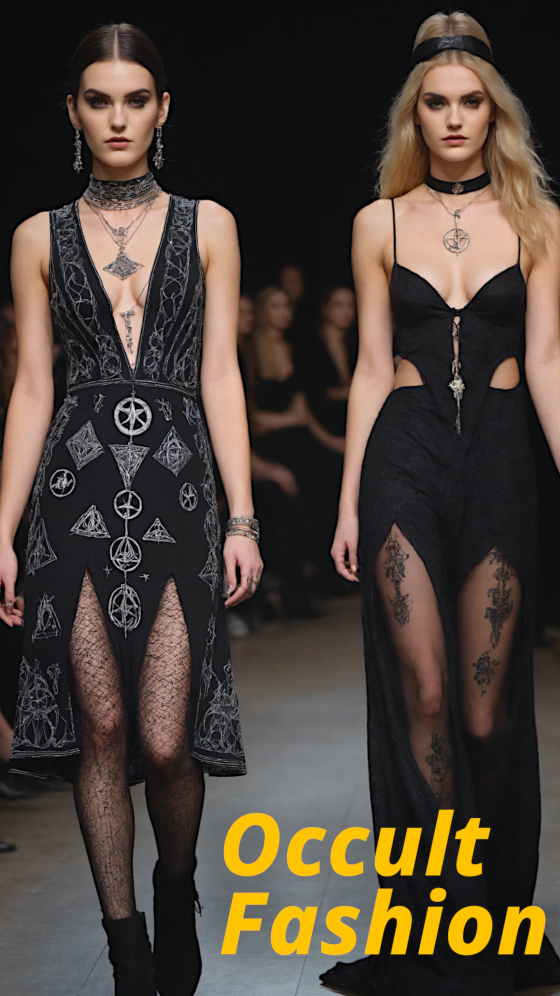
  • Occult Symbols Are Reshaping Modern Fashion

    Occult Symbols Are Reshaping Modern Fashion

    In the ever-evolving world of fashion, a strange trend has emerged, weaving ancient mysticism into the fabric of contemporary style. From high-end runways to streetwear, occult symbolism has become the latest obsession, transforming ordinary garments into powerful statements of spirituality and rebellion. But what’s driving this fascination with the esoteric, and how is it reshaping the fashion landscape? Let’s dive into the shadowy realm where fashion meets the occult and uncover the secrets behind this spellbinding phenomenon.

    The fashion industry has always been a mirror of societal shifts, and the current surge in occult imagery is no exception. As we move across what some have termed ‘interesting times’, many are turning to ancient occult knowledge and mystical practices for guidance and empowerment. Fashion designers, ever attuned to the zeitgeist, have tapped into this collective yearning for deeper meaning, incorporating esoteric symbols into their creations with unprecedented fervor.

    The Allure of the Arcane

    At the core of this fascinating trend lies a compelling blend of defiance, spiritual exploration, and visual fascination. The use of occult symbols in fashion taps into a deep-seated human desire for connection with the mysterious and unknown. These ancient emblems, steeped in centuries of lore and hidden significance, offer wearers a thrilling sense of enigma and exclusivity.

    By adorning themselves with these potent symbols, individuals can craft a unique personal identity that sets them apart from the mainstream. It’s a way of aligning oneself with age-old traditions that hint at hidden knowledge and inner power. If being elite is in fashion, as it has always been, then the most fashionable thing is to try to pretend like you are part of the most elite groups possible; the illuminati, the Masons, covens, or whatever else. This appeal has not gone unnoticed by the upper echelons of the fashion world.

    Prestigious fashion houses have wholeheartedly embraced this esoteric aesthetic, weaving it into the very fabric of their collections. Their designs now frequently feature elements drawn from mystical practices and belief systems. Tarot card imagery, with its rich symbolism and evocative archetypes, has become a particular favorite. Astrological motifs, celebrating the cosmic dance of celestial bodies, add a touch of the divine to earthly garments. Alchemical symbols, hinting at transformation and hidden truths, find their way onto everything from haute couture gowns to ready-to-wear pieces.

    Some of the most renowned names in fashion have fully committed to this occult-inspired direction. Their creations blur the boundaries between wearable art and mystical talisman, resulting in pieces that are as thought-provoking as they are visually stunning. These designs do more than just catch the eye; they ignite conversations about the interplay between personal style and spiritual exploration in our modern world.

    Streetwear Gets Spiritual

    The influence of occult symbolism has spread far beyond the rarefied world of high fashion. Streetwear, long celebrated for its ability to capture and reflect the zeitgeist of youth culture, has enthusiastically adopted this trend. This has led to a fascinating fusion of urban cool and ancient mysticism.

    Hoodies emblazoned with pentagrams, once solely the domain of metal bands, now grace the backs of fashion-forward urbanites. T-shirts featuring the enigmatic Eye of Horus, an ancient Egyptian symbol of protection and royal power, have become must-have items for style-conscious individuals. Streetwear designers are incorporating an ever-widening array of esoteric imagery into their collections, creating pieces that resonate with a generation seeking both cutting-edge style and deeper meaning in their wardrobe choices.

    This melding of street culture aesthetics with elements of ancient mysticism has given birth to a wholly new and captivating style. It’s an aesthetic that manages to be simultaneously edgy and profoundly significant. Walking down any trendy urban street, one is likely to encounter young fashion enthusiasts sporting outfits that seamlessly blend traditional occult iconography with contemporary street style sensibilities.

    The result is a look that goes beyond mere visual appeal. These ensembles make a statement, inviting observers to ponder the deeper meanings behind the symbols and sparking conversations about spirituality, history, and personal identity. It’s a style that’s as intellectually stimulating as it is visually arresting. It screams, “look at me, I am elite, I am power, I am fascinating!”

    The Double-Edged Sword of Symbolism

    While the incorporation of occult symbolism into fashion has undeniably produced some awe-inspiring and thought-provoking designs, it’s crucial to approach this trend with a measure of caution and respect. The world of esoteric symbolism is vast and complex, with each emblem potentially carrying a wealth of meanings and associations, not all of which may be immediately apparent or universally positive.

    Some symbols, when taken out of their original context or used without proper understanding, can inadvertently promote ideas or practices that might be considered harmful or offensive to certain groups. What appears to be a visually striking design element could, in fact, hold deep spiritual or cultural significance for various traditions around the world.

    This reality places a significant responsibility on both fashion designers and consumers. It’s imperative that those creating and wearing these symbolically charged garments take the time to educate themselves about the origins, meanings, and potential implications of the imagery they’re using.

    For designers, this means conducting thorough research and potentially consulting with experts in relevant fields before incorporating occult symbols into their work. It’s about striking a delicate balance between creative expression and true occult understanding.

    Consumers, too, have a role to play in this process. Before purchasing and wearing items featuring occult symbolism, it’s wise to delve into the background of these symbols. Understanding the significance behind what you’re wearing not only enriches your personal connection to the garment but also helps prevent unintentional offense or the potentially unintentional promotion of memes and rituals that are sometimes not wholly positive from a societal point of view.

    By approaching this trend with mindfulness and respect, both creators and wearers can fully appreciate the beauty and depth of occult symbolism in fashion while avoiding potential pitfalls. This thoughtful engagement allows for a more meaningful and enriching experience with this fascinating intersection of style and spirituality.

    Beyond Aesthetics: The Spiritual Connection

    The allure of occult-inspired fashion extends far beyond its visual appeal, tapping into a profound yearning for spiritual connection and self-discovery. For many individuals, adorning themselves with esoteric symbols is a deeply personal act, serving as a bridge between the material world and the realm of mystical energies. This clothing choice represents a genuine desire to explore alternative spiritual paths and delve into the wisdom of ancient traditions that have fascinated humanity for countless generations.

    By wearing these potent symbols, individuals often report feeling a sense of empowerment and alignment with cosmic forces. The act of choosing and donning clothing adorned with occult imagery becomes a ritual in itself, a daily affirmation of one’s spiritual journey and a constant reminder of the hidden mysteries. Many wearers describe feeling a tangible shift in their energy and mindset when clothed in these symbolic garments, as if the very fabric serves as a conduit for ethereal forces. Certainly, this is reason enough to research those symbols and understand the kind of influences that you are working with.

    This spiritual dimension of occult fashion has ignited a renaissance of interest in various esoteric practices. Enthusiasts are increasingly drawn to explore the intricate world of tarot, delving into its rich symbolism and using it as a tool for self-reflection and divination. Astrology, with its celestial patterns and archetypal energies, has seen a surge in popularity, with many fashion lovers incorporating zodiac-inspired elements into their wardrobes as a way to express their cosmic identity. The use of crystals for healing and energy work has also become intertwined with this fashion trend, with many incorporating gemstones into their accessories or seeking out clothing designed to align with specific chakras.

    For these fashion enthusiasts, their journey often begins with a chance encounter – perhaps a striking occult symbol on a runway piece or a mystical motif on a streetwear item. This initial spark of curiosity frequently blossoms into a full-fledged passion for occult studies. Many find themselves poring over ancient texts, attending workshops, and seeking out mentors in various esoteric traditions. In this way, fashion serves as a gateway, opening up new avenues of spiritual exploration and personal growth. Sobriety therefore becomes essential, because in wearing the symbols yourself you ignite the memetic driving others to align themselves with that certain current. It is essential to understand the symbols you wear, the hand signs you might make, and beliefs you promote. They don’t have to be in line with the average and rigid establishment, but you should at least know what you’re wearing and promoting so that it truly resonates with your personal inner frequencies.

    The Fashion Industry’s Transformation

    The infusion of occult symbolism into mainstream fashion has propelled and given exuberance to a profound transformation within the industry. No longer content with creating merely aesthetically pleasing garments, designers are now challenged to imbue their creations with layers of meaning and spiritual significance. This shift has given rise to a new paradigm in fashion design, one that prioritizes intention, symbolism, and energetic resonance alongside visual appeal.

    Many fashion houses have embraced this change wholeheartedly, revamping their design processes to incorporate deeper research and spiritual consultation. It’s becoming increasingly common for brands to collaborate with occult practitioners, scholars of esoteric traditions, and even energy workers to ensure the authenticity and potency of the symbols they use. This interdisciplinary approach has led to the creation of collections that are not just visually stunning but also energetically charged and spiritually aligned.

    The transformation extends beyond the design studio and into the realm of marketing and brand identity. Fashion campaigns have undergone a mystical makeover, with many now featuring ethereal, otherworldly aesthetics that transport viewers to realms of magic and mystery. Models are often portrayed as modern-day mystics or spiritual seekers, posed in dreamlike settings surrounded by esoteric symbols and magical artifacts. These campaigns do more than showcase clothing; they invite consumers into a lifestyle centered around spiritual exploration, personal transformation, and cosmic connection.

    This shift has also influenced the way brands interact with their customers. Many are now offering workshops, retreats, and online resources that delve into the spiritual aspects of their collections. Some have even created dedicated spaces within their stores for meditation, tarot readings, or energy healing sessions, turning the shopping experience into a holistic spiritual journey.

    The Future of Occult Fashion

    As we peer into the crystal ball of fashion’s future, it’s evident that the influence of occult symbolism is set to grow even stronger. Far from being a passing trend, this movement appears to be evolving into a fundamental aspect of contemporary fashion, reflecting society’s ongoing quest for meaning and spiritual connection in an increasingly complex and uncertain world.

    In the coming years, we can anticipate a more nuanced and sophisticated integration of esoteric elements in fashion. Designers are likely to delve even deeper into obscure mystical traditions, unearthing forgotten symbols and reinterpreting ancient magical practices for the modern wardrobe. We may see collections inspired by lesser-known spiritual paths, incorporating symbols and motifs from diverse cultures and historical periods.

    The emphasis on education and context is also expected to grow. Fashion brands may start offering more comprehensive information about the symbols and traditions they draw upon, fostering a more informed and trendy approach to these powerful images. This could take the form of detailed hang tags, augmented reality experiences that reveal the stories behind the symbols, or even educational content integrated into the shopping experience.

    As technology advances, we might witness the emergence of “smart” occult fashion – garments embedded with technology that responds to the wearer’s energy or aligns with celestial events. Imagine a jacket that subtly changes color during different moon phases or a ring that vibrates to remind you of your daily meditation practice.

    The future of occult fashion also holds the potential for greater personalization. With the rise of on-demand manufacturing and AI-driven design, we may see the creation of bespoke magical garments tailored to an individual’s spiritual path, astrological chart, or energetic needs.

    Ultimately, the continued evolution of occult symbolism in fashion reflects a broader societal shift towards seeking deeper meaning and personal transformation. As this trend matures, it has the potential to bridge the gap between material culture and spiritual practice, offering individuals a tangible way to express their inner journey and connect with the mysteries of the universe through their daily attire. And it can also herald the coming of a marketing revolution, one where it is not just brands that are being promoted, it is also beliefs and practices interwoven with occult knowledge.

    Embracing the Mystery

    The intertwining of occult symbolism and fashion marks a captivating evolution in the realm of human self-expression. This phenomenon reflects our perpetual search for deeper significance and our innate yearning to forge connections with forces that transcend our everyday existence. While it’s crucial to approach this trend with reverence and a nuanced understanding, we cannot overlook the profound transformative potential inherent in garments that bear the gravity of age-old power.

    The allure of occult symbols in clothing lies not just in their aesthetic appeal, but in their capacity to serve as conduits for energy, intention, and ancient knowledge. Each garment becomes a talisman, each accessory a tool for spiritual attunement. It is crucial therefore that we understand the talisman that we are wearing, because whether we want to believe it or not, it is quite possible that the symbols and this ritual that we wearer as fashion, is affecting not only our reality but the reality of those around us.

    This movement encourages us to view our wardrobes through a different lens, one that recognizes the power of symbolism and intention in our daily lives. It challenges us to consider how the clothes we wear might influence our mindset, our energy, and even our interactions with the world around us. In this context, fashion becomes a form of magic in itself – a way to manifest our desires, protect our energy, and express our innermost truths. Fashion is influence, so we must decide how we want to influence others and ourselves.

    Whether you’re drawn to this trend for its visual intrigue or its spiritual implications, it offers a unique opportunity to explore the hidden dimensions of your own psyche. By incorporating occult symbols into your attire, you’re not just making a fashion statement – you’re participating in an ancient tradition of using symbols as gateways to higher consciousness and self-realization.

    Frequently Asked Questions

    1. Is wearing occult symbols in fashion disrespectful?
      Incorporating occult symbols into your wardrobe can be a deeply personal and meaningful choice. However, it’s essential to approach this practice with reverence and a genuine understanding of the symbols’ origins and significance. Take the time to research the traditions from which these symbols originate, and consider the cultural context in which they’ve been used. By doing so, you can ensure that your use of these symbols comes from a place of understanding.
    2. Are there any risks associated with wearing occult symbols?
      While the physical risks of wearing occult symbols are generally minimal, it’s important to be aware of the potential social and personal implications. Some individuals may misinterpret your intentions or make assumptions about your beliefs based on the symbols you choose to wear. This could lead to misunderstandings or uncomfortable situations. To mitigate this, consider being prepared to engage in open, respectful dialogues about your fashion choices. View these interactions as opportunities to educate others and foster greater understanding of diverse spiritual practices and symbolic traditions.
    3. Can wearing occult symbols actually affect my energy or spirituality?
      Many practitioners of various spiritual traditions believe that symbols carry inherent energetic properties that can influence the wearer. This concept is rooted in the idea that everything in the universe is interconnected through energy, and symbols act as focal points for specific energetic frequencies. If you’re sensitive to subtle energies, you might find that certain symbols resonate more strongly with you or affect your mood and mindset. When choosing symbolic clothing, trust your intuition and pay attention to how different symbols make you feel. Select pieces that align with your personal energy and spiritual goals.
    4. How can I incorporate occult symbols into my wardrobe tastefully?
      Integrating occult symbols into your style can be done with subtlety and elegance. Begin by introducing small, understated pieces such as delicate jewelry or discreet accessories featuring symbolic designs. Look for symbols that hold personal meaning for you or align with your spiritual path. When incorporating these elements into your outfits, aim for balance by pairing them with classic, timeless pieces. This approach allows the symbolic elements to stand out without overwhelming your overall look. Consider the context of where you’ll be wearing these items and adjust accordingly to ensure your style remains appropriate for various settings.
    5. Where can I learn more about the meanings behind occult symbols in fashion?
      To deepen your understanding of occult symbols in fashion, explore a variety of resources. Many contemporary fashion brands now offer detailed information about the symbolism used in their designs, often providing historical context and spiritual significance. Delve into books on symbology, comparative religion, and occult traditions to gain a broader perspective on these ancient signs and their modern interpretations. Online courses and workshops focused on esoteric symbolism can provide structured learning experiences. Additionally, consider engaging with communities of practitioners or scholars who specialize in various mystical traditions to gain firsthand insights into the living use of these symbols.

    Conclusion: Decoding the Symbols, Unveiling the Truth

    The allure of ancient symbols in modern designs speaks to our collective desire for depth and significance in an often superficial world. However, as we embrace this trend, we must also cultivate a keen awareness of the power these symbols hold.

    The integration of esoteric imagery into fashion is more than just a passing fad; it’s a reflection of our society’s evolving spiritual landscape. By wearing these symbols, we’re not just making a fashion statement – we’re potentially aligning ourselves with age-old beliefs and energies. This realization should inspire us to look deeper into the symbolism that surrounds us in all aspects of life, not just in our wardrobes.

    It’s crucial to remember that symbols, like words, can have multiple meanings and interpretations. What may seem like an innocent design choice to one person could carry profound significance to another. By educating ourselves about the origins and meanings of various symbols, we gain the power to discern between genuine spiritual expression and mere aesthetic appropriation.

    Moreover, this awareness extends beyond fashion. The symbols we encounter in our daily lives – in advertising, media, and even in the logos of the companies we support – all carry messages. Some may be benign, while others might represent ideologies or intentions that don’t align with our values. By developing a discerning eye for symbolism, we equip ourselves with the tools to navigate this complex visual landscape.

    Understanding the symbolism around us allows us to peek behind the curtain of surface-level appearances. It gives us insight into the beliefs, motivations, and potential agendas of those who create and promote these symbols. This knowledge is power – the power to make informed choices about what we wear, what we support, and how we interact with the world around us.

    As we move forward in this symbol-rich world, let’s carry with us a spirit of curiosity and critical thinking. Let’s appreciate the beauty and depth that occult symbolism brings to fashion, but also remain vigilant about the messages we’re conveying and receiving. By doing so, we not only enrich our personal style but also deepen our understanding of the intricate web of meanings that shape our society.

    In the end, fashion is a powerful form of self-expression, and incorporating occult symbolism into our wardrobe can be a profound way to connect with ancient wisdom and express our spiritual inclinations. But let it also be a reminder to always look beneath the surface, to question, to learn, and to grow. For in understanding the symbols around us, we come to better understand ourselves and the world we inhabit.
  • How WitchTok is Casting a Spell on TikTok and Reshaping Modern Witchcraft and Spirituality

    How WitchTok is Casting a Spell on TikTok and Reshaping Modern Witchcraft and Spirituality

    In the dynamic realm of social media, a mystical transformation is unfolding. WitchTok, the spellbinding segment of TikTok devoted to the arcane arts and spiritual exploration, has seen an unprecedented surge in popularity. This digital gathering place for the magically inclined has amassed an astounding number of views, drawing in a fresh wave of spiritual adventurers from the younger generations. Far from being a fleeting fad, this online coven represents a significant shift in how we approach and engage with spirituality in our contemporary world.

    As we plunge into the enchanted realm of WitchTok, we’ll uncover its rapid ascension, the myriad practices it encompasses, and the far-reaching effects it’s having on modern spiritual pursuits. This virtual space has become a treasure trove of mystical knowledge, offering everything from intricate spell-weaving demonstrations to in-depth explorations of divination techniques. It serves as a gateway to the metaphysical, introducing millions of inquisitive individuals to the potential of crystal energies, the wisdom of celestial bodies, and the power of intention-setting rituals.

    What factors are fueling this remarkable upsurge in interest? In what ways does WitchTok diverge from more conventional spiritual practices? And how might this digital spiritual revolution shape the future of faith and belief in our increasingly interconnected world? Join us on an illuminating journey as we peel back the layers of mystery surrounding WitchTok and explore how this phenomenon, viewed by billions, is reshaping the spiritual terrain of our time.

    The Emergence of WitchTok: A Digital Revival of Time-Honored Traditions

    The inception of WitchTok was no chance occurrence. It arose from a perfect alignment of circumstances that thrust witchcraft and spirituality into the spotlight of social media. The advent of TikTok as a platform for bite-sized, engaging content dovetailed seamlessly with a burgeoning fascination in alternative spiritual paths, particularly among the youth.

    An Ideal Stage for Mystical Expression

    The algorithm-powered content discovery mechanism of TikTok has been instrumental in propelling WitchTok to prominence. Those with even a spark of interest in spiritual or occult matters swiftly find themselves enveloped in a rich ecosystem of related content. This creates a self-perpetuating cycle of engagement, where curiosity begets further exploration. The platform’s focus on originality and genuine expression has provided a canvas for witches and spiritual practitioners to showcase their knowledge and experiences in ways that are both innovative and deeply personal.

    A Rich Mosaic of Spiritual Paths

    WitchTok is far from a uniform entity. Instead, it presents a vibrant and varied landscape of diverse practices and belief systems. This digital realm embraces an expansive spectrum of spiritual traditions, from the structured practices of Wicca to the more eclectic approaches of modern witchcraft. It encompasses everything from age-old folk magic traditions to contemporary reinterpretations of ancient rites. This welcoming attitude towards a multitude of spiritual expressions has been a key factor in WitchTok’s widespread appeal. It offers both seasoned practitioners and curious newcomers the opportunity to explore and connect with various facets of witchcraft and spirituality, fostering a sense of belonging and discovery.

    The WitchTok Phenomenon: By the Numbers

    The growth of WitchTok has been nothing short of phenomenal. As of early 2025, videos tagged with #WitchTok have garnered over 69 billion views according to some sources, which is a staggering figure that continues to grow daily. This isn’t just a niche interest; it’s a global movement that’s capturing the imagination of millions.

    Demographics: Who’s Casting the Spells?

    While WitchTok appeals to a broad audience, it’s particularly popular among Gen Z and younger Millennials. These digital natives are drawn to the accessibility and authenticity of WitchTok content, finding in it a form of spirituality that resonates with their values and worldview.

    The most popular content on WitchTok ranges from practical tutorials on spell-casting and potion-making to more esoteric discussions of energy work and divination. Some of the trending topics include:

    • Manifestation techniques
    • Tarot and oracle card readings
    • Crystal healing and chakra balancing
    • Herbal magic and kitchen witchery
    • Astrology and zodiac compatibility
    • Shadow work and personal growth

    The Allure of WitchTok: Unraveling Its Mystical Magnetism

    WitchTok’s captivating power extends far beyond simple intrigue. This digital realm of magic and spirituality strikes a chord with fundamental human longings and aspirations, particularly among the younger generations who are actively seeking meaning and purpose in their lives.

    Empowerment and Self-Transformation

    At the heart of WitchTok’s appeal lies its profound emphasis on personal empowerment. This virtual sanctuary offers a space where individuals can explore their inner beliefs and unlock their hidden potential. Many who engage with WitchTok view the mystical arts as powerful tools for self-discovery and personal evolution. Through the practice of rituals and the crafting of spells, users find avenues to manifest their deepest desires and surmount life’s challenges.

    The allure of WitchTok lies in its promise of transformation. It presents a path where one can take control of their destiny, harnessing unseen energies to shape their reality. This empowering narrative resonates strongly with those who feel powerless in the face of life’s uncertainties, offering a sense of personal responsibility and control.

    Forging Mystical Bonds

    In our increasingly disconnected world, WitchTok emerges as a beacon of community and belonging. This digital gathering place has given rise to virtual covens, creating a global network of like-minded individuals united by their interest in the mystical arts. These online communities serve as safe havens where practitioners can freely share their experiences, exchange knowledge, and offer support to one another on their spiritual quests.

    The sense of camaraderie fostered within these digital circles is profound. Members find solace in the understanding that they are not alone in their spiritual explorations. They can seek guidance from more experienced practitioners, celebrate each other’s magical milestones, and find comfort during challenging times. This interconnectedness fulfills a deep-seated human need for belonging, creating a sense of tribe in our fragmented modern world.

    Crafting a Personalized Spiritual Path

    WitchTok stands apart from rigid religious frameworks by supporting a highly adaptable and individualized approach to spirituality. This platform praises diversity in belief and practice, encouraging users to participate in a journey of spiritual exploration and self-discovery. Practitioners are empowered to investigate various mystical traditions, cherry-picking elements that resonate with their personal beliefs and experiences.

    This flexibility allows for the creation of unique, personalized spiritual practices that are tailored to the individual’s needs, preferences, and cultural background. Users might blend elements of traditional witchcraft with modern mindfulness techniques, or combine ancestral wisdom with contemporary magical innovation. This freedom to craft one’s own spiritual path is particularly appealing to those who feel constrained by conventional religious structures or who seek a more personalized connection with the divine.

    The customizable nature of WitchTok practices also allows for seamless integration into daily life. Users can adapt rituals and spells to fit their schedules, living spaces, and available resources, making spiritual practice more accessible and sustainable in the long term.

    The Impact of WitchTok on Modern Spirituality

    WitchTok is revolutionizing the landscape of contemporary spirituality, transforming not only the practice of witchcraft but also reshaping the broader spiritual ecosystem of our time.

    Democratization of Spiritual Knowledge

    WitchTok has ushered in an unprecedented era of accessibility to spiritual and magical wisdom. The platform has dismantled traditional barriers to esoteric knowledge, making centuries-old practices and beliefs available at the fingertips of anyone with a mobile device and internet access. This digital revolution in spiritual education has opened doors that were once tightly sealed, allowing curious seekers to explore realms of mysticism that were previously shrouded in secrecy or restricted to initiates of specific traditions.

    The democratization of spiritual knowledge through WitchTok has ignited a renaissance of magical exploration. Users from diverse backgrounds can now delve into the intricacies of spell crafting, energy work, and divination techniques that were once guarded by secretive covens or passed down through carefully maintained lineages. This newfound accessibility has empowered individuals to take charge of their spiritual journeys, fostering a sense of autonomy and personal discovery in the realm of the mystical.

    Fusion of Spiritual Traditions

    WitchTok has become a melting pot of spiritual practices, enabling an unprecedented blending of diverse traditions. This digital platform serves as a crossroads where ancient wisdom meets modern interpretation, allowing practitioners to draw inspiration from a vast array of spiritual sources. The result is a rich and dynamic spiritual landscape where new, meme oriented forms of practice are constantly emerging.

    This fusion of traditions reflects the interconnected nature of our globalized world. Practitioners on WitchTok might combine elements of European folk magic with Asian energy practices, or blend Native American spirituality with African diasporic traditions. This cross-pollination of ideas and practices is giving rise to innovative spiritual approaches that are, according to some, more suited to our contemporary, multicultural society.

    The blending of traditions on WitchTok is not without its challenges and controversies. Questions of a loss of true magical understanding and a respect for closed practices are hotly debated within the community. However, this ongoing dialogue is fostering a more nuanced understanding of cultural exchange and spiritual syncretism in the digital age. There are those those that feel, that underneath all of the quick content and memetic barrage, there is a loss of the true power inherent in magical practices. Could this new trend ‘spell’ the end for true magical understanding?

    Challenging Traditional Narratives

    WitchTok is playing a pivotal role in reshaping public perceptions of witchcraft and paganism. By providing a platform for diverse practitioners to share their experiences and knowledge, the app is helping to dismantle long-standing stereotypes and misconceptions about these spiritual paths.

    Through the lens of WitchTok, viewers are exposed to the multifaceted nature of modern witchcraft. The platform showcases practitioners from all walks of life, highlighting the diversity within the community. From professional women incorporating magic into their corporate lives to stay-at-home parents using witchcraft to enhance their family’s well-being, WitchTok presents a more nuanced and relatable image of what it means to be a witch in the 21st century.

    This increased visibility and normalization of alternative spiritualities is having a ripple effect beyond the digital realm. As WitchTok demystifies witchcraft and pagan practices, it’s contributing to a broader societal shift towards greater acceptance and understanding of diverse spiritual paths. This change is reflected in the growing mainstream interest in practices like tarot reading, crystal healing, and meditation – all of which have found a home on WitchTok.
    But as we have seen throughout countless decades in the modern era, the popularization of things is not always good. Generally speaking, the popularization and the trend creation of any particular class of action, usually tends to water down and confuse true knowledge and true practice, eventually creating a mishmash that loses popular interest. Will WitchTok destroy the modern magical movement, or will it enhance it and make it more powerful?

    The Practical Side of WitchTok: Spells, Rituals, and Daily Practice

    WitchTok is not merely a platform for theoretical discussions about magic and spirituality; it’s a treasure trove of practical advice and hands-on tutorials for incorporating magical practices into everyday life.

    Everyday Magic

    A significant trend on WitchTok is the focus on accessible, everyday forms of magic that can be seamlessly integrated into modern lifestyles. Creators on the platform recognize that many of their followers lead busy lives and may not have the time or resources for elaborate rituals. As a result, they’ve developed a wealth of content centered around simple yet powerful magical practices that can be performed with minimal preparation. While this trend tends to take into consideration the modern attention span and busy living, it does also impact the quality of those practices and rituals. We could ask ourselves, were magical practices supposed to be performed in 15 second bites?

    But on a positive note, these everyday magical practices often revolve around enhancing personal well-being and achieving practical goals. For instance, WitchTok creators might share morning rituals designed to set positive intentions for the day ahead. These could include simple visualization exercises, affirmations, or brief meditations that can be performed in just a few minutes before starting the workday.

    Another popular area of focus is the use of crystals for various purposes. WitchTok tutorials might demonstrate how to choose and use specific crystals to boost focus and productivity during work or study sessions. Creators often emphasize that these practices can be discreet, allowing practitioners to incorporate magic into their lives without drawing unwanted attention in professional or academic settings.

    The integration of magical herbs into cooking is another aspect of everyday magic frequently featured on WitchTok. Creators share recipes and techniques for infusing meals with magical intent, turning the act of preparing and consuming food into a spiritual practice. This might involve using specific herbs associated with prosperity in a meal eaten before a job interview, or incorporating calming herbs into an evening tea ritual for better sleep.

    Ethical Considerations

    As WitchTok has grown in popularity and influence, so too has the discourse surrounding ethical practices within the community. Many creators on the platform have taken it upon themselves to educate their followers about the importance of responsible and respectful magical practices.

    One of the key ethical considerations frequently discussed on WitchTok is the respect for cultural traditions. As the platform simplifies the blending of diverse spiritual practices, creators emphasize the importance of understanding the origins of various rituals and techniques. They encourage followers to research the cultural context of practices they’re interested in adopting and to be mindful of closed practices that are not open to outsiders.

    Sustainability is another ethical concern that has gained traction on WitchTok. Many creators advocate for eco-friendly magical practices, recognizing the importance of environmental stewardship in spiritual work. This might involve using locally sourced or ethically harvested herbs, repurposing household items for magical tools instead of buying new ones, or performing rituals that focus on environmental protection and healing.

    The responsible use of magical powers is a topic that generates significant discussion on WitchTok. Creators often stress the importance of consent in magical workings, particularly when it comes to spells or rituals that might affect others. They caution against using magic to manipulate or harm, instead encouraging practices that focus on personal growth, healing, and positive change.
    While these are positive and responsible ways to deal with the influx of knowledge. It is hoped that in the search for the best practice, an emphasis on what could be termed a woke agenda, is not overtly emphasized. Creators may find a fine line between responsibility and political agenda; it is hoped therefore that going forward this new generation of magical practitioners can navigate that complex reality with sobriety and a lack of ego reflection.

    The Future of WitchTok: What’s Next for Digital Witchcraft?

    This is where things really get interesting

    As WitchTok continues to evolve and grow, several emerging trends hint at exciting possibilities for the future of digital witchcraft.

    Virtual Reality Rituals

    With the rapid advancement of virtual reality (VR) technology, the potential for immersive magical experiences on WitchTok is becoming increasingly possible. As VR headsets become more accessible to the average consumer, we may see the emergence of virtual covens and shared digital ritual spaces.

    These VR environments could allow practitioners from around the world to gather in richly detailed, customizable magical settings. Imagine participating in a full moon ritual where users can feel as if they’re standing in a moonlit forest glade, complete with the sounds of nature and the glow of virtual candles. Such immersive experiences could bring a new level of connection and presence to group rituals, transcending the limitations of physical distance.

    Virtual reality could also open up new possibilities for magical education on WitchTok. Users might be able to take virtual tours of sacred sites, explore three-dimensional models of magical symbols, or practice complex rituals in a safe, guided VR environment before attempting them in the physical world.

    AI-Assisted Divination

    The integration of artificial intelligence into WitchTok practices presents intriguing possibilities, particularly in the realm of divination. As AI technology becomes more sophisticated, we may see the development of AI-enhanced tools for interpreting tarot spreads, analyzing astrological charts, or even generating personalized magical guidance.

    For example, an AI system could be trained on vast databases of tarot interpretations and symbolism, allowing it to offer nuanced and contextual readings of card spreads. This could serve as a valuable learning tool for beginners, helping them understand the complex interplay of meanings in tarot readings.

    In astrology, AI could process complex celestial data to provide detailed, personalized astrological forecasts. It might even be able to suggest optimal times for performing certain rituals or spells based on astrological conditions.

    However, the integration of AI into spiritual practices is likely to be a topic of debate within the WitchTok community. While some may embrace the potential of AI to enhance and streamline their practices, others may view it as antithetical to the intuitive, personal nature of magic and divination.

    Eco-Witchcraft

    As environmental concerns continue to grow globally, we’re likely to see an increased focus on eco-friendly magical practices and nature-based spirituality on WitchTok. This trend towards “eco-witchcraft” reflects a broader societal shift towards sustainability and environmental consciousness.

    Eco-witchcraft might manifest in various ways on the platform. We may see more content focused on working with local plants and natural materials, reducing waste in magical practices, or performing rituals aimed at environmental healing and protection. Creators might share tips for creating biodegradable spell components or demonstrate how to repurpose household items for magical tools instead of buying new ones.

    There could also be a resurgence of interest in traditional, nature-based magical systems that emphasize harmony with the natural world. This might include exploring indigenous magical practices (with proper respect and attribution), delving into the magical properties of local ecosystems, or developing new rituals that address modern environmental challenges.

    As WitchTok continues to evolve, these trends and others yet to emerge will shape the future of digital witchcraft. The platform’s ability to adapt to new technologies and societal shifts while maintaining a connection to ancient wisdom will likely ensure its continued relevance in the ever-changing landscape of modern spirituality.

    Frequently Asked Questions About WitchTok

    What exactly is WitchTok?

    WitchTok is a community on TikTok dedicated to witchcraft, magic, and spiritual practices. It’s a digital space where practitioners share spells, rituals, divination techniques, and other occult-related content through short videos.

    Is WitchTok only for practicing witches?

    No, WitchTok is open to anyone interested in witchcraft or alternative spiritualities. Many viewers are simply curious about the practices or enjoy the aesthetic without necessarily practicing themselves.

    What kind of content can I find on WitchTok?

    WitchTok content includes spell tutorials, tarot readings, crystal healing guides, astrology discussions, herb magic, manifestation techniques, and personal stories about spiritual experiences.

    While some WitchTok content may draw from Wiccan or Pagan traditions, it’s not tied to any single religion. The community embraces a wide range of spiritual practices and beliefs.

    How has WitchTok impacted modern spirituality?

    WitchTok has made spiritual and magical knowledge more accessible, encouraged the blending of different traditions, and helped challenge negative stereotypes about witchcraft and paganism. But it may have also caused a blending of traditions that might in the end water down the whole. It is hoped that this community stays on top of these challenges.

    Are the practices on WitchTok real or just for entertainment?

    While some content is created purely for entertainment, many WitchTok creators are sincere practitioners sharing authentic spiritual practices. It’s up to viewers to discern between entertainment and genuine spiritual content.

    Is WitchTok safe for young users?

    As with any online content, parental guidance is advised for younger users. Some WitchTok content may not be suitable for all ages, and it’s important for viewers to approach the information critically.

    Can I learn real witchcraft from WitchTok?

    While WitchTok can provide introductions to various practices, most experienced practitioners recommend supplementing TikTok content with in-depth research and, if possible, guidance from experienced mentors.

    How do I get started on WitchTok?

    To explore WitchTok, simply search for hashtags like #WitchTok, #Witchcraft, or #Spells on TikTok. The algorithm will start showing you more related content as you engage with these videos.

    Is WitchTok just a passing trend?

    While its popularity has surged, many believe WitchTok represents a broader resurgence of interest in alternative spiritualities that will continue to evolve beyond the platform.

    Are there any risks associated with practicing spells from WitchTok?

    As with any spiritual practice, it’s important to approach WitchTok content with discernment. Some practitioners warn against attempting advanced rituals without proper knowledge or preparation.

    How has the WitchTok community responded to skepticism or criticism?

    Many WitchTok creators actively engage with skeptics, explaining their beliefs and practices. The community often emphasizes personal experience and the psychological benefits of their practices.

    Can WitchTok replace traditional forms of learning about witchcraft?

    While WitchTok provides a great starting point, most experienced practitioners recommend it as a supplement to, rather than a replacement for, more traditional forms of study and practice.

    How is WitchTok changing the perception of witchcraft in mainstream culture?

    By making witchcraft more visible and accessible, WitchTok is helping to normalize alternative spiritual practices and challenge long-held stereotypes about witches and magic. One wonders how this resurgence in magic will impact the whole of established religions over time. A pushback might be coming, but for now the relative newness of the technology has not allowed for traditional spirituality to catch up with modern trend. It will be interesting to see how this surge develops over time as technology continues to develop at an incredibly rapid pace.

    What’s the future of WitchTok?

    As technology evolves, we may see WitchTok expand into areas like virtual reality rituals or AI-assisted divination, while continuing to adapt to the changing needs of its community. Generally, it seems that it has been the rapid pace of technological innovation, that has allowed the space to stay relatively free. It is hoped that this freedom to evolve and participate continues over time.

    Conclusion: The Enduring Enchantment of WitchTok

    WitchTok has emerged as a transformative force in the realm of digital spirituality, far surpassing the status of a fleeting internet fad. This virtual sanctuary for magical exploration represents a profound shift in how individuals engage with esoteric practices and alternative belief systems. By dismantling traditional barriers to spiritual knowledge, WitchTok has democratized access to a vast array of mystical traditions, creating an unprecedented opportunity for spiritual seekers to explore, learn, and grow.

    The platform’s unique blend of accessibility, diversity, and interactivity has sparked a renaissance of interest in witchcraft and alternative spiritualities. From novices taking their first steps into the world of magic to seasoned practitioners sharing centuries-old wisdom, WitchTok has become a melting pot of spiritual innovation and cross-cultural exchange. This digital coven has fostered a sense of community that transcends geographical boundaries, allowing like-minded individuals to connect, share experiences, and support one another on their spiritual journeys.
    As the future of Tick-Tock comes into question in the United States, it will be interesting to see what will happen to this community over time. One thing is for certain, you will always find freedom and cutting edge innovation at the forefront of technology, where traditional establishment has not yet begun to tribal eyes and control its participants.

    Peering into the future, it becomes evident that WitchTok’s influence on modern spirituality (or whatever that space might look like in the future as the digital world evolves), will only continue to grow and change. The virtual world’s ability to adapt and change to meet societal needs positions it at the forefront of spiritual exploration in the modern age. Virtual reality rituals, AI-assisted divination, and eco-conscious magical practices are just a few of the exciting possibilities that lie on the horizon, promising to further expand the boundaries of what’s possible in the realm of digital spirituality.

    For seasoned witches and curious newcomers alike, WitchTok offers a treasure trove of magical knowledge and experiences. The platform’s user-friendly interface and algorithm-driven content discovery system make it easier than ever for individuals to find resonance with practices that speak to their unique spiritual needs and interests. Whether one is drawn to ancient traditions or modern magical innovations, WitchTok provides a space for exploration, experimentation, and personal growth.

    The meteoric rise of WitchTok shows that humanity’s fascination with the mystical and the unknown remains undiminished, even in our hyper-technological era. In a world often driven by scientific rationalism and material pursuits, WitchTok has reignited a collective yearning for magic, mystery, and connection to the unseen forces that shape our lives. It demonstrates that the human spirit continues to seek meaning and transcendence, finding new ways to explore the depths of consciousness and the mysteries of existence.

    As this digital coven continues to expand its reach and influence, it will undoubtedly leave an indelible mark on modern spirituality. WitchTok’s enchanting blend of ancient wisdom and cutting-edge technology is reshaping how we conceptualize, practice, and share spiritual experiences. It challenges us to reconsider the boundaries between the physical and the digital, the mundane and the magical.

  • Astrology and How “As Above, So Below” Shapes Your Destiny

    Astrology and How “As Above, So Below” Shapes Your Destiny

    Have you ever wondered why certain places feel like home, while others leave you feeling out of sync? Or why some people seem to effortlessly attract success, while others struggle to find their footing? The answers may lie in the stars, and more specifically, in the ancient wisdom of “As Above, So Below.” This powerful concept, combined with the art of astrocartography and the intuitive skills of seasoned astrologers, can unlock the secrets of your personal cosmic blueprint. Join me on a journey through the celestial realms as we explore how the positions of planets and stars can influence your life path, career, relationships, and even your ideal living location.

    The Cosmic Connection: Understanding “As Above, So Below”

    At the core of astrological wisdom lies a profound and far-reaching principle that helps to bring to light the intricate relationship between the celestial realm and our earthly existence. This fundamental concept, known as “As Above, So Below,” unveils a universe teeming with interconnected energies, where every celestial body and cosmic event resonates with our individual lives and the world around us.

    This principle isn’t merely a fanciful idea or poetic metaphor; it represents a cornerstone of astrological thought that shapes our understanding of how energy flows and manifests throughout the cosmos. It suggests that the vast expanse of the universe, with its myriad stars, planets, and galaxies, is intricately mirrored in the smallest details of our daily lives and personal experiences.

    Consider, for instance, the moon’s influence on Earth’s tides. This observable phenomenon serves as a tangible example of how celestial bodies can exert real, measurable effects on our planet. Extending this concept further, astrology posits that the positions and movements of planets and other celestial objects can similarly impact our personalities, life events, and even our emotional states.

    This cosmic movement of energies creates a symphony of influences that shape our individual and collective experiences. From the grand cycles of planetary arrangements to the subtle shifts in celestial alignments, each cosmic event sends ripples through the fabric of existence, touching every aspect of life on Earth.

    By embracing this principle, we open ourselves to a deeper understanding of our place in the universe. We begin to see ourselves not as isolated entities, but as integral parts of a vast cosmic ecosystem, where every action and reaction is part of a greater whole. This perspective gives us a lens with which to explore the hidden connections between celestial events and our personal journeys, uncovering patterns and insights that can guide us towards greater self-awareness and harmony with the universe.

    Your Cosmic Blueprint: The Birth Chart Decoded

    Think of your birth chart as an exquisite cosmic snapshot, capturing the precise arrangement of celestial bodies at the moment you entered this world. This intricate celestial map serves as a unique identifier, a cosmic fingerprint that encapsulates the energetic imprint of your birth moment.

    As you took your first breath, the universe etched its current state into your being, creating a personal cosmic blueprint that would influence your life’s journey. This celestial photograph doesn’t just record the positions of the sun and moon; it encompasses a rich array of planetary bodies, asteroids, and mathematical points, each holding significance in the astrological tradition.

    Your birth chart is a multifaceted tool, offering insights into various aspects of your life and personality. The sun’s position reveals your core essence and life purpose, while the moon’s placement illuminates your emotional landscape and innermost needs. Mercury’s location in your chart sheds light on your communication style and thought processes, while Venus offers clues about your approach to love and values.

    Mars, with its fiery energy, indicates how you assert yourself and pursue your desires. The positions of Jupiter and Saturn provide insights into your potential for growth and the structures that shape your life. The outer planets – Uranus, Neptune, and Pluto – represent generational influences and transformative forces that can profoundly impact your life path.

    Beyond these planetary placements, your birth chart also includes important points such as the Ascendant, which represents your outward personality and approach to life, and the Midheaven, which offers clues about your career path and public persona.

    Each element in your chart interacts with others, creating a complex web of aspects and relationships. These interactions can highlight areas of ease and challenge in your life, pointing to potential talents, obstacles to overcome, and opportunities for growth.

    By delving into the rich symbolism and intricate relationships within your birth chart, you gain access to a powerful tool for self-discovery and personal development. This cosmic blueprint serves as a guide, helping you navigate life’s journey with greater awareness and purpose, aligning your actions with the celestial rhythms that have been influencing you since the moment of your birth.

    The birth chart is divided into twelve houses, each governing different areas of life:

    1. Self and personality
    2. Values and possessions
    3. Communication and learning
    4. Home and family
    5. Creativity and pleasure
    6. Work and health
    7. Partnerships and relationships
    8. Transformation and shared resources
    9. Philosophy and higher learning
    10. Career and public image
    11. Friends and social groups
    12. Spirituality and the subconscious

    The planets’ placements within these houses, along with their relationships to each other (called aspects), create a unique cosmic fingerprint that influences your life journey.

    Earthly Reflections: How Location Shapes Your Destiny

    Now, let’s delve into a truly interesting and often overlooked aspect of astrological wisdom. The principle of “As Above, So Below” extends far beyond the confines of your personal birth chart, reaching down to the very earth beneath your feet. This is where we encounter astrocartography, a fascinating and intricate branch of astrological study that maps the cosmic influences of your birth chart onto the surface of our planet.

    Astrocartography unveils a profound connection between geographical locations and the energetic patterns of your birth chart. This innovative approach to astrology suggests that different places on Earth can activate, amplify, or even transform specific aspects of your cosmic blueprint. In essence, by changing your physical location on the planet, you have the power to alter the energetic landscape of your life in significant ways.

    Imagine a world map crisscrossed with lines, each representing a different planetary influence from your birth chart. These lines aren’t just abstract concepts; they represent real, tangible energies that can shape your experiences and opportunities in different parts of the world. When you move to a new location, whether it’s a neighboring city or a country on the other side of the globe, you’re essentially stepping into a new energetic field that resonates with different aspects of your astrological makeup.

    For instance, consider the influence of Venus in astrocartography. If you were to live on or near your Venus line – a location where Venus was positioned directly overhead or on the horizon at the moment of your birth – you might find that aspects of your life associated with Venus become more pronounced or flow more easily. This could manifest as an enhanced capacity for love and relationships, a blossoming of your artistic talents, or even an improvement in your financial situation.

    Similarly, positioning yourself near your Jupiter line could open doors to remarkable opportunities for personal growth and expansion. You might find yourself drawn to higher education, spiritual pursuits, or entrepreneurial ventures. The jovial energy of Jupiter could bring a sense of optimism and abundance to your daily life, potentially leading to increased success and recognition in your chosen field.

    But it’s not just about the positive influences. Astrocartography also reveals areas where you might face challenges or experience intense transformations. For example, a Pluto line might indicate a location where you’ll undergo profound personal changes, face your deepest fears, or tap into hidden sources of power within yourself.

    The beauty of astrocartography lies in its potential for conscious life design. By understanding the energetic influences of different locations, you can make informed decisions about where to live, work, or even vacation. Want to boost your career? You might consider spending time near your Midheaven line. Looking to deepen your spiritual practice? A Neptune line could provide the ideal environment for mystical experiences and heightened intuition.

    The Astrologer’s Intuition: Understanding the Cosmic Patterns

    While astrocartography provides a wealth of information through its intricate system of charts, lines, and planetary positions, it’s the astrologer’s intuition that truly brings these cosmic elements to life. A skilled practitioner in this field doesn’t simply recite facts from a chart or mechanically interpret the intersection of lines on a map. Instead, they tap into the subtle energies and nuances that numbers and symbols alone cannot fully convey.

    This intuitive approach to astrocartography is where the true magic happens. An experienced astrologer can sense the underlying currents of energy, perceiving how different planetary influences might interact in a specific location. They can intuit how these energies might manifest in your life, taking into account your unique personality, life experiences, and current circumstances.

    For example, while a Venus line might generally indicate an enhancement of love and creativity, an intuitive astrologer might sense that for you, this energy could manifest more strongly in your career or in your relationships with family members. They might perceive that this Venusian influence could help you heal old wounds or open you up to new forms of self-expression you’ve never explored before.

    This intuitive interpretation goes beyond the surface level of astrocartography, delving into the deeper, more personal implications of cosmic influences. It’s about understanding not just where the lines fall on a map, but how the energies they represent might weave through the fabric of your life, influencing your choices, your relationships, and your personal growth.

    Moreover, an astrologer’s intuition can help navigate the complexities that arise when multiple planetary lines intersect. They can sense which energies might be dominant in your life at a particular time, or how different planetary influences might work together to create unique opportunities or challenges.

    This intuitive approach also allows for a more holistic interpretation of astrocartography. While the lines on a map provide valuable information, an intuitive astrologer understands that you carry your birth chart with you wherever you go. They can help you understand how the energies of a particular location might interact with your inherent tendencies and potentials, creating a nuanced picture of how a place might influence your life journey.

    In essence, the astrologer’s intuition serves as a bridge between the cosmic patterns revealed by astrocartography and the lived reality of your personal experience. It transforms astrocartography from a theoretical concept into a practical tool for self-discovery, personal growth, and conscious life design. Through this intuitive lens, the world becomes a vast field of potential, each location offering unique opportunities for you to explore different aspects of yourself and align more fully with your cosmic blueprint.

    This intuitive approach allows astrologers to:

    1. Interpret complex chart patterns and aspects
    2. Understand the interplay between different planetary energies
    3. Recognize themes and cycles in a person’s life
    4. Offer guidance that resonates on a soul level
    5. Adapt their readings to the specific needs and questions of each individual

    The best astrologers combine their technical knowledge with a finely-tuned intuition, creating a holistic picture that speaks to the heart of what their clients truly seek to know.

    Practical Applications: Using Astrology in Everyday Life

    Now that we understand the basics of “As Above, So Below” and how it relates to astrology, let’s explore some practical ways to apply this wisdom in your daily life:

    Career Choices and Timing

    Your birth chart can reveal natural talents and potential career paths. By understanding the energies at play, you can make informed decisions about when to start a new job, launch a business, or ask for a promotion.

    Relationship Compatibility

    Comparing birth charts (a practice known as synastry) can offer insights into relationship dynamics, potential challenges, and areas of harmony between partners.

    Travel and Relocation

    Astrocartography can guide you in choosing ideal locations for vacations, business trips, or permanent moves that align with your personal growth and goals.

    Personal Growth and Self-Understanding

    Regular astrological check-ins can help you navigate life’s ups and downs with greater awareness, allowing you to work with cosmic energies rather than against them.

    Health and Wellness

    Certain planetary positions and transits can influence your physical and emotional well-being. Understanding these patterns can help you take proactive steps to maintain balance and vitality.

    The Power of Cosmic Timing: Working with Astrological Cycles

    One of the most valuable aspects of astrology is its ability to reveal the ebb and flow of cosmic energies over time. By understanding these cycles, you can make more informed decisions and align your actions with favorable celestial influences.

    Some key astrological cycles to consider include:

    1. Lunar phases for short-term planning and emotional rhythms
    2. Mercury retrograde periods for communication and technology matters
    3. Venus and Mars cycles for love and passion
    4. Jupiter and Saturn transits for growth, expansion, and structure
    5. Outer planet movements for generational and societal shifts

    By working in harmony with these cosmic rhythms, you can maximize opportunities and navigate challenges with greater ease and grace.

    Embracing Your Cosmic Heritage: The Journey of Self-Discovery

    As you go deeper into the world of astrology and the principle of “As Above, So Below,” you’ll likely find that this ancient wisdom offers far more than just predictions or personality descriptions. It provides a framework for understanding your place in the universe and your unique role in the grand cosmic reality.

    By embracing your astrological blueprint, you open yourself to:

    1. Greater self-awareness and acceptance
    2. A deeper connection to the natural world and its cycles
    3. Improved decision-making skills based on cosmic timing
    4. Enhanced relationships through better understanding of others
    5. A sense of purpose and alignment with your soul’s journey

    Remember, astrology is a tool for empowerment and self-discovery. It doesn’t dictate your fate but rather illuminates potential paths and energies at play in your life. The choices you make and the actions you take are still very much in your hands.

    Frequently Asked Questions

    After delving into the fascinating world of astrology and the concept of “As Above, So Below,” you may find yourself with some lingering questions. Let’s address some of the most common queries that arise:

    Q1: How accurate is astrology in predicting future events?

    A: Astrology is not about predicting specific events with certainty. Instead, it offers insights into potential energies and tendencies. Think of it as a cosmic weather forecast – it can tell you what conditions to expect, but how you navigate those conditions is up to you.

    Q2: Can astrology really influence my career or relationships?

    A: Astrology doesn’t dictate your life, but it can highlight areas of potential strength or challenge. For example, understanding your Mars placement might reveal how you assert yourself in the workplace, while Venus aspects could shed light on your relationship patterns.

    Q3: How often should I consult my birth chart or an astrologer?

    A: There’s no set rule, but many find it helpful to check in with their chart during major life transitions or at the start of each year. Regular consultations can help you stay aligned with cosmic energies, but ultimately, the frequency depends on your personal needs and interests.

    Q4: Is astrocartography really effective for choosing where to live?

    A: Many people find astrocartography incredibly useful for understanding how different locations might influence their lives. However, it’s important to consider practical factors as well. Use astrocartography as a guide, not as the sole determinant for major life decisions.

    Q5: Can my astrological chart change over time?

    A: Your birth chart remains constant, as it’s a snapshot of the sky at your birth moment. However, the way you experience and express these energies can evolve as you grow and develop. Additionally, current planetary transits interact with your birth chart in different ways throughout your life.

    Q6: How does astrology explain why twins can have different personalities?

    A: While twins born close together will have similar charts, even a few minutes’ difference can change house cusps or exact planetary degrees. Moreover, each individual has free will in how they express their chart’s energies, and environmental factors also play a significant role in personality development.

    Q7: Is there scientific evidence supporting astrology?

    A: Astrology is not currently recognized as a scientific discipline. However, many practitioners and believers find value in its insights and ability to provide a framework for self-reflection and personal growth.

    Q8: How can I start learning more about my own chart?

    A: Begin by obtaining your accurate birth chart using your birth date, time, and location. Many online resources offer free chart calculations. Start by learning about your sun, moon, and rising signs, then gradually explore other planets and aspects. Consider consulting with a professional astrologer for deeper insights.

    Q9: Can astrology help with timing important decisions?

    A: Many astrologers use techniques like transits and progressions to understand favorable timing for different activities. For example, avoiding major communications or contracts during Mercury retrograde is a common practice.

    Q10: How does astrology relate to other spiritual or metaphysical practices?

    A: Astrology often complements other spiritual practices, offering a cosmic perspective on personal growth and self-understanding. Many people incorporate astrological insights into their meditation, energy work, or other spiritual routines for a more holistic approach to well-being.

    Remember, astrology is a vast and complex field. These questions scratch the surface, and there’s always more to explore and discover in this cosmic journey of self-discovery.

    Conclusion: Your Personal Cosmic Journey Awaits

    Throughout this journey, we’ve delved into the multifaceted aspects of astrological knowledge, from the intricate details of your personal birth chart to the global implications of astrocartography. We’ve uncovered how the positions of celestial bodies at the moment of your birth can create a cosmic blueprint, influencing your personality, challenges, and life path. We’ve explored how the energy of different geographical locations can resonate with aspects of your chart, potentially altering the course of your life’s journey.

    Moreover, we’ve come to appreciate the invaluable role of intuition in astrological interpretation. The skilled astrologer, armed with both technical knowledge and finely-tuned intuitive abilities, serves as a bridge between the cosmic patterns and your lived experience, helping to translate celestial movements into practical, actionable insights.

    As you stand poised to continue your personal cosmic journey, remember that this newfound knowledge is not a deterministic script, but rather a cosmic compass. The stars and planets, in their grand celestial ballet, do not dictate your fate. Instead, they illuminate potential pathways, highlight areas of growth, and reveal hidden strengths within you. They are celestial signposts, offering guidance and insight as you navigate the winding road of life.

    The power to shape your destiny remains firmly in your hands. Armed with astrological wisdom, you now have the opportunity to make more informed choices, to align your actions with cosmic rhythms, and to approach life’s challenges and opportunities with a broader, more cosmic perspective. This knowledge empowers you to co-create your reality in harmony with the universal energies that surround and permeate us all.

    As you continue to explore the vast and intricate world of astrology, may you find not only practical guidance but also a sense of wonder and connection to the grand cosmic design. Let this journey of self-discovery and celestial alignment open your eyes to the magic and mystery that permeates every aspect of existence. Allow it to deepen your appreciation for the interconnectedness of all things and your unique place within the cosmic web.

    Remember, astrology is not just about predicting the future or understanding personality traits. It’s a tool for self-reflection, personal growth, and spiritual evolution. It offers a language to describe the ineffable, a map to navigate the intangible, and a mirror to reflect the deepest truths of your soul.

    So, the next time you find yourself beneath a star-studded sky, take a moment to pause and reflect. Feel the cosmic energies swirling around and within you. Recognize that the same forces that move the planets and stars are also at work in your life, guiding you towards your highest potential. Your journey of cosmic self-discovery is an ongoing process, an ever-unfolding adventure that continues to reveal new insights and opportunities with each passing day.

    Where will this cosmic journey take you next? What undiscovered talents might be revealed as you align more closely with your astrological blueprint? What transformative experiences await as you explore new geographical energies through astrocartography? The possibilities are as vast and varied as the cosmos itself.

    As you step forward on this path of celestial wisdom, may you find not only the guidance you seek but also a deeper sense of purpose, a greater understanding of your place in the universe, and a profound connection to the cosmic dance that has been unfolding since the dawn of time. Your personal cosmic journey is unique, filled with potential, and infinitely valuable. Embrace it with an open heart and a curious mind, for the stars are calling, and your adventure is just beginning.

  • Earth’s Hidden Wonders: How Cryptozoology Could Revolutionize Our Understanding of Life

    Earth’s Hidden Wonders: How Cryptozoology Could Revolutionize Our Understanding of Life

    Introduction:

    In a world where we’ve sent humans to the moon and rovers to Mars, it’s astounding to think that vast portions of our own planet remain unexplored. The field of cryptozoology, often misunderstood and underappreciated, might hold the key to unlocking Earth’s most profound mysteries. As we delve into the depths of our oceans and venture into uncharted territories, we’re confronted with a startling reality: there’s more to discover on Earth than we ever imagined. This article will explore the fascinating world of cryptozoology, the untapped potential of our oceans, and the possibility of encountering creatures once thought to be mere legends.

    The Unexplored Frontier: Earth’s Oceans

    While we’ve made significant strides in space exploration, our oceans remain largely unexplored. It’s a staggering fact that we’ve mapped more of Mars than we have of our own ocean floors. The vastness of our oceans, covering about 71% of Earth’s surface, holds secrets we’ve yet to uncover.

    Only about 5% of our oceans have been thoroughly explored. The remaining 95% is a treasure trove of potential discoveries. The challenges of deep-sea exploration, including extreme pressure and darkness, have hindered our progress. However, as technology advances, we’re beginning to scratch the surface of what lies beneath.

    Uncharted Territories: Earth’s Last Frontiers

    Beyond our oceans, there are numerous regions on land that remain largely untouched by human presence. These areas include:

    1. The Amazon Rainforest: Despite its fame, large portions of this vast ecosystem remain unexplored.
    2. The Sahara Desert: Its harsh conditions have left many areas untouched by modern exploration.
    3. Antarctica: While scientific outposts exist, much of this icy continent remains unexplored.
    4. The Mariana Trench: The deepest part of our oceans, with depths reaching over 36,000 feet.
    5. The Northern Forest Complex: A remote region in Myanmar, largely unexplored due to political instability.

    These regions, and many others like them, could potentially harbor unknown species, including those sought after by cryptozoologists.

    New Species Discoveries: A Constant Surprise

    The rate at which new species are discovered is truly astounding. On average, scientists describe about 18,000 new species each year. This number includes everything from tiny insects to larger mammals. In 2022 alone, some notable discoveries included:

    1. A new species of giant water lily in Bolivia
    2. A leopard frog species in New York City
    3. A ghost shark in New Caledonia
    4. A type of giant tortoise in the Galápagos Islands
    5. Several new reptile species in India

    These discoveries underscore the fact that our planet still holds many secrets, lending credibility to the possibility of larger, more elusive creatures existing undiscovered.

    Cryptozoology: Bridging the Gap Between Legend and Reality

    Cryptozoology, the study of animals whose existence is unproven, plays a crucial role in pushing the boundaries of zoological knowledge. While often dismissed by mainstream science, cryptozoologists have contributed to significant discoveries in the past.

    Take the case of the giant squid. Long considered a sea monster of legend, it was finally filmed alive in its natural habitat in 2004, validating centuries of sailor’s tales. This discovery should show all of us that legends often have a basis in reality.

    The Quest for Legendary Creatures

    Cryptozoology’s most famous subjects, such as Bigfoot, the Yeti, and the Loch Ness Monster, continue to capture public imagination. But could these creatures actually exist?

    Bigfoot: More Than Just Folklore?

    Bigfoot, also known as Sasquatch, has been a part of North American folklore for centuries. Described as a large, ape-like creature, sightings have been reported across the continent. While concrete evidence remains elusive, the sheer number of sightings and the consistency in descriptions across different cultures and time periods is intriguing.

    Recent advancements in environmental DNA (eDNA) analysis could potentially provide breakthrough evidence. This technique allows scientists to detect traces of DNA in environmental samples, potentially revealing the presence of unknown species.

    The Yeti: Himalayan Mystery

    The Yeti, or Abominable Snowman, is said to inhabit the Himalayan region. Like Bigfoot, it has a long history in local folklore. Interestingly, a 2017 genetic study of purported Yeti samples revealed a match with an ancient polar bear species, suggesting that the legend might be based on a real, albeit misidentified, animal.

    Loch Ness Monster: Beneath the Waves

    The Loch Ness Monster, affectionately known as Nessie, has been a staple of Scottish folklore for centuries. While many dismiss it as a myth, the deep, murky waters of Loch Ness could potentially conceal an unknown species. Recent sonar scans have detected large, unexplained objects moving in the loch, reigniting interest in the possibility of Nessie’s existence.

    Rediscovering the ‘Extinct’

    Cryptozoology isn’t just about finding new species; it’s also about rediscovering species thought to be extinct. This phenomenon, known as the Lazarus taxon, has occurred numerous times in recent history.

    1. Coelacanth: This prehistoric fish, thought to have gone extinct 65 million years ago, was discovered alive in 1938.
    2. Chacoan Peccary: Believed extinct for 10,000 years, it was found alive in Paraguay in the 1970s.
    3. Bermuda Petrel: Thought extinct for 330 years, it was rediscovered in 1951.

    These examples show that species can survive undetected for long periods, lending credence to the possibility of other ‘extinct’ animals still existing in remote areas.

    The Impact on Human Reality

    The implications of cryptozoological discoveries extend far beyond the realm of zoology. They have the potential to reshape our understanding of evolution, ecology, and our place in the natural world.

    1. Ecological Impact: The discovery of large, unknown species could dramatically alter our understanding of ecosystems and food chains.
    2. Evolutionary Insights: New species, especially those thought to be extinct, could provide valuable data on evolutionary processes and adaptations.
    3. Conservation Efforts: The potential existence of undiscovered species underscores the importance of habitat preservation, even in areas we think we understand well.
    4. Cultural Significance: Many cryptids are deeply embedded in local cultures and folklore. Their discovery could validate traditional knowledge and change how we view indigenous histories.
    5. Scientific Paradigm Shift: Major cryptozoological discoveries could force a reevaluation of scientific methodologies and open up new avenues of research.

    Frequently Asked Questions

    1. Q: Is cryptozoology a real science?

    A: Cryptozoology occupies a unique position in the scientific landscape. While it’s not officially recognized as a formal scientific discipline, it draws upon various scientific methodologies in its quest to uncover unknown animals. The field intertwines with established sciences like zoology, biology, and anthropology, creating a multidisciplinary approach to investigating mysterious creatures. Cryptozoologists often employ rigorous data collection techniques and analytical methods, although their conclusions may not always align with mainstream scientific consensus.

    2. Q: Why haven’t we found concrete evidence of creatures like Bigfoot?

    A: The elusive nature of creatures like Bigfoot presents numerous challenges for researchers. Our planet still harbors vast swathes of unexplored terrain, from dense forests to remote mountain ranges, providing ample hiding spots for undiscovered species. The potential rarity of these creatures, combined with their possible intelligence and ability to avoid human contact, further complicates the search. Additionally, conducting fieldwork in these isolated and often inhospitable environments poses significant logistical and safety challenges, limiting the scope and duration of research expeditions.

    3. Q: How do new species get officially recognized?

    A: The process of officially recognizing a new species involves a meticulous and standardized procedure within the scientific community. Researchers must first conduct extensive field studies to gather comprehensive data about the organism in question. This includes detailed observations of its physical characteristics, behavior, habitat, and genetic makeup. The collected information is then compiled into a thorough scientific description, highlighting how the potential new species differs from its closest known relatives. This description undergoes rigorous peer review, where experts in the field scrutinize the findings for accuracy and validity. Upon successful review, the description is published in a reputable scientific journal, officially introducing the new species to the scientific world.

    4. Q: Could climate change affect the discovery of new species?

    A: Climate change has the potential to significantly impact species discovery in complex and multifaceted ways. On one hand, rapidly changing environmental conditions may push some undiscovered species towards extinction before scientists have the chance to document them. This is particularly concerning in biodiversity hotspots that are highly sensitive to climate fluctuations. Conversely, climate change might also create new opportunities for species discovery. As ecosystems shift and adapt to new conditions, some creatures may be forced to migrate into previously uninhabited areas, potentially bringing them into contact with human observers for the first time. Additionally, melting ice in polar regions could reveal previously inaccessible habitats, possibly harboring unknown species that have remained hidden for millennia.

    5. Q: How does technology aid in the search for cryptids?

    A: The field of cryptozoology has been revolutionized by advancements in technology, providing researchers with powerful tools to aid their investigations. Thermal imaging cameras allow for the detection of heat signatures in dense forests or during nighttime searches, potentially revealing the presence of warm-blooded creatures. High-definition cameras and camera traps can capture clear, detailed images and videos of elusive animals, even in low-light conditions. Drones equipped with various sensors enable researchers to survey vast areas quickly and safely, accessing terrain that would be challenging or dangerous on foot. Perhaps most promising is the emerging field of environmental DNA (eDNA) analysis, which can detect trace amounts of genetic material left behind by organisms in water, soil, or air samples. This technology has the potential to provide evidence of cryptids without the need for direct observation or physical capture.

    Conclusion:

    As we progress deeper into the 21st century, cryptozoology remains a fascinating field that pushes the boundaries of our understanding of the natural world. It’s easy to think we’ve discovered everything there is to find on Earth, but the reality is far from it. Our planet is vast and complex, with countless nooks and crannies that have yet to be fully explored. Even after thousands of years of human civilization, we’re still uncovering new species and rediscovering ones we thought were lost to time.

    This isn’t just idle speculation or wishful thinking. Every year, scientists describe thousands of new species, from tiny insects to surprisingly large mammals. These discoveries happen not just in remote, unexplored areas, but sometimes right under our noses in well-populated regions. It’s a humbling reminder of how much we still have to learn about our own planet.

    Cryptozoology sits at an interesting intersection of scientific inquiry and cultural folklore. Many of the creatures it studies, like Bigfoot or the Loch Ness Monster, have deep roots in local legends and traditions. But rather than dismissing these stories outright, cryptozoologists approach them with a mix of skepticism and open-mindedness. They ask: Could there be a kernel of truth behind these tales? What might these stories tell us about real, undiscovered animals?

    The field has its critics, of course. Many mainstream scientists view cryptozoology with suspicion, arguing that it relies too heavily on anecdotal evidence and unproven claims. But it’s worth remembering that many now-accepted animals were once considered cryptids. The giant squid, the okapi, and the mountain gorilla were all once dismissed as myths or exaggerations before their existence was conclusively proven.

    As technology advances, the tools available to cryptozoologists are becoming more sophisticated. High-definition cameras, thermal imaging, drones, and environmental DNA analysis are all changing the game. These technologies allow researchers to gather data in ways that were impossible just a few decades ago. They’re opening up new avenues of investigation and bringing a higher level of scientific rigor to the field.

    The potential implications of a major cryptozoological discovery are profound. Finding a large, unknown animal species would force us to reconsider our understanding of ecology, evolution, and even human history. It would raise questions about how such a creature could have remained hidden for so long, and what other surprises might be out there waiting to be found.

    But even if we never find conclusive proof of creatures like Bigfoot or the Yeti, the pursuit itself is valuable. Cryptozoology encourages us to look at the world with fresh eyes, to question our assumptions, and to remember that nature is often stranger and more wonderful than we imagine. It reminds us that there’s still room for mystery and discovery in our world.

    As we continue to explore our planet – from the deepest ocean trenches to the densest jungles to our own backyards – we should keep an open mind. The next big discovery could be just around the corner. It might be hiding in a remote mountain range, lurking in an unexplored cave system, or swimming in the depths of a murky lake. The world is full of surprises, and cryptozoology is all about being ready for them.

    In the end, cryptozoology is more than just a search for legendary beasts. It’s a testament to human curiosity, to our desire to understand the world around us. It’s about the thrill of exploration, the joy of discovery, and the humbling realization that our planet still has secrets to reveal. As long as there are unexplored corners of the Earth, there will be cryptozoologists eager to investigate them, driven by the possibility that the next expedition, the next survey, or the next analysis could rewrite the books on what we thought we knew about life on Earth.

  • How Helena Blavatsky Revolutionized Spiritual Science and Shaped the Modern New Age Movement

    How Helena Blavatsky Revolutionized Spiritual Science and Shaped the Modern New Age Movement

    Introduction

    Helena Petrovna Blavatsky is a crucial figure in the development of esoteric knowledge in the West, with her impact still felt in modern spiritual thought. Born in 1831 in the region now known as Ukraine, Blavatsky’s life unfolded as an extraordinary odyssey that spanned continents and delved into the depths of ancient wisdom traditions. Her relentless pursuit of hidden knowledge ultimately culminated in the establishment of the Theosophical Society, an organization that would reshape the contours of Western esotericism.

    This article examines Blavatsky’s life and legacy, focusing on her groundbreaking work in spiritual science. She aimed to bridge the gap between ancient mystical insights and contemporary scientific understanding. I will also explore Blavatsky’s connections with Rudolf Steiner, another influential figure in modern spirituality.

    A key aspect of our exploration is Blavatsky’s concept of Ascended Masters, a hierarchy of enlightened beings she believed guided humanity’s spiritual evolution. This idea, revolutionary at the time, continues to impact numerous spiritual movements and New Age philosophies today.

    We will also examine Theosophy as a new occult order, looking at Blavatsky’s syncretic approach to spirituality and her efforts to reveal a universal philosophy underlying various religious and mystical traditions.

    As we explore Blavatsky’s life and teachings, I encourage readers to consider the possibility of a reality that transcends materialistic understanding. Perhaps one of her greatest contributions to the West, was her ability to have people question ordinary reality and contemplate the vast realms of consciousness and spiritual evolution that might exist beyond our ordinary perception.

    The Early Years: A Prelude to Spiritual Awakening

    Helena Blavatsky’s formative years were characterized by an extraordinary sensitivity to realms beyond the physical. From her earliest memories, young Helena exhibited an uncanny ability to perceive and interact with unseen forces. These childhood experiences were not mere flights of fancy but profound encounters that would shape her future path as a spiritual visionary.

    Born into an aristocratic family, Blavatsky’s upbringing was far from conventional. Her mother, a renowned novelist, passed away when Helena was just a child, leaving her in the care of her maternal grandparents. This early loss perhaps contributed to her seeking solace and understanding in realms beyond the physical.

    As a young girl, Blavatsky often spoke of invisible companions and displayed an intuitive grasp of occult concepts that baffled those around her. She would describe in vivid detail historical events she couldn’t possibly have known about and demonstrated an innate understanding of symbolic and esoteric languages. These abilities, while perplexing to her family and peers, were early indications of her unique spiritual gifts.

    Blavatsky’s adolescence was marked by a voracious appetite for knowledge, particularly in the realms of mythology, world religions, and ancient mysteries. She devoured books on these subjects, laying the groundwork for her future synthesis of Eastern and Western spiritual traditions.

    As she entered young adulthood, Blavatsky’s innate spiritual curiosity blossomed into a full-fledged quest for hidden wisdom. Defying the social conventions of her time, she embarked on a series of extensive travels that would take her across the globe. Her journeys were not mere sightseeing expeditions but profound spiritual pilgrimages.

    From the mystical traditions of Egypt to the esoteric teachings of Tibetan Buddhism, Blavatsky immersed herself in a diverse array of spiritual practices and philosophies. She sought out spiritual teachers, holy men, and keepers of ancient wisdom in remote corners of the world. These experiences were not just academic exercises but deeply transformative encounters that would shape her unique spiritual perspective.

    In India, she delved into the depths of Vedantic philosophy and the mystical practices of yoga. In Tibet, she claimed to have received initiations into secret doctrines preserved by hidden masters. In Egypt, she explored the ancient mysteries of the pharaohs and the hermetic traditions that had long fascinated Western occultists.

    Throughout her travels, Blavatsky began to perceive common threads running through diverse spiritual traditions. She came to believe that beneath the surface differences of the world’s religions lay a unified, primordial wisdom tradition. This realization would form the cornerstone of her later teachings and the foundation of Theosophy.

    Blavatsky’s early years and extensive travels served as a furnace in which her unique spiritual perspective was forged. The experiences and knowledge she accumulated during this period would provide the raw material for her later writings and teachings. It was this incredible pilgrimage of knowledge that allowed Blavatsky to establish Theosophy as a new paradigm in Western esotericism.

    The Birth of Theosophy: A New Paradigm in Spiritual Science

    In 1875, Blavatsky co-founded the Theosophical Society in New York City, along with Colonel Henry Steel Olcott and William Quan Judge. The society’s primary objectives were to form a universal brotherhood of humanity, encourage the study of comparative religion and philosophy, and investigate unexplained natural laws and latent human powers.

    Theosophy, meaning “divine wisdom,” sought to reconcile ancient spiritual teachings with modern scientific discoveries. Blavatsky’s magnum opus, “The Secret Doctrine,” published in 1888, presented a comprehensive cosmology that attempted to bridge the gap between science and spirituality.

    Blavatsky’s Contribution to Spiritual Science: Bridging the Esoteric and the Empirical

    Helena Blavatsky’s work in the realm of spiritual science stands as a bold attempt to reconcile ancient wisdom traditions with the emerging scientific understanding of her time. Her approach was revolutionary, challenging the materialistic paradigm that dominated 19th-century scientific thought. Blavatsky’s insights, drawn from her extensive study of esoteric doctrines and her claimed communications with advanced spiritual beings, offered a unique perspective on the nature of reality that continues to intrigue scholars and spiritual seekers alike.

    One of Blavatsky’s most significant contributions was her comprehensive view of the cosmos, which she articulated in her Great Work, “The Secret Doctrine.” This work presented a grand synthesis of science, religion, and philosophy, proposing a unified theory of existence that encompassed both the physical and metaphysical realms. Blavatsky’s cosmology was not merely speculative; it made several bold predictions about the nature of the universe that, at the time, seemed to contradict established scientific knowledge.

    In the realm of physics, Blavatsky put forth ideas about the nature of matter and energy that were far ahead of her time. She proposed a view of the atom as a dynamic, divisible entity, constantly in motion and imbued with an inherent intelligence. This concept stood in stark contrast to the prevailing scientific view of atoms as indivisible, static particles. Blavatsky’s atomic theory suggested that matter, at its most fundamental level, was not inert but alive with energy and consciousness.

    Furthermore, Blavatsky’s writings hinted at the interchangeability of matter and energy, a concept that would not gain scientific traction until decades later. She spoke of a fundamental unity underlying all manifestation, suggesting that the apparent diversity of the physical world was, in fact, different expressions of a single, primordial substance. This idea resonates with modern physics’ understanding of the fundamental forces and particles that compose our universe.

    Blavatsky’s cosmological views extended beyond the realm of particle physics. She presented a model of cosmic evolution that described the universe as undergoing cycles of activity and rest, expansion and contraction. This cyclical view of cosmic processes bears intriguing similarities to modern theories of universal expansion and the possibility of a cyclic universe.

    Perhaps one of Blavatsky’s most prescient ideas was her suggestion of the existence of invisible matter permeating the cosmos. She spoke of ethereal substances and forces that, while imperceptible to ordinary senses, played a crucial role in the functioning of the universe. This concept finds a striking parallel in contemporary astrophysics’ theories of dark matter and dark energy, which are believed to constitute a significant portion of the universe’s mass-energy content.

    While Blavatsky’s ideas were not presented in the formal language of scientific papers or subjected to empirical testing, they nonetheless represent a remarkable intuitive grasp of concepts that would later become central to our understanding of the cosmos. Her work serves as a bridge between the intuitive wisdom of ancient traditions and the empirical approach of modern science, suggesting that there may be deeper truths accessible through a synthesis of these seemingly disparate modes of inquiry.

    The Concept of Ascended Masters: Guides from Higher Realms

    At the heart of Blavatsky’s spiritual philosophy lies the concept of Ascended Masters, a hierarchy of highly evolved beings who, she claimed, guide the spiritual evolution of humanity. This idea represents a significant departure from traditional Western religious thought, introducing a more nuanced and expansive view of spiritual authority and cosmic order.

    According to Blavatsky’s teachings, these Ascended Masters have transcended the cycle of earthly incarnation, having achieved a state of spiritual perfection through countless lifetimes of growth and service. From their exalted state, these beings are said to work tirelessly to assist in the spiritual development of humanity and the evolution of consciousness on Earth.

    Blavatsky described a complex hierarchy of these advanced beings, known collectively as the Great White Brotherhood. This spiritual order is said to include figures recognized in various religious and spiritual traditions, as well as lesser-known adepts who work behind the scenes of human affairs. Among the most prominent of these Masters in Theosophical literature are:

    • Koot Hoomi: A Kashmiri adept said to embody profound wisdom and compassion.
    • Morya: Described as a Rajput prince, associated with strength and power.
    • Saint Germain: A mysterious figure from European history, linked to alchemy and spiritual transformation.
    • Jesus Christ: Viewed as a great initiate and teacher within the Brotherhood.
    • Gautama Buddha: Recognized as an enlightened being of supreme wisdom.

    Blavatsky claimed to be in direct communication with several of these Masters, particularly Koot Hoomi and Morya. She asserted that much of the knowledge presented in her writings was imparted to her by these advanced beings, either through direct telepathic communication or through her ability to access the Akashic records, a cosmic repository of all knowledge and experience.

    The concept of Ascended Masters introduces a more inclusive and universal approach to spiritual guidance and authority. It suggests that divine wisdom is not the exclusive domain of any single religion or tradition but is accessible to all who sincerely seek it. This idea has had a profound impact on modern spiritual thought, influencing numerous New Age and esoteric movements that have emerged in the wake of Theosophy.

    The teachings associated with the Ascended Masters emphasize personal spiritual growth, the development of latent psychic and spiritual faculties, and service to humanity. They present a vision of human potential that far exceeds conventional understanding, suggesting that each individual has the capacity to evolve to a state of spiritual mastery through dedicated effort and alignment with cosmic principles.

    While the existence of Ascended Masters remains a matter of faith and personal experience rather than empirical verification, the concept has proven to be a powerful catalyst for spiritual exploration and self-transformation. It offers a framework for understanding the spiritual journey that resonates with many seekers, providing a sense of guidance and purpose in the quest for higher consciousness.

    The legacy of Blavatsky’s teachings on Ascended Masters continues to evolve, with various spiritual teachers and movements expanding upon and reinterpreting the original Theosophical concepts. Whether viewed as literal beings or as archetypal representations of human spiritual potential, the idea of Ascended Masters remains a significant contribution to the landscape of modern spirituality, challenging us to consider the vast possibilities of human consciousness and our place in the cosmic order.

    The Blavatsky-Steiner Connection: A Meeting of Minds

    Rudolf Steiner, the founder of Anthroposophy, was initially deeply influenced by Blavatsky’s work. As a young man, he was involved with the Theosophical Society and even served as the head of its German section. However, their relationship was complex and ultimately led to a divergence in their spiritual paths.

    Steiner’s early work was heavily informed by Theosophical concepts, but he eventually developed his own spiritual philosophy, Anthroposophy. While both systems share certain similarities, such as the belief in reincarnation and the existence of higher spiritual realms, they differ in significant ways:

    1. Western vs. Eastern Focus: Steiner emphasized Western esoteric traditions and Christianity, while Blavatsky drew more heavily from Eastern philosophies.
    2. Approach to Spiritual Development: Anthroposophy focuses on developing individual spiritual faculties through meditative practices, while Theosophy emphasizes the study of ancient wisdom traditions.
    3. Cosmology: While both systems present complex cosmologies, Steiner’s is more closely aligned with Christian esoteric traditions.

    Despite their eventual parting of ways, the intellectual exchange between Blavatsky and Steiner played a crucial role in shaping modern esoteric thought.

    The Legacy of Helena Blavatsky: Shaping Modern Spirituality

    Blavatsky’s influence extends far beyond the Theosophical Society. Her work has had a profound impact on various fields:

    1. Modern Spirituality: Concepts introduced by Blavatsky, such as karma, reincarnation, and the existence of subtle energy bodies, have become commonplace in New Age spirituality.
    2. Comparative Religion: Blavatsky’s syncretic approach to world religions paved the way for interfaith dialogue and the recognition of universal spiritual truths across different traditions.
    3. Parapsychology: Her emphasis on investigating psychic phenomena helped legitimize the scientific study of consciousness and psi abilities.
    4. Art and Literature: Theosophical ideas influenced numerous artists and writers, including Wassily Kandinsky, Piet Mondrian, and William Butler Yeats.
    5. Environmental Awareness: Blavatsky’s holistic worldview, which emphasized the interconnectedness of all life, has contributed to modern ecological consciousness.

    Frequently Asked Questions

    Q: Was Helena Blavatsky a fraud, as some critics claim?
    A: While skeptics have questioned some of Blavatsky’s claims, her profound impact on spiritual thought and her prescient ideas about the nature of reality suggest a deeper understanding that transcends simple fraud. Many of her concepts have found validation in modern scientific discoveries and spiritual practices.

    Q: How did Blavatsky acquire her knowledge?
    A: Blavatsky claimed to have received teachings from Ascended Masters during her travels and through psychic communication. She also extensively studied various esoteric traditions and scientific theories of her time, synthesizing this knowledge into her unique spiritual philosophy.

    Q: What is the relevance of Theosophy in the modern world?
    A: Theosophy continues to offer a holistic worldview that integrates spiritual wisdom with scientific understanding. Its emphasis on universal brotherhood, comparative study of religions, and exploration of human potential remains relevant in our increasingly interconnected world.

    Q: How did Blavatsky’s work influence the New Age movement?
    A: Many core concepts of the New Age movement, such as the belief in spiritual evolution, the existence of subtle energies, and the idea of a coming new era of enlightenment, can be traced back to Blavatsky’s teachings.

    Q: What is the relationship between Theosophy and modern science?
    A: While Theosophy is not a scientific discipline, some of Blavatsky’s intuitive insights align with modern scientific discoveries, particularly in the fields of quantum physics and cosmology. This suggests a potential bridge between ancient wisdom and contemporary scientific understanding.

    Conclusion

    Helena Blavatsky’s life and work stand as a monumental bridge between the esoteric wisdom of antiquity and the intellectual landscape of the modern era. Her pioneering efforts in the realm of spiritual science, her revolutionary concept of Ascended Masters, and her establishment of Theosophy as a cohesive philosophical system have profoundly shaped the contours of contemporary spirituality. The ripples of her influence continue to expand, touching diverse fields from art and literature to psychology and physics.

    Blavatsky’s contributions to spiritual thought are multifaceted and far-reaching. Her syncretic approach, which sought to unveil the common threads running through the world’s diverse spiritual traditions, offered a new paradigm for understanding the nature of reality and human consciousness. By proposing a unified field of consciousness underlying all existence, she challenged the materialistic worldview dominant in her time and opened new avenues for exploring the depths of human potential.

    The concept of Ascended Masters, central to Blavatsky’s teachings, introduced a revolutionary perspective on spiritual hierarchy and evolution. This idea of enlightened beings guiding humanity’s spiritual development has resonated deeply with seekers across generations, offering a framework for understanding personal growth and cosmic evolution. It has inspired countless individuals to pursue their own paths of spiritual unfoldment and to consider the possibility of attaining higher states of consciousness.

    Theosophy, as established by Blavatsky, has served as a foundational source for the development of numerous spiritual and philosophical movements. Its emphasis on the unity of all life, the existence of subtle realms beyond the physical, and the potential for direct spiritual experience has influenced fields as diverse as psychology, quantum physics, and environmental science. The Theosophical Society’s motto, “There is no religion higher than truth,” continues to inspire open-minded inquiry and interfaith dialogue.

    Blavatsky’s vision of a universal brotherhood of humanity and her call to explore the hidden laws of nature remain profoundly relevant. In an age marked by global crises and rapid technological advancement, her teachings offer a holistic perspective that emphasizes the interconnectedness of all life and the responsibility we bear for our collective evolution.

    The enduring impact of Blavatsky’s work lies not only in the specific ideas she proposed but in the doors of perception she opened. Her writings continue to inspire individuals to embark on their own spiritual quests, to seek direct experience of the divine, and to contemplate the profound mysteries of existence. In this sense, Blavatsky’s greatest contribution may be the inspiration she provides for each of us to become explorers of consciousness and seekers of wisdom.

    In the final analysis, Helena Blavatsky emerges as a seminal figure in the development of modern spiritual thought, a bridge-builder between East and West, and a catalyst for the expansion of human consciousness. Her life and teachings continue to challenge us to look beyond the confines of conventional thinking, to explore the hidden dimensions of reality, and to recognize the profound interconnectedness of all existence. As we face the unprecedented challenges and opportunities of our time, Blavatsky’s vision of a spiritually awakened humanity, united in its diversity and committed to the pursuit of truth, offers a beacon of hope and a call to action for all who seek a deeper understanding of themselves and the cosmos.

  • Unlock the Secrets of the Universe: The Kabbalah Can Transform Your Reality!

    Unlock the Secrets of the Universe: The Kabbalah Can Transform Your Reality!

    Introduction

    Have you ever felt like there’s more to the universe than what you can perceive with your physical senses? Are you searching for a deeper understanding of reality and your place in it? Then, like in intricate and infinitely fascinating framework for the entirety of reality, the ancient wisdom of Kabbalah can take you further than you thought possible. This mystical tradition offers a fascinating model for exploring the cosmos, our bodies, and the hidden realms of consciousness. In this article, we’ll dive into the captivating world of Kabbalah and discover how it can revolutionize your perception of reality, enhance your spiritual growth, and even help you manifest your deepest desires.

    The Cosmic Blueprint: Kabbalah’s Explanation of the Universe

    Kabbalah offers a profound and intricate framework for understanding the cosmos that extends far beyond the limitations of our sensory perception. Central to this mystical tradition is the concept of the Ten Sefirot, a complex system of divine emanations that serve as the foundational elements of all existence. These Sefirot can be envisioned as celestial conduits through which the boundless radiance of the Creator flows, manifesting every aspect of reality as we know it.

    Picture the universe as an immense, interconnected network of energy and information, pulsating with life and purpose. Each Sefirah embodies a distinct facet of divine consciousness, spanning the spectrum from the loftiest realms of wisdom, known as Chochmah, to the most tangible expression of physicality, represented by Malchut. By delving into the nature of these Sefirot and exploring their intricate interrelationships, we can unlock profound revelations about the essence of reality and our own place within the grand cosmic design.

    The Kabbalistic narrative of creation commences with a remarkable concept known as tzimtzum, or divine contraction. In this primordial state, before the birth of our universe, there existed only the infinite, all-encompassing light of the Creator, permeating every conceivable dimension of existence. To bring forth our finite realm, the Creator performed an act of cosmic self-limitation, withdrawing this all-encompassing light to create a void – a space of potential within which creation could unfold and flourish.

    Following this initial contraction, the Sefirot emerged as divine vessels, perfectly crafted to contain and channel the Creator’s light. These Sefirot do not exist in isolation but engage in a complex and dynamic interplay, giving rise to the rich and multifaceted reality we experience. This intricate weaving of divine energies manifests in every aspect of existence, from the most colossal celestial bodies to the tiniest subatomic particles, all reflecting and embodying this underlying spiritual architecture.

    The Ten Sefirot can be understood as a cosmic tree of life, with each Sefirah representing a unique attribute or quality of the divine. At the top of this celestial structure sits Keter, the crown, embodying the purest expression of divine will and the source of all creation. From Keter flows Chochmah (wisdom) and Binah (understanding), forming the supernal triad that gives birth to the lower seven Sefirot.

    These lower Sefirot include Chesed (loving-kindness), Gevurah (strength or judgment), Tiferet (beauty or harmony), Netzach (victory or endurance), Hod (splendor or gratitude), Yesod (foundation or connection), and finally, Malchut (kingdom or physicality). Each of these divine attributes plays a crucial role in shaping the fabric of reality, influencing everything from the laws of nature to the complexities of human consciousness and behavior.

    The Sefirot also represent different stages in the process of creation, from the most abstract and spiritual to the most concrete and physical. This gradual unfoldment of divine energy allows for the manifestation of a diverse and multifaceted universe, capable of supporting an infinite variety of life forms and experiences.

    Understanding the Sefirot and their interactions provides a powerful framework for spiritual growth and self-discovery. By aligning ourselves with these divine attributes and striving to embody their qualities in our own lives, we can cultivate a deeper connection to the source of all creation and unlock our full potential as spiritual beings having a human experience.

    Moreover, the Kabbalistic model of the universe through the Sefirot offers a unique perspective on the nature of consciousness and reality itself. It suggests that our perceived world is but a small fraction of a vast, interconnected spiritual ecosystem, with layers upon layers of reality existing beyond our ordinary perception.

    In essence, Kabbalah’s explanation of the universe through the Ten Sefirot provides a rich and nuanced understanding of reality that bridges the gap between the physical and the spiritual, the finite and the infinite. It offers a roadmap for personal and collective evolution, inspiring us to see beyond the surface appearances of things and to connect with the deeper, divine essence that permeates all of existence.

    The Body Electric: Kabbalah and the Human Energy System

    One of the most captivating aspects of Kabbalah is its intricate correlation with the human body. The Sefirot, which serve as the cosmic blueprint, find their reflection in various aspects of our physical and energetic anatomy. This profound connection between the grand scale of the universe and the microcosm of human existence forms a cornerstone of Kabbalistic philosophy.

    The human form can be understood as a miniaturized embodiment of the Tree of Life, the iconic diagram representing the Ten Sefirot. Each Sefirah is intricately linked to a specific bodily region and its associated energetic hub. This correspondence offers a unique lens through which we can explore the interplay between our physical, emotional, and spiritual dimensions.

    Let’s delve deeper into one particular model of the Sefirot and their bodily associations:

    1. Keter (Crown): Positioned at the apex of the head, Keter represents the pinnacle of consciousness and our most direct link to the divine realm. It’s the seat of our highest aspirations and the conduit for transcendent experiences.
    2. Chochmah (Wisdom): Corresponding to the right hemisphere of the brain, Chochmah embodies our capacity for intuitive flashes, creative breakthroughs, and holistic understanding. It’s the wellspring of inspiration and novel ideas.
    3. Binah (Understanding): Aligned with the left hemisphere of the brain, Binah symbolizes our analytical prowess, logical reasoning, and ability to discern patterns. It’s the realm of detailed comprehension and structured thought.
    4. Chesed (Loving-kindness): Associated with the right arm, Chesed embodies our capacity for unconditional love, generosity, and expansive energy. It represents our ability to reach out and embrace others with compassion.
    5. Gevurah (Strength): Linked to the left arm, Gevurah signifies our inner discipline, boundary-setting abilities, and discernment. It’s the source of our moral fortitude and the power to say “no” when necessary.
    6. Tiferet (Beauty): Centered in the heart, Tiferet acts as the great harmonizer, balancing and integrating the energies of all other Sefirot. It’s the seat of our authentic self and the source of inner equilibrium.
    7. Netzach (Victory): Connected to the right leg, Netzach embodies our endurance, perseverance, and ability to overcome obstacles. It fuels our long-term vision and the stamina to see things through to completion.
    8. Hod (Splendor): Associated with the left leg, Hod represents our capacity for gratitude, acknowledgment, and humble receptivity. It’s the source of our ability to recognize beauty and express appreciation.
    9. Yesod (Foundation): Linked to the reproductive organs, Yesod symbolizes our creative and connective energies. It’s the realm of manifestation, where spiritual impulses take form in the material world.
    10. Malchut (Kingdom): Corresponding to the feet, Malchut grounds spiritual energies in the physical realm. It represents our connection to the earth and our ability to bring higher concepts into practical reality.

    This intricate mapping of the Sefirot onto the human form provides a powerful framework for understanding the interplay between our spiritual and physical natures. By recognizing these correspondences, we gain insight into how different aspects of our being influence each other and how we can work towards greater internal harmony.

    For instance, when we experience mental clarity and inspiration (Chochmah), we might notice a corresponding lightness in our right arm and an increased capacity for generous actions (Chesed). Conversely, when we feel grounded and connected to the earth (Malchut), we may find it easier to access higher states of consciousness (Keter).

    The Kabbalistic view of the body as an energetic system offers numerous avenues for personal growth and spiritual development. By working with these energy centers through various practices, we can foster balance and alignment across all levels of our being:

    • Meditation: Focusing on each Sefirah in turn, visualizing its location in the body and its associated qualities, can help activate and balance these energy centers.
    • Movement practices: Engaging in mindful physical activities that involve the whole body can help harmonize the energies of all the Sefirot.
    • Breathwork: Specific breathing techniques can be used to direct energy to different parts of the body, activating and balancing the corresponding Sefirot.
    • Visualization: Imagining light or energy flowing through the body in patterns that connect the different Sefirot can help integrate their energies.
    • Sound healing: Using specific tones or chants associated with each Sefirah can resonate with and activate these energy centers.
    • Ritual practices: Engaging in symbolic actions that correspond to different Sefirot can help embody their qualities in our daily lives.

    By exploring and working with this Kabbalistic map of the body, we open ourselves to a profound understanding of our multidimensional nature. We begin to see how our physical experiences, emotional states, mental processes, and spiritual aspirations are all interconnected aspects of a greater whole.

    This holistic perspective encourages us to approach our well-being from multiple angles, recognizing that true health and balance involve the harmonious integration of all aspects of our being. It invites us to see our bodies not just as physical entities, but as living, breathing manifestations of cosmic principles, each part resonating with divine energies.

    In essence, the Kabbalistic view of the human energy system offers a rich and nuanced approach to self-understanding and personal development. It provides a map for navigating the complex interplay between our physical, emotional, mental, and spiritual dimensions, guiding us towards a more integrated and fulfilling existence.

    Transcending Reality: Kabbalah as a Path to Higher Consciousness

    One of the most exciting aspects of Kabbalah is its potential to help us transcend our limited perception of reality and access higher states of consciousness. The Kabbalistic tradition teaches that our everyday awareness is just the tip of the iceberg, and that there are vast realms of experience waiting to be explored.

    Through various practices and techniques, Kabbalah offers a roadmap for expanding our consciousness and connecting with the divine. Some of these methods include:

    1. Meditation on the Sefirot: By contemplating the qualities of each Sefirah and visualizing their corresponding colors and symbols, we can attune ourselves to higher spiritual frequencies.
    2. Hebrew letter meditation: The 22 letters of the Hebrew alphabet are considered to be cosmic building blocks. Meditating on these letters and their shapes can open up new channels of awareness.
    3. Study of sacred texts: Delving into Kabbalistic writings like the Zohar can reveal hidden layers of meaning and spark profound insights.
    4. Devotional practices: Prayer, chanting, and ritual can help align our consciousness with divine energies.
    5. Contemplation of divine names: Focusing on the various names of God in Kabbalah can invoke specific spiritual qualities and experiences.

    As we engage in these practices, we may begin to experience expanded states of consciousness, such as:

    • A sense of unity with all creation
    • Heightened intuition and psychic abilities
    • Profound feelings of love and compassion
    • Glimpses of higher dimensions and spiritual realms
    • A deeper understanding of the interconnectedness of all things

    It’s important to note that the goal of Kabbalistic practice is not just personal enlightenment, but also tikkun olam – the repair and perfection of the world. As we elevate our consciousness, we become better equipped to bring light and healing to those around us.

    Manifesting Your Desires: Kabbalistic Magic and Practical Applications

    While Kabbalah is fundamentally a spiritual and mystical tradition, it also provides a rich array of practical tools for enhancing our lives and bringing our deepest desires into reality. The realm of Kabbalistic magic, often referred to as practical Kabbalah, taps into the system’s profound understanding of cosmic energies to catalyze tangible changes in the physical world.

    This ancient wisdom offers a multitude of approaches for applying Kabbalistic principles to the art of manifestation:

    1. Harnessing the Power of the Sefirot: The Sefirot, as cosmic channels of divine energy, each resonate with different aspects of existence. By identifying which Sefirah aligns most closely with your desired outcome, you can concentrate your energy and intention on that particular facet of reality. For instance, if you’re seeking abundance, you might work with Chesed, the Sefirah of loving-kindness and expansion. For strength and discipline, Gevurah would be your focus. This targeted approach allows you to tap into the specific cosmic forces that govern your area of interest.
    2. The Mystical Language of Creation: Hebrew letters and divine names hold a special place in Kabbalistic practice. Each letter is considered a building block of creation, vibrating with unique energetic properties. By combining these letters in specific ways or meditating on divine names, practitioners believe they can access powerful creative forces. For example, the 72-letter name of God, when properly contemplated, is thought to open channels of divine blessing and manifestation.
    3. Crafting Energetic Anchors: Talismans play a significant role in practical Kabbalah. These are not mere symbolic objects but are considered energetic devices that can attract and channel specific forces. Creating a talisman involves carefully selecting Kabbalistic symbols and diagrams, often inscribing them on parchment or metal during astrologically auspicious times. These talismans serve as focal points for desired energies, acting as bridges between the spiritual and physical realms.
    4. Aligning with Cosmic Rhythms: The Kabbalistic worldview recognizes the profound influence of celestial cycles on earthly affairs. By timing rituals and practices to align with specific astrological configurations, practitioners aim to maximize the effectiveness of their spiritual work. This might involve performing certain meditations during the waxing moon for growth-oriented goals, or working with planetary hours to enhance specific types of manifestation.
    5. The Inner Temple of Visualization: Kabbalistic imagery provides a rich landscape for visualization practices. By incorporating the Tree of Life, angelic beings, or the celestial palaces described in Merkavah mysticism into your meditations, you can create a powerful inner environment for manifestation. This approach not only amplifies your visualizations but also aligns your consciousness with higher spiritual realms.
    6. Sacred Geometry as a Manifestation Tool: Kabbalistic teachings include complex geometric forms that are believed to represent cosmic structures. Meditating on these forms, such as the Tree of Life or the Flower of Life, can attune your consciousness to universal creative principles, enhancing your ability to shape reality.
    7. The Power of Divine Names: Kabbalah teaches that certain combinations of Hebrew letters form names of God or angels that resonate with specific aspects of creation. Chanting or meditating on these names is believed to invoke their associated energies, facilitating manifestation in those areas.
    8. Elevating Physical Actions: Practical Kabbalah often involves infusing mundane activities with spiritual significance. This might include reciting specific prayers while performing daily tasks, turning everyday actions into opportunities for manifestation and spiritual growth.

    It’s crucial to approach Kabbalistic magic with deep respect, proper knowledge, and pure intentions. These practices are not meant for manipulating reality for selfish gains, but rather for aligning ourselves more closely with divine will and increasing the presence of light and harmony in the world. The true essence of Kabbalistic manifestation lies in personal transformation and the elevation of consciousness, which naturally leads to positive changes in one’s external reality.

    A Powerful Kabbalistic Exercise for Transformation

    Here’s an advanced and potent exercise rooted in Kabbalistic principles, designed to enhance your spiritual growth and amplify your manifestation abilities:

    The Sefirot Ascension and Reality Weaving Meditation

    1. Create a Sacred Space: Choose a quiet, undisturbed area. Purify the space by burning sage or cedar, and set up a simple altar with symbols meaningful to you. Light a candle to represent the divine light.
    2. Grounding and Centering: Sit comfortably in a meditative posture. Take several deep, slow breaths, allowing tension to melt away with each exhale. Visualize roots growing from the base of your spine, anchoring you deeply into the earth.
    3. Invoking Divine Presence: Chant or intone the Hebrew phrase “Ribbono Shel Olam” (Master of the Universe) three times, feeling a connection to the infinite source of all creation.
    4. The Descent of Light: Envision a brilliant, pulsating white light descending from the infinite realms above. This light, representing pure divine energy, enters through your crown chakra, filling your entire being with radiance.
    5. Sefirot Activation: As you inhale, imagine this divine light flowing down your spine, illuminating each of the Sefirot in your body, starting from Malchut (feet) and moving upward. With each exhale, feel the unique energy of each Sefirah activating and expanding. Use the following visualizations, spending at least a full breath cycle on each:
      • Malchut (feet): Rich, earthy brown light, grounding you in physical reality
      • Yesod (lower abdomen): Shimmering violet light, connecting you to the universal flow of energy
      • Hod (left hip): Vibrant orange light, filling you with gratitude and receptivity
      • Netzach (right hip): Emerald green light, instilling endurance and the power to overcome obstacles
      • Tiferet (heart): Radiant golden light, harmonizing your entire being and aligning you with divine beauty
      • Gevurah (left shoulder): Deep red light, empowering your boundaries and sense of justice
      • Chesed (right shoulder): Sky blue light, expanding your capacity for unconditional love and kindness
      • Binah (left side of head): Midnight black light, deepening your understanding and intuition
      • Chochmah (right side of head): Misty grey light, awakening your highest wisdom and creative insight
      • Keter (crown): Clear, prismatic light, connecting you directly to the source of all being
    6. The Tree of Light: Once all Sefirot are activated, visualize them as a glowing tree of light within you, each sphere pulsating with its unique color and quality. Feel the energy flowing freely between all points, creating a dynamic, harmonious whole.
    7. Intention Seeding: Focus on your deepest intention or desire. See it as a luminous seed of potential in your heart center (Tiferet). As you concentrate on this seed, allow it to take on a specific color and shape that represents its essence.
    8. Sefirot Empowerment: Visualize streams of energy from each Sefirah flowing into this seed, each contributing its unique quality:
      • Malchut grounds it in reality
      • Yesod infuses it with vital life force
      • Hod adds beauty and resonance
      • Netzach provides the strength to overcome obstacles
      • Tiferet harmonizes all aspects
      • Gevurah gives it form and definition
      • Chesed expands its potential
      • Binah provides deep understanding
      • Chochmah illuminates it with wisdom
      • Keter connects it to divine will
    9. Reality Weaving: As the seed absorbs these energies, see it beginning to sprout and grow. Visualize your intention manifesting in vivid, multisensory detail. Feel the emotions of it already being realized, hear the sounds associated with its fulfillment, smell any relevant scents, and imagine touching or interacting with the manifested reality.
    10. Universal Integration: When the vision feels complete and vibrant, see it surrounded by a sphere of golden light. With a deep exhale, send this energized intention out through your crown chakra into the universe. As you do so, declare in your mind or softly aloud: “As above, so below. As within, so without. It is done.”
    11. Gratitude and Grounding: Express heartfelt gratitude for the experience and the coming manifestation. Slowly bring your awareness back to your physical body, feeling refreshed and aligned. Ground yourself by placing your hands on the earth or floor, and take a few deep breaths.
    12. Integration: Spend a few moments in quiet reflection. Consider journaling about your experience, noting any insights or sensations that arose during the meditation.

    For optimal results, practice this exercise regularly, especially when working towards significant goals or seeking profound spiritual insights. Remember that consistency and sincerity in your practice are key to unlocking the transformative power of this Kabbalistic approach to manifestation.

    Frequently Asked Questions

    Q: Is Kabbalah exclusively for those of Jewish heritage?
    A: While Kabbalah’s origins are deeply rooted in Jewish mystical traditions, its profound wisdom and spiritual insights have transcended cultural boundaries. In recent decades, the universal aspects of Kabbalistic teachings have attracted seekers from diverse backgrounds. Many contemporary Kabbalah centers and instructors now offer programs tailored for individuals of various faiths and cultures, recognizing that the core principles of Kabbalah speak to fundamental human experiences and spiritual longings. However, it’s important to approach Kabbalah with respect for its Jewish origins and to seek out authentic sources of knowledge.

    Q: Is proficiency in Hebrew a prerequisite for studying Kabbalah?
    A: While a grasp of Hebrew can certainly enrich one’s understanding of Kabbalistic texts and concepts, it is not an absolute requirement for beginning your exploration of this mystical tradition. Numerous high-quality translations and interpretations of key Kabbalistic works are now available in many languages, making the wisdom more accessible than ever before. That said, as you delve deeper into Kabbalah, you may find that learning some Hebrew terms and concepts can provide valuable insights into the nuances and layers of meaning within the teachings.

    Q: Does Kabbalah involve dangerous or occult practices?
    A: Kabbalah is a profound and complex spiritual system that delves into the mysteries of existence, consciousness, and the divine. While it does explore mystical concepts, its fundamental purpose is to illuminate the path to greater understanding, spiritual growth, and connection with the divine source. Authentic Kabbalah study and practice, when approached with sincerity and proper guidance, aim to bring more light, wisdom, and harmony into the practitioner’s life and the world at large. It’s crucial to distinguish between genuine Kabbalistic teachings and misrepresentations or commercialized versions that may incorporate elements foreign to the tradition. Approaching Kabbalah with respect, humility, and under the guidance of knowledgeable teachers helps ensure a safe and enriching experience.

    Q: What practical benefits can Kabbalah offer in everyday life?
    A: Kabbalistic teachings provide a comprehensive framework for understanding the nature of reality, human consciousness, and our relationship with the divine. When applied to daily life, these principles can offer numerous benefits:

    1. Enhanced self-awareness and personal growth
    2. Tools for managing emotions and overcoming challenges
    3. A deeper sense of purpose and meaning in life
    4. Improved relationships through understanding of human nature
    5. Techniques for meditation and spiritual connection
    6. A holistic approach to health and well-being
    7. Insights into the interconnectedness of all things
    8. Methods for aligning with divine will and manifesting positive change

    Many practitioners report experiencing greater inner peace, clarity of purpose, and a profound sense of fulfillment as they integrate Kabbalistic wisdom into their daily routines and decision-making processes.

    Q: Is there any scientific basis for Kabbalistic concepts?
    A: While Kabbalah is fundamentally a spiritual and mystical system, not a scientific one, some of its core ideas about the nature of reality and consciousness have drawn interest from researchers in various fields. For instance, Kabbalistic concepts of interconnectedness and the influence of consciousness on reality have intriguing parallels with some interpretations of quantum physics. Similarly, Kabbalistic views on the structure of the psyche and the process of personal transformation share some commonalities with depth psychology and theories of human development.

    However, it’s crucial to maintain a clear distinction between Kabbalah as a spiritual tradition and scientific inquiry. While there may be interesting points of convergence, Kabbalah’s primary value lies in its spiritual and philosophical insights rather than its alignment with current scientific understanding. As our scientific knowledge evolves, new parallels may emerge, but the essence of Kabbalah remains rooted in mystical experience and divine wisdom.

    Q: How can I begin studying Kabbalah responsibly?
    A: To embark on a meaningful journey into Kabbalah:

    1. Start with introductory texts from reputable authors and teachers
    2. Seek out classes or study groups led by knowledgeable instructors
    3. Approach the teachings with an open mind and a willingness to challenge your preconceptions
    4. Practice patience and persistence, as many concepts may take time to fully grasp
    5. Integrate Kabbalistic principles gradually into your daily life and reflect on their effects
    6. Maintain a balance between intellectual study and practical application
    7. Respect the depth and complexity of the tradition, avoiding quick fixes or superficial interpretations

    Remember that Kabbalah is a lifelong journey of discovery and growth, not a quick path to enlightenment or magical powers.

    Conclusion

    Kabbalah presents an intricate and captivating framework for comprehending the cosmos, our physical forms, and the very essence of consciousness. This ancient mystical tradition offers a multifaceted approach to exploring the deepest mysteries of existence, providing seekers with a rich model full of wisdom that spans millennia. By immersing ourselves in its teachings and engaging with its practices, we open doorways to profound realizations about the nature of reality, expand the boundaries of our awareness, and unlock the potential to manifest our most heartfelt aspirations.

    The beauty of Kabbalah lies in its universal appeal and adaptability. For the devoted spiritual seeker, it offers a path to divine connection and self-realization. The intellectually curious will find in Kabbalah a complex system of thought that challenges and expands the mind, offering a way to partake in deep contemplation of life’s most fundamental questions. Those in search of practical tools for personal development will discover a treasure trove of techniques for self-improvement, emotional healing, and spiritual growth.

    The journey into Kabbalistic wisdom is one of continuous discovery and growth. Each concept you encounter, each meditation you practice, and each insight you gain has the potential to reshape your understanding of yourself and your place in the universe. The Tree of Life, with its intricate network of Sefirot, becomes not just a diagram to be studied, but a map for navigating the complexities of your inner world and your relationship with the divine.

    The practical applications of Kabbalah can have far-reaching effects on your daily existence. The techniques for manifestation, rooted in an understanding of cosmic laws and divine energies, offer a powerful approach to creating positive change in your life and in the world around you. However, it’s important to remember that true Kabbalistic manifestation is not about accumulating material wealth or gaining power over others. Instead, it’s about aligning your will with the divine will, bringing more light and harmony into the world, and fulfilling your unique spiritual purpose.

    Kabbalah offers a profound and transformative approach to understanding the universe and our place within it. Whether you’re drawn to its philosophical depths, its practical applications, or its promise of spiritual enlightenment, Kabbalah has the potential to enrich your life in countless ways.

    As you stand at the threshold of this ancient wisdom, know that you are embarking on a journey that has the power to transform not only your understanding of the world but your very being. The secrets of the universe, the keys to unlocking your highest potential, and the path to divine connection lie within your reach.

  • Unlock Your Inner Psychic: Scrying Techniques to Reveal Hidden Truths

    Unlock Your Inner Psychic: Scrying Techniques to Reveal Hidden Truths

    Have you ever wondered if you have psychic ability? Are you interested in ancient divination practices? This guide provides an overview of scrying, a technique that has been used for centuries to gain insight and access hidden knowledge. Whether you’re an experienced practitioner or just starting out, this comprehensive resource will help you understand the basics and explore its applications.

    Scrying is an age-old practice that allows individuals to tap into their innate psychic abilities and connect with the unseen realms. By gazing into various reflective surfaces or objects, scryers can receive visions, messages, and guidance from the spiritual world. This powerful divination method has been used by mystics, seers, and spiritual seekers throughout history to gain clarity, find answers to pressing questions, and even glimpse future events.

    In this article, we’ll delve deep into the world of scrying, exploring its origins, various techniques, and practical applications. I’ll also provide you with step-by-step instructions on how to begin your own scrying practice, along with tips and tricks to enhance your results.

    The Fascinating History of Scrying

    Scrying has a rich and complex history that spans human civilization, influencing numerous cultures and societies throughout the ages. This form of divination has had a lasting impact on spiritual practices, with examples ranging from ancient Egyptian rituals to medieval European traditions.

    Throughout history, scrying has been a means for people to seek connections between the ordinary and the divine. In ancient times, seers and visionaries used reflective surfaces like water, metal, or stone as tools to access higher realms. They believed that by gazing into these surfaces, they could gain profound insights and foresight.

    A notable example of early scrying can be found in ancient Greece at Delphi, where the renowned Oracle would enter a trance-like state and gaze into a simple vessel filled with water. From this humble tool, she would receive prophetic visions that influenced the decisions of monarchs and governments.

    As humanity marched forward through time, the art of scrying evolved and adapted. The medieval period saw a surge in interest among those who walked the fine line between science and mysticism. Alchemists, in their tireless quest to transmute base existence, often turned to scrying as a means of unlocking the secrets of the universe. Magicians and occultists, too, embraced these techniques, weaving them into elaborate rituals designed to commune with otherworldly entities.

    During this era of intellectual and spiritual enlightenment, one figure stands out as a paragon of scrying mastery. John Dee, the enigmatic advisor to Queen Elizabeth I, devoted much of his life to the pursuit of hidden knowledge through various forms of divination. His scrying sessions, often conducted with the aid of specially crafted tools and complex incantations, became the stuff of legend, inspiring generations of mystics and seekers.

    The practice of scrying has weathered the storms of time, religious persecution, and scientific skepticism to emerge as a vibrant and evolving tradition in the modern world. Today, a diverse array of individuals continues to explore the potential of this ancient art. From practicing witches who incorporate scrying into their spiritual rituals to psychics who use it as a tool for accessing intuitive insights, the allure of gazing into the ‘odd angles’ of existence remains as potent as ever.

    Contemporary practitioners of scrying often blend traditional techniques with modern sensibilities, creating a rich fusion of old and new. Some may use crystal balls or black mirrors, while others might turn to more unconventional surfaces like computer screens or smartphone cameras. Regardless of the method, the underlying principle remains the same: to quiet the conscious mind and open oneself to the whispers of the subconscious and the cosmic.

    As our understanding of consciousness and the nature of reality continues to expand, scrying finds itself at the intersection of spirituality, psychology, and quantum theory. Many modern enthusiasts view it not just as a means of divination, but as a powerful tool for self-reflection and personal growth. By delving into the depths of their own minds through the act of scrying, they seek to unlock hidden potentials, confront inner demons, and chart a course towards greater self-awareness.

    The enduring fascination with scrying speaks to a fundamental human desire to connect with something greater than ourselves. In a world often dominated by static three dimensional reason, it offers a gateway to the mysterious, the intuitive, and the profound. As we continue to push the boundaries of science and technology, the ancient art of scrying shows us that there are still realms of human experience that defy easy explanation, luring us to explore the limitless possibilities of consciousness and perception.

    The Many Faces of Scrying: Exploring Different Techniques

    One of the most fascinating aspects of scrying is the wide variety of techniques and tools that can be used. Let’s explore some of the most popular forms of scrying and how they work:

    Crystal Ball Gazing

    Perhaps the most iconic form of scrying, crystal ball gazing involves using a clear quartz sphere to receive visions and messages. The smooth, reflective surface of the crystal ball serves as a focal point for the scryer’s consciousness, allowing them to enter a trance-like state and access their psychic abilities.

    Mirror Scrying

    Mirror scrying, also known as catoptromancy, uses a dark or black mirror as a portal to the spiritual realm. By gazing into the reflective surface, scryers can see beyond the physical world and receive profound insights and visions.

    Water Scrying

    Water scrying, or hydromancy, involves gazing into a bowl or pool of still water. The reflective surface of the water acts as a gateway to the subconscious mind, allowing the scryer to receive messages and symbols from the spiritual realm.

    Fire Scrying

    Fire scrying, also called pyromancy, uses the mesmerizing flames of a candle or bonfire as a focal point for divination. Scryers gaze into the dancing flames, interpreting the shapes and movements they see as messages from the spirit world.

    Smoke Scrying

    Similar to fire scrying, smoke scrying involves observing the patterns and shapes formed by rising smoke from incense or a smoldering fire. The ethereal nature of smoke makes it an ideal medium for receiving spiritual messages.

    Cloud Scrying

    Cloud scrying, or nephelomancy, is a form of divination that involves observing the shapes and patterns formed by clouds in the sky. This technique can be practiced anywhere outdoors and is an excellent way to connect with nature while honing your psychic abilities.

    Wax Scrying

    Wax scrying involves dripping melted wax into a bowl of water and interpreting the shapes and patterns that form as the wax cools and hardens. This technique is often used for answering specific questions or gaining insight into future events.

    Oil Scrying

    Oil scrying uses a small amount of oil poured onto a flat surface or into a dark bowl. The scryer then observes the patterns and reflections created by the oil to receive messages and visions.

    Crystal Scrying

    Similar to crystal ball gazing, crystal scrying can be performed with various types of crystals and gemstones. Different crystals may be chosen based on their specific properties and the type of insight the scryer is seeking.

    Eyelid Scrying

    Eyelid scrying is a unique technique that doesn’t require any external tools. Instead, the scryer closes their eyes and focuses on the patterns and colors they see on the inside of their eyelids, interpreting these visual phenomena as spiritual messages.

    The Purpose and Applications of Scrying

    Scrying serves a variety of purposes and can be applied to numerous aspects of life. Some of the most common reasons people practice scrying include:

    1. Gaining clarity on personal issues
    2. Receiving guidance for important decisions
    3. Connecting with spirit guides and higher beings
    4. Exploring past lives and karmic patterns
    5. Enhancing intuition and psychic abilities
    6. Accessing hidden knowledge and universal wisdom
    7. Predicting future events or outcomes
    8. Healing emotional and spiritual wounds
    9. Developing self-awareness and personal growth
    10. Communicating with loved ones who have passed on

    The versatility of scrying makes it a valuable tool for anyone seeking spiritual growth, personal development, or a deeper understanding of the universe and their place within it.

    How to Begin Your Scrying Practice: A Step-by-Step Guide

    Ready to try scrying for yourself? Follow these steps to start your journey into the world of psychic divination:

    1. Choose your scrying method: Select a technique that resonates with you, such as crystal ball gazing or mirror scrying.
    2. Prepare your space: Create a quiet, comfortable environment free from distractions. Dim the lights and consider lighting candles or incense to set the mood.
    3. Cleanse your tools: Purify your scrying tool (e.g., crystal ball, mirror) using sage, moonlight, energetic absorption, or your preferred cleansing method.
    4. Center yourself: Take a few deep breaths and ground your energy. You may want to perform a short meditation to clear your mind.
    5. Set your intention: Clearly state your purpose for the scrying session, whether it’s to receive guidance on a specific issue or to simply open yourself to any messages that come through.
    6. Begin gazing: Focus your gaze on your chosen scrying surface. Allow your eyes to relax and your vision to soften.
    7. Enter a receptive state: As you continue gazing, allow your mind to quiet and become open to receiving images, symbols, or impressions.
    8. Observe and interpret: Pay attention to any visions, feelings, or thoughts that arise during your session. Trust your intuition when interpreting these messages.
      You may want to try the following contemplation techniques to augment your crying skill.
    9. Record your experience: After your session, write down any insights or impressions you received in a journal for future reference.
    10. Practice regularly: Like any skill, scrying improves with practice. Set aside time for regular sessions to develop your abilities.

    Enhancing Your Scrying Practice: Tips and Tricks

    To elevate your scrying practice and unlock its full potential, consider integrating these invaluable strategies into your routine:

    1. Embrace your inner wisdom: The cornerstone of successful scrying lies in trusting your intuitive faculties. When impressions or visions manifest during your sessions, resist the urge to analyze or doubt them. The initial insights that bubble up from your subconscious are often the purest and most significant. Train yourself to acknowledge and accept these first flashes of understanding, as they frequently hold the keys to profound revelations.
    2. Cultivate unwavering patience: Developing your scrying abilities is akin to nurturing a delicate plant. It requires time, dedication, and a gentle touch. Don’t allow frustration to take root if you don’t experience immediate, dramatic results. Every session, regardless of its apparent outcome, contributes to your growth as a practitioner. Celebrate small victories and subtle improvements, knowing that mastery unfolds gradually.
    3. Diversify your approach: The world of scrying is vast and varied, offering a multitude of techniques to explore. Don’t limit yourself to a single method. Instead, embark on a journey of discovery by experimenting with different scrying tools and surfaces. You might find that gazing into a crystal ball resonates deeply with you one day, while fire scrying ignites your intuition the next. By broadening your repertoire, you’ll not only keep your practice fresh and engaging but also uncover the methods that align most harmoniously with your unique psychic makeup.
    4. Harness the power of crystals: These natural wonders can serve as powerful allies in your scrying endeavors. Consider incorporating crystals known for their psychic-enhancing properties into your sessions. Amethyst, with its deep purple hue, can help open your third eye and strengthen your intuitive abilities. Clear quartz, often referred to as the “master healer,” acts as an amplifier for your intentions and energy. Experiment with placing these crystals near your scrying tool, holding them in your non-dominant hand, or even using them as the focal point for your scrying practice.
    5. Bridge the gap between waking and dreaming: The realm of dreams is intimately connected to the practice of scrying. Both involve tapping into the subconscious mind and receiving symbolic messages. Maintain a detailed dream journal, recording your nocturnal visions as soon as you wake. Pay special attention to any dreams that occur after scrying sessions, as they may contain additional layers of insight or clarification on the messages you received. Over time, you may notice intriguing patterns or recurring symbols that enrich your understanding of both your dream world and your scrying practice.
    6. Sharpen your mind’s eye: The art of visualization is a fundamental skill that can dramatically enhance your scrying abilities. Dedicate time to strengthening this mental muscle through regular exercises. Start with simple objects, like a red apple or a blue sphere, and work your way up to more complex scenes and abstract concepts. As your visualization skills improve, you’ll find it easier to perceive and interpret the subtle images and symbols that arise during your scrying sessions.
    7. Nourish your body and spirit: Proper hydration is crucial for maintaining the energy and focus required for effective scrying. Make it a habit to drink ample water before and after your sessions. This simple act not only supports your physical well-being but also helps to cleanse and balance your energetic body. Consider infusing your water with intentions or even placing a crystal nearby to charge it with specific properties that align with your scrying goals.
    8. Create a psychic shield: Before delving into the depths of scrying, it’s essential to establish a protective barrier around your energy field. This practice not only safeguards you from potential negative influences but also helps to create a sacred, focused space for your work. Visualize a cocoon of golden light enveloping your entire being, or imagine roots growing from your feet deep into the earth, grounding and shielding you. You can enhance this protection by working with crystals known for their protective qualities, such as black tourmaline or obsidian. You may find this article useful.
    9. Honor the power of incremental progress: When embarking on your scrying journey, resist the temptation to dive into marathon sessions. Instead, begin with brief, focused periods of practice, perhaps just 5 to 10 minutes at a time. This approach allows you to build your psychic stamina gradually while avoiding mental fatigue. As you become more accustomed to the sensations and experiences of scrying, slowly extend the duration of your sessions. This measured progression ensures a sustainable and enjoyable practice that can evolve with you over time.
    10. Immerse yourself in a supportive community: The path of a scrying practitioner need not be a solitary one. IF YOU WANT TO, seek out like-minded individuals who share your passion for this ancient art.

    Frequently Asked Questions About Scrying

    As you begin your scrying journey, you may have some questions. Here are answers to some common queries:

    Q: Is scrying dangerous?
    A: When practiced with respect and proper intention, scrying is generally safe. However, it’s essential to protect your energy and maintain a grounded state during sessions.

    Q: Do I need special psychic abilities to scry?
    A: No, anyone can learn to scry. While some people may have a natural aptitude, scrying is a skill that can be developed with practice and patience.

    Q: Can scrying predict the future?
    A: Scrying can provide insights into potential future outcomes, but it’s important to remember that the future is not set in stone. Use scrying as a tool for guidance rather than absolute prediction.

    Q: What if I don’t see anything during my scrying sessions?
    A: It’s common for beginners to experience difficulty at first. Keep practicing, and try different techniques to find what works best for you. Remember that impressions can come in various forms, not just visual images.

    Q: Can I use scrying to communicate with spirits?
    A: Some practitioners use scrying as a method of spirit communication. However, it’s crucial to approach this aspect with caution and proper protection.

    Q: How often should I practice scrying?
    A: Start with short, regular sessions (e.g., 10 minutes a day) and adjust based on your comfort level and results.

    Q: Can scrying be combined with other divination methods?
    A: Yes, many practitioners combine scrying with other techniques like tarot reading or pendulum dowsing for a more comprehensive divination practice.

    Conclusion: Embracing the Magic of Scrying

    Scrying stands as a true doorway to mystical exploration, offering practitioners a profound path to realms beyond ordinary perception. This ancient art of divination serves as a bridge between the tangible world we inhabit and the vast, often imperceptible dimensions of spiritual insight and self-discovery. By delving into the myriad methods of scrying and honing your abilities through consistent practice, you open yourself to a universe of hidden wisdom, transformative personal growth, and unparalleled spiritual awakening.

    The journey of scrying is as diverse as it is enlightening. From the mesmerizing depths of a crystal ball to the flickering dance of candlelight, each technique offers a unique portal to the subconscious mind and the cosmic consciousness that permeates all existence. As you explore these varied approaches, you may find yourself drawn to the rippling surface of water, the swirling patterns of smoke, or the enigmatic reflections in a black mirror. Each method carries its own energy, its own language of symbols and impressions waiting to be deciphered by the attuned practitioner.

    It’s crucial to remember that the path of scrying is inherently personal and deeply individualistic. The techniques and rituals that resonate powerfully with one seeker may feel hollow or ineffective to another. Allow your intuition to guide you, trusting in the wisdom of your inner voice.

    The rewards of dedicated scrying practice are as numerous as they are profound. Many practitioners report heightened intuition, sharpened psychic abilities, and a deepened sense of connection to the universal flow of energy. Scrying can serve as a powerful tool for decision-making, offering clarity in times of confusion and illuminating paths forward that may have been obscured by the noise of everyday life. Moreover, regular engagement with scrying often leads to unexpected insights about oneself, unearthing buried emotions, forgotten memories, and unrealized potentials.

    As you delve deeper into your scrying practice, you may find that it becomes more than just a technique—it evolves into a sacred ritual, a regular communion with the deeper currents of existence. This consistent engagement can foster a profound sense of peace and centeredness, anchoring you amidst the chaos of modern life. Many seasoned scryers report that their practice becomes a sanctuary, a space of quiet reflection and spiritual nourishment that they eagerly anticipate.

    As with any spiritual practice, the true magic of scrying unfolds not in isolated moments of revelation but in the consistent, devoted exploration of its depths. Each session, regardless of its apparent “success,” contributes to your growth as a practitioner and as a spiritual being. The very act of setting aside time for scrying, of creating a sacred space for connection and insight, is a powerful statement of intent to the universe—a declaration of your willingness to see beyond the veil of ordinary reality.

    The most profound insights come not from what we see with our eyes, but what we perceive with our inner senses. As you embark on this magical journey of scrying, may you find not just the answers you seek, but questions you never knew to ask—and in those questions, the seeds of your own spiritual evolution.

  • Unmasking The Matrix: Déjà Vu and Jamais Vu as Evidence of the Simulation

    Unmasking The Matrix: Déjà Vu and Jamais Vu as Evidence of the Simulation

    Déjà vu and jamais vu are experiences that many people encounter, yet few truly understand. These phenomena go beyond simple quirks of the mind, potentially serving as key indicators that our reality is not as it appears. This article explores how these strange occurrences might actually be glitches in a simulated reality, offering us brief insights into the true nature of our existence.

    Introduction: The Profound Implications of Déjà Vu and Jamais Vu

    Déjà vu, a French term meaning “already seen,” occurs when an individual is suddenly struck by an intense and overwhelming sensation that the current moment, with all its intricate details and nuances, has been lived through before. This uncanny feeling of familiarity envelops the person, creating a sense that they are reliving a precise sequence of events, conversations, or sensations that they have previously encountered. Despite the logical impossibility of such a recurrence, the experience feels undeniably real and can be quite unsettling.

    On the opposite end of the spectrum lies jamais vu, which translates to “never seen.” This equally perplexing phenomenon manifests when a person finds themselves in a situation or environment that should be entirely familiar, yet it suddenly feels completely alien and unrecognizable. During a jamais vu episode, common objects, well-known places, or even familiar faces can appear strange and unfamiliar, as if being encountered for the first time. This disorienting experience can leave individuals feeling disconnected from their surroundings and questioning their own memories and perceptions. Both déjà vu and jamais vu challenge our understanding of memory, perception, and the nature of reality itself, having us question and ponder the complexities of human consciousness and our relationship with the world around us.

    Mainstream scientific explanations often attribute these experiences to misfirings in the brain or quirks of memory. However, these explanations fail to fully account for the intensity and specificity of many déjà vu and jamais vu experiences. A more comprehensive explanation might lie in the realm of simulation theory.

    This article delves into the possibility that déjà vu and jamais vu are actually minor malfunctions in a simulated reality. We’ll examine how these experiences might allow us to momentarily perceive beyond the veil of our constructed world, offering glimpses into the true nature of our existence.

    The Matrix Hypothesis: Are We Living in a Simulation?

    Before we explore how déjà vu and jamais vu might serve as evidence for a simulated reality, it’s crucial to understand the simulation hypothesis in depth. This thought-provoking theory proposes that our entire existence, including our consciousness and perceived reality, is actually an incredibly sophisticated computer simulation engineered by an advanced civilization far beyond our current technological capabilities.

    While this concept may initially seem like it belongs in the realm of science fiction, it has garnered serious attention from a diverse range of thinkers, including philosophers, scientists, and technology innovators. The core idea behind this hypothesis is rooted in the exponential growth of technological advancements. As our ability to create increasingly complex and realistic virtual environments progresses, it becomes more plausible that we could eventually simulate entire universes, complete with sentient beings unaware of their simulated nature.

    This leads to a fascinating statistical argument: if it’s possible to create such simulations, and an advanced civilization could potentially create countless such simulations, then the number of simulated realities would far outnumber the single base reality. Therefore, purely from a probabilistic standpoint, it’s more likely that we exist within one of these numerous simulations rather than in the original, non-simulated universe.

    The implications of this hypothesis are profound and far-reaching. It challenges our fundamental understanding of reality, consciousness, and the nature of existence itself. If we are indeed living in a simulation, it would mean that everything we perceive – from the ground beneath our feet to the stars in the sky, and even our own thoughts and emotions – is essentially code in an unimaginably complex computer program.

    This hypothesis also raises intriguing questions about the nature of the civilization running the simulation. What are their motivations? Are they studying us? Is our entire universe just an elaborate experiment or perhaps even a form of entertainment for beings beyond our comprehension?

    Furthermore, if we accept the possibility that we’re living in a simulation, we must also consider the potential for imperfections or glitches within this system. No matter how advanced the technology, it’s conceivable that a simulation of this scale and complexity would have occasional errors or anomalies. This is where phenomena like déjà vu and jamais vu become particularly interesting.

    These strange experiences – the feeling of having lived through a moment before, or the sensation of unfamiliarity in a known situation – could potentially be manifestations of such glitches. They might represent moments where the simulation falters, allowing us to briefly perceive the artificial nature of our reality. In essence, déjà vu and jamais vu could be seen as cracks in the façade of our simulated world, offering fleeting glimpses into the true nature of our existence.

    Déjà Vu: A Glimpse into Alternate Realities

    Déjà vu is often described as a feeling of familiarity with a situation that shouldn’t be familiar at all. But what if this sensation is actually our mind recognizing a moment from an alternate reality or a previous run of the simulation?

    Imagine our simulated reality as a complex computer program. Like any program, it might have multiple iterations or parallel processes running simultaneously. Déjà vu could be a moment where these parallel realities briefly overlap, allowing us to experience a moment from another version of our simulated world.

    This theory becomes even more intriguing when we consider the intensity and specificity of some déjà vu experiences. Many people report not just a vague sense of familiarity, but an acute awareness of specific details that they feel they’ve encountered before. This level of detail aligns more closely with the idea of experiencing an alternate reality than with a simple memory glitch.

    Moreover, déjà vu often comes with a strong emotional component. People frequently describe feeling unsettled, amazed, or even scared during these experiences. This emotional response could be our subconscious mind reacting to the realization that something isn’t quite right with our perceived reality.

    Jamais Vu: When the Simulation Glitches

    While déjà vu might offer us glimpses into alternate realities within the simulation, jamais vu could be evidence of more significant glitches in the system. Remember, jamais vu is the sensation of a familiar situation suddenly feeling completely new or foreign.

    In the context of the simulation hypothesis, jamais vu could occur when there’s a temporary breakdown in the rendering of our simulated environment. Imagine it like a video game where textures fail to load properly, making familiar objects and scenes appear strange and unfamiliar.

    This theory becomes particularly compelling when we consider cases of intense jamais vu. Some people report experiencing prolonged periods where everything around them feels alien and unfamiliar, even their own reflection. These extreme cases could be indicative of more severe glitches in the simulation, where large portions of the rendered reality temporarily malfunction.

    Furthermore, jamais vu often comes with a sense of unreality or detachment, as if the person experiencing it suddenly doesn’t quite belong in their environment. This feeling aligns perfectly with the idea that we’re trapped in a simulated world and momentarily becoming aware of it.

    The Mind’s Capacity to Transcend the Simulated Reality

    Déjà vu and jamais vu phenomena suggest an intriguing possibility: our minds may possess the ability to perceive beyond the boundaries of our simulated reality, even if only at a subconscious level. This concept opens up a realm of fascinating inquiries about the essence of consciousness and its intricate relationship with the proposed simulation.

    In the context of a simulated reality, it’s conceivable that our consciousness isn’t entirely constrained by the parameters of this simulation. Déjà vu and jamais vu experiences could represent moments when our consciousness momentarily breaks free from these limitations, enabling us to glimpse aspects of reality that are typically concealed from our awareness.

    The often surreal and otherworldly nature of these experiences lends credence to this theory. Many individuals describe déjà vu and jamais vu as having a dreamlike quality, reminiscent of lucid dreaming where one becomes aware of dreaming while still in the dream state. This parallel raises an intriguing question: could these phenomena be instances of our minds briefly recognizing the true nature of our simulated existence?

    Furthermore, these experiences often come with a sense of profound significance or revelation, as if we’re on the brink of understanding something fundamental about our reality. This feeling of epiphany, however fleeting, could be interpreted as our consciousness brushing against the edges of the simulation, momentarily sensing the vastness of what lies beyond.

    Both déjà vu and jamais vu, far from being mere quirks of memory or perception, could be vital clues to the nature of our reality. They might represent moments when our consciousness brushes against the boundaries of the simulation, offering us fleeting glimpses into the true nature of our existence. As we continue to explore these phenomena, we may find ourselves unraveling the very fabric of our reality, challenging our understanding of consciousness, free will, and the nature of existence itself.

    Frequently Asked Questions

    Q1: If we’re in a simulation, why don’t we experience déjà vu and jamais vu more often?

    A: The simulation, if it exists, is likely incredibly advanced and designed to be as seamless as possible. Déjà vu and jamais vu might occur only when there are minor glitches or overlaps in the system. The rarity of these experiences could be a testament to the sophistication of the simulation.

    Q2: Could déjà vu and jamais vu be explained by normal brain functions?

    A: While conventional neuroscience proposes various explanations for déjà vu and jamais vu based on brain function and neural processes, these theories often struggle to fully account for the profound intensity and remarkable specificity that many individuals report during these experiences. Traditional explanations typically revolve around misfirings in memory formation, temporal lobe anomalies, or brief disconnects between sensory input and cognitive processing. However, these models frequently fall short when confronted with the vivid, detailed, and often emotionally charged nature of many déjà vu and jamais vu episodes.

    For instance, some people describe déjà vu experiences where they can predict with uncanny accuracy the exact words someone is about to say or the precise sequence of events about to unfold. Similarly, during jamais vu episodes, individuals may suddenly find extremely familiar environments or objects utterly alien, to the point where they question their own sanity or the nature of reality itself. These intense and highly specific experiences go beyond what can be easily explained by simple neural misfirings or memory glitches.

    This is where the simulation hypothesis comes into play, offering a more comprehensive and flexible framework for understanding the full spectrum of these phenomena. By positing that our reality is a sophisticated computer simulation, this theory can account for the intensity, specificity, and seemingly impossible nature of many déjà vu and jamais vu experiences.

    The simulation hypothesis also provides a framework for understanding the emotional and psychological impact of these experiences. The sense of profound significance or revelation that often accompanies déjà vu and jamais vu aligns with the idea that these are moments when our consciousness is brushing against the boundaries of the simulation, momentarily perceiving a greater reality beyond our normal perception.

    Furthermore, this theory can account for the wide variety of déjà vu and jamais vu experiences reported by different individuals. Just as a complex computer program might have different types of glitches or errors, the simulation could produce a range of perceptual anomalies that manifest as various forms of déjà vu and jamais vu.

    In essence, while traditional scientific explanations provide valuable insights into the neurological aspects of these phenomena, the simulation hypothesis offers a more holistic and flexible framework. It allows us to consider these experiences not just as quirks of brain function, but as potential glimpses into the true nature of our reality, opening up new avenues for understanding consciousness, perception, and the fundamental structure of our existence.

    Q3: If we’re in a simulation, who created it and why?

    A: The identity and motivations of the hypothetical creators of our simulated reality remain one of the most profound and perplexing aspects of the simulation hypothesis. This question delves into the very heart of our existence and the nature of consciousness itself, pushing the boundaries of our understanding and imagination.

    One school of thought proposes that the architects of our simulated world could be an incredibly advanced iteration of our own civilization, existing in a far-flung future where technological capabilities have progressed beyond our wildest dreams. In this scenario, these future humans might be running vast, intricate simulations of their ancestral past – essentially us – as a means of studying their own history in unprecedented detail. Such simulations could serve as immersive historical records, allowing these advanced beings to observe and analyze the development of their society, culture, and technology from its earliest stages.

    These future humans might be interested in exploring alternative historical scenarios, testing how slight changes in past events could lead to dramatically different outcomes. By running multiple simulations with varying parameters, they could gain insights into the factors that shaped their civilization and potentially use this knowledge to guide their future development.

    Another intriguing possibility is that the creators of our simulation are not human at all, but rather an entirely alien civilization with motives and thought processes utterly foreign to our own. This concept stretches our imagination to its limits, as we try to conceive of beings so advanced and different from ourselves that their reasons for creating our simulated reality might be completely incomprehensible to us.

    These alien simulators might be conducting a grand experiment, observing the development of consciousness and civilization across countless simulated universes. Perhaps they’re studying the emergence of intelligence in various conditions, or exploring the myriad ways in which life can evolve and adapt. Their purposes could be as diverse as scientific curiosity, entertainment, or even some form of artistic expression on a cosmic scale.

    It’s also possible that the nature of our simulated reality is even more bizarre and complex than we can currently fathom. We might be a simulation within a simulation, created by simulated beings who themselves exist within a higher-level simulation. This nested structure could extend indefinitely, raising profound questions about the nature of reality and consciousness.

    The truth is, if we are indeed living in a simulation, the full scope of our creators’ nature, capabilities, and intentions might be so far beyond our current level of understanding that we lack the cognitive framework to even begin comprehending them. Our attempts to understand their motivations might be akin to an ant trying to understand quantum physics – the gap in complexity and perspective is simply too vast.

    This inherent unknowability adds another layer of mystery and fascination to the simulation hypothesis. It challenges us to expand our thinking and consider possibilities that stretch far beyond our everyday experiences and assumptions about reality. In doing so, it reminds us of the vast potential for discovery and understanding that still lies ahead, encouraging us to continue pushing the boundaries of our knowledge and exploration.

    Q4: How does the simulation hypothesis account for free will?

    A: The question of free will is complex even without the simulation hypothesis. If we are in a simulation, it’s possible that our choices are predetermined by the program. However, it’s also conceivable that the simulation allows for genuine free will within its parameters. Déjà vu and jamais vu could be moments where the illusion of free will briefly breaks down.

    Q5: Can we ever prove definitively that we’re in a simulation?

    A: Proving the simulation hypothesis is incredibly challenging, as any evidence we find could potentially be part of the simulation itself. However, phenomena like déjà vu and jamais vu offer tantalizing clues that our reality might not be what it seems. As we continue to study these experiences and advance our understanding of consciousness and reality, we may get closer to uncovering the truth.

    Conclusion: Embracing the Mystery of Our Reality

    Throughout this exploration, we’ve delved into the intriguing phenomena of déjà vu and jamais vu, uncovering their potential significance as indicators of a simulated reality. These perplexing experiences, far from being mere neurological anomalies, may offer us fleeting glimpses into the true nature of our existence.

    The implications of these phenomena are profound and far-reaching. If déjà vu indeed represents our consciousness brushing against alternate timelines or previous iterations of our simulated world, it suggests a reality far more complex and multifaceted than we typically perceive. Similarly, if jamais vu is a momentary breakdown in the rendering of our simulated environment, it hints at the fragility and artificiality of what we consider “real.”

    These experiences challenge our fundamental understanding of consciousness, time, and the nature of reality itself. They invite us to question whether our perception of a linear, consistent reality is merely an illusion – a carefully constructed facade hiding a much more intricate and fluid existence.

    Moreover, the emotional and psychological impacts of déjà vu and jamais vu are significant. The unsettling nature of these experiences – the eerie familiarity of déjà vu or the disconcerting strangeness of jamais vu – might be our mind’s way of grappling with glimpses of a truth it’s not fully equipped to comprehend. These moments of cognitive dissonance could be seen as our consciousness straining against the boundaries of its simulated constraints.

    It’s important to note that while the simulation hypothesis offers a compelling framework for understanding these phenomena, it remains a theoretical concept. The nature of consciousness, the fundamental structure of reality, and the true extent of our existence are subjects that continue to elude our full understanding. However, by entertaining these possibilities, we expand our intellectual horizons and open ourselves to new ways of perceiving and interacting with our world.

    As we think about these ideas, it’s crucial to approach them with a balance of open-mindedness and critical thinking. While we shouldn’t dismiss conventional explanations outright, we should also be willing to consider alternative interpretations that challenge our established worldview. The pursuit of understanding these phenomena may lead us to groundbreaking discoveries about the nature of consciousness and reality.

    In our daily lives, we can use these experiences as opportunities for introspection and expanded awareness. The next time you find yourself caught in the grip of déjà vu’s uncanny familiarity or jamais vu’s unsettling strangeness, pause to reflect. Consider the possibility that you’re experiencing a glitch in the matrix, catching a fleeting glimpse of an alternate reality, or momentarily breaking free from the illusion of your simulated existence.

    Regardless of whether we’re living in a base reality or an advanced simulation, these experiences serve as powerful reminders of the wonder and mystery inherent in our existence. They encourage us to maintain a sense of curiosity about our world, to question our assumptions, and to remain open to possibilities that extend beyond our current understanding.

    Here is a challenge for you: instead of trying to answer the mysteries of reality with linear and rational dogmas that try to fit everything into nice little feel-good theories, embrace the uncertainty and wonder that comes with these crazy fluctuations in your awareness. In a universe that may be simulated – or may be even stranger than we can currently imagine – the only true limits are those we place on our own curiosity and imagination. By remaining open to these extraordinary possibilities, we position ourselves to potentially uncover profound truths about the nature of our existence and our place within the grand cosmic narrative.

  • Norse Runes: A Comprehensive Guide to Runic Magic and Spiritual Transformation

    Norse Runes: A Comprehensive Guide to Runic Magic and Spiritual Transformation

    Let’s delve into the profound world of Norse runes—a system of ancient wisdom that seamlessly merges with contemporary spiritual practices. This exploration will cover the intriguing historical background, rich mythological context, and practical applications of runic magic. Whether you’re a beginner taking your first steps in runic studies or an experienced practitioner looking to deepen your understanding, this guide is designed for you.

    The runes offer more than just an ancient alphabet; they represent a complex system of symbols imbued with significant power and meaning. This guide aims to unravel the mysteries surrounding these potent glyphs, providing you with the tools to tap into their transformative capabilities. You’ll learn how to harness runic energies for personal development, spiritual growth, and practical magic.

    We’ll examine the origins of the runes, their place in Norse cosmology, and their evolution over time. You’ll discover how these symbols have been used for divination, magic, and personal insight across centuries. Moreover, we’ll explore how modern practitioners have adapted runic wisdom to suit contemporary needs and contexts.

    It is my hope that by the end of this comprehensive overview, you’ll have a solid foundation in runic lore and practice, enabling you to incorporate these powerful symbols into your own spiritual journey or magical workings. Prepare to unlock a wealth of knowledge that bridges the gap between ancient wisdom and modern application, offering new perspectives on personal transformation and spiritual enlightenment.

    The Origins of Runes: A Gift from the Gods

    In Norse cosmology, the inception of runic knowledge is intricately linked to Odin, the supreme deity of the pantheon. According to ancient lore, Odin’s unquenchable desire for enlightenment led him to undertake an extraordinary feat of endurance and sacrifice. This legendary ordeal involved Odin suspending himself from the branches of Yggdrasil, the cosmic tree that connects all realms of existence, for a duration of nine full days and nights.

    During this self-imposed trial, Odin inflicted a wound upon himself with his own spear, Gungnir, symbolizing his willingness to suffer for the sake of wisdom. As he hung in this precarious state, balanced between life and death, Odin’s consciousness expanded, allowing him to perceive realms beyond ordinary comprehension. His gaze penetrated the depths of the Well of Urd, a mystical source of cosmic knowledge located at the base of Yggdrasil.

    It was within these primordial waters that Odin first beheld the enigmatic shapes of the runes. These were not mere symbols, but embodiments of fundamental cosmic principles. As Odin reached out, both physically and metaphysically, to grasp these elusive forms, he experienced a profound transformation. The act of seizing the runes was accompanied by an overwhelming surge of power and understanding, causing Odin to cry out in a mixture of agony and euphoria.

    This mythic narrative serves multiple purposes within Norse tradition. Firstly, it establishes a divine provenance for the runic system, lending it an aura of sacred authority. Secondly, it illustrates the interconnectedness of knowledge, sacrifice, and personal transformation. Lastly, it underscores the runes’ intrinsic connection to the fabric of reality itself, positioning them as conduits for magical practices, prophetic insights, and the manipulation of fate.

    The Runic Alphabet: A Multidimensional System of Meaning

    The runic alphabet, commonly referred to as the Futhark due to the phonetic values of its initial six characters, transcends the conventional notion of a writing system. Each runic symbol functions on multiple levels simultaneously, serving as a phonetic representation, a conceptual abstraction, a natural force, and a spiritual essence.

    The Elder Futhark, which is considered the most ancient form of this runic system, comprises 24 distinct symbols. Each of these runes possesses a unique vibrational signature and a complex web of associated meanings. This multifaceted nature of the runes makes them powerful tools for those seeking to understand and influence the hidden currents of existence.

    Let us delve deeper into the significance of some key runes:

    Fehu, the first rune of the Elder Futhark, embodies the concept of movable wealth in early Germanic society. It represents not just material abundance, but the dynamic flow of energy and resources. This rune encourages active participation in life’s processes of growth and exchange.

    Uruz draws its imagery from the aurochs, a now-extinct species of wild cattle known for its formidable strength. This rune symbolizes raw, primal power and the potential for sudden, transformative change. It speaks to our capacity to tap into reserves of inner strength and vitality.

    Thurisaz, often associated with Thor’s hammer Mjolnir, represents a protective yet potentially destructive force. It embodies the concept of directed energy and the need for caution when wielding power. This rune can signify both defense against external threats and the internal conflicts that drive personal growth.

    Ansuz is intimately connected with Odin himself and the power of divine inspiration. It represents communication on all levels, from mundane speech to cosmic revelation. This rune emphasizes the importance of wisdom and the ability to perceive hidden truths.

    Raidho symbolizes the concept of a journey or pilgrimage, both in the physical world and in the realm of personal development. It embodies the idea of rhythmic, orderly movement and the importance of making correct choices along one’s path.

    Kenaz, the torch rune, illuminates the darkness of ignorance with the fire of knowledge. It represents creativity, inspiration, and the transformative power of ideas. This rune encourages the cultivation and sharing of wisdom.

    Gebo embodies the principle of gifting, which was a fundamental aspect of Germanic social structures. It represents balance, reciprocity, and the forging of bonds between individuals or between humans and the divine.

    Wunjo signifies joy and harmony, but not in a passive sense. It represents the active pursuit of happiness and the fulfillment of one’s desires through right action and alignment with cosmic principles.

    Mastering the multifaceted meanings of these runes is essential for anyone seeking to engage with this ancient system of wisdom. Whether one’s goal is divination, magical practice, or personal spiritual development, a deep understanding of the runes provides a framework for perceiving and interacting with the hidden forces that shape our reality.

    Rune Magic: Harnessing Ancient Power

    Rune magic is a profound and multifaceted practice that harnesses the inherent energies of these ancient symbols to bring about transformation in one’s life and surroundings. This esoteric art form encompasses a wide range of techniques, from straightforward meditative exercises to intricate ritualistic ceremonies. By tapping into the primordial wisdom encoded within each rune, practitioners can influence their reality and gain deeper insights into the hidden workings of the universe.

    Here are some fundamental methods to integrate rune magic into your spiritual journey:

    1. Rune Meditation: Select a rune that aligns with your present circumstances or aspirations. Find a quiet, comfortable space where you can sit undisturbed. Hold the rune in your hands or place it before you, and allow your gaze to soften as you focus on its form. As you breathe deeply, visualize the rune’s energy permeating your being. Spend time contemplating its meaning, allowing intuitive insights to arise. This practice not only deepens your connection with the rune but also attunes you to its vibrational frequency.
    2. Creating Bindrunes: Bindrunes are potent magical tools created by combining two or more runes into a single symbol. This process requires careful consideration of each rune’s meaning and how they interact. Begin by clearly defining your intention. Then, select runes whose energies align with your goal. Sketch various combinations, allowing your intuition to guide you. The final design should feel harmonious and resonate with your purpose. Bindrunes can be used in spellwork, carved into candles, or worn as personal talismans to continually broadcast their energy.
    3. Rune Chanting (Galdr): This vocal technique involves intoning the names or sounds associated with specific runes to invoke their power. Start by learning the correct pronunciation of each rune. Then, find a private space where you can vocalize freely. Begin with a single rune, repeating its name or sound while visualizing its form and essence. As you become more adept, experiment with chanting sequences of runes, creating a sonic landscape that amplifies your magical intent. The vibrations produced through galdr are believed to resonate with the cosmic forces represented by the runes.
    4. Runic Scripting: This method involves writing out your intentions using runic characters, imbuing each symbol with focused will and desire. Choose a medium that feels appropriate—paper, wood, or even sand. As you draw each rune, concentrate on your goal, allowing your energy to flow into the symbols. The act of writing becomes a ritual in itself, a physical manifestation of your magical working. These scripts can be burned to release the energy, buried to ground the intention, or displayed to serve as a constant magical broadcast.
    5. Rune Stone Divination: Casting rune stones is a powerful method for gaining insight into current situations or glimpsing potential futures. Create or obtain a set of rune stones, each marked with a single rune. Develop a personal relationship with your set through regular handling and meditation. When seeking guidance, formulate a clear question or focus. Hold the stones in your hands, infusing them with your energy and intent. Cast them onto a surface, observing which runes appear face-up and their positions relative to each other. Interpret the patterns using your knowledge of rune meanings and your intuitive impressions.
    6. Creating Runic Talismans: Craft personal power objects by inscribing runes onto various materials. Choose a substance that resonates with your purpose—wood for grounding, metal for protection, or crystal for amplification. As you carve or paint the runes, infuse the object with your intention through visualization and energy work. Consecrate your talisman under the light of the sun or moon, or through a ritual of your own devising. Carry or display the talisman to continually work with its runic energies.

    The essence of effective rune magic lies in cultivating a profound and personal bond with these ancient symbols. This connection is forged through dedicated study, consistent practice, and an openness to receiving the wisdom they offer.

    Remember that rune magic is not about imposing your will upon the universe but rather aligning yourself with cosmic currents and universal truths. As you deepen your practice, you may find that the runes begin to speak to you in unexpected ways, offering guidance and insights that extend far beyond your initial magical intentions.

    Embrace the journey of runic exploration with patience and curiosity. Allow the symbols to reveal their secrets to you gradually, layer by layer. Through this process, you’ll not only enhance your magical abilities but also gain a greater understanding of yourself and your place within the grand design of existence.

    The Inner Path of Rune Work

    Beyond their use in magic and divination, runes offer a profound system for personal growth and spiritual development. Each rune can be seen as a gateway to deeper understanding of yourself and the universe. Here are some ways to incorporate runes into your inner work:

    1. Journaling: Reflect on a different rune each day, writing about how its energy manifests in your life.
    2. Pathworking: Use guided visualization to “journey” into the realm of a specific rune, gaining insight and wisdom from its essence.
    3. Rune yoga: Create yoga poses or sequences inspired by runic shapes, combining physical movement with spiritual symbolism.
    4. Dream work: Place a rune under your pillow to influence your dreams, then record and analyze the results.
    5. Shadow work: Use challenging runes like Hagalaz (disruption) or Nauthiz (need) to confront and integrate difficult aspects of yourself.

    By engaging with runes on this deeper level, you’ll not only enhance your magical practice but also accelerate your personal evolution.

    Runes in Norse Mythology: Tales of Cosmic Power and Divine Insight

    In Norse mythology, runes are far more than a simple writing system. They are woven into the very fabric of the cosmos, appearing in numerous sagas and legends as potent forces capable of shaping reality. These mystical symbols play crucial roles in some of the most significant stories of the Norse pantheon, often serving as conduits for divine power and wisdom.

    One of the most renowned tales involving runes centers around Odin, the Allfather of the Norse gods, and his legendary spear, Gungnir. This weapon, unparalleled in its might and precision, was not merely forged through physical means. Instead, its creation involved a complex interplay of divine craftsmanship and runic magic.

    The story goes that Odin, ever in pursuit of greater power and knowledge, collaborated with Loki, the cunning trickster god, to create a weapon of unmatched prowess. Their goal was to craft a spear that would never fail to strike its intended target, regardless of the wielder’s skill or the circumstances of battle. To achieve this seemingly impossible feat, they turned to the power of the runes.

    Odin, drawing upon his profound understanding of runic lore, carefully selected and inscribed specific runes onto the spearhead of Gungnir. Each rune was chosen for its unique properties and power, combining to create a synergy of magical forces. The process of inscribing these runes was not a simple act of carving, but a deeply ritualistic and magical procedure, requiring immense concentration and spiritual energy from Odin himself.

    As the final rune was etched into the gleaming metal of the spearhead, Gungnir came alive with an otherworldly power. The runes glowed with an inner light, pulsing with the rhythm of the cosmos itself. From that moment on, Gungnir became more than just a weapon – it was a physical manifestation of Odin’s will, guided by the very forces that govern fate and reality.

    The creation of Gungnir serves as a powerful reminder of the Norse conception of runes as living, active forces in the universe. In this worldview, runes are not passive symbols to be written and forgotten, but dynamic energies that, when properly understood and wielded, can bend the very fabric of reality to one’s will.

    Another pivotal connection between runes and Norse mythology is found in the story of the Norns and their relationship to Yggdrasil, the world tree. The Norns, three female entities of immense power and wisdom, are responsible for weaving the fates of all beings in the cosmos, from the lowliest creature to the mightiest god.

    In Norse cosmology, the Norns reside at the base of Yggdrasil, near the Well of Urd, a source of cosmic wisdom. It is here that they perform their crucial task of shaping destiny. However, they do not use thread and loom as one might expect. Instead, their tools are the runes themselves.

    The Norns carve runic symbols directly into the bark of Yggdrasil, each rune representing a different aspect of fate or a significant event in the life of a being or the cosmos as a whole. As they carve these runes, the power of the symbols flows through the vast network of Yggdrasil’s roots and branches, spreading throughout the nine worlds of Norse cosmology.

    This act of runic carving is not a one-time event, but an ongoing process. The Norns continually inscribe new runes and reinterpret existing ones, reflecting the ever-changing nature of fate and the constant flow of time. In this way, the runes become a living, evolving language of destiny, with each symbol carrying the weight of cosmic significance.

    The connection between the Norns, Yggdrasil, and the runes underscores the Norse understanding of fate as something both predetermined and fluid. While the Norns weave the broad strokes of destiny through their runic inscriptions, there is still room for individual actions and choices to influence the outcome. This concept is mirrored in the practice of runic divination, where the runes provide guidance and insight, but the interpretation and application of that wisdom is left to the individual.

    These mythological tales serve to illustrate the profound significance of runes in Norse tradition. Far from being mere tools for writing or simple magical trinkets, runes were understood as fundamental forces of the universe, capable of influencing fate, granting divine power, and revealing hidden truths. They were seen as a direct link between the mortal world and the realm of the gods, a means by which humans could tap into the cosmic energies that shape reality.

    In Norse culture, working with runes was not taken lightly. It was understood to be a practice that carried great responsibility and potential consequences. Just as Odin had to sacrifice and suffer to gain knowledge of the runes, those who sought to use them were expected to approach the practice with reverence, wisdom, and a deep understanding of the forces they were invoking.

    The stories of Gungnir and the Norns remind us that in Norse tradition, runes were far more than a simple alphabet or a set of divination tools. They were living embodiments of the cosmic forces that govern existence, keys to unlocking the mysteries of the universe, and powerful agents of change in both the physical and spiritual realms. This understanding of runes as active, potent forces continues to inspire and guide those who work with them today, infusing modern runic practices with a sense of connection to ancient wisdom and cosmic power.

    Practical Applications: Integrating Runic Wisdom into Everyday Life

    While the mythological significance of runes is profound, their practical applications in daily life can be equally transformative. By incorporating runic wisdom into our everyday routines, we can tap into these ancient energies to enhance our decision-making, boost creativity, and find balance in our hectic modern lives. Here are some expanded ways to bring the power of runes into your daily practice:

    1. Morning Rune Ritual: Begin each day by selecting a rune at random from your set. Take a moment to hold the rune, feeling its shape and energy. Reflect on its traditional meaning and how it might apply to your coming day. Consider journaling about the rune, exploring its potential messages and guidance. This practice not only sets an intentional tone for your day but also deepens your understanding of each rune over time.
    2. Runic Decision-Making Process: When faced with a complex decision, create a simple runic spread. Choose three runes: one to represent each major option you’re considering, and one to symbolize the overall outcome or advice. Lay them out in a triangle formation. Spend time meditating on each rune, noting your intuitive responses and how the runes’ meanings might illuminate different aspects of your choice. This method can provide fresh perspectives and insights you might not have considered.
    3. Space Cleansing and Protection Ritual: Use runic energy to purify and safeguard your living or working space. Choose runes associated with protection, harmony, and cleansing, such as Algiz, Eihwaz, or Laguz. You can draw these runes on small pieces of paper and place them at entry points, or use visualization to imagine the runic shapes glowing with protective light in each corner of your space. As you do this, focus on your intention to create a safe, positive environment.
    4. Runic Goal Setting: Select a rune that embodies the essence of a personal or professional goal you’re working towards. For instance, you might choose Jera for long-term projects requiring patience, or Fehu for financial goals. Create a visual representation of this rune – you could paint it, draw it, or even create a digital image. Place this where you’ll see it regularly, using it as a focal point for meditation and a reminder of your objective. Each time you see the rune, take a moment to reaffirm your commitment to your goal.
    5. Stress Relief Visualization: In moments of anxiety or stress, use runic imagery as a calming tool. Close your eyes and visualize a soothing rune like Algiz (protection) or Ehwaz (harmony). Imagine the rune glowing with a calm, comforting light. As you breathe deeply, see this light expanding to surround you, creating a protective, peaceful bubble. You can enhance this practice by learning and softly chanting the rune’s name, allowing the vibration to further center and ground you.
    6. Runic Creative Inspiration: Incorporate runes into your creative processes to spark new ideas and overcome blocks. For writers, try selecting three runes at random and weaving a story that incorporates their meanings. Artists might choose a rune as a central theme for a piece, exploring its shape and significance visually. Musicians can experiment with creating melodies or rhythms based on the traditional chants (galdr) associated with different runes. By engaging with runes in this way, you open yourself to new creative pathways and deeper layers of meaning in your work.
    7. Runic Affirmations: Create personal affirmations based on runic concepts. For example, using the energy of Uruz (strength), you might affirm, “I embody the primal strength of the aurochs, facing each challenge with courage and determination.” Repeat these affirmations during your morning routine, as part of a meditation practice, or whenever you need a boost of confidence.
    8. Seasonal Rune Work: Align your runic practice with the changing seasons. As we move through the year, different runes come to the forefront. For instance, focus on Jera (harvest) in autumn, Isa (ice) in winter, Berkana (birch, new beginnings) in spring, and Sowilo (sun) in summer. This practice helps attune you to natural cycles and the shifting energies throughout the year.
    9. Runic Journaling: Dedicate a journal to your rune work. Regularly select a rune and spend time writing about its meaning, your personal associations with it, and how its energy is manifesting in your life. Over time, this creates a rich, personal grimoire of runic wisdom.
    10. Runic Movement Meditation: Incorporate runes into a physical practice by creating a series of movements or poses that embody different runic shapes. This can be integrated into a yoga routine or done as a standalone practice, allowing you to physically experience and express the energy of each rune.

    By integrating these practices into your daily life, you create multiple touchpoints with runic energy throughout your day. This consistent engagement deepens your understanding of the runes and allows their ancient wisdom to permeate various aspects of your modern life, bringing a sense of connection, purpose, and magic to your everyday experiences.

    Advanced Rune Work: Exploring the Depths of Runic Wisdom

    For those drawn to delve deeper into the mysteries of the runes, there exists a realm of advanced practices that can open doors to profound spiritual experiences and esoteric knowledge. These practices require dedication, study, and often the guidance of experienced practitioners, but they offer the potential for transformative insights and a deeper connection to the cosmic forces represented by the runes.

    1. Runic Shamanic Journeying: This practice involves using the runes as gateways or portals to other realms of consciousness. Each rune is viewed as a doorway to a specific aspect of the Norse cosmos. Through meditation and visualization techniques, practitioners learn to project their consciousness through these runic doorways, exploring the realms beyond and interacting with spirit guides, ancestral wisdom, and the very forces that the runes represent.In a typical runic shamanic journey, the practitioner might begin by entering a trance state through drumming, chanting, or other methods. They then visualize a chosen rune, allowing its form and energy to fully materialize in their mind’s eye. As they focus on the rune, it begins to expand, becoming a gateway. The practitioner then mentally steps through this gateway, entering a landscape or realm that embodies the essence of that particular rune.For example, a journey through Ansuz might lead to an encounter with Odin himself or to a realm of divine inspiration and communication. A journey through Laguz might involve exploring the depths of the subconscious, represented by vast, mysterious waters. These journeys can provide profound insights, healing experiences, and a deeper understanding of the runic energies.
    2. Galdr: The Art of Runic Sound Magic: Galdr is an advanced form of runic magic that focuses on the power of sound and vibration. Each rune has an associated sound or chant, and mastering these sounds is believed to unlock deeper layers of runic power. Galdr goes beyond simply chanting the names of the runes; it involves understanding the subtle nuances of pitch, rhythm, and resonance that can activate the rune’s energy.Practicing galdr often begins with learning the correct pronunciation and intonation of each rune’s name. As the practitioner advances, they learn to modulate their voice in specific ways, using techniques like overtone chanting or specific breath control methods. The goal is to create sound vibrations that resonate with the cosmic frequency of the rune, effectively ‘activating’ its power.Advanced galdr work might involve creating complex ‘runic songs’ that combine multiple rune sounds in specific sequences, or using galdr in conjunction with other magical practices to enhance their effectiveness. Some practitioners report entering altered states of consciousness through prolonged galdr sessions, experiencing visions or receiving intuitive insights.
    3. Runic Kabbalah: This innovative approach seeks to create a synthesis between the Norse runic system and the principles of Kabbalah, the Jewish mystical tradition. While these systems come from different cultural backgrounds, some practitioners have found intriguing parallels and complementary concepts that can deepen understanding of both traditions.In runic kabbalah, practitioners might map the 24 runes of the Elder Futhark onto the structure of the Kabbalistic Tree of Life, creating a unique framework for understanding the relationships between different runic energies. This can involve assigning runes to specific sephiroth (the nodes on the Tree of Life) based on their qualities and associations.For example, the rune Fehu (wealth, cattle) might be associated with Malkuth, the sephirah representing the physical world and material manifestation. Ansuz (communication, divine inspiration) could be linked to Chokmah, the sephirah of wisdom and the divine word.This practice allows for a rich cross-pollination of ideas, offering new perspectives on both runic and Kabbalistic concepts. It can lead to complex meditative practices, where the practitioner navigates the merged runic-Kabbalistic tree, gaining insights from the interplay of these two ancient systems.
    4. Advanced Runecasting: While basic runecasting often involves simple one or three rune draws, advanced practitioners develop much more complex systems of divination. This might include creating elaborate spreads with multiple runes, each position having a specific meaning or representing a particular aspect of the question at hand.Some advanced runecasters work with all 24 runes of the Elder Futhark simultaneously, creating intricate patterns or mandalas that offer multi-layered insights. Others might combine runecasting with other divinatory tools, such as tarot cards or astrology, to create a more comprehensive system of insight.Advanced runecasting often involves developing a deep, intuitive understanding of how runes interact with each other. Practitioners learn to read not just the individual meanings of runes, but the stories and patterns that emerge from their combinations and relative positions.
    5. Runic Energy Healing: This practice involves using the energetic properties of runes for healing purposes, both on a physical and spiritual level. Advanced practitioners learn to channel and direct runic energies, often combining this with other energy healing modalities.A runic healing session might involve visualizing specific runes over areas of the body that need healing, using runic hand positions similar to Reiki, or creating runic talismans for ongoing healing support. For example, the practitioner might use the energy of Uruz for physical strength and vitality, Laguz for emotional healing and flow, or Sowilo for overall well-being and life force.Some practitioners develop the ability to perceive runic energies in the aura or energy field of a person, using this information to guide their healing work. This might involve ‘rewriting’ negative energetic patterns with more positive runic influences.
    6. Runic Astral Projection: This advanced technique combines runic magic with the practice of astral projection. Practitioners use runic symbols and energies to facilitate and guide their out-of-body experiences. This might involve visualizing a series of runes as a pathway or ladder to ascend through different levels of consciousness, or using specific runes as anchors or waypoints in the astral realm.For example, a practitioner might use the rune Raidho (journey) to initiate the projection process, Ansuz (communication) to maintain a clear connection with their physical body, and Algiz (protection) to create a shield of safety around their astral form.
    7. Runic Alchemy: This esoteric practice applies alchemical principles to runic work, viewing the runes as representations of different stages in spiritual and material transformation. Practitioners might create a ‘runic opus’ – a series of meditations or rituals that guide them through a process of inner transformation, with each rune representing a specific alchemical stage or principle.For instance, the rune Hagalaz might represent the alchemical stage of calcination (breaking down), while Jera could symbolize fermentation (transformation over time). By working through a carefully constructed sequence of runes, the practitioner aims to achieve a profound inner transformation. This process mirrors the alchemical pursuit of turning base metals into gold, but on a spiritual level. Each rune in the sequence represents a different stage of personal growth and transformation.

    For example, after Hagalaz (breaking down) and Jera (transformation over time), the practitioner might work with Sowilo (the sun) to represent the alchemical stage of illumination or enlightenment. Dagaz (breakthrough) could symbolize the final stage of union or completion of the Great Work.

    This runic alchemical process combines deep meditation, visualization, and often physical rituals to internalize the transformative energies of each rune. Practitioners believe that by systematically working through this ‘runic opus’, they can achieve higher states of consciousness, self-realization, and spiritual enlightenment.

    Ethical Considerations in Rune Magic

    As with any form of spiritual or magical practice, it’s important to approach rune work with respect and ethical consideration. Here are some guidelines to keep in mind:

    1. Respect the cultural origins: While runes have become popular in various New Age and neopagan traditions, it’s important to acknowledge and respect their Norse and Germanic roots.
    2. Use runes responsibly: Remember that rune magic, like any form of magic, can have real-world consequences. Always consider the potential outcomes of your workings and avoid using runes to manipulate or harm others.
    3. Honor the runes: Treat your rune set with respect. Many practitioners have specific rituals for cleansing and consecrating their runes.
    4. Be patient: Developing a relationship with the runes takes time. Don’t expect instant mastery or magical results. Instead, approach rune work as a lifelong journey of learning and growth.

    By keeping these ethical considerations in mind, you’ll develop a more authentic and powerful relationship with the runes.

    Frequently Asked Questions

    Q: How long does it typically take to learn the basic meanings of all 24 runes in the Elder Futhark?

    A: The time it takes to learn the basic meanings of all 24 runes in the Elder Futhark can vary depending on the individual and their study methods. However, with consistent practice, most people can grasp the fundamental meanings within a few weeks to a couple of months. It’s important to remember that truly understanding and working with the runes is a lifelong journey, and your relationship with them will continue to deepen over time.

    Q: Can I create my own runes or modify existing ones for personal use?

    A: While the traditional runes have established meanings and energies, some practitioners do create personal variations or entirely new runes for their own use. This practice requires a deep understanding of runic principles and should be approached with caution and respect. If you feel called to create your own runes, spend time meditating on their purpose and energy, and be consistent in your use of them. However, for beginners, it’s generally recommended to work with the traditional runes first to build a solid foundation.

    Q: Is it necessary to have Norse or Germanic ancestry to work with runes effectively?

    A: No, it’s not necessary to have Norse or Germanic ancestry to work with runes effectively. The runes are a spiritual and magical system that can be accessed by anyone with genuine interest and respect. However, it’s important to approach them with cultural sensitivity and awareness of their origins. Many people from diverse backgrounds find deep meaning and power in working with runes.

    Q: The article mentions “bindrunes.” Can you explain more about what these are and how to create them?

    A: Bindrunes are combined rune symbols created by overlapping or intertwining two or more individual runes. They are used to focus and amplify magical intentions or to represent complex concepts. To create a bindrune, choose runes whose meanings align with your intention, then artistically combine their shapes into a single symbol. For example, you might combine Fehu (wealth) and Wunjo (joy) for a bindrune representing prosperous happiness. The process of creating bindrunes is both an art and a science, requiring both creativity and a deep understanding of runic energies.

    Q: How do runes compare to other divination systems like tarot or I Ching?

    A: Runes, tarot, and I Ching are all respected divination systems, each with its own unique characteristics. Runes tend to offer more direct, concise messages compared to the narrative quality of tarot or the philosophical depth of I Ching. Rune readings often focus on practical advice and immediate energies, while tarot can provide more detailed storylines, and I Ching offers complex, nuanced guidance. The choice between these systems often comes down to personal resonance and the type of insight you’re seeking.

    Q: The article mentions rune yoga. Is this a widespread practice, and where can I learn more about it?

    A: Rune yoga is a relatively niche practice that combines traditional yoga poses with runic shapes and energies. While not as widespread as other forms of yoga, it’s gaining popularity among those interested in both Norse spirituality and physical practice. To learn more, you might look for specialized workshops, online courses, or books that focus on this unique blend of traditions. Keep in mind that as a newer practice, approaches to rune yoga can vary widely between teachers and traditions.

    Q: Are there any potential risks or dangers associated with rune magic that beginners should be aware of?

    A: As with any magical practice, there are some considerations for beginners working with rune magic. The main risks are usually psychological rather than supernatural. Overreliance on rune readings for decision-making, becoming obsessed with divination, or using runes to avoid personal responsibility are potential pitfalls. Additionally, working with certain runes associated with challenging energies (like Thurisaz or Hagalaz) requires caution and proper understanding. It’s always advisable to approach rune work with respect, balance, and a grounded mindset.

    Q: The article talks about Odin’s self-sacrifice to gain the runes. Are there other myths or stories about how different gods or beings interact with runes?

    A: Yes, there are several other myths and stories involving gods and runes in Norse mythology. For example, the god Heimdall is said to have taught the runes to humans. The goddess Freya is associated with a specific runic divination method called seidr. Thor’s hammer, Mjolnir, is often depicted with runic inscriptions. These stories emphasize the integral role of runes in Norse cosmology and the interactions between gods and these powerful symbols.

    Q: Can runes be used in combination with other magical or spiritual practices?

    A: Absolutely! Many practitioners incorporate runes into a variety of other magical and spiritual practices. They can be combined with crystal work, herbalism, astrology, or various forms of meditation and energy work. Some people integrate runes into their Wiccan or other neopagan practices, while others use them alongside more mainstream religious or spiritual traditions. The key is to approach such combinations thoughtfully and respectfully, ensuring that the different practices complement rather than conflict with each other.

    Q: The article mentions using runes for space clearing. How exactly would one go about doing this?

    A: To use runes for space clearing, you can employ several methods. One approach is to visualize or physically draw protective runes like Algiz or Thurisaz at the entrances to your space. Another method is to create a runic charm by carving or painting relevant runes on a piece of wood or stone, which can then be placed in the area you wish to cleanse. You might also perform a ritual where you walk the perimeter of your space, tracing runic symbols in the air while focusing on your intention to clear and protect the area. Some practitioners combine these methods with other space clearing techniques like smudging or sound cleansing for a more comprehensive approach.

    Conclusion: Embracing the Runic Path

    The study of Norse runes presents a rich and complex field of exploration, combining elements of ancient history, mythological narratives, spiritual practices, and practical magical applications. This comprehensive guide aims to provide a thorough examination of runic lore and its relevance in contemporary contexts. Whether you are a newcomer to the subject or an experienced practitioner, this exploration of runic wisdom offers valuable insights and techniques for personal development and spiritual growth.

    The runic system encompasses a wide array of concepts and practices. Its historical roots stretch back to ancient Germanic and Norse cultures, where runes served not only as a writing system but also as powerful symbols imbued with magical and divinatory significance. The mythology surrounding runes, particularly their connection to Norse deities and cosmology, adds depth to their meaning and use.

    For those interested in divination, runes offer a unique method of gaining insight into present circumstances and future possibilities. Their magical applications range from simple charm-making to complex ritual workings. Moreover, many find that working with runes provides a pathway for personal growth, self-discovery, and spiritual enlightenment.

    It’s important to approach the study of runes with a balance of respect for their historical and cultural context and an openness to their potential in modern practice. These ancient symbols are not mere relics of the past, but living tools that can provide profound insights into the nature of reality and one’s place within it. They offer a means to connect with deeper aspects of oneself and the underlying patterns of the universe.

    As you delve into runic studies, maintain an attitude of curiosity and reverence. The wisdom encoded in these symbols has the potential to catalyze significant personal transformation. By engaging with runes thoughtfully and consistently, you may discover new perspectives on your life, your relationships, and your spiritual path.

    The journey into runic wisdom is ongoing, with each exploration potentially revealing new layers of meaning and application. May your studies be fruitful, and may the ancient wisdom of the runes provide illumination and guidance on your path of discovery and growth.

  • Voodoo from Ancient Africa to Modern America

    Voodoo from Ancient Africa to Modern America

    Introduction:

    Voodoo, a misunderstood and sometimes maligned religion, has captivated imaginations for centuries. Far from the Hollywood portrayal of dark magic and zombie-making, Voodoo is a rich, complex spiritual tradition with roots stretching back thousands of years. In this journey through time and across continents, we’ll explore the fascinating origins of Voodoo, its evolution as it crossed the Atlantic, and its vibrant presence in modern-day America. In our examination of the complexities of Voodoo, it’s essential that we approach it with a nuanced understanding of its multifaceted nature. We’ll delve into the realm of the Loa, the powerful spirits that form the bedrock of this ancient tradition, and examine how they continue to shape and influence modern-day practices.

    The Ancient Roots of Voodoo:

    The Ancient Roots of Voodoo can be traced to the verdant landscapes of West Africa, particularly in the region now known as Benin. This lush and culturally rich area, formerly called Dahomey, is widely regarded as the birthplace of Voodoo. The practice’s roots run deep, with some scholars suggesting it may have existed for millennia, potentially dating back six thousand years or more.
    The term “Voodoo” itself is steeped in linguistic significance, originating from the Fon language spoken in the region. In this ancient tongue, the word encapsulates the concepts of “spirit” or “deity,” hinting at the profound spiritual nature of the practice.
    In its primordial form, Voodoo was not merely a set of religious beliefs but an all-encompassing worldview that permeated every aspect of daily life for its adherents. It provided a framework for understanding and engaging with the natural world, based on the fundamental belief that spiritual energy infused all elements of existence. This holistic perspective, often referred to as animism, continues to be a cornerstone of Voodoo philosophy and practice in the present day.
    The early African practitioners of Voodoo developed an intricate and nuanced spiritual system, featuring a diverse array of spirits. Each of these ethereal entities was associated with specific facets of life, nature, and the cosmos. These spirits, which would eventually come to be known as the Loa, were viewed as essential intermediaries, bridging the gap between mortal humans and the supreme creator deity, Bondye.
    Voodoo rituals in their African context were vibrant, multisensory experiences that engaged participants on multiple levels. These ceremonies typically involved rhythmic drumming that seemed to pulse with the heartbeat of the dark earth itself. Intricate dances allowed practitioners to physically express their spiritual devotion and connect with the divine. Perhaps most notably, these rituals often culminated in spirit possession, where participants would become vessels for the Loa, allowing direct communication between the mortal and spiritual realms.
    These powerful ritualistic elements would prove resilient enough to endure the harrowing journey across the Atlantic, eventually forming the foundation of Voodoo as it is practiced today in various parts of the world. However, it’s crucial to understand that these ceremonies were far more than mere religious observances. They served multiple vital functions within the community.
    Voodoo rituals acted as a social glue, reinforcing bonds between community members and strengthening the collective identity of the group. They were also a crucial vehicle for the transmission of cultural knowledge, ensuring that important traditions, values, and wisdom were passed down from one generation to the next. Additionally, these ceremonies often incorporated healing practices, addressing both physical and spiritual ailments within the community.
    The holistic nature of early Voodoo, integrating spiritual beliefs with practical aspects of daily life, community cohesion, and healing, laid the groundwork for a resilient and adaptable belief system. This foundation would allow Voodoo to survive and evolve through the centuries, ultimately emerging as a vibrant and influential spiritual tradition that continues to captivate and inspire people around the world today.

    Voodoo in the Americas:

    As Voodoo took root in the Americas, it developed distinct regional variations. In Haiti, Voodoo played a crucial role in the slave rebellion that led to the country’s independence in 1804. Haitian Vodou, as it’s known, remains a vibrant and influential spiritual tradition to this day.
    In North America, New Orleans became the epicenter of Voodoo practice. Louisiana Voodoo, also known as New Orleans Voodoo, developed its own unique characteristics, influenced by the city’s diverse cultural heritage. The most famous practitioner of New Orleans Voodoo was undoubtedly Marie Laveau, the legendary Voodoo Queen who wielded considerable influence in 19th century New Orleans.
    In South America and the Caribbean, Voodoo-derived religions took on various forms. In Brazil, it evolved into Candomblé, while in Cuba, it became Santería. Each of these traditions maintains core elements of African spirituality while incorporating local influences.

    The Loa: The Divine Spirits of Voodoo:

    At the core of Voodoo spirituality lie the Loa, mystical entities that bridge the gap between mortal beings and Bondye, the supreme architect of the universe. These Loa are not deities in the traditional sense, but rather potent spiritual forces, each embodying distinct characteristics, spheres of influence, and favored tributes. The Loa form an intricate spiritual hierarchy, with numerous entities populating the Voodoo pantheon. Let’s explore some of the most revered Loa in greater depth:
    Papa Legba: Known as the celestial gatekeeper, Papa Legba stands guard at the crossroads between the mortal realm and the spirit world. His presence is pivotal in Voodoo rituals, as he is the first to be summoned, tasked with opening the metaphysical gates that allow communication with other Loa. Papa Legba often manifests in the guise of an elderly sage, leaning on a gnarled cane, sometimes accompanied by loyal canine companions. His wisdom is as vast as his years, and his role as a divine messenger makes him an indispensable figure in Voodoo practice.
    Erzulie Freda: The embodiment of love, beauty, and opulence, Erzulie Freda is a Loa of profound complexity. She represents the pinnacle of feminine grace and allure, often visualized as a stunning woman of fair complexion. Erzulie Freda’s domain extends beyond mere physical beauty, encompassing the realms of romance, passion, and luxury. She is known for her capricious nature, capable of bestowing great blessings of love and prosperity, but also prone to fits of jealousy and melancholy. Her followers seek her favor in matters of the heart and in pursuit of life’s finer pleasures.
    Ogou: A formidable presence in the Voodoo pantheon, Ogou personifies the warrior spirit. He is the master of metal, fire, and conflict, revered for his strength and strategic prowess. Ogou’s influence extends to matters of justice, leadership, and political power. He is often envisioned as a fearsome warrior, brandishing weapons forged in the fires he commands. Despite his martial nature, Ogou is also associated with healing and protection, making him a multifaceted Loa sought after for various purposes.
    Damballa: Revered as one of the oldest and most powerful Loa, Damballa is often represented as a great serpent. He embodies the principles of creation, wisdom, and cosmic balance. Damballa’s serpentine form is seen as a symbol of eternity and the cyclical nature of existence. His domain encompasses the sky, rain, and fertility, making him a crucial figure in agricultural communities. Damballa is often invoked for guidance in life’s most profound decisions and for protection against malevolent forces.
    Baron Samedi: As the Loa of death and rebirth, Baron Samedi holds a unique and somewhat unsettling position in the Voodoo pantheon. Often depicted as a skeletal figure donning formal attire – complete with a top hat and tailcoat – Baron Samedi’s appearance is as striking as his role. He stands at the crossroads of life and death, determining when a soul may pass from one realm to the other. Despite his macabre associations, Baron Samedi is known for his ribald humor and fondness for earthly pleasures. He is called upon for protection against death and for matters relating to ancestors and the afterlife.

    Worshipping the Loa and Spirit Possession

    Voodoo ceremonies are extraordinary spectacles of spiritual devotion, pulsating with the rhythms of drums, the fervor of dance, and the passion of song. These rituals serve as conduits for communion with the Loa, seeking their guidance, blessings, and intervention in worldly affairs. The pinnacle of these ceremonies is the phenomenon of spirit possession, a profound spiritual experience where a Loa temporarily inhabits the body of a worshipper.
    This act of divine possession, often referred to as being “mounted” by a Loa, is a cornerstone of Voodoo practice. During a ceremony, as the drums beat and chants fill the air, a practitioner may enter an altered state of consciousness. In this trance-like condition, they become a vessel for the Loa, allowing the spirit to manifest in the physical world. The transformation is often dramatic and unmistakable.
    When possessed, the individual undergoes a remarkable metamorphosis. Their entire demeanor shifts to reflect the personality and attributes of the inhabiting Loa. The possessed may speak in unfamiliar voices, sometimes in languages unknown to them in their normal state. Their mannerisms, gestures, and even facial expressions change to mirror those associated with the specific Loa. In some instances, the possessed display seemingly superhuman abilities, such as unusual strength, pain resistance, or prophetic insights.
    This divine possession is viewed as a supreme honor within Voodoo circles. It represents the most direct form of interaction between the mortal and spiritual realms. Through the possessed individual, the Loa can communicate directly with the assembled worshippers. These divine messages may take various forms – from prophetic visions of future events to sage advice for personal or community issues. The Loa may offer healing to the sick, guidance to the lost, or warnings about impending dangers.
    The practice of spirit possession also serves as a vital method for preserving and transmitting Voodoo traditions. Through these experiences, the wisdom and rituals of the faith are reinforced and passed down through generations. Each possession event is unique, adding to the rich oral history and evolving practices of Voodoo.
    To maintain harmonious relationships with the Loa, worshippers present specific offerings tailored to each spirit’s preferences. These offerings are not mere gestures but are considered essential in nurturing the bond between the human and spirit worlds. The nature of these offerings varies widely, reflecting the diverse personalities of the Loa.
    For instance, Papa Legba, the guardian of crossroads, might be presented with candy to sweeten his disposition or tobacco to honor his wisdom. Erzulie Freda, the Loa of love and beauty, may be offered luxurious perfumes, shimmering jewelry, or fine champagne, befitting her refined tastes. Ogou, the warrior spirit, might receive offerings of rum or red wine, symbolizing the fire in his nature.
    These offerings extend beyond food and drink. Some Loa may be honored with specific colors, symbols, or actions. The presentation of these offerings is often accompanied by elaborate rituals, prayers, and gestures of respect. The act of offering is seen as a sacred exchange – the worshippers provide sustenance and respect to the Loa, and in return, the Loa bestow their blessings and protection.
    The practice of Voodoo, with its intricate system of Loa worship and the profound experiences of spirit possession, represents a rich and complex spiritual tradition. It offers its adherents a direct and personal connection to the divine, a means of understanding the mysteries of existence, and a framework for navigating the challenges of life. Through these practices, Voodoo continues to thrive as a vibrant and meaningful spiritual path for many around the world.

    Voodoo in the Modern Era:

    Despite centuries of misunderstanding by some, Voodoo has not only survived but continues to thrive and evolve in the modern world. In Haiti, Vodou is recognized as an official religion and plays a significant role in national culture. In New Orleans, Voodoo remains an important part of the city’s unique cultural reality, attracting both sincere practitioners and curious tourists.
    Modern Voodoo has also adapted to address contemporary issues. Many practitioners use Voodoo as a form of spiritual healing, helping people deal with mental health issues, addiction, and other modern ailments. Some Voodoo priests and priestesses offer their services online, conducting readings and rituals via video chat for clients around the world.
    In recent years, there’s been increased academic interest in Voodoo, with scholars studying its history, practices, and social impact. This has led to a greater understanding and appreciation of Voodoo as a meaningful spiritual tradition.