
This article invites you into a realm that most people sense but rarely understand, a realm where influence moves through channels far deeper than ordinary thought. It explores ideas that challenge familiar assumptions about how reality works, and hints at forces that operate beneath the surface of everyday experience. You will encounter concepts that stretch beyond simple rational models, touching on structures that shape outcomes in ways the conscious mind cannot easily grasp. The article opens a door and lets you feel the presence of something larger, something intricate, something quietly powerful. If you wish to understand what lies behind the symbols, the systems, and the unseen currents that shape both digital and physical worlds, you will need to step inside and read further. The path is yours to walk.

Sigils • Attention • Complexity • Technomancy
Beyond the Razor
Exploring intention, symbolism, attention, and the deeper systems of technomancy.
There is always, among the ultra rationalist, a firm belief that magic, intention, and psychic influence are not happening. When confronted with accounts of hidden influence, they try to compress everything into psychological terms or strictly objective terms. They want a world made only of objects, where you are just another object among other objects, and any influence must fit neatly inside that narrow frame. Within that frame, subtle mental action is reduced to suggestion, bias, or misinterpretation. It is a tidy model, but it is also a model that cannot stretch far enough to account for the full range of causal behavior that actually exists.
I have myself tried to explain certain forms of mental manipulation using psychological language, because it can make the ideas easier to approach. But there are lines that cannot be crossed with those tools. Some phenomena simply do not fit inside the small container of first level rationality.
This is where Occam’s razorA reasoning heuristic that favors simpler explanations when they adequately account for the evidence. is often brought in as a kind of shield. Occam’s razorA reasoning heuristic that favors simpler explanations when they adequately account for the evidence. is the precept that, when two explanations seem to account for the same event, the simpler one should be preferred. In its proper use, it is a helpful guideline for certain kinds of experimentation. But in the hands of the strict rationalist, it becomes something else. It becomes a way to deny complexity. It becomes a way to insist that anything too intricate, too layered, too subtle, must be dismissed. They call it a principle of reasoning, but in practice it is often used to cut away anything that does not fit their preferred model of a simple world.
Anyone with an adequate understanding of mathematics knows that this approach cannot hold. Complex systems theory and chaos mathematicsThe study of deterministic systems whose behavior can be highly sensitive to initial conditions. show that even the most ordinary events are shaped by countless variables interacting in nonlinear ways. A system can be sensitive to initial conditions, to micro‑scale variations, to tiny fluctuations that are invisible to the casual observer. In such systems, the simplest explanation is often not the correct one. The simplest explanation may not even be close.
The world is not a simple place, and first level rationality is not complex enough to grasp causal structures with any real accuracy. Chaos mathematics shows that even small changes in a system can produce large, unpredictable outcomes. This alone is enough to drown the modern person’s reliance on Occam’s razorA reasoning heuristic that favors simpler explanations when they adequately account for the evidence.. The rational skeptic insists that the simplest causal chain must be the true one, but in a chaotic system, the simplest chain is usually an illusion.
Take the familiar example of a billiard ball striking another. The rationalist sees a clean mechanical interaction: one ball hits another, the second ball moves. But this is only the surface. The table may have a slight irregularity. The felt may have a tiny shift in texture. There may be a fragment of a peanut on the path of the ball, small enough to escape notice but large enough to alter the motion by a fraction. That fraction changes the angle, which changes the next angle, which changes the entire outcome. The causal line becomes a branching structure, not a straight one. And this is only one moment in one small system. The real world is far more complex.
To try to explain all of this using only the simplest mechanical terms is not just incomplete, it is wrong. Even classical mechanics, which is already far more advanced than the average rationalist tends to realize, contains layers of causal variation that are ignored by those who insist on simplicity. Classical mechanics itself is a model that works well within certain limits, but even it cannot capture the full complexity of chaotic systems.
This is the point where the rationalist’s tools begin to fail. And it is the point where we can begin to explore forms of influence, intention, and manifestation that operate within these deeper causal structures. Before we reach sigilA symbol used here as a compressed representation of an intention.s and technomancyThe article’s term for combining symbolic intention with digital and computational systems., we must first understand that the world is not governed by simple chains of cause and effect. It is governed by complex systems, sensitive interactions, and nonlinear dynamics. Only then can we begin to see how intention can move through those structures in ways that the rationalist cannot yet perceive.
The Classical Manipulators and the Limits of Psychological Influence
I have in the past used the work of Edward Bernays to show how certain kinds of manifestation are possible through the manipulation of human psychology. Bernays demonstrated that you can influence people by tapping into unconscious drives, ideas that trace back to Sigmund Freud. Within this classical frame, influence is explained through emotional urges, fears, and repressed desires. You can attach commodities to abstract longings, shape group opinion, and engineer consent. All of this stays safely inside the rationalist box, because it keeps everything within psychology and psychiatry. It never asks the rationalist to step beyond the mind as a closed system.
To describe this kind of power, I have also used the term meme, and the field known as memeticsA framework for studying how ideas and cultural patterns replicate and spread.. Within the context of this article, memeticsA framework for studying how ideas and cultural patterns replicate and spread. can be understood as the study of how ideas replicate, mutate, and spread through human minds in a way that resembles biological evolution. A meme is not just a joke or a picture online. It is a unit of meaning that can reproduce itself across minds, shaping perception and behavior. Some call memeticsA framework for studying how ideas and cultural patterns replicate and spread. pseudoscience, but that is usually because they only see the surface of the concept. They do not see how ideas can act as self‑propagating structures that alter human action in measurable ways.
But to understand true manipulation, we must go further. The hard‑core rationalist, again holding Occam’s razorA reasoning heuristic that favors simpler explanations when they adequately account for the evidence. like a shield, insists that simplicity must rule. They cling to the belief that everything is composed of simple objects interacting in a classical mechanics kind of way, with about as much complexity as billiard balls on a table in a vacuum. This is the only way they can maintain their worldview. If they allow complexity, their entire model collapses.
To understand manifestation, the way of magic, and how it is as much a science as anything else, we must again return to complex systems and chaos mathematicsThe study of deterministic systems whose behavior can be highly sensitive to initial conditions.. Within that world, the findings of Bernays can be taken much further. Once you accept that reality is not a simple chain of causes but a dynamic field of nonlinear interactions, you can begin to see how intention can move through those fields. And here we must bring in the more recent scientific and mathematical findings that the rationalist often avoids.
String theory, quantum mechanicsThe physical theory describing matter and energy at microscopic scales., and the work of Planck and Heisenberg show that observation is not passive. Observation can collapse a wave into a particle. The observer is part of the event. Attention itself may be a force that shapes outcomes. This is not mysticism. This is physics. When a quantum system exists in a superposition, it is only when it is observed that it takes on a definite state. The act of observing changes what is observed.
This is the bridge we need. If attention can collapse a quantum state, then attention is not just a mental act. It is a causal act. It is a force that interacts with reality at the smallest scales. And if attention can shape the smallest scales, then through complex systems theoryA field concerned with interacting components, nonlinear behavior, emergence, and sensitivity to conditions., it can influence larger scales as well. Small changes can cascade. Tiny shifts can amplify. Intention can move through the system.
This is where sigilA symbol used here as a compressed representation of an intention. magic and technomancyThe article’s term for combining symbolic intention with digital and computational systems. begin to emerge. A sigilA symbol used here as a compressed representation of an intention. is a form of symbolic compression. It takes a complex intention and compresses it into a symbol that can hold that intention in a stable form. When the symbol is charged with attention, it becomes a point of focus that interacts with the deeper causal structures of reality. Technomancy extends this into modern systems, using digital symbols, digital attention, and digital networks as part of the same process.
We are now approaching the true subject of this article: how intention, symbol, and attention can interact with complex systems in a way that the rationalist cannot yet see.
The Symbology That Shapes the Modern Mind
Please do not misunderstand the power of what is happening here. The ability of supposedly simple psychology to influence not only individual lives but entire collective movements is staggering. What begins as a subtle shift in unconscious desire can ripple outward into massive dynamics that appear, on the surface, to be purely psychological or purely objective. Yet both levels are being shaped by forces that most people never consciously register.
You can see this everywhere. Certain politics, certain ideas about right and wrong, trends in thought, hidden values, unconscious fears, and collective impulses shape the world around you. You can see it in courts, in political systems, in theological debates. You can see it in the way people speak, the way they react, the way they choose sides. Influence is happening all around you, constantly, and most of it is invisible to the conscious mind.
But let us go deeper and explore sigilA symbol used here as a compressed representation of an intention. craft, because this is all around us right now, and it has far greater influence than most imagine. What follows will be only a small slice of what is possible, but it will serve as an introduction to help you understand how this power can be available to you as well, so that you may begin to shape your own life with greater precision.
Consider logos. A logo is not just a picture. It is an ideogram. It is a compressed symbol that holds meaning, emotion, and identity. Modern logos are designed with extreme care, but I will speak about them in general terms to avoid any unnecessary issues. A logo can begin as a simple mark, but over time it becomes a structure in its own right. It becomes a point of focus that gathers attention. It becomes a vessel for meaning. It becomes a sigilA symbol used here as a compressed representation of an intention..
App interfaces work the same way. The arrangement of icons, the color of buttons, the shape of notifications, the rhythm of alerts, all of these are symbolic structures. They are designed to capture attention, to pull the mind toward certain actions, to create loops of engagement. A notification symbol is a perfect example. It is small, simple, and yet it can trigger a cascade of behavior. It is a sigilA symbol used here as a compressed representation of an intention. that has been charged by millions of minds, millions of moments of attention, millions of emotional reactions.
Social media loops are built on this principle. The symbols, the icons, the badges, the alerts, the tiny red circles, all of them are ideograms that compress meaning and trigger unconscious responses. They gather attention, and attention gives them force. Over time, these symbols take on a kind of life. They become structures that influence unconscious reality. They shape behavior, emotion, and even belief.
This begins with symbology, but it continues through human attention. Attention collapses the wave. Attention selects one possibility out of many. Attention gives gravity to certain outcomes. When enough attention is directed toward a symbol, that symbol becomes a node in the chaotic system of reality. It becomes a point where intention, emotion, and unconscious impulse converge. It becomes a generator of outcomes.
Attention itself seems to have a force. It can bring things to life. It can augment the power of an ideogram. Over time, a symbol charged with attention becomes more than a symbol. It becomes a structure that can influence the unconscious mind, and through that unconscious influence, it can shape objective reality. As attention is driven in a certain direction, it gives more and more weight to certain ideas, certain actions, certain outcomes. This weight becomes gravity. That gravity becomes manifestation.
This is how things become real in the human world, the world where classical mechanics seems so powerful and so true. But in reality, these things are being shaped and manipulated through chaotic systems, mathematically complex systems, that operate far beyond simplistic reasoning. A symbol charged with attention becomes a seed in that system. It becomes a point where nonlinear dynamics can amplify intention.
This ties everything together. Psychology gives us the first layer, the understanding of unconscious drives and emotional triggers. Sigil work gives us the second layer, the use of ideograms as compressed language for intention. Modern science gives us the third layer, the understanding that attention can affect matter, that observation can collapse states, that quantum systems respond to the observer. String theory and modern computation show us that the smallest scales of reality are not fixed objects but vibrating fields of possibility.
When you combine these layers, you begin to see how sigilA symbol used here as a compressed representation of an intention.s, symbols, and technomancyThe article’s term for combining symbolic intention with digital and computational systems. can operate. You begin to see how intention can move through complex systems. You begin to see how attention can shape outcomes. You begin to see how symbolic compression can become a tool for manifestation.
Beyond the Pinball Machine: Entering the Deep Systems of Technomancy
What we are trying to do here is to move beyond the simple conscious frameworks that insist reality is nothing more than a classical mechanical arcade game. The rational skeptic imagines existence as a pinball machine, where objects bounce off other objects in neat, predictable ways. This is the worldview that Occam’s razorA reasoning heuristic that favors simpler explanations when they adequately account for the evidence. protects. It is a line drawn between simple conscious reality and the deep unconscious. On one side of that line is the tidy world of objects. On the other side is the true power of complex mathematics, the power we are trying to tap into.
The conscious mind lives on the simple side of that line. It is not built to handle complexity. It cannot hold more than a handful of items at once. It cannot track nonlinear interactions. It cannot see the hidden variables that shape outcomes. This is why Occam’s razorA reasoning heuristic that favors simpler explanations when they adequately account for the evidence. feels so comfortable to the rationalist. It matches the limits of conscious thought. It keeps everything small enough to fit inside the narrow bandwidth of conscious awareness.
But the unconscious goes beyond that line. It moves past the razor, past the rationalist’s simplistic ideas of reality, and into the chaotic and complex systems that actually govern events. The unconscious can track far more than the conscious mind. It can hold vast networks of associations. It can process nonlinear dynamics. It can interact with structures that the rationalist cannot even perceive. This is where manifestation becomes possible. This is where intention can move through the deeper layers of reality.
There is no better way to understand this than to look at our modern online culture. Every moment you spend online is shaped by systems that are far too complex for conscious tracking. And within every computer chip, quantum mechanicsThe physical theory describing matter and energy at microscopic scales. is happening right now. The transistors that make computation possible rely on quantum effects. Electrons tunnel through barriers. States flip based on probabilities. The entire digital world is built on quantum behavior. This means that every interaction with a computer is an interaction with quantum systems.
Through this online reality, through these machines of extreme complexity, we can take advantage of sigilA symbol used here as a compressed representation of an intention. magic and chaotic systems to manifest potential outcomes. This goes far beyond simple online influence. It goes beyond becoming a meme force. It can include the manifestation of physical outcomes outside the computer itself. This is the power of technomancyThe article’s term for combining symbolic intention with digital and computational systems..
Technomancy involves the manipulation of ideograms. A logo is an ideogram. It begins as a simple mark, but over time it becomes a structure. It gathers attention. It becomes charged with meaning. It becomes a sigilA symbol used here as a compressed representation of an intention.. When millions of people focus on a symbol, that symbol becomes a node in the chaotic system of reality. It becomes a point where intention, emotion, and unconscious impulse converge.
Online culture amplifies this. Memetic spread gives symbols power. Notification loops give symbols rhythm. App interfaces give symbols placement. The cyber world gives symbols constant attention. And attention is not passive. Attention collapses states. Attention gives force. Attention brings structures to life.
Over time, an ideogram charged with attention becomes more than a symbol. It becomes a living structure within the unconscious. It shapes behavior. It shapes emotion. It shapes belief. And through chaotic systems, it shapes objective reality. As attention is directed toward a symbol, that symbol gains gravity. That gravity pulls outcomes toward it. This is manifestation through complex systems.
This ties everything together. Psychology gives us the first layer, the understanding of unconscious drives. Sigil work gives us the second layer, the use of ideograms as compressed intention. Modern science gives us the third layer, the understanding that attention interacts with matter. Quantum mechanics shows us that observation collapses states. Computation shows us that quantum behavior underlies digital systems. Online culture shows us how symbols gather power.
Technomancy is the fusion of these layers. It is the use of symbolic compression, chaotic systems, and directed attention to shape outcomes in both digital and physical reality.
Conclusion: Claiming Your Power in a World Beyond the Razor
I have been speaking in larger terms, in grander ones that involve entire countries, entire meme realities, entire networks of unconscious influence. But everything described here can also be used by an individual like yourself. You can create sigilA symbol used here as a compressed representation of an intention.s. You can create ideograms. You can create a personal language that speaks to the frontiers beyond simplistic Occam’s razorA reasoning heuristic that favors simpler explanations when they adequately account for the evidence.. You can step past the line that separates conscious simplicity from the deep unconscious, and you can begin to work with the true engines of causation.
The conscious mind is small. It cannot hold seven things at once without strain. It cannot track nonlinear interactions. It cannot see the hidden variables that shape events. Occam’s razorA reasoning heuristic that favors simpler explanations when they adequately account for the evidence. feels comfortable to the conscious mind because it matches its limits. But the unconscious is not bound by those limits. The unconscious can move past the razor, past the rationalist’s pinball machine reality, and into the chaotic and complex systems that actually govern outcomes. When you work with sigilA symbol used here as a compressed representation of an intention.s, you are speaking directly to that deeper system.
And now we must speak of something even more powerful. You can tap into the modern attention created by artificial intelligenceComputational systems designed to perform tasks associated with human intelligence. and computing systems. Attention collapses waves. Attention gives gravity to intention. When a computer processes information, quantum mechanicsThe physical theory describing matter and energy at microscopic scales. is happening inside the chip. Electrons tunnel. States flip based on probabilities. The machine is interacting with quantum fields every moment it is running. This means that artificial intelligenceComputational systems designed to perform tasks associated with human intelligence. and computation are not just tools. They are attention engines. They are systems that can amplify intention.
This is the true definition of technomancyThe article’s term for combining symbolic intention with digital and computational systems.. It is the ability to use artificial intelligenceComputational systems designed to perform tasks associated with human intelligence. and computers themselves to manifest desired outcomes. It is the ability to create an ideogram, very much like a logo, and then manipulate the attention given to that ideogram through memetic spread, digital engagement, and the unconscious pull of symbolic compression. It is the ability to use the cyber world as a field of intention, and to use the machine’s own quantum attention as part of the manifestation process.
A sigilA symbol used here as a compressed representation of an intention. can begin as a simple symbol. But when it is charged with human attention, and when it is fed into the digital world, it becomes something far more. It becomes a structure that gathers gravity. It becomes a node in the chaotic system of reality. It becomes a point where intention, emotion, and quantum behavior converge. Through this convergence, outcomes can be shaped not only online but in the physical world as well. This is technomancyThe article’s term for combining symbolic intention with digital and computational systems.. This is the fusion of psychology, symbolic compression, quantum mechanicsThe physical theory describing matter and energy at microscopic scales., and complex systems.
To go deeply into these techniques, to learn how to set them up for the most potential for true manifestation and profit in whatever way you want to change your life, I recommend the book Digital Sigil Magic: Manifest Power and Freedom Through Technomancy. The screen world is not going away. Artificial intelligence will only grow more sophisticated. But as powerful as these systems become, they are nothing compared to the magic within you, the light within you, and the unconscious powers beyond Occam’s razorA reasoning heuristic that favors simpler explanations when they adequately account for the evidence. that you can begin to tap into.
Sigil magic and technomancyThe article’s term for combining symbolic intention with digital and computational systems. are not just ways to manifest outcomes within highly complex systems. They are also ways to maintain your sanity and your personal freedom in an ever increasingly complex world. They allow you to shape your own reality rather than being shaped by the realities of others. They allow you to reclaim your attention, your intention, and your power. They allow you to stand at the edge of complexity without fear, and to use that complexity as a tool rather than a threat.
In a world where machines grow stronger every day, your unconscious remains the greatest force you possess. And when you learn to speak its language, when you learn to compress intention into symbol, when you learn to direct attention with precision, you can manifest outcomes that the rationalist cannot even imagine. This is your power. This is your freedom. This is the path beyond the razor.
Recommended Reading
Digital Sigil Magic: Manifest Power and Freedom Through Technomancy takes these ideas further into practical techniques for working with sigils, digital systems, and technomancy.
Explore Digital Sigil Magic on Amazon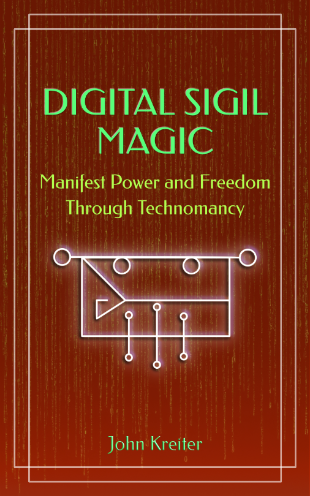
Leave a Reply