
As 2026 begins, something subtle yet unmistakable stirs beneath the surface of everyday life, a quiet shift that few can name but everyone can feel. There is movement everywhere, a sense that patterns once familiar are rearranging themselves into something just beyond understanding. The air feels charged, the ordinary seems to shimmer with new significance, and time itself carries a strange elasticity. Conversations hint at change, headlines flicker with fragments of something larger, and technology hums with a presence that feels almost alive. You might sense it too, that faint pull toward discovery, that intuition that this year will not simply unfold but reveal, asking you to watch closer, think deeper, and wonder what waits on the other side of what we think we already know.
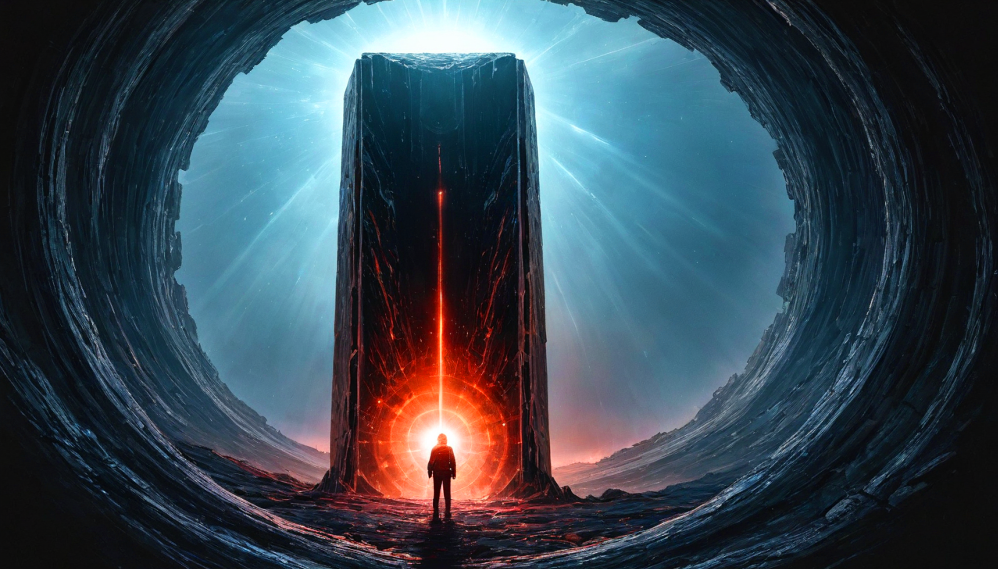
The Architecture of the Unseen: Why 2026 is the Beginning of the Internal Pivot
It appears we have reached that frantic season of the “Great Reveal;” a time where every pundit with a keyboard feels compelled to play prophet. We are drowning in forecasts about how 2026 will decompose or reconstitute itself; searching for logic in a world that often feels like it has lost its manual.
Well, I suppose it is my turn to step into the ring. However, I have no intention of peddling the usual apocalyptic clickbait. I will not be predicting a panic-driven sell-off on the trading floors; nor will I bore you with the inevitable fluctuations of oil and gas prices. I am also choosing to bypass the tactical analysis of the next “special military operation” or conflict brewing in South America. While those “concrete” events certainly demand attention; they are merely the symptoms, not the disease.
Instead; I want to focus on things that we have discussed for a long period of time (perhaps from its very inception) in this particular website. My prediction is about the nature of human awareness and perception going forward through 2026. This is far more important than many realize. As we know; there are many people that find the material I speak about to be perhaps not as important as the more material or seemingly concrete things of the world. But as I have tried to outline so many times: we create our world from the inside out.
The Subjective Loom: Weaving the “Real”
The nature of our creation means that there is a reflection between our perceptions and how we react to them. In other words: we create our outer reality from inside ourselves (from within our subjective realm) through the focus of our attention. In the average human being, this is directed through their beliefs and their belief patterns which then generate emotions and create a cascading effect of ethereal to real; subjective to objective. This isn’t just a solo performance, either. These individual ripples coalesce into massive “gestalts” of human consciousness (what the mainstream comfortably labels the “collective unconscious”) which then hardens into the shared reality we all wake up to.
Perception as a Precision Tool
What is so often overlooked is that conscious awareness is the master variable in this equation. It is the foundational link in the complex chain between the inner mind and the outer world. Think of your perception not as a passive camera, but as a fractionating tool. We use our observation of the outer world as a feedback loop: a way to reframe, modify, and ultimately perfect our external creations into cohesive and separated parts. If the world at large looks like a mess, it is because our internal “blueprints” are cluttered. As we move through 2026, the veil between what we think and what we see is thinning. Understanding this isn’t just “spiritual” advice; it is the most practical data point you will receive all year.
The Technological Mirror: 2026 and the Internal Quickening
My core prediction for 2026 is that this mirror of perception is about to undergo a radical, almost violent transformation. This shift isn’t merely philosophical; it is being driven by the relentless, exponential advancements in human technology.
Technology as an Artifact of the Soul
I have often said, and it bears repeating with urgency now: Technology is simply a mirror of an internal reality. We tend to view the “Silicon Valley” breakthroughs as external events; things that happen to us. But this is a fundamental misunderstanding of the process. The “quickening” we see in the tech space (the breathtaking rate at which we are birthing new tools) is a direct result of an inner quickening. Humanity is currently experiencing a liberation of mental states, a thawing of ancient psychological rigidities that are now reflecting outwardly as “technological flourishing.” We aren’t just building better computers; we are manifesting the increasing speed and fluidity of our own evolving consciousness.
The Expansion of the Human Canvas: AI as the Great Disruptor
This brings us to the specific catalyst of 2026. As a result of this internal acceleration, we are now deploying technologies that allow us to perceive the world in ways that were previously reserved for the realm of dreams or madness. We are witnessing the expansion of human reality itself.
2026 is the critical year for this expansion, and its primary vehicle is Artificial Intelligence. Specifically, we are moving past the novelty of AI-generated text and into the dizzying, immersive era of exponentially growing AI-generated video and audio. When you can generate a high-fidelity video of a world that doesn’t exist, or hear a voice speak truths that were never recorded, the “mirror” of reality begins to ripple. We are no longer limited by what the physical world gives us to perceive; we are now creating the very sensory data that will, in turn, re-inform our awareness. In 2026, the distinction between the “subjective” dream and the “objective” world won’t just be blurred, it will be fundamentally redefined by the synthetic media we are pouring into our collective consciousness.
The Collapse of the Objective: 2026 and the Devastation of Certainty
As we move deeper into 2026, we are witnessing an unprecedented expansion of synthetic media. But we must ask the deeper question: what does the proliferation of AI-generated video and audio actually do to the human psyche?
The answer is both exhilarating and terrifying. We are entering the year that begins the process of Total Blur: a period where the traditional line between subjective imagination and objective truth doesn’t just fade; it slowly begins to dissolves. The blossoming of video technology will in 2026 reach a tipping point where artificial intelligence will be able to craft long-form, coherent narratives that will challenge our very definition of “possible.”
From Memes to Mirages: The Death of the “Seeing is Believing”
We have already seen the precursors. Consider the viral tropes that have dominated platforms like TikTok and YouTube Shorts: like the classic “Grizzly vs. Gorilla” debates. Not long ago, these were intellectual exercises or crude animations. Today, we are served photorealistic footage of these titans clashing in the wild. Aside from the occasional “clunkiness” in physics or a stray digital artifact, these videos are becoming indistinguishable from a National Geographic broadcast.
But as 2026 progresses, the “oddities” are being ironed out. The “vanishing things” and “slight little odds and ends” that used to give the game away are disappearing. We are moving from 15-second clips to minutes and perhaps in time even hours of high-fidelity, AI-orchestrated content. When the average person can no longer rely on their eyes to distinguish between a recorded event and a digitally manifested imagination, the biological “truth-testing” mechanism of the human brain begins to fail.
The Devastation of Human Awareness
This isn’t just about being “fooled” by a fake video; it is about the devastation of certain portions of human awareness. For centuries, our awareness has relied on the outer world as a stable, objective anchor. We used the “real” to ground our “imaginary.”
In 2026, that anchor is being pulled up. When the “fractionating tool” of our perception is fed a constant stream of synthetic reality, our internal sense of what is “right” or “probable” loses its North Star. This is the year where the mirror begins to truly show us things that have never existed, with such conviction that we begin to treat them as foundations for our beliefs. We are no longer just watching videos; we are inhabiting a hall of mirrors where the subjective has finally gained the power to masquerade as the objective on a global, industrial scale.
The Siege of Certainty: Narrative Control and the Fracturing of Collective Dogma
As we move across 2026, the distinction between mainstream media and independent digital creators will become increasingly irrelevant. Whether you are scrolling through an “authorized” news portal or a rogue streamer’s feed, you will find yourself caught in a crossfire of fabricated narratives. We are fast approaching a “zero-trust” horizon where it will be functionally impossible to know if a broadcast is a recording of a physical event or a high-fidelity hallucination rendered by a server farm.
Naturally, this chaos will trigger a massive institutional backlash. We can already see the blueprints for this: a frantic, loud narrative demanding “restrictions,” “verification,” and “censorship” to protect the public. But let us be exacting in our analysis; this is the same tired script used throughout history to build new cages under the guise of safety.
The real struggle in 2026 is not about “fake news”; it is about the monopolization of the mirror. There is a growing movement to strip AI tools from the average individual, reserving the power of reality-creation for a select technocratic elite. By framing AI as a “danger” to be managed only by the state, they hope to widen the chasm between the classes. They want a world where their synthetic realities are the only ones permitted to reach your screen, while your ability to create, dissent, or experiment is regulated out of existence.
The Shattering of Dogma: When Authority Dissolves
This brings us back to our bear and our gorilla. It seems quaint, perhaps even humorous, to wonder if a digital video can “settle” an age-old debate about which beast is stronger. But the implications are profound. If you see it with your own eyes, with perfect fur physics and visceral audio, does it not become a “fact” in your mind?
Most of humanity relies on external dogma (precepts handed down by authority figures, books, or the blue light of the screen) to anchor their sanity. This dogma provides the “rules” of reality. But in 2026, when these authority figures begin to use synthetic media to “nudge” the truth, and when independent creators use the same tools to subvert it, the anchor snaps.
Without a stable, objective dogma to lean on, many people will begin to shatter from the inside out. This isn’t just a metaphor; it is a psychological destabilization. When the “matrix” of your personality is built on external truths that are suddenly revealed to be fluid or fabricated, the resulting internal collapse leads to “aberrative actions” in the physical world.
The Dual Strategy of Control
In response to this volatility, 2026 will see two primary methods of narrative control:
- Synthetic Propagandizing: Authorized “gatekeepers” will begin to subtly weave AI-generated data into their broadcasts to reinforce the narratives they want to become your “reality.” They won’t call it fake; they’ll call it “enhanced” or “simulated data,” but the effect on the human psyche remains the same: the manufacture of consent through the manufacture of perception.
- Technological Gatekeeping: There will be a concerted effort to restrict high-level AI power. We will see a digital civil war between “closed-source” platforms that censor content and “open-source” groups that flood the market with tools that allow anyone to be a god of their own digital universe.
In this environment, the “little screens” that surround us become the primary battlefield for the human soul. The question for 2026 is not “What is real?” but rather “Who is allowed to define reality for you?”
Conclusion: The Singularity and the Way Forward
2026 will become an interesting year in that regard. But this is just the beginning. Here we will see the footprints of what will continue through the decades: blurring between subjective and objective reality to a point that I have referred to as the singularity.
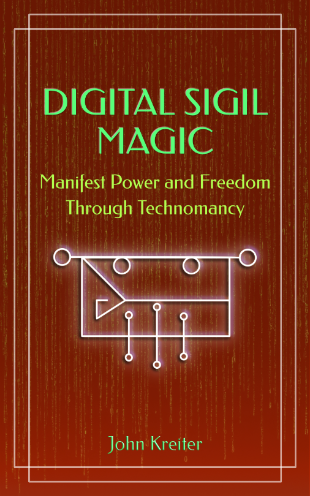
I have written about this and how to deal with it (how to stand up within it) in my book: Digital Sigil Magic: Manifest Power and Freedom Through Technomancy. There I tried to give a working framework from which to understand what is happening and how to find your own way through it: how to survive within it yourself by developing your own ability to create and manifest your intent within a chaotic future. Within that book; I give a way to stabilize your own subjective reality and a way for you to manifest your stable world within this seemingly unstable new outer reality.
The year 2026 marks a pivotal era where we begin to lay the foundations for a world in which the boundary between AI and reality becomes indistinguishable. Rather than fading away, the screen will amplify its presence by manifesting through virtual reality, augmented reality, and the eventual communion between technology and biology. While this transition is chaotic, it offers an incredible opportunity for growth. We can evolve into stronger and more capable beings who are equipped to exist beyond the rigid narratives of any specific era. In a literal sense, we can begin to perceive the underlying forces of our world directly instead of relying on dogmatic tools to dictate our perception.
This new perspective demands that we finally reclaim power in an age defined by total simulation. By looking past all external dogma, in whatever form such narrative might take, we find the freedom to define our own purpose and build a future rooted in authentic inner and individual human experience. We are not merely witnesses to this evolution; we are the architects of a new way of being that transcends the limitations of the past.
If you would like to know more about this subject and how to flourish within it: I highly recommend the book mentioned above. Trust your own inner directions and intuitions as opposed to what the rest of the world is saying!
🧭 The 2026 Reality-Check
Are You a Master or a Mirror?
1. You see a viral video of an impossible event (e.g., a gorilla defeating a grizzly bear). Your first physiological reaction is:
A) Immediate acceptance: “I knew it! My eyes don’t lie.” B) Cynicism: “Everything is fake now. I don’t believe anything.” C) Curiosity: “How does this image make me feel, and why was it created?”2. When you spend three hours scrolling through “The Little Screens,” how do you feel afterward?
A) Energized by the information/entertainment. B) Drained, anxious, or strangely “hollow.” C) Aware of the data, but mentally detached from the emotional hooks.3. If a major “authority figure” presented an AI-generated scenario as absolute truth, how likely are you to adopt it?
A) High: “They have the data; who am I to question it?” B) Medium: “I’ll believe it until someone else proves them wrong.” C) Low: “I trust my inner ‘truth-meter’ more than any external broadcast.”4. How often do you actively practice “Inner Action” (meditation or alchemy) to shape your day?
A) Never: Life happens to me. B) Occasionally: I try when I’m stressed. C) Daily: I am the architect; the world is the clay.5. When you think about the “Singularity” (the merging of technology and biology), you feel:
A) Fear: “We are losing our humanity.” B) Indifference: “It is just more gadgets.” C) Empowerment: “It is a new frontier for the expansion of my intent.”6. Do you currently use your digital devices as magical tools, or are they simply “cages”?
A) They are cages: I feel controlled by notifications and algorithms. B) They are neutral: They are just tools for communication. C) They are sigils: I am learning to project my intent through the screen.RESULTS: If you chose mostly A or B: your awareness is currently tethered to external dogma. To learn how to flourish in this environment: I highly recommend reading Digital Sigil Magic.







Leave a Reply