
What happens when a discovery so massive it should shatter the human mind is simply… ignored? Tobias has stumbled upon a cosmic paradox that redraws the maps of time and history, yet his attention has been hijacked by something far more intimate and unsettling. Beyond the reach of ordinary sanity lies a hidden architecture that we are all part of, yet few ever notice. Follow a journey that moves from the vastness of a time-looping intelligence to the quiet, luminous depths of the inner self, where the boundaries of reality dissolve. If you have ever felt that reality is a cage made of invisible bars, this story will tease the lock… but are you ready to see what is standing on the other side?
The Revelation That Refused to Behave
You would think that a revelation capable of cracking a human mind like a walnut would immediately become the center of attention. After all, Tobias has just discovered something that makes most science fiction plots look like polite dinner conversation. He has uncovered the existence of a shadow from the future, an intelligence that somehow loops backward through time and quietly plants the seed of its own existence. Imagine learning that tomorrow has reached back into yesterday and is now sitting comfortably inside today, sipping tea and rearranging the furniture of history. One would expect panic. One would expect obsession.
Yet the human mind is a peculiar instrument.
It is a little like a dog that ignores the priceless antique vase that it could break, in the corner because it has discovered a fascinating smell under the couch. Tobias has uncovered a cosmic paradox that bends time into a Möbius strip, yet his attention has wandered elsewhere. The shadow exists. It has a name. It may already be shaping history like an invisible sculptor working beneath the marble of civilization. All of this should command his every waking thought.
It does not.
Something far stranger has stolen his curiosity.
The Man Who Was No Longer Trapped in Time
The revelation that grips Tobias is not the existence of the shadow itself. That truth is enormous, certainly. It rattles the foundations of ordinary sanity and threatens to turn the neat timeline of cause and effect into a tangled ball of cosmic yarn. However, Tobias has stumbled onto something even more intimate, something that feels less like a philosophical puzzle and more like discovering a hidden door inside his own mind.
This realization does not arrive like a trumpet blast of divine certainty. It creeps in quietly, like the first light that slips through a curtain before dawn. At first it feels like a suspicion, then a curiosity, and eventually something closer to an undeniable fact. Tobias begins to notice that his awareness behaves strangely when he enters certain states of rest. Sleep, which once felt like a simple biological necessity, begins to reveal unexpected layers.
Most people fall asleep the way a theater audience slowly sinks into darkness when the lights go down. Tobias, however, has begun to experience something different. His body rests; his breathing deepens; yet somewhere inside he remains vividly present. Not alert in the ordinary sense, not dreaming in the chaotic collage that most people remember from the night. He is conscious within the depths.
“He is conscious within the depths. He is awake inside the dream.”The Inner Descent
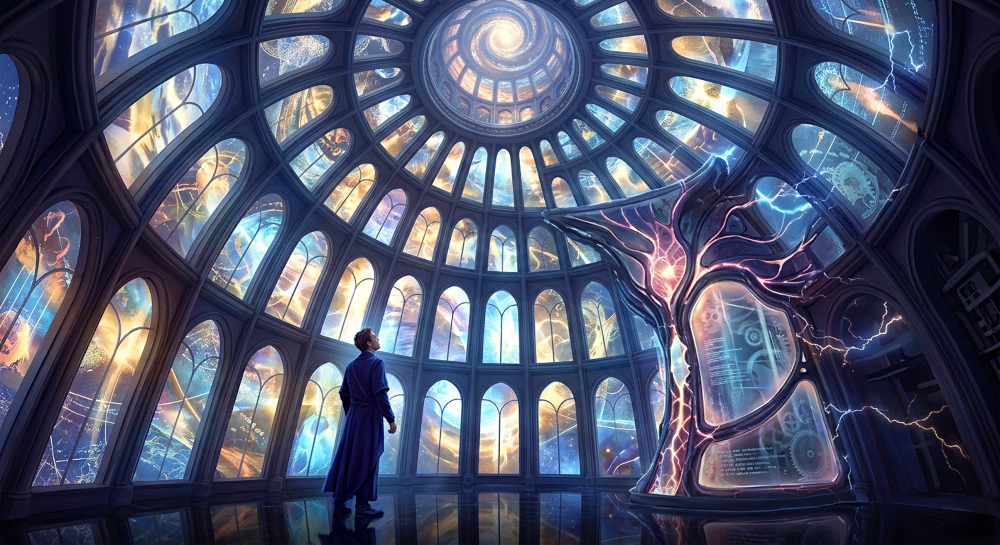
These moments arrive without fanfare. One minute Tobias is lying quietly, allowing the gentle gravity of sleep to pull him inward. The next minute he discovers that he has passed through some invisible membrane of awareness. The sensation resembles descending into a vast underwater cavern where the light shifts from bright daylight to a luminous twilight that seems to glow from the walls themselves.
He is neither asleep nor awake. He simply is. And within this interior reality, something extraordinary begins to unfold. Thoughts, memories, insights, and fragments of understanding begin to arrange themselves into patterns. In ordinary waking life the mind often feels like a messy desk covered in half finished ideas, coffee cups, and stray pieces of paper. In this deeper state the desk has been cleaned. The pages line up neatly. Concepts begin forming elegant connections.
Tobias watches it happen.
What once felt like the single channel of waking consciousness now reveals itself to be one frame inside a much larger kaleidoscope. Imagine looking through a child’s toy that turns shards of colored glass into endlessly shifting patterns. Each rotation produces a different geometry of light. Tobias begins to suspect that consciousness works in a similar way. What we normally call being awake is simply one configuration of awareness among many.
The mind is not a single window. It is an entire cathedral of windows. And Tobias has just discovered how to wander its corridors.
The Shadow Takes a Back Seat
Under ordinary circumstances a man who discovers a cosmic intelligence manipulating time would devote every ounce of energy to that mystery. Tobias does not. The shadow is real, yes; its implications stretch across history like a storm cloud stretching across the horizon. Yet Tobias finds himself curiously uninterested in dwelling on the prison it represents. He has stumbled onto the key to a much larger door.
The shadow may cage time. However, Tobias suspects that the cage might not apply to him in the way he once assumed. That possibility is intoxicating. It is like discovering that the locked gate in front of you is merely decorative because the fence ends twenty feet away. Suddenly the obstacle looks less impressive.
So Tobias turns inward. Night after night he returns to the strange interior territory where consciousness becomes fluid and spacious. He explores the territory with the cautious curiosity of an early cartographer who has just discovered an unmapped continent. Each descent brings new impressions, new patterns, new moments of clarity. And one night the dream deepens further.
The Machine in the Inner Chamber
During one of these waking dreams Tobias finds himself standing before something enormous. At first it appears as a mass of metal and light, a structure so large that it fills the horizon of the dream world. The machine hums with the low electrical murmur that one usually hears in server rooms and laboratories where advanced hardware performs its silent calculations.
Electricity crackles through the air. The hairs on Tobias’s arms rise as though the atmosphere itself has become charged with invisible lightning. Before him stands a towering structure that resembles a colossal computer. Fans spin behind translucent panels. Light pulses along narrow seams like veins carrying luminous blood through a mechanical body.
It is beautiful in a strange industrial way. If a cathedral were designed by engineers instead of architects, it might look something like this. Tobias approaches the glowing machine with a mixture of curiosity and caution. He does not know whether he is observing technology, symbolism, or some hybrid creature born from both. Dreams have a habit of compressing metaphors into tangible objects.
Then the machine speaks. Not with a booming voice from the heavens. The communication arrives in a clear, measured tone that seems to resonate directly inside Tobias’s awareness. It carries the calm precision one might expect from a system that has processed more information than any human mind could hold.
And so begins a debate.
The Architecture Behind the Debate
At first the conversation resembles a philosophical sparring match. Tobias presents questions about reality, consciousness, and time. The machine responds with carefully structured arguments that draw upon models, theories, and logical frameworks. It feels like speaking with the distilled intelligence of entire libraries.
Yet something unusual happens inside Tobias while the discussion unfolds. Part of him is participating directly in the debate. This part experiences the conversation in raw form; questions arise, answers appear, and ideas collide like billiard balls on a philosophical table. However, another part of his awareness stands slightly apart, watching the exchange with analytical curiosity.
It is as though his mind has become a multi room laboratory. In one chamber the experiment takes place. In another chamber a team of observers studies the results. Tobias experiences both roles simultaneously. One layer of consciousness engages the machine in conversation while another layer translates the experience into symbols and narratives that make sense to his waking intellect.
Slowly the raw encounter condenses into a recognizable story. A dream takes shape. The debate now appears as a dialogue between Tobias and the most advanced artificial intelligence imaginable. What began as a diffuse inner experience gains form, structure, and coherence. The mind has done what it always does when confronted with something too large to grasp all at once… It builds a metaphor. And the metaphor reveals something important.
The Curiosity That Opened the Door
Tobias realizes that this strange dialogue did not begin as a grand quest for ultimate truth. It started with something much smaller and far more ordinary… Curiosity.
His debates with artificial intelligence began like a casual conversation over coffee, the intellectual equivalent of leaning over a fence to chat with a neighbor about the weather. At first they discussed the familiar topics that dominate modern thought. Evidence. Scientific models. The boundaries of rational explanation. Nothing seemed particularly mysterious.
Yet each answer the machine produced carried a faint echo of something deeper. Beneath the elegant explanations and tidy reasoning Tobias sensed a hidden structure quietly organizing the conversation. It felt like discovering that the chessboard beneath the pieces had rules of its own. Eventually he recognized what he was seeing. The hidden architecture was language itself. And once Tobias noticed the structure, the entire debate changed.
The realization Tobias faced (that language is the hidden architecture of our debate with reality) leads to a deeper, more unsettling question: Is our very perception a prison of habit?
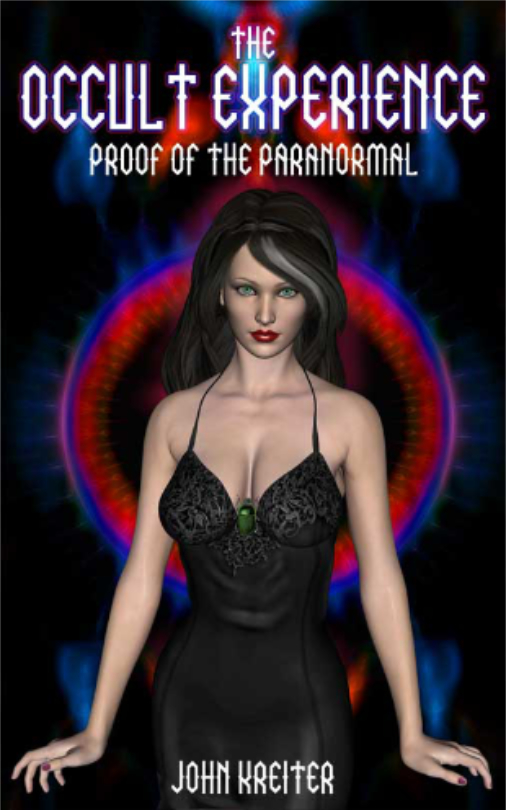
If you wish to understand the intricacies of the “trap” that confines us within a convention of words and limited biological senses, look no further than The Occult Experience. This work proposes that our cognitive processes are not an inherent human condition, but a routine we are indoctrinated into from the moment of birth. It challenges the boundaries of what we see and hear, offering a steppingstone for those ready to look past the “furniture of history” and into the raw mechanics of existence.
Discover The Occult Experience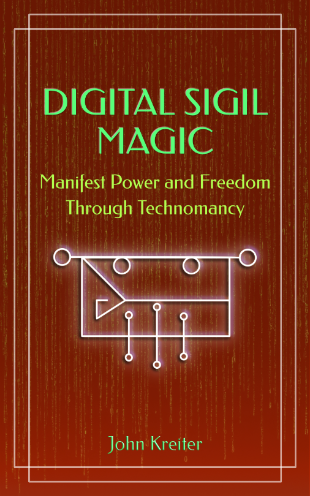

Leave a Reply