
This article challenges you to undertake a quiet but profound confrontation with the nature of your own perception. It hints at a world behind the familiar one, a world that most people sense only in passing but rarely dare to explore. Within, you will encounter ideas that challenge the boundaries of routine awareness and question the foundations of what you may believe to be real. The journey is not presented as a simple escape from everyday life but as a deeper inquiry into the forces that shape identity, perception, and the structure of reality itself. There are suggestions of vastness, of hidden layers, of cracks in the ordinary world that reveal something far larger than the senses usually allow. You are invited to step toward this threshold, to consider what lies beyond, and to discover why such exploration may be far more important than you ever imagined.
When you think of identity diffusionA psychological state where clear boundaries of personal selfhood become porous or unstructured., most often you are most likely thinking about politics or some kind of powerful theology, but as we shall discover, this particular concept is something that affects our entire life, and it is quite simply the part of us, that little tiny gear within our psyche, that is responsible for our entire reality.
Let us begin by defining identity diffusion.
Identity fusion is a psychological state in which a person’s sense of self becomes tightly welded to a group, ideology, or worldview. In this fused state, the boundary between “I” and “we” dissolves, and the individual experiences the group’s beliefs, goals, and threats as their own personal reality.
Identity Fusion and the Shape of Everyday Reality
Identity fusion is not an exotic psychological condition reserved for zealots or fanatics. It is the quiet engine that drives the behavior of almost every person you know, including you. It is the moment when the self merges with a group or belief so completely that the boundary between personal identity and collective identity dissolves. Once this happens, the group is no longer something you belong to. It becomes something you are.
You can see this most clearly in the world of sports. Watch a devoted fan during a championship game and you will witness identity fusionThe deep structural merging of personal ego with external collective identities. in its purest form. They are not sitting on a couch. They are on the field. They are running the play. They are taking the hit. When their team loses, they feel a physical ache in their chest as if someone has punched them. Some will cry. Some will rage. Some will overturn cars and set fire to dumpsters as if the universe has committed a personal insult. They are spectators in reality but participants in identity. The team is not a team. It is an extension of their own body.
This same mechanism operates in politics. A person who fuses with a political party does not simply support its ideas. They embody them. Any criticism of the party feels like an attack on their own character. Any challenge to its worldview feels like a threat to their safety. They defend the party with the same instinct that a parent uses to protect a child. They cannot separate themselves from the collective because the collective has become the architecture of their identity.
Theology offers another example. When belief becomes fused with the self, faith is no longer a perspective. It is a personal essence. Questioning doctrine becomes indistinguishable from questioning the believer’s existence. The sacred merges with the self… and the self becomes sacred!
This fusion is possible because reality begins with perceptionThe sensory filtering process conditioned by cultural instruction and repetition.. We experience the world through our senses, and these senses feed us the same patterns day after day. The repetition creates familiarity. Familiarity creates belief. Belief creates identity. Over time, the mind builds a stable model of reality based on what it has repeatedly seen, heard, and felt. This model becomes the foundation of our worldview.
Experts, leaders, and cultural authorities reinforce these models. They tell us what is true, what is normal, what is acceptable, and what is real. They shape the consensus that defines the boundaries of everyday life. When you agree with them, you fuse with the worldview they promote. You adopt it as part of your identity. You defend it as if it were your own flesh. You feel threatened when it is challenged. You feel validated when it is praised.
This fusion affects every part of daily reality. It determines how you interpret events. It shapes your emotional reactions. It influences your choices. It decides what you fear and what you desire. It tells you who you are and who you should be. It is the invisible force that keeps you aligned with the herd, even when the herd is running in circles. It is the reason you cling to familiar beliefs even when they no longer serve you. It is the reason you feel discomfort when someone suggests that the world might be larger, stranger, or more flexible than you were taught.
Identity fusion is not a flaw. It is a feature of human consciousness. But it is also a trap. When your identity becomes fused with a belief or a group, you stop seeing reality as it is and start seeing it as the group insists it must be. You stop perceiving the world directly and begin perceiving it through the filter of consensus. You become a spectator in your own life, convinced that you are a participant.
Reality Fusion and the Making of the Everyday Automaton
While identity fusion explains why people cling to groups, teams, and beliefs with such intensity, there is a deeper and far more pervasive mechanism at work. This same psychological gear binds humanity not only to social identities but to an entire model of reality itself. You could call this reality fusion, the moment when the individual merges with the sanctioned version of the world and begins to defend it as if it were their own flesh.
Reality fusion is the identity fusion of the entire species. It is the collective agreement about what is real, what is possible, and what must never be questioned. Just as the zealot sports fan will scream, cry, or even riot when their team loses, the average person will defend the accepted structure of reality with equal fervor. They may not overturn cars, but they will ridicule, shame, defund, or dismiss anyone who dares to look beyond the boundaries of consensus. They will protect the sanctioned worldview with the same instinct that a buffalo uses to protect the middle of the herd… see this article.
This happens because the basic model of reality is taught long before a person can think for themselves. The network that creates consensus begins immediately after birth. A parent points at objects and names them. They teach the child what is safe and what is dangerous, what is normal and what is strange, what is allowed and what is forbidden. They teach the child how to interpret sensations, how to categorize experiences, and how to act in the world. The child absorbs these lessons without question because they have no alternative frame of reference.
School reinforces this structure. Teachers present the world as a fixed system with clear rules and established truths. Peers enforce conformity through approval and rejection. Experts add authority to the entire structure by presenting themselves as custodians of reality. They tell you what exists, what does not exist, what is possible, and what is impossible. They shape the boundaries of perception and call it knowledge.
Over time, repetition turns perception into belief. Belief turns into identity. Identity turns into fusion. The individual becomes inseparable from the worldview they were taught. They no longer see reality as something they experience. They see it as something they are. Any challenge to the consensus feels like a personal attack. Any deviation feels like a threat. Any suggestion that reality might be larger or stranger than the sanctioned model feels like an insult to their very existence.
This is why the average person becomes a kind of drone. They are not mindless in the sense of lacking intelligence. They are mindless in the sense that their identity has fused so completely with the consensus that they cannot imagine stepping outside it. They defend the sanctioned reality because they believe they are defending themselves. They protect the worldview because they believe they are protecting their own essence. They cling to the herd because they believe the herd is who they are.
Reality fusion is the quiet force that keeps humanity aligned with a shared perception of the world. It is the reason people fear the unknown. It is the reason they resist new ideas. It is the reason they feel threatened by anything that challenges the consensus. It is the reason they stay in the middle of the herd even when the horizon is calling.
The Need to Grow Beyond the Fused Reality
It is true that identity fusion has its uses. It helps the individual function within the group. It creates harmony, predictability, and shared understanding. It gives the child a starting point, a simple surface level reality that allows them to act within the world without falling into chaos. But this surface level reality is only a beginning. It is not meant to be the final destination of a fully developed human being. There comes a time when the child must grow up and see beyond the fused world they inherited. There comes a time when the individual must expand.
This expansion is at the heart of every theological search for meaning. It is the reason people begin to question their routines. It is the reason they feel restless in the face of repetition. The structure of reality that once felt comforting begins to feel small. The identity they fused with begins to feel restrictive. The drone begins to sense that there is more to life than the sanctioned world they were taught to defend.
The average rationalist will insist that all there is, is within the sole realm of the physical senses. They will say that reality is limited to what the eyes can see and the ears can hear. But even within the physical senses there is a great beyond. The senses themselves have been shaped by identity fusion. They have been trained to perceive in a particular way. They have been taught to divide the world into objects and empty space, into things that matter and things that do not. This division is not natural. It is learned.
Take vision. The average person looks at the world and sees objects floating in empty space. They see a chair, a tree, a wall, and they ignore the space between them. They treat the space as nothing. They treat the objects as everything. This is not the only way to see. There are jungle tribes that do not understand depth in the way modern people do. They see the world as a flat curtain of shapes and colors. There are individuals who can invert the relationship between object and space. They can perceive the emptiness as full and the objects as interruptions in a continuous field. They can see the world as a single flowing structure rather than a collection of separate things.
The same is true for hearing. Most people listen for distinct sounds and ignore the silence between them. They treat silence as absence. But silence can be perceived as a presence. It can be felt as a texture. It can be experienced as a living part of reality. Touch, taste, and smell can also be expanded. There are sanctioned ways of perceiving and there are unsanctioned ways. The sanctioned ways create the fused reality. The unsanctioned ways reveal that even the physical senses contain hidden dimensions.
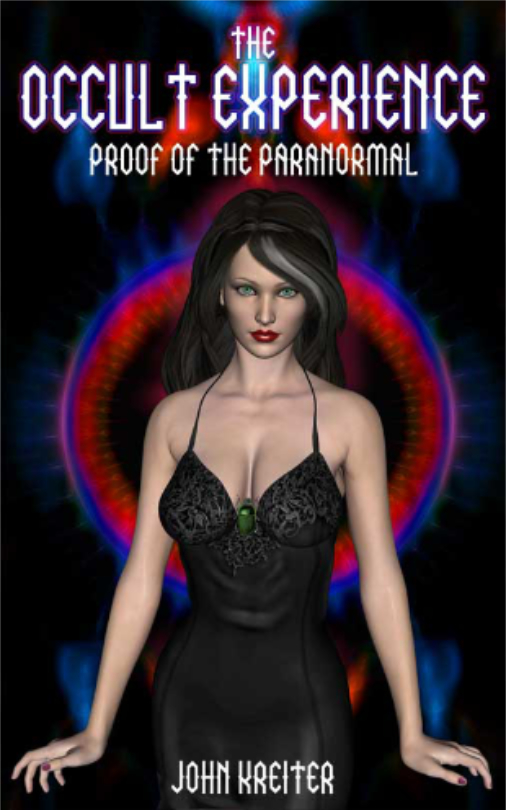
A deeper dive if you are interested… you can either read this section or keep reading past it if you are short for time. It is an enlightening deeper look into the processes I discuss in this article, and it is a good introduction to what I cover extensively in my book The Occult Experience. If you want me to expand on this, let me know and I will try to do a full article on it.
Sensory habits are built through the environments we inhabit. People raised in highly structured urban settings often rely heavily on linear perspective, organizing their vision around isolated items set against passive background voids. By contrast, traditional hunter gatherer communities frequently prioritize acoustic awareness and broad peripheral tracking to monitor dense forest canopies where physical horizons are blocked. Similarly, maritime societies often utilize an allocentric frame of reference, constantly computing their precise position relative to wind, swell, and stars rather than relying on ego centered directions. These varied cognitive frameworks prove that human physiology processes raw stimuli through cultural instruction, turning sensory intake into vastly different experiences of reality.
Human perception is deeply bound to cultural habits and physical environments, producing entirely different ways of experiencing reality and structuring thought.
General Scientific Studies
Anthropological and psychological research confirms that sensory interpretation is not uniform across humanity:
- Depth Perception and Environment: Classic cross-cultural studies, notably documented by anthropologist Colin Turnbull during his work with the Mbuti pygmies of the Ituri Forest, demonstrated that individuals raised in dense tropical canopies lack the habitual exposure to long-distance vistas. When an Mbuti man named Kenge was taken to an open plain for the first time, he mistook distant buffalo for insects because he had never learned to visually scale down objects across vast empty horizons. Psychologists like Marshall Segall, Donald Campbell, and Melville Herskovits later formalized these findings in cross-cultural psychology, showing that susceptibility to certain visual illusions depends heavily on whether a person grows up in a “carpented” world full of rectangular walls and straight lines.
- Spatial Frames of Reference: Seminal cognitive research by linguist Stephen Levinson and anthropologist John Haviland into the Guugu Yimithirr people, an Indigenous Australian community, revealed that human spatial processing varies drastically. Their research showed that perception can be anchored entirely to the earth rather than the human body.
Alternative Perceptual Realities
Different communities process sensory inputs through frameworks completely foreign to standard urban experiences:
- Absolute Geocentric Tracking: Speakers of languages like Guugu Yimithirr do not use egocentric terms like left, right, in front of, or behind. Instead, every physical action is perceived through fixed cardinal directions. A person does not scratch their left arm; they scratch their southwest arm. They do not walk forward; they walk north-northwest.
- Continuous Field Awareness: Forest dwelling groups who live under a thick overhead canopy develop heightened auditory and tactile sensitivity over long-range visual tracking. Space is perceived not as an empty container separating distinct objects, but as a dense, continuous medium of sounds, smells, and overlapping organic textures.
From Perception to Syntax and Worldviews
The way sensory data is parsed directly dictates grammar, which in terms shapes how an entire culture conceptualizes time, existence, and action.
When a language relies on absolute cardinal directions rather than relative body coordinates, the syntax forces speakers to maintain a constant, subconscious mental compass. You cannot speak the language without precisely knowing where north is at every second, whether you are outdoors, blindfolded, or deep inside a windowless building. Consequently, psychological experiments show that these speakers naturally organize time and memories geographically, tracking time not as a line moving from left to right across the body, but moving from east to west.
This creates a radically different worldview. While Western syntax often separates humans from objects by placing an actor at the center of a sentence acting upon an external thing, an environmentally anchored cognitive system places the individual as a tiny, coordinated node within a vast, unyielding cosmic grid. Reality is experienced not as a collection of movable possessions floating in an empty void, but as an unbroken, living structure where everything has an absolute, unchangeable place.
The modern world has for the most part not made the connection yet of how deeply this different syntax of the world can affect perception… reality itself.
We are the sum of our language; it is the structure that we use to repeat our worldview. When the syntax is different, everything changes!
When syntax shifts, the entire architecture shifts with it, altering how the self is distinguished from the world and how the sacred is conceptualized.
Through sustained focus across generations, these linguistic and perceptual divergences compound into distinct civilizational frameworks, shaping societies whose inhabitants operate within a fundamentally altered universe. Pushed to its ultimate evolutionary limit, this continuous feedback loop between language, perception, and environment can produce cultural lineages so profoundly distinct that they function as entirely separate iterations of humanity.
Read that last line again, slowly, because it is not merely a conclusion to this little boxed section. It is a window. And if you look long enough, you may notice that it opens onto a reality far larger, older, and stranger than anything we pretend to understand. In time, you may realize that it explains the alien, the occult, the Weird… and, with a kind of terrible elegance, it explains everything!
Consider the phenomenon where you notice a certain kind of car and then begin to see it everywhere. This is not magic. It is perception shifting. It is the mind tuning itself to a new pattern. Once the pattern is noticed, the world reorganizes itself around it. This can happen with anything. You can tune your perception to colors, shapes, movements, or even the space between objects. You can tune your perception to the background instead of the foreground. You can tune your perception to the subtle instead of the obvious. When you do this, the world changes.
There are people who perceive reality in ways that most would consider strange. They see patterns in empty space. They feel textures in silence. They sense depth where others see flatness. They experience the world as a continuous field rather than a collection of objects. They have stepped beyond the fused reality. They have expanded their senses within the limits of the physical world. They have discovered that even the ordinary world contains extraordinary possibilities.
Perceptual Expansion and the Power of Attention
Identity fusion convinces the average person that their way of perceiving the world must be defended at all costs. To question the routine structure of reality feels like a direct assault on the self. This is why people become drones who protect their worldview with remarkable intensity. They are not defending truth. They are defending the fused identity that tells them who they are. This is critical because once perception becomes identity, any challenge to perception becomes a threat to existence.
Yet perception can go far beyond this fused cage. The physical senses are not fixed instruments. They are shaped by training, repetition, and the sanctioned rules of the group. The eyes are taught to divide the world into solid forms and empty gaps. The ears are taught to separate sound from silence. The skin is taught to distinguish contact from non contact. These divisions are learned. They are not inherent. They are part of the identity fusion that creates the drone.
Beyond this cage there are other ways to perceive. Inner senses can be awakened.
AttentionThe focal mechanism that directs mental energy and alters the structure of everyday reality. is the key. When you focus on a certain kind of car, you begin to see it everywhere. The car was always there. Your attention was not. When attention shifts, reality shifts. This can be taken much further. You can focus on the background instead of the foreground. You can focus on the silence instead of the sound. You can focus on the space instead of the object. When you do this, the world changes. The senses reveal hidden layers. The drone begins to crack.
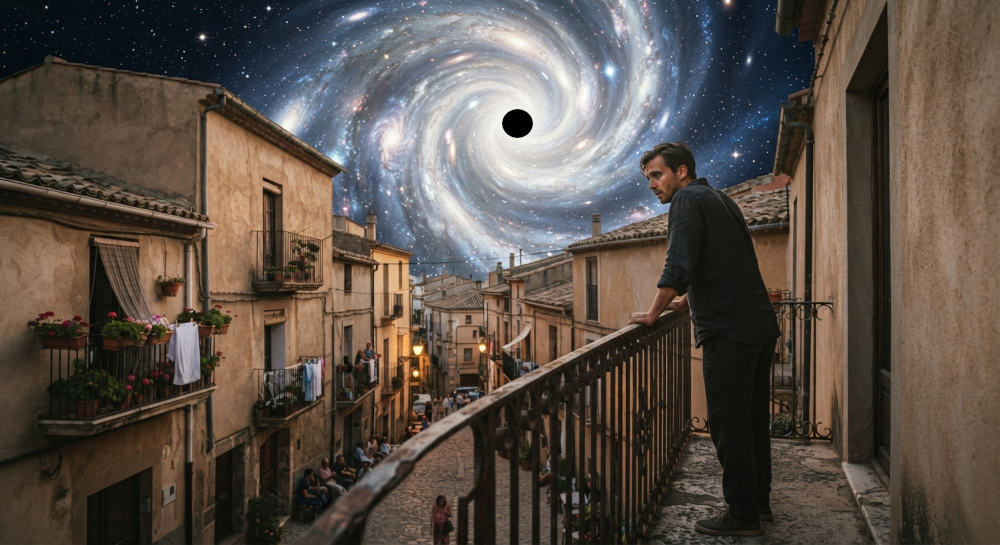
This expansion leads directly to the idea that reality itself is shaped by attention. When attention moves beyond the sanctioned limits of the physical senses, perception begins to stretch. It reaches into what inner alchemy calls cosmic distanceA vastness existing just beyond routine sensory perception where the familiar world thins.. This is not infinity. It is a kind of vastness that exists just beyond the edge of routine perception. It is the place where the familiar world begins to thin. It is the place where the cracks appear… it is the liminal spaces.
Imagine standing at the edge of your fused reality and seeing a small break in the structure. It is like an HP Lovecraft moment where the ordinary world reveals a slit of something immense behind it. The crack is small but the presence behind it is enormous. It is not darkness. It is not light. It is something that cannot be named because naming belongs to the fused world. It is the beyond, that the drone fears. It is the beyond that the seeker must face.
This is why perceptual expansion is both thrilling and terrifying. It shows that the world you defend so fiercely is only a surface. It shows that the senses you trust have been trained to see only a fraction of what is possible. It shows that attention is not just a tool but a force that shapes reality. When attention moves, reality moves. When attention expands, reality expands. When attention breaks the cage, the world becomes something far larger than the fused identity ever allowed.
The Collapse of Routine and the Birth of a New Perception
Cosmic expansion begins the moment the routine world starts to crack. Once attention shifts beyond the sanctioned limits of the physical senses, the familiar structure of reality begins to loosen. The drone feels the first tremor. The fused identity feels the first strain. The world that once seemed solid begins to show seams. These seams are the beginning of a new form of perception.
It is possible for an average person to reach this place. It is possible to see beyond the boundaries of perceptual routine. But this step is difficult because it requires rejecting identity fusion. It requires dismantling the idea of self that has been built since childhood. It requires breaking the self. EnlightenmentThe radical dissolution of the fused ego to allow expanded, direct perception of reality. in any tradition demands this destruction. The old self must fall so that a new and expanded self can rise. This is the key. You are destroying your self because identity fusion has convinced you that you are the thing you perceive. To attack the fused reality is to attack you. Therefore the self must be broken before a different reality can be revealed.
This is the secret that is rarely explained. People speak of awakening but they do not speak of the cost. They speak of expansion but they do not speak of the collapse required to make room for it. They speak of higher perception but they do not speak of the fear that comes when the familiar world begins to dissolve. When the fused identity breaks, the world loses its usual shape. The senses begin to stretch. Attention begins to move into places it has never been allowed to go. The routine world collapses and a new form of perception emerges.
This new perception is not abstract. It is not symbolic. It is not metaphor. It is a direct experience of reality beyond the cage of identity fusion. Inner senses begin to awaken. Attention begins to reach into distances that cannot be measured. Perception begins to extend into what inner alchemy calls cosmic distance. This is not infinity. It is a vastness that exists just beyond the edge of the familiar world. It is the place where the ordinary world thins and something immense begins to show through.
This is the emergence of a new form of perception. It is the moment when attention becomes a force that shapes reality. It is the moment when the senses begin to reveal layers that were always present but never noticed. It is the moment when the fused identity collapses and the world becomes larger than the cage ever allowed.
Recommended Reading
If you wish to explore these techniques in a slow and natural way, if you wish to understand how to break past certain physical barriers of perception in order to reach a greater reality, then I recommend this comprehensive guide.
The Occult ExperienceThere you will find a careful method for expanding perception, dismantling identity fusion, and creating a new reality that stretches far beyond the walls of the current cage. It is a path that can take the practitioner into cosmic distance, into the kind of awe and mystery that feels like standing at the edge of a Lovecraft crack in the world, looking into a vastness that has always been there, waiting for attention to finally turn toward it.




Leave a Reply